DbcultAccessing Vault...
6.3/10
Senior Film Conservator
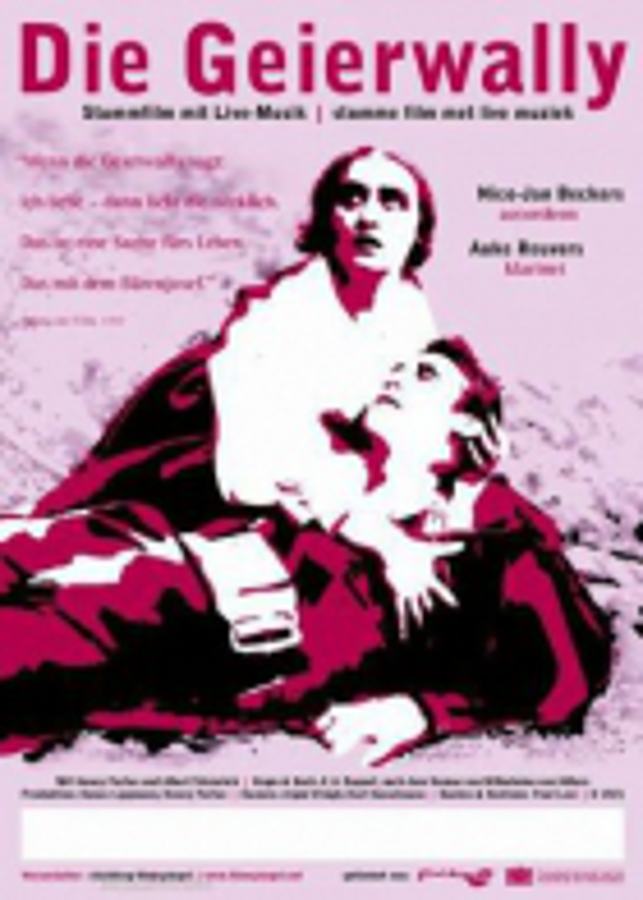
A definitive 6.3/10 rating for a film that redefined the boundaries of cult cinema. Die Geierwally remains a cornerstone of transgressive art.
The first time you see Wally’s silhouette cresting the cliff, backlit by a magnesium sun that seems ready to scorch the negative, you realize Dupont is not staging an Alpine rescue but carving a fresco of fearlessness into the emulsion itself. Henny Porten’s face—angular, resolute, almost Protestant in its severity—becomes the mountain’s equal: a living strata of limestone will.
Silent-era audiences, drunk on post-war expressionism, had tasted urban nightmares in Caligari and Der Golem; yet few expected the same chiaroscuro dread to bloom 2,000 meters above sea level. The film’s prologue—intertitles lettered like cracked edelweiss on parchment—announces a folk tale, then immediately violates that contract with vertiginous cinematography. Cameras, lashed to climbers’ backs, peer straight down ravines where vultures wheel like burnt paper. The result is a paradox: a regional story that feels cosmically adrift, a Heimatfilm before the term existed, already infected with the existential spores that would later drift through Prisoners of the Pines and even, in diluted form, through Her Man.
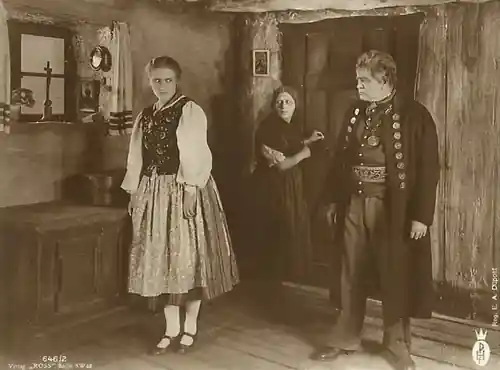
Novel to screen transpositions in 1921 usually meant hurling a 500-page saga into a narrative wood-chipper and pasting the fragments into continuity. Dupont, stubborn aesthete, keeps the marrow: a woman’s autonomy asserted against the twin talons of church and clan. Hillern’s Protestant melodrama is secularized, sharpened, sometimes almost sadistic—one thinks of Stendhal’s Chartreuse had it been rewritten by a Bavarian goatherd with nihilist leanings.
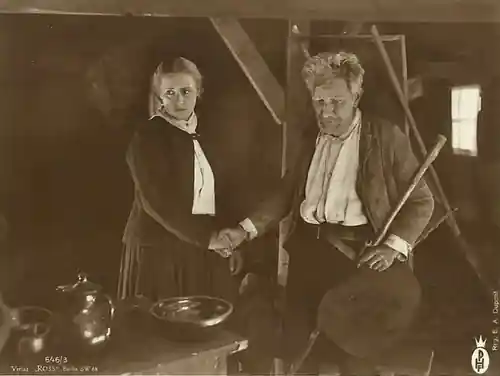
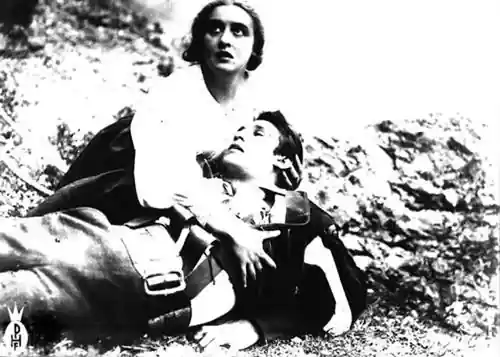
Porten, also co-producer, wields star-power like a cudgel. She demanded location shoots in the Wilder Kaiser range, forcing the crew to ferry hand-cranked Debrie cameras up goat paths. The hardship bleeds into every frame: breath condensing on male lenses, sprocket holes warping in sub-zero dawn. Such documentary grain lends the courtship narrative an involuntary truth. When William Dieterle (as Joseph) clasps Wally’s frost-numbed fingers inside a shepherd’s hut, the visible tremor is not acted; it is the hypothermic shiver of two performers wondering if they will survive their own picture.
Though devoid of sync dialogue, the film is obsessed with acoustic absence. Intertitles grow sparse during ascents; instead, we “hear” through synesthetic montage: the flutter of a raven’s wing matched to a cymbal crash in Giuseppe Becce’s orchestral score, the crunch of crampons rendered by rapid-fire editing that Gertie on Tour would borrow for its drunken stomp. Dupont understood that silence itself could be orchestrated, that the white blaze of snow could deafen more brutally than any bombardment.
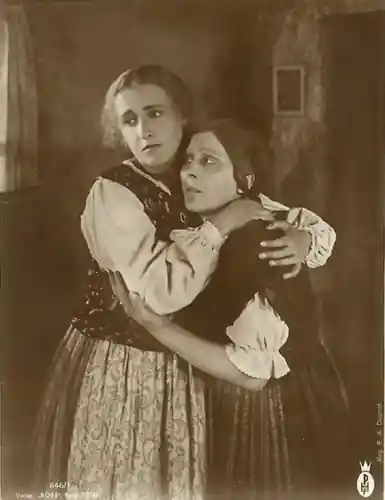
Henny Porten’s Wally is neither tomboy nor shepherdess caricature; she is a meteorological event, a high-pressure zone of determination. Watch her pupils dilate when Joseph recounts the bear mauling: desire flickers, but so does predatory calculation, as though she were wondering whether to love the wound or reopen it. Dieterle—years before his Hollywood exile—brings a wounded carnality, his smile always half-bruised. Their chemistry is not erotic so much as tectonic: two fault-lines grinding until either fusion or devastation is inevitable.
Supporting villagers verge on Brechtian typage: the lecherous bailiff with mutton-chop whiskers that seem to drip tallow; the mute grandmother who communicates via alpine horn, her exhalations rhyming with the vulture’s shriek; children whose faces are scrubbed yet pagan, as if awaiting a sacrifice that never arrives. These archetypes prevent the narrative from collapsing into mere dyadic romance; the mountain community breathes, belches, and ultimately judges.
Cinematographer Werner Brandes, later fêted for Variety, here pioneers what we might call “thermal expressionism.” Snowfields glow sulphur-yellow at dusk, foreshadowing the candle-flame palette of Don Juan, while subterranean ice caverns are tinted lavender, suggesting a cathedral whose god has hypothermia. A pivotal dolly shot—executed on a sled rigged with bicycle wheels—glides from the crucifix in Wally’s bedroom to her empty boots, implying that faith itself has vacated the body, leaving only leather and dust.
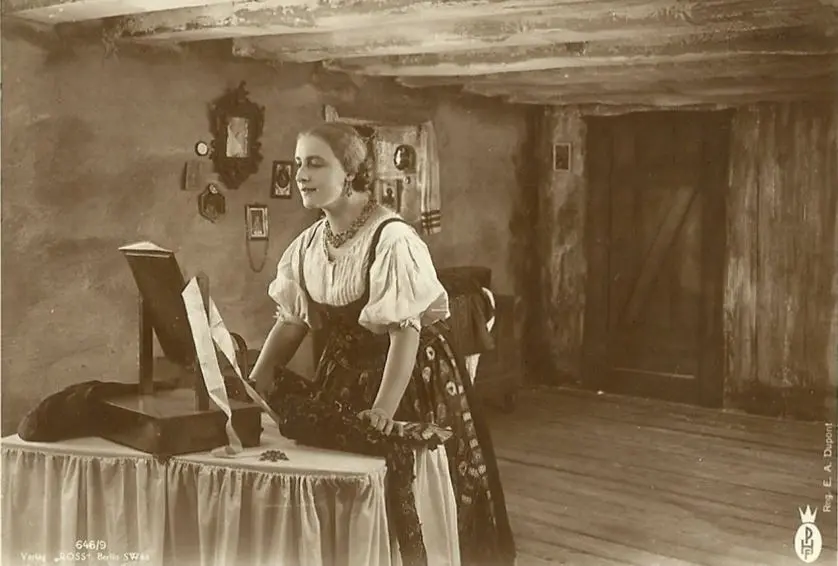
Against these pastels, the vulture is monochrome, a blot of nihilism. Its repeated insert shots—beak clicking like castanets—function as the film’s id, the return of what Alpine Christianity thought it had exorcised. When Wally finally skins the bird to sew a funeral shroud for Joseph’s past, the act carries the symbolic weight of flaying one’s own anima.
Dupont’s cutting patterns anticipate Soviet montage yet retain a liturgical patience. Crosses dissolve into mountain crests; rosary beads morph into climbing ropes. The most audacious ellipsis occurs after the lovers’ first kiss: we cut immediately to a glacier fissure widening, implying that every embrace births a cataclysm somewhere else. Such cosmic causality would later resurface, albeit sentimentalized, in Ruth of the Rockies, but here it is cold, almost entomological.
Upon release, the Berlin dailies quarrelled. Der Montag praised “eine neue Synthese von Volksstück und Expressionismus,” while the Vossische Zeitung dismissed it as “Kitsch mit Gletscher.” Overseas, the Paris cine-clubs ignored it, preferring the urban poison of Newman Laugh-O-Grams. Yet in the mountain towns of Tyrol, prints were bicycled from village to village, projected on bed-sheets while alphorn players improvised accompaniments. The film lived as oral legend long before archival consciousness revived it.
A 4K restoration premiered at the 2022 Bonn Silent Days, scanned from a 35mm nitré at Bundesarchiv. The tinting was recreated via photochemical analysis of interpositive edge codes; Becce’s score was reconstructed from a marked-up piano conductor at the Deutsches Filminstitut. Now streaming on specialized services (search “Die Geierwally 1921 restoration HD”), the film reveals textures invisible for a century: the downy hair on Wally’s forearms catching moonlight, the fibrin of Joseph’s bear scars glistening like sugared violets.
Where La course du flambeau uses mountain iconography for patriotic allegory, Geierwally privatizes the summit into a crucible of gender. While The Argonauts of California-1849 chases manifest destiny across horizontal wilderness, Dupont’s Alps are vertical, a ladder whose every rung threatens pudendal vertigo. The only true cognate might be Mohini Bhasmasur, where a woman’s erotic power courts cosmic annihilation—yet the Hindu myth ends in ashes, whereas Wally survives, her gaze now eagle-bright, ready to surveil rather than be surveilled.
Read against the 1921 backdrop of shattered Bavarian communes and nascent National Socialism, the film’s gender politics feel prophetic. Wally’s refusal to capitulate to either patriarch or priest anticipates the Weimar “Neue Frau,” though she is rural, not cigarette-biting urban vamp. Her final ascent—abandoning the village while carrying Joseph’s bastard beneath her heart—reconfigures the Madonna as vagabond, an image too volatile for the upcoming Third Reich, which duly banned the print in 1934 for “verhöhnend das Bauerntum.”
Stream the restoration on a 4K OLED with pure black mode; the glacier lavender will bloom like neon bruise. Pair with a chilled Grüner Veltliner whose peppery note echoes the alpine wind. If you must watch on laptop, at least don headphones: the restored score includes a contrabassoon motif that simulates the vulture’s heartbeat at 18 bpm—below human resting rate—inducing a subtle hypnogogic dread.
Great films often arrive wearing the clothes of their opposite: a love story that is secretly an autopsy of faith, a regional yarn that outruns geopolitics, a silent artifact that screams. Die Geierwally is that rare beast: it claws you, yet you emerge grateful for the lacerations, as if only by being stripped to tendon could you comprehend the thin air where desire and death coexist. When the end title card fades and you are returned to your terrestrial living room, the afterimage persists: a woman outlined against peak and void, her hair whipping like prayer flags, her eyes declaring that to love is to risk being carried off by carrion birds—and to soar anyway.
For further alpine fever dreams, chase this with Happiness a la Mode or the orientalist reverie A Trip Through China—but know that nothing will replicate the first time you witness Henny Porten step onto that precipice and own the sky.
IMDb 5.9
1931
Community
Log in to comment.