DbcultAccessing Vault...
Cult Review
Senior Film Conservator
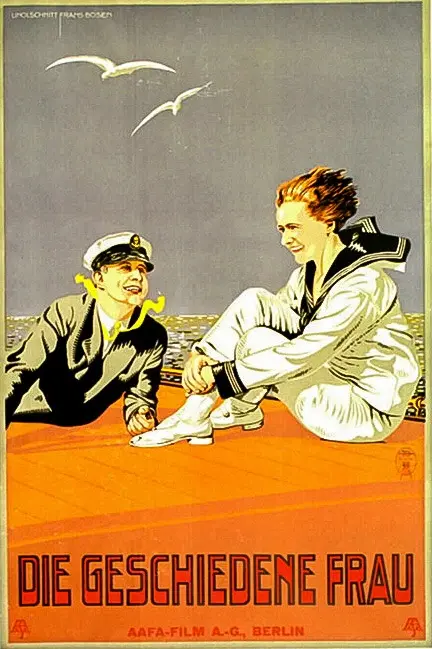
Is Die geschiedene Frau worth your time in the modern era? Short answer: yes, but only if you appreciate the theatrical absurdity of 1920s social satires. This film is a fascinating relic of Weimar cinema that trades in the currency of jealousy and coincidence, making it essential for historians and a delightful curiosity for casual fans of silent comedy.
This film is for viewers who enjoy the intersection of operetta flair and silent film physical comedy. It is not for those who require logical character motivations or high-speed modern pacing.
This film works because it utilizes the 'comedy of errors' trope with a visual panache that transcends its stage origins, particularly in the claustrophobic train sequences.
This film fails because the central conflict relies on a degree of female jealousy that feels incredibly dated and occasionally grating to a contemporary audience.
You should watch it if you want to see Mady Christians deliver a masterclass in silent-era expressive acting or if you are interested in how early cinema handled the 'scandal' of divorce.
Yes, Die geschiedene Frau is a compelling watch for anyone interested in the evolution of the romantic comedy. While its plot is driven by a series of improbable misunderstandings, the film offers a vivid window into the social anxieties of mid-1920s Germany. It manages to balance the weight of a failing marriage with the lightness of a farce, providing a unique viewing experience that feels both grounded and surreal.
The opening act of Die geschiedene Frau is a masterclass in establishing tension through silence. We see the Hardys on their honeymoon, a setting that should signify bliss, but instead feels like a pressure cooker. Walter Rilla plays the husband with a frantic energy, attempting to smother his wife with affection to mask the underlying cracks in their relationship. It is a performance that reminds me of the desperate protagonists in The Foolish Virgin, where marital expectations collide with harsh reality.
The introduction of the 'fascinating creature' on the beach is the catalyst for the film's primary conflict. Director Victor Janson uses wide shots of the shoreline to emphasize the wife's isolation. Even when she is physically close to her husband, her mind is miles away, poisoned by the suspicion that this stranger is more than just a passerby. The beach, usually a place of leisure, becomes a battlefield of glances and unspoken accusations.
The yachting trip serves as the film's first major set piece. It is here that the 'unknown woman' appears in a bathing costume, a move that would have been significantly more scandalous in 1926 than it appears today. The way the camera lingers on the reactions of the other guests—particularly the judge—adds a layer of social commentary. The film isn't just about a marriage; it’s about how society watches a marriage fail. This voyeuristic quality is something we also see explored in Trapped by the Camera.
The cinematography in Die geschiedene Frau is surprisingly dynamic for a film of its age. The use of shadows in the train sequence is particularly effective. When the latch jams, locking the husband in a sleeping compartment with the mystery woman, the lighting shifts to a higher contrast. The flickering light from the passing landscape creates a strobe effect that mirrors the husband's internal panic. It is a simple but effective technique that elevates the scene from mere slapstick to something more atmospheric.
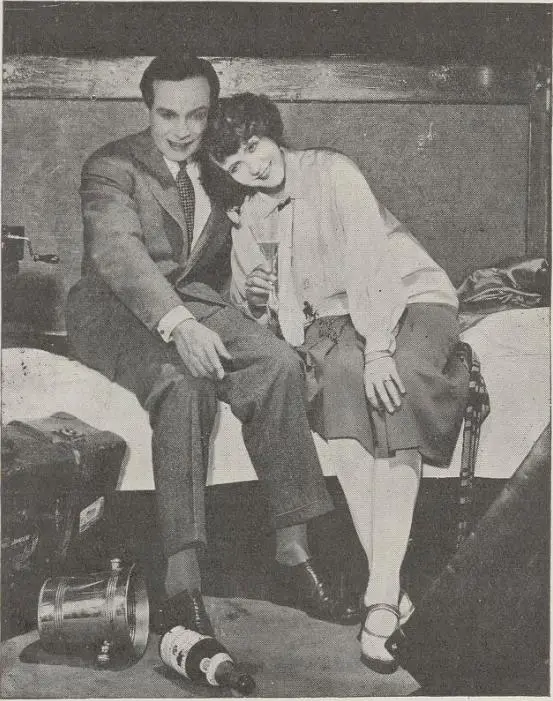
Mady Christians is the heart of the film. Her performance is nuanced, avoiding the over-the-top gesticulation that plagued many silent films of the era. In the courtroom scene, her stillness is her greatest weapon. As the decree nisi is pronounced, her face remains a mask of cold resolve, only breaking for a split second when she catches her husband's eye. It’s a moment of raw humanity that rivals the emotional depth found in The Branded Woman.
The pacing of the film is generally brisk, though it occasionally sags in the middle during the extended yacht sequences. However, the energy picks up significantly during the final act. The resolution, while predictable, is handled with a light touch that prevents it from becoming overly sentimental. The judge, played with a dry wit by Wilhelm Bendow, provides a necessary cynical counterpoint to the central couple's melodrama.
It is impossible to discuss Die geschiedene Frau without acknowledging its roots in the operetta by Leo Fall. The film retains a rhythmic quality in its editing, almost as if it is following an invisible score. This musicality gives the film a whimsical air, even when the subject matter turns to divorce and betrayal. It’s a tonal tightrope walk that Janson performs with surprising skill.
The film’s treatment of divorce is particularly interesting. In 1926, the 'decree nisi' was a serious matter, yet the film treats the courtroom as a stage for comedy. The judge is not a figure of stern authority but a man looking for his own romantic distraction. This subversion of legal gravity suggests a society that was beginning to view the institution of marriage with a more critical, perhaps even jaded, eye. This satirical edge is what keeps the film from feeling like a dusty museum piece.
Compared to other films of the time like The Dawn of a Tomorrow, which leans heavily into moralizing, Die geschiedene Frau is refreshingly amoral. It doesn't seek to punish the 'other woman' or cast the husband as a villain. Instead, it views the entire situation as a series of unfortunate events that can only be resolved through a combination of luck and social realignment. The final marriage between the judge and the mystery woman is a punchy, cynical ending that works perfectly.
Pros:
Cons:
When we look at Die geschiedene Frau today, we are seeing a society in flux. The film captures a moment where the rigid Victorian values of the past were clashing with the more liberated, chaotic energy of the 1920s. The 'mystery woman' represents this new world—she is independent, mobile, and unafraid to occupy space. Her presence alone is enough to shatter the Hardys' fragile, traditional marriage.
The film doesn't necessarily take a side in this cultural war, but it does highlight the absurdity of trying to maintain appearances in the face of chaos. The train latch incident is a perfect metaphor for this. No matter how much the characters try to control their narrative, they are ultimately at the mercy of a broken piece of hardware. It’s a brutally simple observation: life is often determined by the smallest, most insignificant failures.
In many ways, this film feels like a precursor to the screwball comedies that would dominate the 1930s. It has the same DNA—the rapid-fire conflict, the focus on the upper classes, and the eventual restoration of order through a series of improbable events. If you enjoyed the domestic chaos of A Looney Honeymoon, you will find much to admire here.
Die geschiedene Frau is a fascinating, if occasionally frustrating, piece of cinematic history. It works. But it’s flawed. The film succeeds as a visual experience and a social satire, even if its internal logic is as flimsy as a jammed train door. Mady Christians provides the emotional anchor that keeps the farce from drifting into total irrelevance. It is a film that reminds us that even in the silent era, the loudest thing in the room was often a person's unspoken suspicion. While it may not be a masterpiece of the genre, it is a spirited and stylish production that deserves a spot in the conversation about Weimar cinema. It is a charming, cynical, and ultimately entertaining look at the messiness of human relationships.
IMDb 6.2
1935
Community
Log in to comment.