DbcultAccessing Vault...
4.8/10
Senior Film Conservator
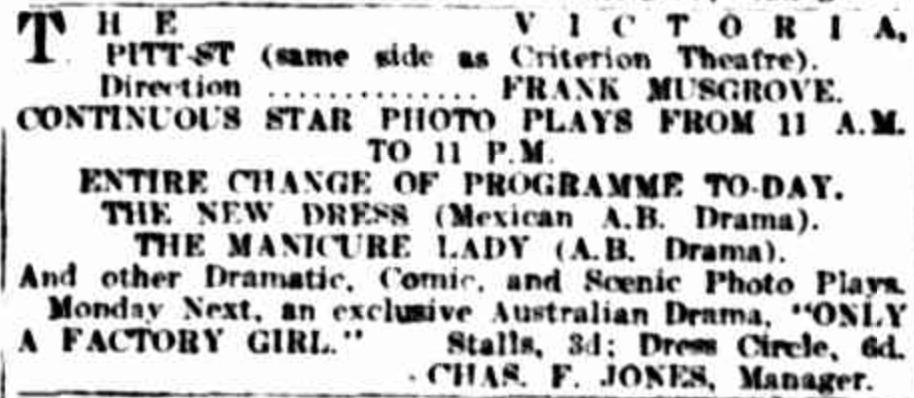
A definitive 4.8/10 rating for a film that redefined the boundaries of cult cinema. Only a Factory Girl remains a cornerstone of transgressive art.
Stepping back into the nascent days of cinema, one encounters a fascinating array of moving pictures, many of which, like the subject of our current discourse, 'Only a Factory Girl' (circa 1911), offer far more than mere historical curiosity. This particular film, a silent testament to the burgeoning narrative capabilities of the medium, transcends its humble origins to deliver a poignant, albeit understated, commentary on the human condition within the unforgiving machinery of early industrialization. It's a work that, despite the technological limitations of its era, manages to etch a vivid portrait of resilience, aspiration, and the quiet dignity found amidst relentless toil. The narrative, stripped of dialogue, relies entirely on visual storytelling, a craft that, in this instance, is executed with an evocative power often overlooked in the grander pronouncements of later cinematic epochs. It compels us to consider the lives lived on the fringes of societal progress, giving voice to the voiceless through the sheer force of its imagery and the understated performances that define its core.
The film introduces us to Eliza, a character whose existence is defined by the cacophony and grime of a textile factory. Her days are a blur of repetitive motion, a relentless dance with the looms that both provide her meager livelihood and threaten to consume her very soul. Yet, within this crucible of labor, Eliza nurtures a secret life, a vibrant inner world expressed through her nascent artistic talent. She sketches, she designs, she dreams of patterns and forms far removed from the utilitarian fabrics produced around her. This dichotomy — the stark reality of her environment versus the ethereal beauty of her imagination — forms the emotional bedrock of the film. It's a familiar theme, certainly, but one rendered with a raw authenticity that resonates deeply, reminding us that the human spirit, even when most oppressed, finds clandestine avenues for expression. The subtle interplay of light and shadow, a hallmark of early cinematography, is employed here to amplify Eliza's internal landscape, contrasting the grim industrial interiors with moments of quiet reflection, often bathed in a soft, almost hopeful glow.
The brilliance of 'Only a Factory Girl' lies in its ability to construct a compelling narrative through minimalist means. Eliza is not a character of grand pronouncements or dramatic outbursts; rather, her struggle is communicated through her weary posture, the fleeting glances she casts at her hidden sketches, and the subtle shifts in her facial expressions. The narrative arc, deceptively simple, follows her journey from silent aspiration to a tentative, almost accidental, revelation of her talent. This is not a Hollywood fairy tale, but a grounded observation of social realities. Her interaction with Thomas, the factory mechanic, is particularly noteworthy. Their connection is forged not through overt declarations, but through shared glances, a mutual understanding of their plight, and Thomas's unspoken appreciation for Eliza's creative spirit. He sees beyond the 'factory girl' label, perceiving the artist within, a recognition that offers Eliza a rare moment of affirmation. This nuanced portrayal of human connection, devoid of melodramatic excess, elevates the film beyond mere social realism into something more profound.
The portrayal of the factory environment itself is another strong point. It's depicted not just as a workplace, but as a living, breathing entity, its machinery a character in its own right – relentless, indifferent, yet vital. This focus on industrial landscapes was not uncommon in early cinema, as evidenced by films like Saída dos Operários do Arsenal da Marinha or the various segments of Westinghouse Works, which documented the daily routines of laborers. However, 'Only a Factory Girl' imbues its setting with a psychological weight, making the factory a metaphor for the societal structures that confine Eliza. The distant figure of Mr. Abernathy, the factory owner, serves as a stark reminder of the class hierarchy. His brief appearances, often framed from a slight distance, underscore his detachment from the daily grind, yet his benign, almost patriarchal, demeanor prevents him from being a one-dimensional villain. This complexity adds layers to the film’s social commentary, suggesting that the system itself, rather than any single individual, is the primary antagonist.
The visual grammar of 'Only a Factory Girl' is remarkably sophisticated for its time. The filmmakers expertly utilize the nascent language of cinema to convey emotion and narrative progression without the aid of spoken words. Close-ups, though still somewhat nascent in their application, are deployed sparingly but effectively to highlight Eliza's internal turmoil or a significant glance between characters. The framing often emphasizes the scale of the factory, dwarfing the human figures and underscoring their insignificance in the grand industrial scheme. This is a stark contrast to the more intimate, observational style seen in some contemporary actualités, or even the dramatic staging of early passion plays such as Life and Passion of Christ or S. Lubin's Passion Play, which relied on pre-existing narratives for dramatic weight. Here, the drama is organic, born from the circumstances.
The use of mise-en-scène is particularly effective in establishing the film's tone and thematic concerns. The cluttered, often dim factory interiors are rendered with a stark realism that immediately immerses the viewer in Eliza's world. Conversely, the brief moments of respite, perhaps a glimpse of a window or a quiet corner where Eliza can sketch, are framed to suggest a fleeting sense of peace and possibility. Even the costumes, simple and functional, speak volumes about the characters' socio-economic standing. These details, meticulously crafted, demonstrate an early understanding of how visual elements could contribute to a film's overall message, moving beyond mere documentation to deliberate artistic expression. It's a testament to the burgeoning artistry of filmmakers who were still, in many ways, inventing the rules as they went along, laying the groundwork for the more complex cinematic narratives that would soon follow.
'Only a Factory Girl', while firmly rooted in its historical context, possesses a timeless quality. Its exploration of class struggle, the pursuit of artistic expression against formidable odds, and the quiet resilience of the human spirit are themes that continue to resonate. It speaks to the universal desire for self-actualization, irrespective of one's social standing or economic constraints. In an era where many films focused on spectacles, travelogues, or reproductions of popular events like The Corbett-Fitzsimmons Fight or Reproduction of the Corbett and Fitzsimmons Fight, this film chose a quieter, more introspective path, highlighting the dramas unfolding in everyday lives. This choice, bold for its time, underscores its enduring significance as an early work of social realism.
The film's impact, though perhaps not immediately recognized as revolutionary in its time, is undeniable in hindsight. It demonstrates that compelling narratives do not require elaborate sets or a cast of thousands; sometimes, the most potent stories are found in the subtle gestures and unfulfilled dreams of ordinary individuals. It serves as a reminder of the power of visual storytelling to transcend barriers of language and time, communicating profound truths with a directness that can still move modern audiences. The simple yet effective performances, particularly from the actress portraying Eliza, convey a depth of character that belies the lack of spoken dialogue, allowing the audience to project their own understanding and empathy onto her struggle. This engagement is a testament to the film's fundamental humanism, a quality that elevates it beyond a mere historical artifact into a genuinely affecting piece of cinematic art. It stands as a powerful precursor to later cinematic movements that would more explicitly address social injustice and the lives of the working class, proving that even in its infancy, cinema had the capacity for profound social commentary.
Consider its place among films of its era. While we have numerous examples of early 'actualities' showing military parades like 69th Regiment Passing in Review or religious processions like A Procissão da Semana Santa, 'Only a Factory Girl' delves into the interiority of a character, giving agency and aspiration to a figure often relegated to the background of society. This shift from external observation to internal experience marks a crucial step in the evolution of cinematic narrative. It’s a film that, through its quiet determination, challenges the viewer to look beyond the surface, to recognize the rich inner lives of those often dismissed as 'only' a factory girl, or 'only' a laborer. This empathetic gaze is what truly distinguishes it, making it a valuable piece not just of film history, but of social history as well. The film, in its modest ambition, manages to capture a universal truth about the human spirit's indomitable drive to create and to find meaning, even when circumstances conspire to deny it. It's a subtle masterpiece that continues to resonate with its timeless message of hope and the quiet power of individual dreams.
The potential for a character like Eliza to transcend her circumstances, even if only in a small, personal way, offers a profound message. It’s a narrative that avoids the saccharine sentimentality of some later melodramas, opting instead for a more grounded, realistic portrayal of struggle and tentative triumph. The film’s quiet ending, rather than a grand resolution, suggests an ongoing journey, a continuous negotiation between aspiration and reality. This open-endedness imbues the film with a lasting power, inviting viewers to ponder Eliza's future and, by extension, the futures of countless individuals striving for something more than their assigned station. It is a work that, through its careful construction and heartfelt execution, stands as a testament to the early cinema's capacity for both social commentary and profound human empathy, solidifying its place as a significant, if often overlooked, contribution to the cinematic canon.
IMDb 6.4
1927
Community
Log in to comment.