DbcultAccessing Vault...
4.5/10
Senior Film Conservator
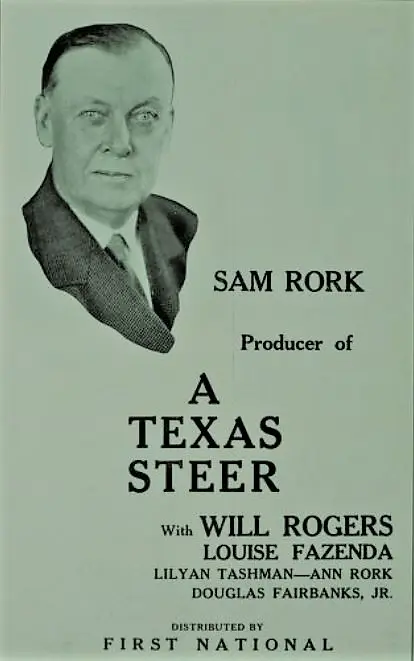
A definitive 4.5/10 rating for a film that redefined the boundaries of cult cinema. A Texas Steer remains a cornerstone of transgressive art.
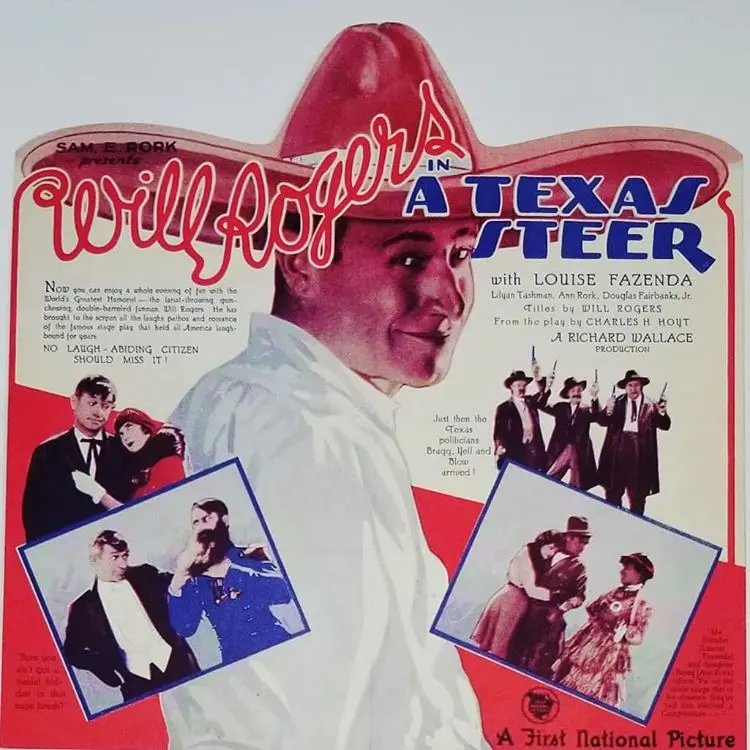
Is "A Texas Steer" worth watching today? Short answer: yes, but with significant caveats. This 1927 silent comedy, a vehicle for the legendary Will Rogers and featuring a surprisingly robust supporting cast, offers a fascinating, if sometimes challenging, glimpse into early Hollywood's attempt at political satire. It's a film that demands a certain patience from modern viewers, yet rewards those willing to engage with its unique blend of folksy humor and pointed critique.
This film is undeniably for cinephiles, historians of American comedy, and those with a genuine interest in the silent era's narrative techniques and performance styles. If you appreciate the nuances of physical acting, the charm of intertitles, and the historical context of early political commentary, you'll find something to enjoy here. However, it is decidedly not for audiences seeking fast-paced action, complex character arcs, or contemporary comedic sensibilities. If the idea of a 90-minute silent film feels like a chore, this won't be the one to convert you.
This film works because: Its satirical bite, though dated in execution, remains surprisingly relevant in its critique of political ambition and the absurdities of Washington. The performances, especially from the character actors, are often delightful, showcasing the expressive power of silent film acting.
This film fails because: Its pacing can feel sluggish by modern standards, and some of its comedic beats rely heavily on period-specific references or broad physical gags that don't always land effectively today. The narrative structure, while clear, lacks the intricate layering contemporary audiences expect.
You should watch it if: You are a student of film history, a fan of Will Rogers, or simply curious about how political humor was conveyed in the silent era. It offers a unique window into a bygone cinematic landscape.
"A Texas Steer" centers on Maverick Brander, a man whose name belies his nature. Far from the rebellious individualist, Brander is introduced as a man of considerable wealth, yet utterly indifferent to its trappings. His world is one of quiet ranch life, a stark contrast to the aspirational machinations of his wife and their vivacious, romantically ambitious daughter, Bossy. The narrative thrust begins when Brander's wife, a woman of formidable social ambition, leverages her connections with political kingmakers to propel her unassuming husband into the halls of Congress.
This sudden transplantation from the dusty plains to the gilded cages of Washington D.C. is where the film finds its satirical footing. Brander, a man of simple truths and direct action, is immediately out of his depth. The political arena, with its backroom deals, double-speak, and constant maneuvering, becomes a bewildering labyrinth for the straight-shooting cowboy. The film meticulously details his clumsy navigation through this alien environment, culminating in a classic political snare: blackmail. Opponents of a bill Brander supports weaponize his naiveté, threatening to expose a fabricated scandal to derail his legislative efforts.
The story isn't just about a fish out of water; it’s a commentary on the corrosive nature of power and the innocence often exploited by it. Brander's journey is less a hero's quest and more a satirical descent into the absurdities of the political machine, where personal integrity is a vulnerability, not a virtue.
The film, co-written by Will Rogers himself, clearly aims its comedic arrows at the hypocrisy and superficiality of the nation's capital. It’s a narrative that, despite its silent-era trappings, speaks to a timeless critique of political life. The focus remains squarely on Brander's predicament, his family's role in his political ascension, and the colorful, often conniving, characters that populate his new world, all without divulging the ultimate resolution of his congressional woes.
The heart of "A Texas Steer" beats with a satirical rhythm, a quality often overlooked in the broader history of silent cinema. While many films of the era, like The Red Circle (1922), focused on melodrama or adventure, "A Texas Steer" boldly wades into the murky waters of political commentary. Will Rogers, renowned for his folksy wisdom and sharp wit, was a driving force behind this project, lending his distinctive voice to the screenplay, even in a silent medium. His influence is palpable in the film's gentle, yet pointed, lampooning of Washington D.C.'s political elite.
The film's satire isn't the biting, cynical kind we often see today. Instead, it’s a more good-natured, observational humor that highlights the inherent absurdity of the political process through the eyes of an outsider. Maverick Brander, the titular 'Texas Steer,' is the audience's surrogate, his bewilderment mirroring our own as he encounters the convoluted rules and hidden agendas of Congress. The humor often derives from the clash between Brander's straightforward, rancher's logic and the serpentine machinations of career politicians.
One particularly effective satirical element is the portrayal of the political bosses. They are not overtly villainous, but rather comically self-serving, their every action driven by personal gain or party loyalty rather than genuine public service. This depiction, while exaggerated for comedic effect, resonates even today. The film suggests that the more things change in politics, the more they stay the same.
The film's exploration of social climbing, particularly through Brander's wife, also adds another layer to its satirical tapestry. It critiques the superficiality of high society and the lengths to which individuals will go to attain status, often at the expense of authenticity. This social commentary, woven into the political narrative, gives the film a broader appeal beyond mere governmental critique.
However, it’s crucial to acknowledge that the film’s satirical intent is sometimes hampered by the conventions of silent film. The reliance on intertitles to convey dialogue and internal thoughts can slow down the comedic timing, making some jokes feel less immediate than they would in a sound film. Yet, for those attuned to the rhythm of silent cinema, there's a charming cleverness to how these gags are set up and delivered.
While not as overtly revolutionary as some contemporary works, "A Texas Steer" stands as an important artifact of early political satire. It demonstrates that even in its nascent stages, cinema was capable of holding a mirror—albeit a slightly distorted, comedic one—up to society and its power structures. Its gentle prodding of Washington's foibles feels both of its time and, in its essence, remarkably timeless.
The performances in "A Texas Steer" are a testament to the unique demands and expressive power of silent film acting. Without spoken dialogue, actors relied heavily on exaggerated facial expressions, precise physical comedy, and grand gestures to convey emotion, intent, and humor. This film is a masterclass in that art form, showcasing a cast of silent-era stalwarts who understood the medium intimately.
Louise Fazenda, as Brander's social-climbing wife, is a standout. Her performance is a whirlwind of ambition and comedic exasperation. Fazenda, known for her comedic roles, perfectly embodies the character's relentless drive, her eyes often darting about, calculating her next social ascent. Her physical reactions to Brander's rustic simplicity are priceless, often involving dramatic sighs, eye-rolls, and frantic hand gestures that speak volumes without a single word. She is the engine of the plot, and Fazenda plays her with an infectious, if slightly over-the-top, energy.
Bud Jamison, in the role of Maverick Brander, anchors the film with his stoic, almost bewildered presence. Jamison, a veteran character actor often seen as a foil in comedies, brilliantly portrays the laconic cowboy. His strength lies in his understated reactions; a slight furrow of the brow, a slow, deliberate nod, or a wide-eyed stare conveying his utter confusion in the face of Washington's complexities. He’s the straight man to the surrounding madness, and his quiet dignity provides a necessary contrast to the more flamboyant performances around him.
Ann Rork, as the 'man-crazy' daughter Bossy, brings a youthful exuberance to the screen. Her character is a delightful whirlwind of romantic pursuits and youthful indiscretion. Rork’s performance is full of vivacious energy, her flirty glances and playful antics adding a layer of lightheartedness to the political satire. She is a stark reminder of the social mores and freedoms of the Roaring Twenties.
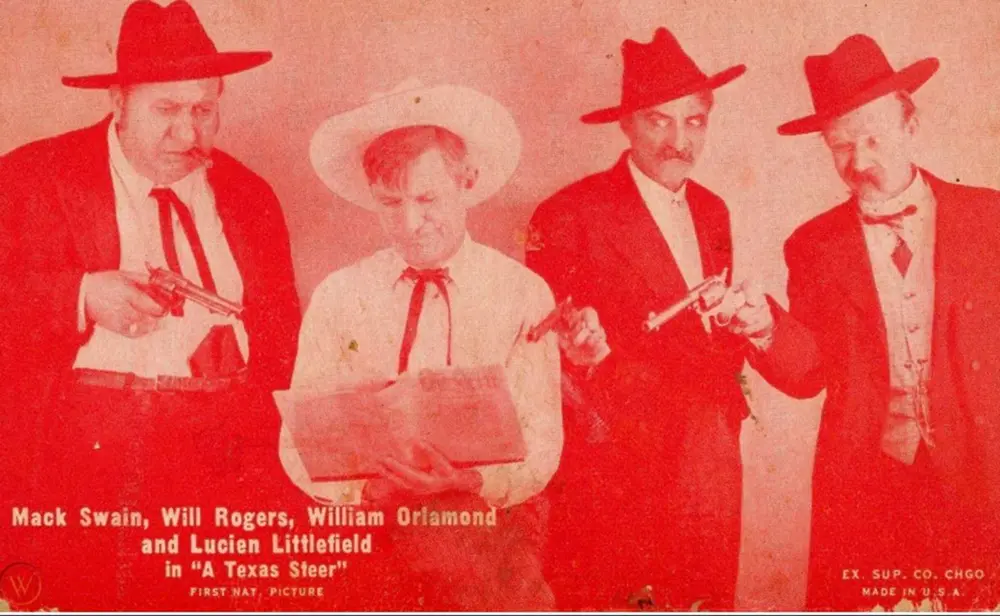
Even in smaller roles, the cast shines. Mack Swain, as one of the political bosses, delivers a wonderfully greasy performance, his sneering expressions and conspiratorial whispers (conveyed through intertitles, of course) painting a clear picture of his character's duplicity. It’s these specific, memorable choices that elevate the film beyond a simple comedic premise.
A quick mention must go to Douglas Fairbanks Jr., who has a minor role. While not central to the plot, his presence adds a touch of star power and a glimpse of a future Hollywood icon in his early career. It's a fun "spot the star" moment for film history buffs.
Overall, the ensemble cast, under Lloyd Bacon's direction, creates a vibrant tapestry of characters. Their ability to communicate complex emotions and comedic timing without dialogue is a testament to their craft. They breathe life into the satirical world of "A Texas Steer," making it surprisingly engaging despite its silent nature. The acting is undeniably broad, but it’s precisely that theatricality that makes it work within its historical context. It’s a joy to observe how much can be said without uttering a single word.
Lloyd Bacon, a prolific director who would later transition successfully into the sound era, helms "A Texas Steer" with a steady, if not groundbreaking, hand. His direction is largely functional, serving the comedic and satirical elements of the script rather than pushing any radical cinematic boundaries. This approach is typical of many studio productions in the late silent period, where storytelling clarity and character performance took precedence over avant-garde techniques.
The pacing of "A Texas Steer" is perhaps its most challenging aspect for a modern audience. At approximately 90 minutes, it feels longer due to the inherent rhythm of silent film. The reliance on intertitles, while crucial for plot and dialogue, inevitably slows down the narrative flow. Each title card requires the viewer to pause, read, and then re-engage with the visual scene. This stop-start rhythm can be jarring if one is accustomed to the continuous flow of contemporary cinema.
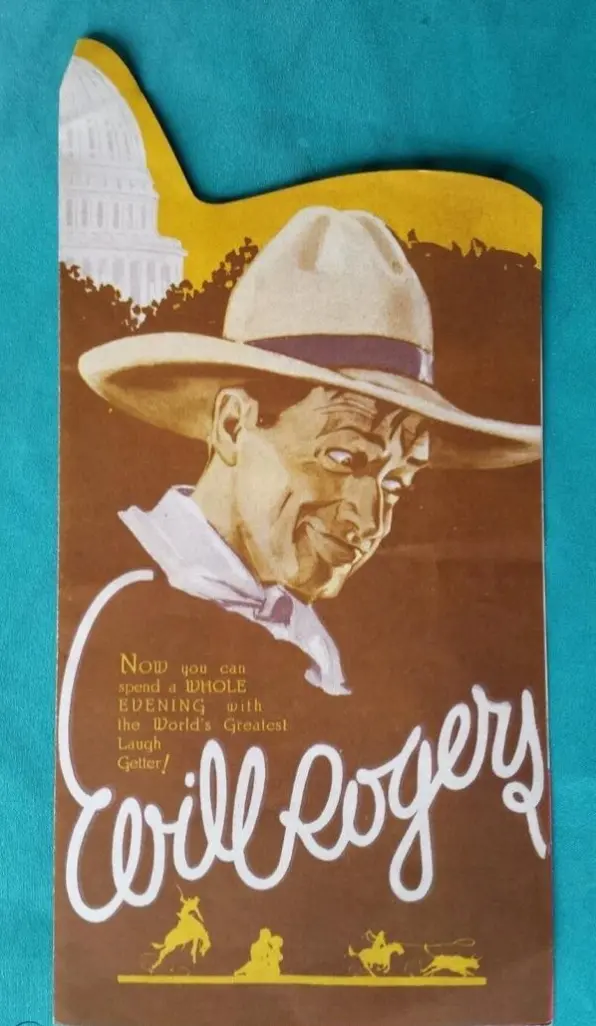
However, within the context of 1927, the pacing would have been considered quite standard. Audiences of the era were accustomed to this mode of storytelling. Bacon manages to keep the narrative moving forward, despite these inherent limitations, by employing a relatively straightforward editing style and clear scene compositions. He allows the actors ample space to perform their physical comedy and exaggerated expressions, understanding that these were the primary drivers of audience engagement.
One might argue that Bacon’s direction, while not flashy, is effective in its clarity. He ensures that the comedic situations are well-framed and that the audience always understands the characters' motivations, even if those motivations are comically shallow. For instance, the scenes depicting Brander's bewilderment in Washington are often shot with him as a small figure amidst grand, imposing sets, visually emphasizing his fish-out-of-water status.
There are moments where the film truly finds its stride, particularly during sequences of physical comedy or when the satirical elements are at their strongest. These scenes are often tighter, with quicker cuts and more dynamic blocking. Yet, these moments are interspersed with longer takes that allow for character reactions to play out, a common technique in silent film to maximize the impact of a performance.
Compared to more experimental films of the era, such as Abel Gance's Autour de la roue (1923), Bacon's work here is decidedly conventional. He prioritizes accessibility and broad appeal over artistic innovation. This is not a criticism, but rather an observation of the film's commercial intent. It was designed to entertain a wide audience with its humor and message, and in that regard, Bacon's direction serves its purpose admirably, guiding the viewer through Brander's misadventures with a competent, if unadventurous, hand.
The visual aesthetic of "A Texas Steer" is a fascinating time capsule, offering a window into the production values and stylistic conventions of late 1920s Hollywood. While silent films are often remembered for their black-and-white imagery and lack of synchronized sound, their visual storytelling relied heavily on meticulously crafted sets, costumes, and the expressive power of cinematography.
The cinematography, likely handled by a studio workhorse of the era, is straightforward and functional. There aren't many dazzling camera movements or innovative angles, but rather a focus on clear, well-lit compositions that allow the actors and their physical comedy to take center stage. Close-ups are used effectively to capture the exaggerated facial expressions that were so vital to silent acting, particularly for characters like Fazenda's ambitious wife or Jamison's bewildered Brander. The lighting is generally flat, ensuring visibility across the frame, though some scenes might employ more dramatic contrasts to highlight tension or character mood.
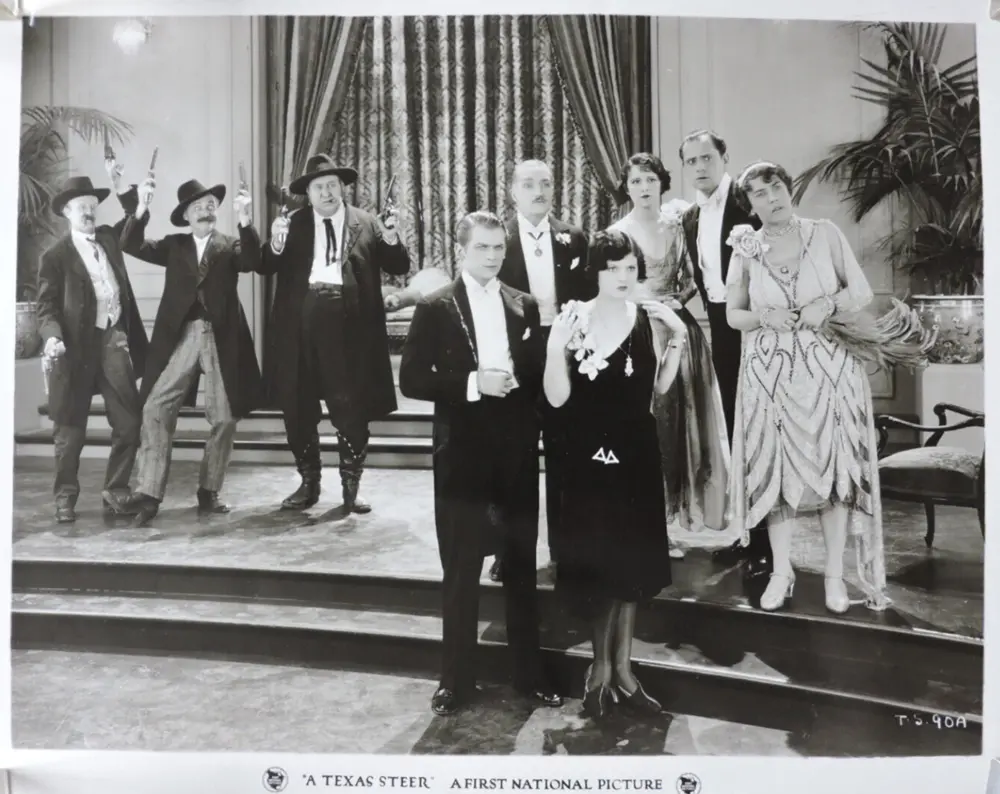
The production design, however, is where the film truly shines in its depiction of contrasting worlds. The early scenes set on Brander's ranch evoke a sense of rugged simplicity. These sets, while perhaps not sprawling, effectively convey the rustic charm of a wealthy Texan estate, grounding Brander's character in his humble origins. The costumes here are practical, reflecting cowboy attire and modest domestic wear.
The real visual transformation occurs when the narrative shifts to Washington D.C. Here, the production design steps up, creating grand, imposing sets for congressional chambers, opulent drawing-rooms, and bustling political offices. These sets are designed to convey the gravitas and, implicitly, the artifice of the political world. The contrast between the sparse, authentic ranch and the ornate, somewhat theatrical Washington sets is a visual metaphor for Brander's journey and the film's central conflict.
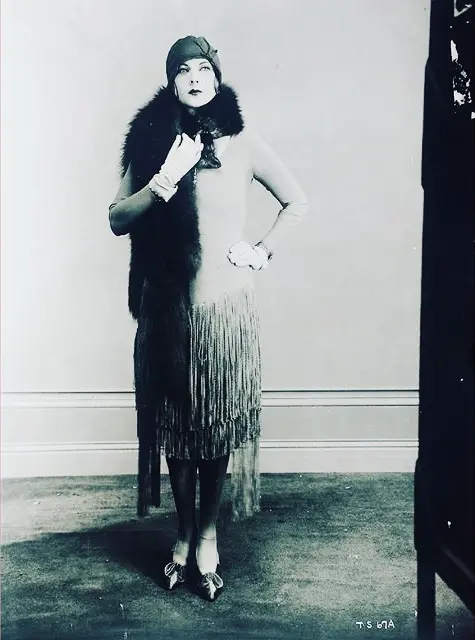
Costumes play a crucial role in defining the characters and their social standing. Brander's transition from practical cowboy gear to ill-fitting, formal suits in Washington is a recurring visual gag, emphasizing his discomfort and outsider status. His wife and daughter, on the other hand, are impeccably dressed in the height of 1920s fashion, their elaborate gowns and accessories signaling their aspiration for social prominence. These sartorial choices are not merely decorative; they are integral to character development and comedic effect.
While not a visually groundbreaking film like The Sleep Walker (1922), which might have employed more expressionistic techniques, "A Texas Steer" nonetheless provides a rich visual tapestry of its time. It captures the architectural grandeur that Hollywood studios could recreate and the fashion sensibilities of the Roaring Twenties, all contributing to a believable and often humorous backdrop for its satirical narrative. It's a reminder that even without color or sound, silent cinema could build compelling and immersive worlds through the careful crafting of its visual elements.
Yes, "A Texas Steer" holds a unique charm and value for specific audiences today. It's a significant historical document of early political satire in American cinema, offering insights into the comedic sensibilities of the 1920s. For those interested in Will Rogers' screen persona or the evolution of the comedy genre, it's an essential watch.
The film's strengths lie in its surprisingly relevant commentary on political maneuvering and social ambition. While the silent format and slower pacing require some adjustment, the expressive performances and clear narrative shine through. It’s a film that provides a valuable historical lens, showing how timeless themes were tackled in a bygone era of filmmaking.
It’s not for everyone, certainly not for casual viewers seeking modern entertainment. But for film enthusiasts and historians, it offers genuine rewards and a unique perspective on American culture and politics a century ago. It works. But it’s flawed.
Cons:
"A Texas Steer" is more than just a historical curio; it's a surprisingly sharp piece of political satire that, despite its silent-era trappings, still manages to poke fun at the absurdities of power and ambition. While its pacing and some comedic beats may feel dated, the expressive performances and the clarity of its message shine through. It's a film that demands an audience willing to meet it on its own terms, to appreciate the craftsmanship of a bygone era. For those who do, it offers a rewarding, often amusing, glimpse into early American cinema and its enduring capacity for social commentary. It’s certainly not a masterpiece, but it’s a valuable and often delightful watch for the right viewer. Give it a chance, and you might find yourself charmed by this cowboy's misadventures in Washington.
IMDb 6
1923
Community
Log in to comment.