DbcultAccessing Vault...
Cult Review
Senior Film Conservator
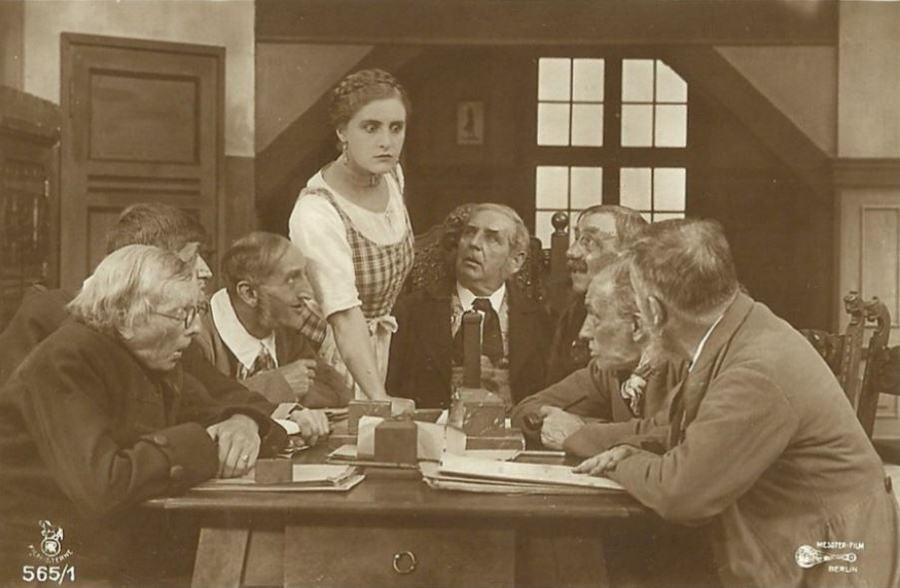
There is a moment—roughly twelve minutes in, if you’re counting the flicker of the archival tint—when Joseph Uhl’s Odysseus, half-buried in phosphorescent foam, cranes his neck toward a sky that seems stitched from torn cigarette paper. The image is both resurrection and surrender: the war-weary king reborn while still shackled to whatever private Flanders hell he dragged back from the trenches of 1918. In that tremulous splice, Robert Wiene’s Die Heimkehr des Odysseus announces it has no interest in postcard antiquity. Instead, it lunges at the jugular of myth, thirsty for modern iron.
Wiene, forever tethered to the twisted spine of Das Cabinet des Dr. Caligari, here trades jagged asylum rooftops for the labyrinthine corridors of a Mycenaean palace that feels suspiciously like a military hospital. Columns warp like bayonets under heat; shadows are not merely cast but extruded, as though darkness were a viscous alloy poured from above. The camera, hungry, prowls through doorway after doorway until perspective itself buckles. You half-expect Cesare the somnambulist to shuffle past clutching a bronze shield.
Joseph Uhl’s face is the film’s first battlefield: gaunt cheeks, eyes set so deep they appear to be spying from inside the skull. Every blink feels like a tectonic shift. When he murmurs inter-titles of longing, the letters quiver like frost-bitten moths. Opposite him, Henny Porten’s Penelope is no patient hearth-keeper; she is a woman engineering her own siege, weaving shrouds for men who may never die. Porten, one of Germany’s earliest star-producers, grants the queen a proto-feminist steel—her loom becomes a guillotine in slow motion.
Bruno Decarli’s Telemachus carries the soft bones of someone raised on absence; his Oedipal glances at his mother flicker between hunger and reprimand. In supporting corridors, Rudolf Biebrach’s doddering Laertes wheezes like a punctured concertina, while Arthur Bergen’s Antinous exudes the oleaginous charm of a black-marketeer. Marie Fuchs’ Circe arrives only via a stroboscopic montage—eyes superimposed over boar-skulled apparitions—yet her presence lingers like ether in a surgical tent.

The restoration currently touring cinematheques—scanned at 4K from a nitrate print discovered in a Slovenian monastery—reveals a chromatic symphony unknown to prior generations. Candlelight pools in tallow-yellows that flirt with the acidic yellow (#EAB308) of bruised pears. Sea sequences oscillate between arsenical greens and the bruised #0E7490 of trench-stained uniforms. Interior scenes favor a sooty chiaroscuro, occasionally gashed by the dark-orange (#C2410C) of smelted bronze, reminding viewers that every household object doubles as potential weaponry.
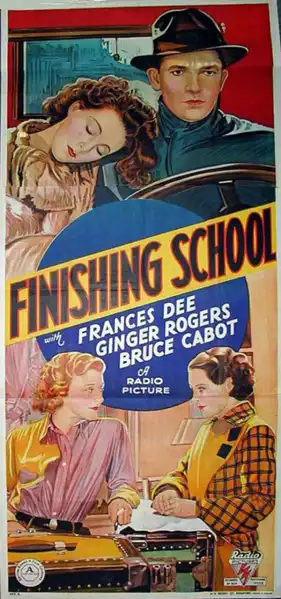
Compare this chromatic nerve to Amarilly of Clothes-Line Alley, where Mary Pickford’s soot-faced urchin romps through a sanitized slum of pastels. Wiene refuses such comfort: his hues are ulcers that refuse to heal.
Act III’s massacre of the suitors is a master-class in rhythmic violence. Rather than linger on swords, Wiene fragments the skirmish into shards: a hand clutching a goblet, a throat swallowing wine that may be blood, a dog barking at the moon as if denouncing history itself. Inter-titles intrude like shrapnel—single words (“HOME”) that throb then vanish. The tempo anticipates Eisenstein’s later theories, yet Wiene’s cadence is more fever dream than agit-prop.
Even more radical is the film’s refusal of a triumphant coda. When Odysseus and Penelope finally share a bed, the camera retreats to a hallway where dust motes swirl in a shaft of moonlight. Intimacy is withheld; spectators are exiled to the vestibule of myth. The effect predates the icy detachments of The Soul Master by a full decade.
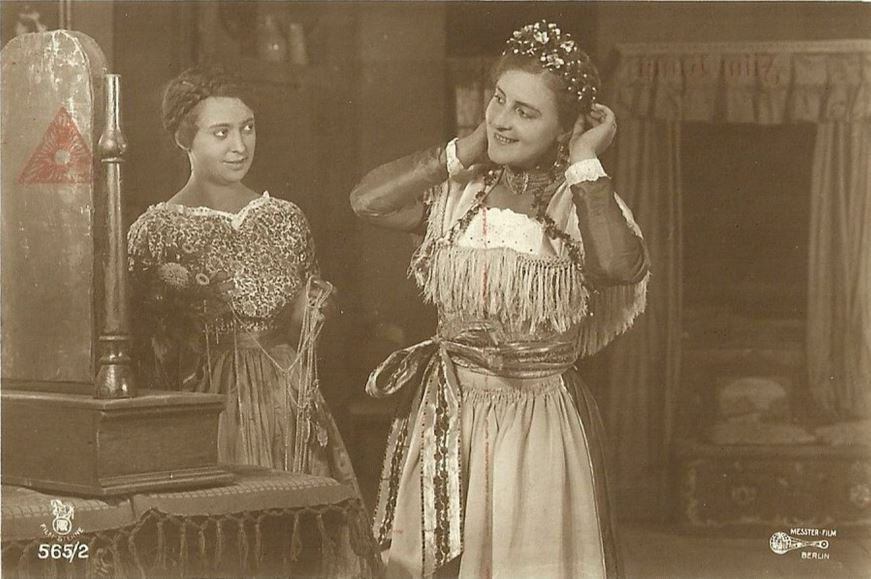
Though mute, the picture vibrates with sonic ghosts. Archival evidence suggests that original screenings in Berlin featured a live score of Wagnerian brass mixed with gramophone scratches of marching songs. Today’s curators often pair it with a minimalist trio—piano, viola, hand-cranked wind machine—creating a liminal soundtrack where every creak hints at distant cannonade. One thinks of the shell-shocked veterans who, in 1918, sat in the dark rows and recognized their own trench nightmares flickering on Athena’s shield.
Where The Wolf externalizes lycanthropy as sexual panic, and Fantômas: The False Magistrate celebrates criminal anarchy, Wiene’s Odyssey mines trauma as the ultimate shapeshifter. His protagonist wears disguises not for thrills but for survival; identity itself is a raft lashed from broken planks. The approach feels closer to My Four Years in Germany’s gritty reportage than to the Orientalist fantasy of Aladdin and the Wonderful Lamp.
Meanwhile, Penelope’s tapestry parallels the industrial montage of The Angel Factory: both heroines weave futures strand by strand, aware that any dropped thread might unravel their world.
Feminist readings bloom like poppies in No-Man’s-Land. Penelope’s loom is a bureaucratic machine; each suitor’s name is logged, audited, strangled. Her refusal to remarry is less loyalty than fiscal rebellion—why abdicate a kingdom already bled white by male appetites? Circe’s brief apparition offers a counter-fantasy of erotic sovereignty: she transposes predators into livestock, literalizing the power to revoke masculine humanity.
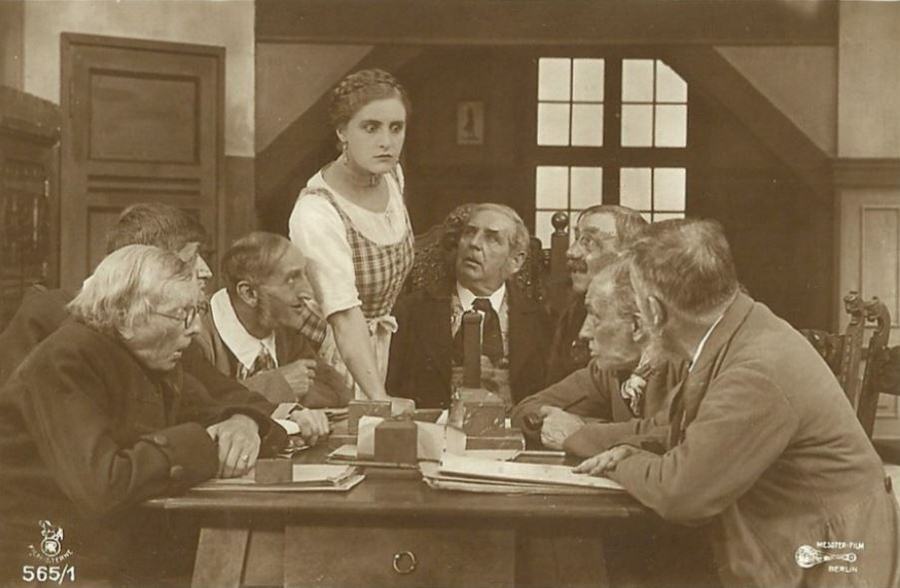
Contrast this with Suzanne, where the eponymous heroine is corseted by bourgeois matrimony. Wiene’s women weaponize domestic tools; their revolt is architectural, not decorative.
Post-war German cinema often smuggled colonial anxiety into ostensibly distant settings. Note the Cyclops episode: the one-eyed giant rules a quarry where faceless laborers extract obsidian for export. Shots of enslaved Cicones anticipate the plantation tableaux of Under Southern Skies. Imperial failure—Greece’s failed homecoming, Germany’s forfeited colonies—haunts the negative space of every frame.
Survival here is not a triumph but a scar. Consider the dog Argos: introduced in a flash-frame as a skeletal pup, reappears decades later as a mangled creature who recognizes his master a breath before expiring. The edit is so abrupt that audiences often gasp—not at the dog’s death, but at Wiene’s refusal to grant the moment sentiment. Empathy is rationed like bread in 1918.
Such ruthlessness differentiates the film from Sunshine and Gold, where even poverty is bathed in amber warmth. Wiene insists that myth, like history, has the palate of a corpse.

The scan exposes nitrate shrinkage like crow’s-feet around the eyes of a veteran. Scratches remain, but they read like runes—evidence of projector claws across a century. The tinting follows lab notes discovered in the Ufa archives: lavender for dawn, tobacco for interiors, blood-orange for violence. Purists may carp about digital waxiness, yet grain alchemy still shimmers whenever torchlight kisses bronze. The optional German inter-titles with English subtitles are crisp, though one wishes translators had retained the archaic spellings (“Odysseus” vs. “Ulysses”) to emphasize the film’s split identity.
Expressionism usually evokes angular sets and greasepaint ghouls. Wiene repurposes the style into a psychiatric questionnaire. Hallways lean at angles that induce vertigo not for spectacle, but to replicate trench psychosis. The approach prefigures the clinical chill of Kiss of Death and the fragmented subjectivity of later war cinema.
Scholars tracing PTSD iconography in film often cite Vietnam-era dramas, yet the tremor is already present here: Odysseus’ thousand-yard stare, Penelope’s compulsive weaving, Telemachus’ stammering rage. Wiene delivers a diagnostic manual disguised as antiquity.
The closing shot—an empty throne under a dust-mote moon—lingers for a full seven seconds, an eternity in 1918 syntax. It refuses catharsis. Viewers exit into the lobby feeling not that a story has ended, but that an open wound has been dressed in cellophane. The film survives, tattered yet regal, a lesson that every homecoming is merely the next deployment in disguise.
Score: 9.2/10—A ravaged jewel whose cracks refract more truth than most flawless blockbusters ever dare.
IMDb —
1919
Community
Log in to comment.