DbcultAccessing Vault...
6.3/10
Senior Film Conservator
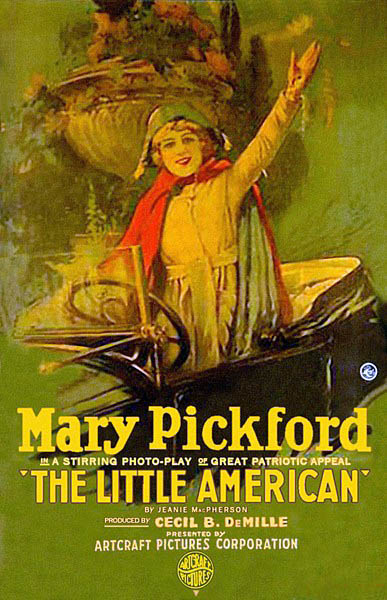
A definitive 6.3/10 rating for a film that redefined the boundaries of cult cinema. The Little American remains a cornerstone of transgressive art.
Stepping back into the cinematic landscape of 1917, one encounters a fascinating intersection of burgeoning artistry and global upheaval. It was a time when the world was irrevocably reshaped by the Great War, and the nascent film industry, still finding its voice, grappled with how to reflect, interpret, and sometimes even influence public sentiment. In this tumultuous era, Cecil B. DeMille, a director already known for his ambitious scope, teamed up with the incandescent Mary Pickford, America's Sweetheart, to deliver "The Little American." Far from a mere romantic trifle, this film stands as a potent, often harrowing, document of its time, showcasing Pickford's remarkable range and DeMille's early mastery of spectacle interwoven with intimate drama.
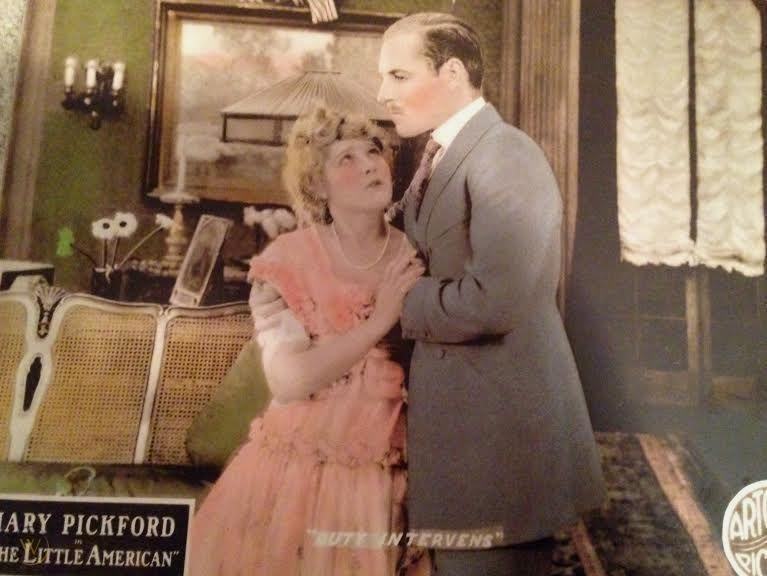
The narrative unfurls with a deceptive calm, introducing us to Angela More (Pickford), a quintessential American ingenue, ensconced in the comforts of wealth and privilege. Her world, initially painted in hues of innocence and burgeoning romance, is complicated by two suitors: the earnest German-American Karl von Austreim (played by Jack Holt) and the dashing French officer Jules Ayres (Norman Kerry). This romantic triangle, while perhaps a conventional trope, serves a crucial purpose in establishing the personal stakes that will soon be engulfed by the impersonal machinery of war. Pickford, with her signature curls and expressive eyes, imbues Angela with a vulnerability that makes her subsequent transformation all the more impactful. Her early scenes are reminiscent of her roles in lighter fare, perhaps even echoing the charming, if less dramatically weighty, performances seen in films like The Chorus Lady, where her effervescence was the primary draw. Here, however, that very effervescence is destined for a brutal collision with reality.
The film pivots dramatically with America's entry into World War I. Angela, driven by a desire to tend to her ailing aunt in France, embarks on a transatlantic voyage aboard the SS 'Lusitania' (though the film carefully avoids direct naming for legal reasons, the implication is clear). This journey, meant to be a simple act of familial duty, transforms into a terrifying ordeal. DeMille masterfully orchestrates the sequence of the ship's torpedoing by a German U-boat. The sudden, violent rupture of peace, the chaos, the desperate struggle for survival amidst the churning waters – these moments are depicted with a visceral intensity that must have been profoundly shocking for audiences of the era. Pickford's portrayal of sheer terror and disorientation is utterly convincing, a testament to her capabilities beyond the 'sweetheart' persona. The scene, while lacking the explicit gore of later war films, conveys the horror through the sheer scale of the disaster and the palpable fear etched on the faces of the survivors.
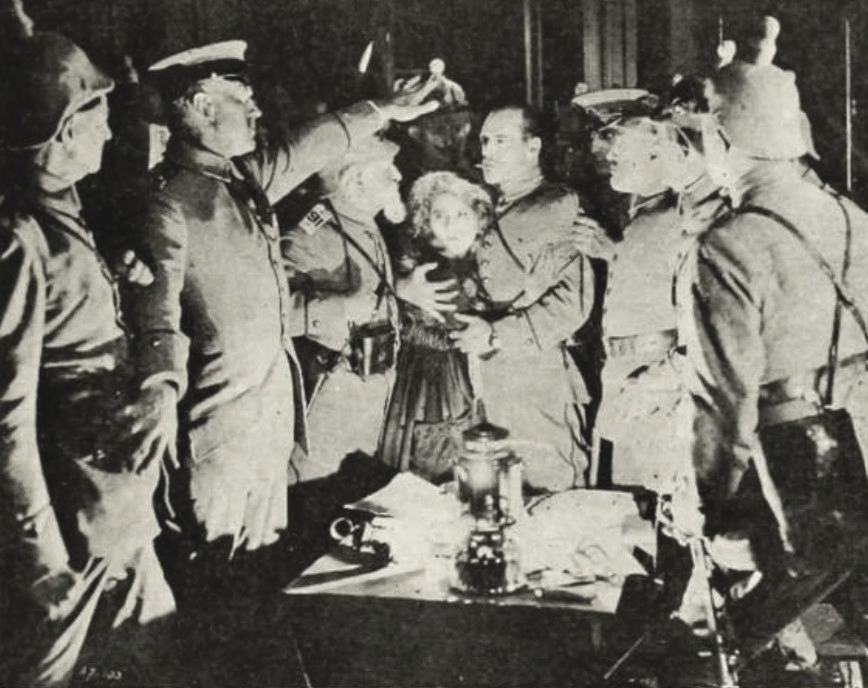
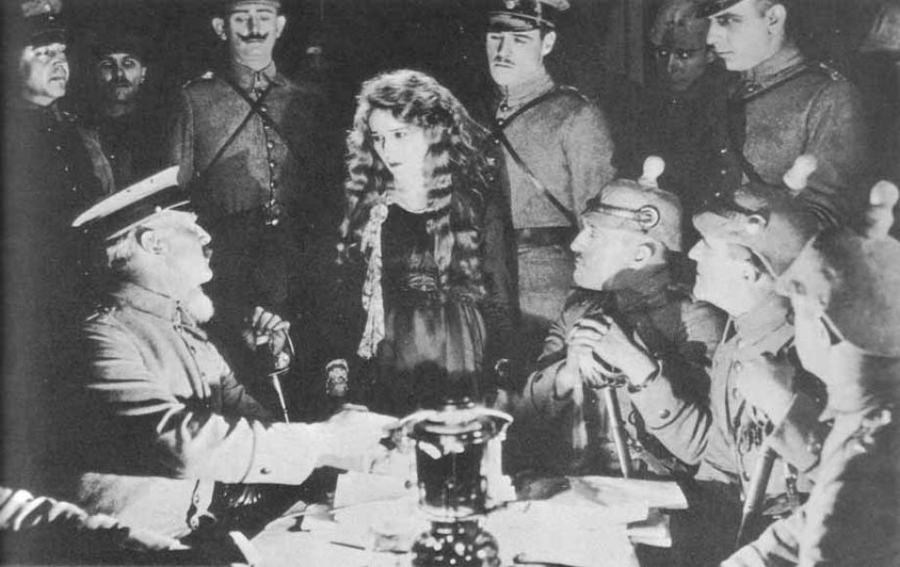
Miraculously, Angela survives and makes her way to her ancestral chateau in France, only to find it under German occupation. This is where "The Little American" truly sheds its initial romantic trappings and delves into the unvarnished realities of war. The chateau, once a symbol of heritage and comfort, becomes a microcosm of occupied France – a place where German officers, led by the ruthless Major von Rodeck (Walter Long), exert their authority with chilling efficiency. Angela witnesses firsthand the systematic brutality: the arbitrary executions, the requisitioning of resources, the casual cruelty inflicted upon the local populace. These scenes are designed to elicit a strong emotional response, solidifying the Germans as the unambiguous antagonists and positioning Angela as an innocent witness to their transgressions. The film doesn't shy away from depicting the psychological toll of occupation, hinting at the degradation and fear that permeate daily life.
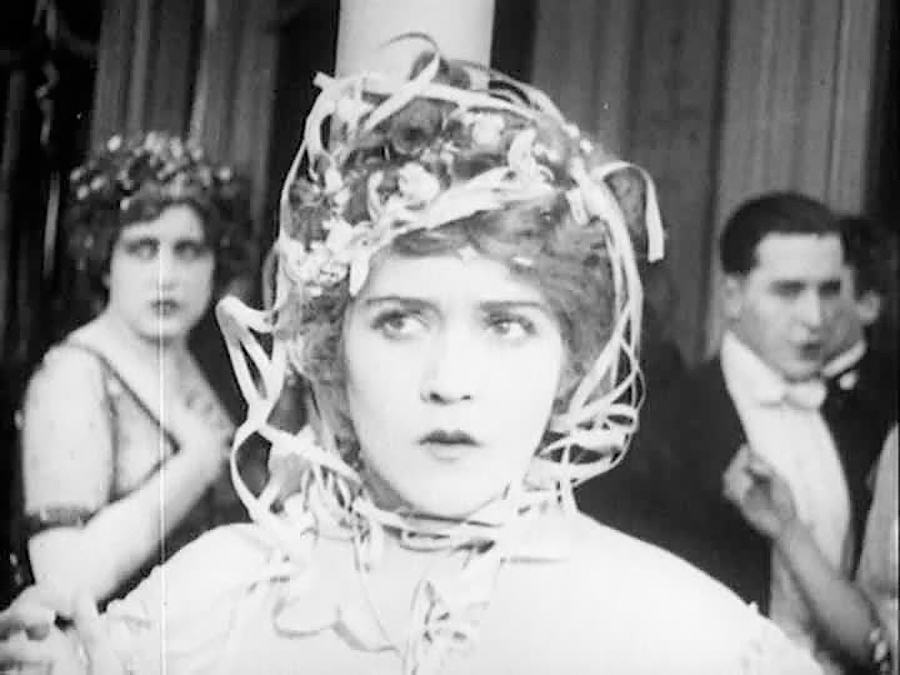
Pickford's performance during this segment is nothing short of transformative. The wide-eyed ingenue gives way to a woman hardened by suffering, imbued with a quiet but fierce resolve. Her character's journey from naive American tourist to defiant patriot is compelling, providing the emotional core of the film. She moves beyond mere reaction, actively seeking ways to resist, to aid the Allied cause, even if it means risking her own life. This shift is crucial for the film's message, transforming her from a passive victim into an active participant in the struggle. Her defiance, often expressed through subtle gestures and piercing gazes, speaks volumes in the silent medium. One can draw parallels to the steadfast endurance seen in characters grappling with immense societal pressures in films like The Second Mrs. Tanqueray, although Pickford's struggle here is externalized through the brutal realities of wartime rather than internal societal conflict.
The reappearance of both Karl and Jules further complicates Angela's predicament. Karl, now a German officer, is torn between his duty to his adopted country and his lingering affection for Angela. Jules, a French soldier, represents the resistance. This creates a powerful dramatic tension, forcing Angela to confront complex moral choices. The film explores themes of loyalty, betrayal, and the devastating impact of war on personal relationships. The fact that Karl is a German-American officer adds a layer of nuance, suggesting the divided loyalties and personal tragedies that extended beyond national borders. However, it's important to remember the film's primary purpose as a piece of wartime propaganda; while it flirts with moral ambiguity through Karl's character, the ultimate message remains clear: German actions are reprehensible, and Allied resistance is righteous. This is a recurring theme in wartime cinema, where the lines between good and evil are often starkly drawn to bolster national morale.
DeMille, along with his co-writers Jeanie Macpherson and Clarence J. Harris, crafts a narrative that, while melodramatic at times (a common characteristic of the era), effectively conveys its message. The pacing is deliberate, allowing the audience to fully absorb the gravity of each situation. The use of intertitles is particularly effective, often delivering poignant observations or crucial plot points with succinct precision. Visually, DeMille employs striking compositions and effective lighting to enhance the mood, moving from the sun-drenched innocence of pre-war America to the stark, shadowed reality of occupied France. The contrast is palpable, underscoring the profound change that has befallen Angela and, by extension, the world. The film's production values, even for 1917, are impressive, particularly the large-scale set pieces involving the torpedoing and the occupation scenes, showcasing DeMille's burgeoning reputation for grand spectacle.
The supporting cast, featuring talents like Wallace Beery, Raymond Hatton, and Ramon Novarro (in an uncredited role), contributes significantly to the film's texture. While Pickford is undoubtedly the star, these actors fill out the world with believable characters, whether they are sympathetic victims or menacing antagonists. Walter Long's portrayal of Major von Rodeck is particularly chilling, embodying the cold, unfeeling face of the German occupation. His performance, through subtle gestures and stern expressions, effectively conveys the oppressive atmosphere Angela finds herself in. The ensemble work, while perhaps not as deeply explored as Pickford's character, provides a robust framework for the central drama.
The film's propaganda element cannot be overstated. Released during a critical juncture of World War I, "The Little American" served as a powerful tool to galvanize American public opinion against Germany. It capitalized on the prevailing sentiment, portraying the Germans as unequivocally barbaric and the Allies as righteous defenders of freedom. This aligns with a broader trend in wartime cinema, where films like A Soldier's Oath also sought to inspire patriotism and demonize the enemy. However, what elevates DeMille's film beyond mere propaganda is Pickford's nuanced performance, which grounds the broader political message in a deeply personal and emotionally resonant journey. Her transformation from a symbol of American innocence into a symbol of wartime resilience makes the film's message feel earned, rather than simply declared.
Beyond its immediate wartime impact, "The Little American" offers valuable insights into the social and cultural anxieties of the period. It reflects a nation grappling with its new role on the global stage, transitioning from isolationism to active participation in a European conflict. Angela's journey mirrors America's own awakening to the harsh realities beyond its borders. The film also provides a fascinating glimpse into early cinematic techniques, showcasing how directors like DeMille were pushing the boundaries of visual storytelling in the silent era, using close-ups, parallel editing, and dramatic staging to maximize emotional impact. It’s a compelling example of how early cinema, despite its technical limitations compared to modern filmmaking, could still deliver powerful and engaging narratives.
In conclusion, "The Little American" is more than just a historical artifact; it is a vital piece of cinematic history that deserves continued attention. It is a testament to Mary Pickford's incredible talent, demonstrating her capacity to embody complex emotions and undergo profound character arcs, moving far beyond the 'girl with the curls' image. It is also a significant work in Cecil B. DeMille's oeuvre, showcasing his emerging skill in blending grand spectacle with intimate human drama, a hallmark that would define much of his later career. The film's unflinching portrayal of wartime brutality, while filtered through a lens of patriotic fervor, remains impactful, reminding us of the human cost of conflict. For those interested in the evolution of cinema, the role of film in shaping public opinion, or simply a powerful story of resilience against overwhelming odds, "The Little American" stands as a compelling and essential viewing experience, a silent masterpiece that still speaks volumes about courage in the face of tyranny.
IMDb 7.6
1924
Community
Log in to comment.