DbcultAccessing Vault...
Cult Review
Senior Film Conservator
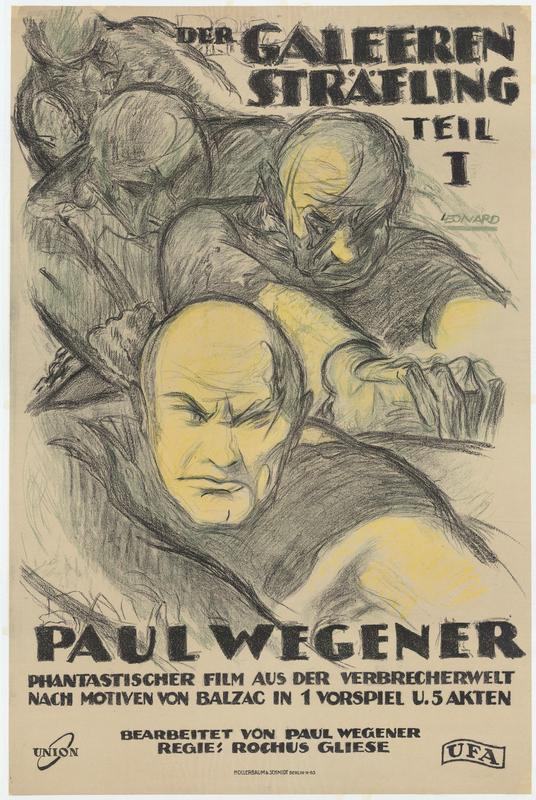
Stepping into the spectral embrace of Paul Wegener's 1919 cinematic epic, Der Galeerensträfling, is akin to descending into a meticulously crafted dreamscape, one where the stark realities of human suffering and the indomitable spirit of defiance coalesce into a potent, unforgettable tableau. This isn't merely a film; it's a profound excavation of societal fault lines, a silent symphony of despair and hope orchestrated with the audacious visual language that would come to define German Expressionism. Wegener, a titan of early German cinema, both in front of and behind the camera, weaves a narrative that, while ostensibly a tale of a man unjustly condemned, blossoms into a universal meditation on identity, redemption, and the relentless pursuit of an elusive peace.
The film opens with a visceral depiction of Johann's plight, portrayed with harrowing intensity by Wegener himself. His initial scenes as a simple man, driven to a desperate act by the gnawing pangs of poverty, immediately establish a profound empathy. The visual grammar here is crucial: the cramped, shadowed hovels, the stark contrast between the opulence of the privileged and the squalor of the suffering, all painted with a chiaroscuro palette that underscores the moral ambiguities of the era. The trial sequence, a masterclass in silent film staging, portrays justice not as a blind arbiter of truth, but as a cold, unfeeling mechanism, grinding the individual beneath its inexorable gears. One cannot help but draw parallels to the existential dread found in later works like Dommens dag, where the individual is similarly overwhelmed by an impersonal system, though Der Galeerensträfling imbues its protagonist with a more active, defiant spirit.
The subsequent chapters of the film plunge us into the inferno of the galleys, a harrowing depiction of human degradation that remains strikingly powerful even today. Wegener, with a raw physicality, embodies the transformation of Johann from a broken man into a figure of formidable, almost elemental, strength. The rhythmic thud of the oars, the sweat, the despair etched on the faces of his fellow convicts – it’s a brutal ballet of servitude. Yet, within this crucible of suffering, a fire of resistance is ignited. Johann’s escape, meticulously planned and executed with a breathtaking audacity, serves as the pivotal turning point, not just in the plot, but in the very essence of his being. He sheds not only the chains of the galley but also the identity of the condemned, emerging into the world as a phantom, a man reborn with a singular purpose: to reclaim his dignity and rewrite his destiny. This narrative arc, reminiscent of the great literary traditions of Honoré de Balzac, one of the credited writers, explores the profound psychological impact of societal judgment and the arduous path to self-reinvention.
The supporting cast, a veritable who's who of early German cinema, elevates the film considerably. Ernst Deutsch, as Inspector Krell, delivers a performance of chilling, almost obsessive conviction. Krell is not a mustache-twirling villain; rather, he is a man consumed by the letter of the law, a relentless hound of justice whose unwavering pursuit of Johann becomes a tragic counterpoint to Johann's quest for redemption. Deutsch imbues Krell with a cold, intellectual intensity, making his character a formidable, psychologically complex antagonist. His gaunt features and piercing gaze are perfectly suited to the Expressionist aesthetic, embodying the unyielding, often cruel, face of institutional authority. This dynamic between protagonist and antagonist echoes the relentless pursuit seen in films like The Clutch of Circumstance, where fate and a dogged pursuer conspire against the hero, but with a distinctly German philosophical undercurrent.
Johann’s transformation into a respected industrialist, a pillar of the community, is handled with remarkable subtlety and depth. He builds his empire not through exploitation, but through innovation and a genuine desire to uplift others, perhaps a reflection of his own past suffering. This new persona, however, is a fragile construct, perpetually threatened by the possibility of exposure. Else Berna, as the compassionate woman who sees beyond Johann's enigmatic facade, provides a crucial anchor of humanity. Her performance is imbued with a quiet strength and an empathetic understanding, offering Johann a glimpse of a future free from the shackles of his past. The scenes between them are tender and understated, providing moments of emotional respite amidst the mounting tension. Adele Sandrock, often a formidable presence, likely embodies a more cynical or society-bound character, perhaps a matriarchal figure whose judgment Johann fears, or a socialite who unknowingly poses a threat to his carefully constructed identity.
The film’s visual artistry is consistently breathtaking. Director of photography, possibly with Wegener's strong artistic vision, employs stark contrasts of light and shadow, exaggerated sets, and highly stylized acting to create a world that is both hyper-real and deeply symbolic. The towering, angular structures of the city, the oppressive gloom of the prison, and the claustrophobic interiors all serve to externalize Johann’s internal turmoil and the oppressive forces at play. This Expressionist aesthetic is not merely decorative; it is integral to the narrative, amplifying the emotional impact and underscoring the film’s thematic concerns. One might even compare the deliberate visual storytelling to the pioneering efforts seen in The New Moon, though Der Galeerensträfling pushes the boundaries of visual allegory even further.
The brilliance of Der Galeerensträfling lies in its refusal to offer simplistic answers. Krell’s pursuit, while relentless, is driven by a genuine belief in the sanctity of the law, however flawed that law may be. This creates a compelling moral dilemma: is justice served by upholding a rigid code, even if it crushes an individual who has demonstrably reformed? Or does true justice lie in compassion and the recognition of human fallibility? The film masterfully explores this tension, inviting the audience to grapple with these complex questions. The interplay between societal structures and individual will is a recurring motif, subtly woven into the fabric of the story. Lothar Müthel and Paul Hartmann, likely playing characters caught in the web of Johann’s past or present, contribute to this intricate tapestry, each performance adding another layer to the film's rich human drama.
Wegener's direction is marked by a meticulous attention to detail and a profound understanding of pacing. The narrative unfolds with a deliberate, almost epic sweep, allowing moments of quiet introspection to breathe amidst sequences of high drama. The use of intertitles, far from being mere exposition, often serves as a poetic commentary, deepening the thematic resonance of the visuals. Lyda Salmonova, a frequent collaborator with Wegener, likely delivers a performance of nuanced emotion, perhaps as a character who is initially suspicious but ultimately swayed by Johann's integrity. Her presence often brought a delicate counterpoint to Wegener's more imposing figures, a balance that would have been invaluable in a film exploring such heavy themes.
In its exploration of societal prejudice and the arduous journey towards personal redemption, Der Galeerensträfling stands as a monumental achievement of early German cinema. It’s a film that resonates deeply with contemporary audiences, reminding us that the struggle against injustice, the yearning for acceptance, and the quest for self-forgiveness are timeless human endeavors. The performances, particularly Wegener’s towering portrayal of Johann and Deutsch’s chillingly precise Krell, remain etched in the memory long after the final frame. The film's visual language, a pioneering example of Expressionist aesthetics, continues to influence filmmakers and artists, proving that true artistry transcends temporal boundaries. It is a work that, much like the protagonist himself, defies the constraints of its historical moment to speak to universal truths.
The influence of Balzac is palpable in the film's intricate character studies and its unflinching gaze upon the social stratification and moral complexities of its world. While Balzac's novels often focused on the grand sweep of French society, Wegener translates this meticulous observation into a distinctly German context, utilizing the nascent power of cinema to explore similar themes of fate, free will, and the indelible marks left by one's past. The collaborative genius between writer and director here elevates the material beyond a simple crime drama into a profound philosophical statement. Hedwig Gutzeit and Armin Schweizer, though perhaps in smaller roles, undoubtedly contribute to the rich tapestry of supporting characters, each face and gesture adding to the film’s detailed depiction of society. Jakob Tiedtke, often cast as a figure of authority or a comedic foil, might have played a judge or a corrupt official, further complicating Johann’s journey.
Indeed, one could argue that Der Galeerensträfling is a precursor to many later cinematic explorations of societal oppression and individual revolt. It shares a thematic kinship with works like Bound and Gagged in its depiction of a protagonist struggling against overwhelming forces, though Wegener's film offers a more nuanced psychological journey. The sheer ambition of the storytelling, coupled with the groundbreaking visual style, cements its place as an essential piece of cinematic history. It’s a film that demands to be seen, studied, and discussed, for its artistry, its emotional depth, and its enduring relevance in an ever-changing world. It challenges us to look beyond the surface, to question authority, and to champion the enduring power of the human spirit to seek light even in the deepest shadows. Its powerful narrative and stunning visuals ensure its place not just as a historical artifact, but as a vibrant, living work of art that continues to provoke thought and stir the soul.
The final act of Der Galeerensträfling is a crescendo of tension and emotion, where Johann’s two lives inevitably collide. The confrontation with Krell is not merely a chase but a clash of ideologies, a battle between the rigid adherence to law and the moral imperative of compassion. The film avoids easy resolutions, instead opting for a conclusion that is both poignant and thought-provoking, leaving the audience to ponder the true meaning of justice and the possibility of genuine redemption in a world that often refuses to forgive. It’s a testament to Wegener's genius that he crafted a narrative so compelling, so visually arresting, and so philosophically rich, all within the nascent language of silent cinema. This film does not merely tell a story; it embodies an experience, a journey into the heart of human resilience against the backdrop of an unforgiving world.

IMDb 6.5
1929
Community
Log in to comment.