DbcultAccessing Vault...
5.8/10
Senior Film Conservator
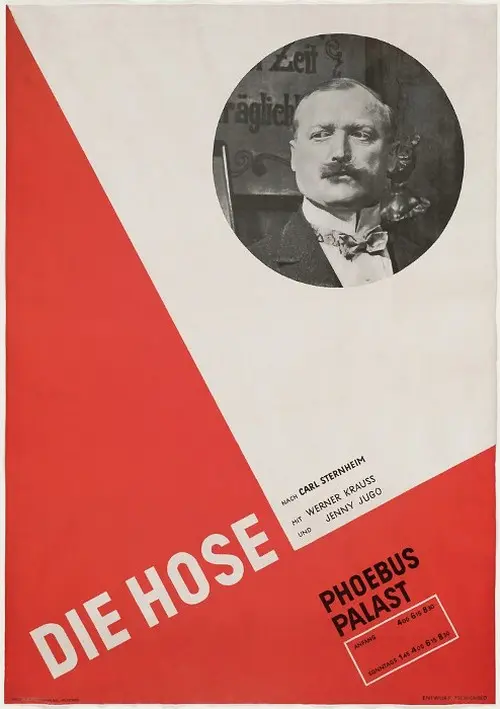
A definitive 5.8/10 rating for a film that redefined the boundaries of cult cinema. Die Hose remains a cornerstone of transgressive art.
Is Carl Sternheim's Die Hose still worth watching in our hyper-connected, scandal-obsessed world? Short answer: absolutely, though perhaps not for the reasons you might initially expect. This 1927 silent German satire, adapted from Sternheim's own acclaimed play, is a fascinating time capsule that simultaneously feels remarkably contemporary in its dissection of public outrage and private hypocrisy. It’s a film best suited for cinephiles with an appreciation for silent cinema, sharp social commentary, and theatrical adaptations that transcend their stage origins. Those seeking fast-paced action or conventional dramatic arcs might find its deliberate pacing a challenge, but patient viewers will be richly rewarded.
This film works because it fearlessly holds a mirror to human foibles, specifically the absurd lengths society goes to in judging and fetishizing minor transgressions. Its comedic timing, reliant on visual gags and exaggerated performances, remains surprisingly effective, demonstrating the universal language of farce. Furthermore, the central performances, particularly Jenny Jugo’s nuanced portrayal of Luise, anchor the outrageous premise with a believable human core.
This film fails because its overtly theatrical origins sometimes translate to a somewhat static visual style, especially in its early scenes, which might test the patience of modern audiences accustomed to dynamic camera work. The pacing, while intentional for its era, can feel sluggish in places, particularly when the satirical points are belabored through multiple intertitles rather than pure visual storytelling. Additionally, some of the broader comedic strokes, while effective, occasionally verge on caricature, slightly diminishing the depth of its social critique.
You should watch it if you appreciate biting satire, nuanced silent film acting, or wish to explore the roots of German cinematic wit beyond Expressionism's shadows. It's a valuable piece for understanding how scandalous narratives have always captivated the public, long before the internet amplified every minor misstep.
Berthold Viertel's Die Hose, a cinematic adaptation of Carl Sternheim's 1911 play 'Die Hose' (The Trousers), is a masterclass in escalating absurdity from the most innocuous of beginnings. The plot, deceptively simple, hinges on a single, embarrassing incident: the public dislodging of Luise Maske’s undergarment. What follows is not merely a tale of personal humiliation but a trenchant critique of a society obsessed with appearances, reputation, and the sensational. Sternheim’s original work was already a sharp, theatrical jab at Wilhelminian Germany’s bourgeois morality, and Viertel, alongside co-writer Franz Schulz, translates this biting wit to the silent screen with impressive fidelity.
The film establishes its tone immediately, introducing us to Theobald Maske, portrayed with magnificent, stiff-necked pomposity by Werner Krauss. He is the quintessential petty bureaucrat, whose entire identity is wrapped in the rigid adherence to rules and public decorum. His wife, Luise, played by the luminous Jenny Jugo, is his antithesis: a woman of quiet charm and burgeoning curiosity, inadvertently thrust into the spotlight. The moment her trousers fall, captured with a blend of slapstick and understated shock, sets off a chain reaction that exposes the fragile underbelly of their supposedly respectable lives.
The film’s genius lies in its ability to take this seemingly minor incident and make it the focal point for a broader societal commentary. The ensuing public outcry and the sudden influx of male attention towards Luise are handled with a satirical precision that feels both period-specific and timeless. The scandal isn’t just about a woman's clothing; it’s about what society chooses to obsess over, how quickly judgment is passed, and the often-ludicrous motivations behind human behavior. Viertel’s direction ensures that even the most farcical elements retain a grounding in a believable, if exaggerated, reality.
The success of any silent film, especially one rooted in theatrical satire, rests heavily on its cast's ability to convey complex emotions and intentions without spoken dialogue. Die Hose boasts a cast that rises to this challenge, delivering performances that are both broadly comedic and surprisingly nuanced. Werner Krauss, a titan of German Expressionist cinema, inhabits Theobald Maske with a physical rigidity that speaks volumes. His every movement, from his precise office routine to his horrified reaction to his wife’s perceived disgrace, is a study in repressed indignation. Krauss’s portrayal ensures Theobald is not merely a caricature but a tragically comical figure, trapped by his own self-importance.
In stark contrast is Jenny Jugo as Luise. Her performance is a marvel of understated charm. She navigates the sudden onslaught of attention with a blend of bewilderment, mild flirtation, and a growing sense of agency. Jugo's subtle facial expressions and restrained gestures communicate Luise's inner world far more effectively than any dramatic overacting could. She is the eye of the storm, and her quiet reactions to the boisterous men around her provide much of the film’s emotional depth and comedic counterpoint.
The two primary suitors vying for Luise’s spare room—and her affections—are equally compelling. Rudolf Forster plays Frank Scarron, the flamboyant, self-proclaimed poet, with an almost operatic theatricality. His dramatic pronouncements and exaggerated romantic gestures are a source of constant amusement, highlighting the performative nature of his supposed passion. On the other hand, Veit Harlan (later a controversial director himself) portrays Benjamin Mandelstam, the timid barber, with a wonderfully awkward earnestness. His clumsy attempts at courtship are endearing in their pathetic sincerity, offering a different flavor of male folly. The interplay between these distinct personalities creates a dynamic ensemble that keeps the satire sharp and the narrative engaging.
Berthold Viertel’s direction of Die Hose demonstrates a keen understanding of how to translate a wordy stage play into effective silent cinema. While the film retains a certain theatricality, particularly in its character blocking and reliance on intertitles, Viertel employs visual storytelling techniques that enhance, rather than merely replicate, the original text. The cinematography, though not as overtly experimental as some of its Expressionist contemporaries like The Cat and the Fiddle, is precise and purposeful. Viertel uses framing to emphasize the characters' social standing and emotional states, often isolating Luise within a frame to highlight her newfound predicament, or crowding Theobald with symbols of his bureaucratic existence.
The pacing is deliberate, allowing the humor to build through repetition and escalating absurdity. The sequential arrival of suitors, each with their own distinct approach, creates a rhythmic comedic pattern. Viertel masterfully uses cuts and close-ups to punctuate key moments, such as the initial scandal itself, or Theobald’s increasingly apoplectic reactions to the encroaching chaos. The film's tone strikes a delicate balance between biting satire and genuine pathos, never allowing the characters to become mere puppets for the comedic plot. Even in the most farcical moments, there's a subtle undercurrent of social commentary that prevents the film from devolving into pure slapstick.
One particularly effective visual choice is the depiction of public opinion. While intertitles convey gossip, Viertel also shows crowds gathering, peering, and whispering, creating a tangible sense of a society engrossed by scandal. This visual representation of public scrutiny is incredibly effective, making the societal pressure on Luise and Theobald palpable. The set design, featuring meticulously crafted interiors and exteriors, further grounds the story in a recognizable, albeit slightly exaggerated, German setting, reinforcing the film’s satirical targets.
What makes Die Hose more than just a historical curiosity is the enduring relevance of its satirical targets. Carl Sternheim was a master at exposing the hypocrisy and moral decay beneath the veneer of bourgeois respectability, and his observations feel remarkably prescient even today. The film skewers the human tendency to sensationalize minor events, to judge others based on superficial transgressions, and the often-ridiculous ways in which men assert their perceived authority or desire. It’s a timeless commentary on the performative nature of virtue and the inherent absurdity of public outrage.
Theobald Maske’s obsession with his social standing and his inability to see beyond the perceived shame of his wife’s accident resonates deeply in a world where online reputations can be shattered by a single misstep. The male suitors, each drawn to Luise not for her inherent qualities but for the notoriety surrounding her, highlight the objectification and fetishization of women, particularly when they become figures of public fascination. This element, while played for laughs, carries a sharp, critical edge that points to deeper societal issues.
Perhaps the true scandal isn't the trousers, but the sheer predictability of male reaction, and the swiftness with which society elevates a wardrobe malfunction into a moral failing. The film inadvertently reveals the fragile ego of the patriarchal society more than it condemns Luise. It’s a film that proves silent cinema could be just as loud and opinionated as any talkie.
The film’s humor, while rooted in the visual gags and theatrical exaggerations of its era, still lands with surprising force. It reminds us that human nature, with all its petty jealousies, moral posturing, and susceptibility to sensationalism, has changed very little over the decades. In an age of viral content and cancel culture, Die Hose serves as an amusing, yet pointed, historical precedent for our modern obsessions.
Yes, Die Hose is absolutely worth watching today, especially for those interested in the history of satire and silent German cinema. It offers a unique blend of sophisticated social commentary and engaging comedic performances. While its silent film conventions and deliberate pacing might require a degree of patience from contemporary viewers, the film's sharp wit and surprisingly modern themes make it a rewarding experience. It's a valuable piece of cinematic history that still speaks volumes about human nature and societal folly, proving that a good story, well told, transcends time and technological advancements.
Die Hose is a delightful and surprisingly potent piece of silent cinema. It works. But it’s flawed. Its brilliance lies not just in its historical significance, but in its enduring ability to provoke thought and laughter in equal measure. While it may not possess the visual grandeur of an epic or the frantic energy of a modern comedy, its sharp wit and insightful commentary on human nature remain remarkably fresh. Berthold Viertel, Carl Sternheim, and Franz Schulz crafted a film that reminds us that the absurdities of society are a timeless source of both frustration and profound humor. Give it a watch; you might be surprised at how much a pair of falling trousers can still reveal about us all.
IMDb 5.8
1935
Community
Log in to comment.