DbcultAccessing Vault...
7.3/10
Senior Film Conservator
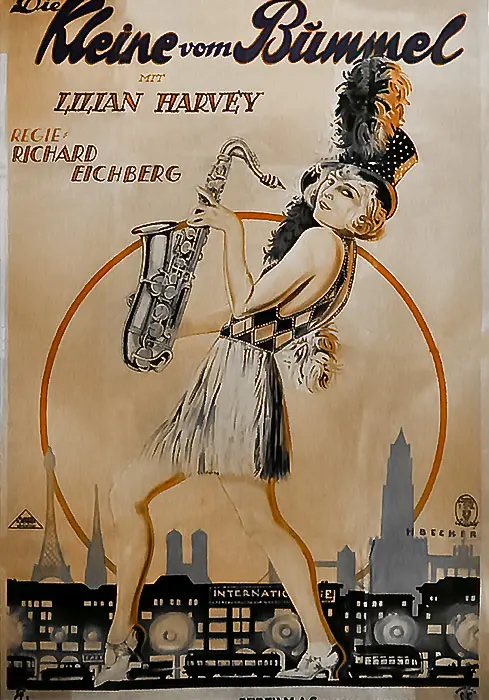
A definitive 7.3/10 rating for a film that redefined the boundaries of cult cinema. Die Kleine vom Bummel remains a cornerstone of transgressive art.
Is this film worth watching today? Short answer: Yes, but only if you are a dedicated student of silent cinema or Weimar-era social dynamics. This film is for those who appreciate the 'shopgirl' subgenre and early 20th-century fashion; it is certainly not for viewers who require fast-paced action or high-definition spectacle.
Die Kleine vom Bummel is a fascinating artifact that captures a very specific moment in German history. It sits comfortably alongside other lighthearted explorations of the era like Trix, der Roman einer Millionärin, focusing more on the whimsy of the moment than the darkness that would eventually consume the decade.
1) This film works because Dina Gralla possesses a magnetic screen presence that transcends the limitations of silent storytelling.
2) This film fails because the script relies on overly familiar tropes of mistaken identity that were already becoming stale in 1925.
3) You should watch it if you want to witness the early, formative screen presence of Lilian Harvey before she became a titan of the UFA studios.
The title itself, which translates roughly to 'The Little Girl from the Stroll,' refers to the culture of 'Bummeln'—the art of walking through the city with no purpose other than to see and be seen. Director Ernst Winar captures this beautifully in the opening sequences. We see the bustling streets of Berlin, not as the dark, expressionist nightmare often depicted in films like Metropolis, but as a playground of light and commerce.
The cinematography by the uncredited camera team is functional, yet it excels during the interior scenes within the department store. There is a specific moment where the protagonist gazes at a silk dress through a glass partition. The reflection of her longing face over the unattainable luxury item is a poignant visual metaphor for the class divide. It is a technique we see used with more polish in Forbidden Fruit, but here it feels raw and immediate.
Winar’s direction is, for the most part, invisible. He stays out of the way of his actors, allowing the physical comedy to take center stage. Unlike the avant-garde experimentation found in The Fugitive Futurist, Die Kleine vom Bummel is content to be a crowd-pleaser. It doesn't want to reinvent the wheel; it just wants to make sure the wheel keeps spinning smoothly.
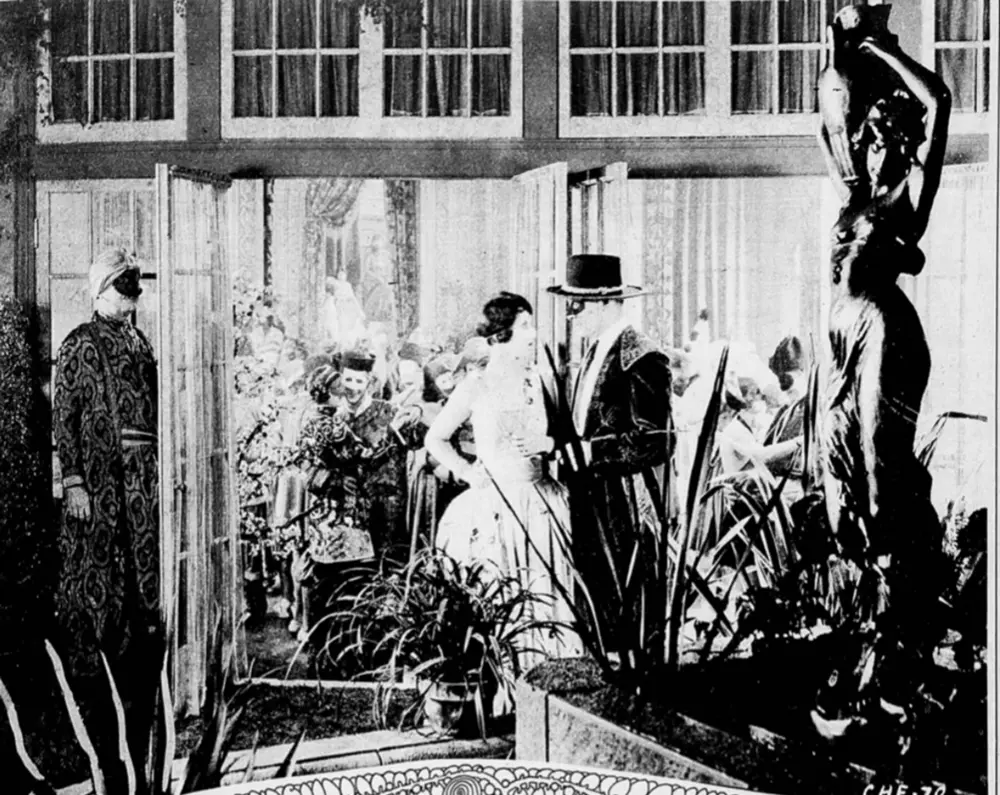
Dina Gralla is the heartbeat of this film. In an era where many actresses relied on exaggerated pantomime, Gralla offers a surprisingly nuanced performance. She uses her eyes to convey a mixture of ambition and vulnerability. When she is forced to hide in a closet during a high-society party, her frantic energy is genuinely funny without being overbearing.
Then there is Lilian Harvey. While she is not the lead here, her presence is undeniable. One can see the sparks of the charisma that would later define her career in the 1930s. Comparing her performance here to her work in We Moderns shows a clear trajectory of a performer learning how to command the lens. She has a way of tilting her head that suggests she knows a secret the audience hasn't figured out yet.
The supporting cast, including Hans Junkermann and Hans Brausewetter, provide solid backing. Junkermann, as the stern patriarch, plays the 'straight man' to the various hijinks with a dry wit that prevents the film from becoming too saccharine. Brausewetter, meanwhile, handles the more slapstick elements with a grace that reminds one of the lighter moments in Potash and Perlmutter.
While the film is marketed as a comedy, it carries a sharp undercurrent of social commentary. The 1920s in Germany were a time of hyperinflation and radical social shifts. The protagonist’s desire to 'pass' as a member of the upper class isn't just a plot device; it’s a survival mechanism. This theme of social performance is also explored in Her Good Name, though with much more dramatic weight.
There is a scene in the second act where the protagonist is nearly caught in her lie. The tension in the room is palpable, not because she might lose a lover, but because she might lose her dignity. It’s a brutally simple realization: in this world, appearance is everything. If you don't look the part, you don't exist. This is a cynical take for a comedy, but it’s what gives the film its bite.
The pacing, however, is where the film occasionally stumbles. The middle section drags as it indulges in too many subplots involving minor characters. While these moments provide a broader look at Berlin life, they distract from the central emotional arc. It lacks the tight narrative focus found in The Heart Bandit.
Should you spend 90 minutes with this silent relic?
If you are looking for a masterpiece of cinema, look elsewhere. However, if you want a charming, low-stakes window into the past, this film delivers. It provides an excellent look at 1920s fashion, social etiquette, and the early career of Lilian Harvey. It is a light snack of a movie—pleasant, but not particularly filling.
Technically, Die Kleine vom Bummel is a product of its time, but it lacks the visionary flair of the era's giants. Where a film like Northern Lights might use shadows to tell a story, Winar uses flat, bright lighting. This isn't necessarily a flaw, as it fits the comedic tone, but it does make the film feel less 'artistic' than some of its contemporaries.
The editing is standard for 1925. There are few rhythmic cuts or montage sequences. Instead, the film relies on long takes where the actors move within the frame. This gives it a theatrical feel, similar to The Wooing of Princess Pat. It works. But it’s flawed. The lack of visual variety can lead to a sense of fatigue during the longer dialogue-heavy sections.
One surprising observation is the film's treatment of the 'Bummel' lifestyle as a legitimate form of labor. The protagonist isn't just lazy; she is working hard to curate an image. This proto-influencer mentality is a fascinating thing to see in a film nearly a century old. It suggests that our modern obsession with 'branding' ourselves is nothing new.
Die Kleine vom Bummel is not a world-shaking work of art, but it doesn't try to be. It is a competent, charming, and occasionally insightful look at the aspirations of a generation. It’s better than Alice Is Stage Struck in terms of production value, but it lacks the experimental edge of Politik och brott. If you find a restored print, it is worth a look for the performances alone. It’s a pleasant stroll through a vanished world, even if the destination is exactly where you expected it to be.
IMDb —
1921
Community
Log in to comment.