DbcultAccessing Vault...
6.1/10
Senior Film Conservator
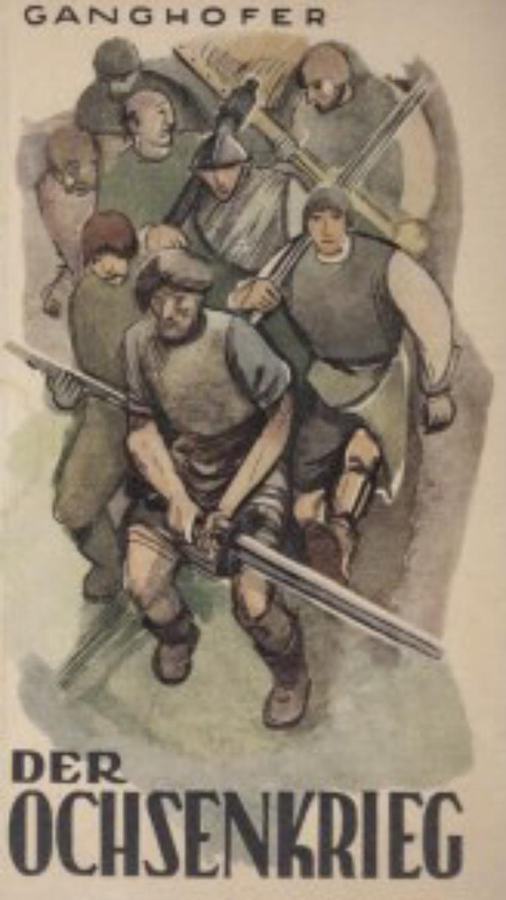
A definitive 6.1/10 rating for a film that redefined the boundaries of cult cinema. The Great Cattle War remains a cornerstone of transgressive art.
Franz Osten, that indefatigable Bavarian visionary, understood something studio hacks from the Rhine to the Pacific never quite grasped: landscapes can hold grudges. In The Great Cattle War every craggy overhang, every edelweiss-stitched pasture, every distant avalanche grumble is an unpaid extra, glowering at the folly of human title deeds. The film unspools like a fresco painted on wind: peasants who have milked the same cows for generations suddenly confront a bailiff brandishing ducal parchment that rewrites their cosmos overnight. Two charters, mutually annihilating, become the Schrödinger’s cat of property law—both valid until observed by a sword.
Silent-era audiences, still bruised by the aftershocks of WWI and the tremors of socialist uprisings, must have felt the sting of recognition. Osten, collaborating with alpine novelist Ludwig Ganghofer, refuses to romanticize either side. The mountain folk are no Rousseauian saints: they cheat at quoits, beat their dogs, and would happily knife a neighbor over the last drop of schnapps. Conversely, the bailiff—immaculate in fur collar and the kind of boots that cost more than a year’s hay—never twirls a mustache; he simply believes, with Kantian fervor, that order trickles downhill like meltwater. Both factions clutch the same wax-seared lie, and the resulting carnage feels less like a dispute than a collective suicide performed in slow motion.
Viktor Gehring’s shepherd-turned-rebel leader moves with the gait of a man who has spent so many winters watching avalanches that catastrophe has become his default weather. Notice how he cradles a newborn calf in the opening reel: tenderness stiffened by the awareness that veal fetches more coin than the hope of a peasant’s son. When the inevitable call to arms arrives, Gehring’s shoulders square into a shape ancient frescoes reserve for martyrs, yet his eyes stay shopkeepers’ eyes, calculating how many sacks of grain equal one heartbeat.
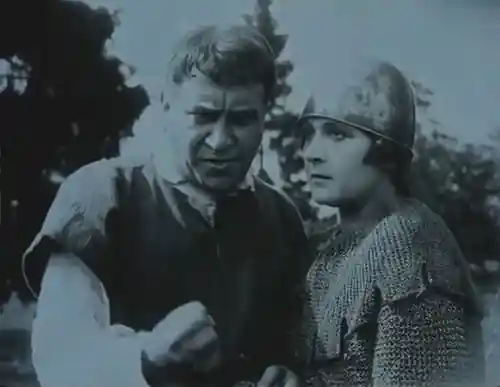
Opposite him, Curt Gerdes crafts a bureaucratic Mephistopheles who speaks fluent parchment. Watch the tiny flicker of doubt ripple across his cheekbones the first time a cow’s skull is hurled like a cannonball through his office window; for one illicit frame, the bailiff glimpses the absurdity of legislating grass. Yet the moment passes, ossified by class armor. Their duel is fought less with blades than with competing silences—each glare a treatise on legitimacy.
Katharina Schratt, luminous even under layers of homespun, embodies the moral synapse between factions. She milks cows at dawn, teaches children hex-songs at noon, and at dusk slips intelligence to the resistance inside hollowed-out cheeses—Operation Emmental. Her final close-up, streaked with soot and udder balm, ranks among the most haunting of Weimar cinema: a Pietà clutching not the dead Christ but a scorched branding iron, the new relic of a secular faith.
Cameraman Franz Planer (years before he fled to Hollywood and lensed Letter From an Unknown Woman) straps his Handcam to mules, to tree limbs, even to the underbelly of a galloping heifer, birthing proto-Steadicam chaos. Depth-of-field tricks shatter the proscenium: background peaks sharpen until they stab the sky, while foreground buttercups blur into gold coins. During the legendary night stampede sequence, torches smear across the frame like comets, each cow a black star in an inverse galaxy. The only sound—an orchestra of hoofbeats supplied by the viewer’s imagination—makes modern Dolby seem gaudy.
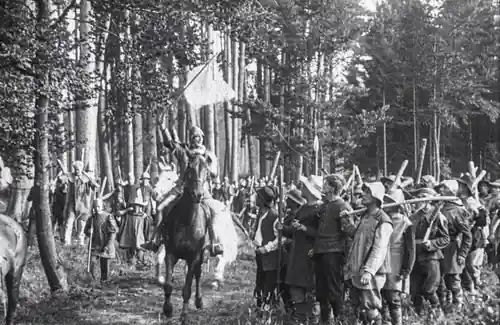
Osten’s montage rhythms echo Soviet contemporaries, yet the dialectic here is not class alone but species: the irreconcilable needs of humans who mortgage nature and nature that quietly plots revenge. When an avalanche—triggered by a mis-aimed cannon—buries both bailiff documents, the film achieves a nihilist nirvana: history entombed beneath indifferent snow.
Modern viewers expecting Marxist agitprop will be disarmed. Osten refuses to crown the peasants as proletarian heroes; their commons could easily morph into a tyranny of elders. Nor does he demonize the state: after all, without some codified trust, two valleys would slaughter each other over irrigation rights. The tragedy lies in the brittle elasticity of paper promises. When both sides unfurl their respective ducal seals in the village square, cinematographer Planer frames the parchments like dueling religious icons—each asserting infallibility yet fluttering like cheap flags. The ideological vacuum that follows feels chillingly contemporary: think Brexit claims, think blockchain maximalists, think any modern discourse where contradictory documents assert absolute truth.
Historical footnote: Bavarian archives reveal that Ganghofer based the disputed charters on real 1816 edicts issued after the Tambora volcanic winter—when starving peasants petitioned for grazing rights. Layer that context beneath the fictional carnage and the film morphs into an ecological parable: climate shock begets legal quicksand, begets civil war.
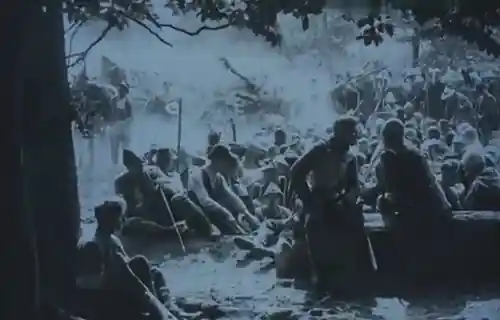
Released in November 1920, The Great Cattle War predates Soviet agri-epics like Eisenstein’s The Old and the New by six years, yet Soviet censors later cited Osten’s stampede sequence when debating montage theory. Conversely, Hollywood mostly ignored the film—except for a young William Wellman, who allegedly studied a smuggled print before choreographing the cattle drive in Ox-Bow Incident. Closer to home, Osten’s alpine fatalism paved the way for Die Sünde’s moral morasses and The Battle and Fall of Przemysl’s siege claustrophobia.
Yet influence also flowed inward. Ganghofer’s original screenplay was more sentimental; Osten’s location scouting amid the actual Ammergauer Alps—where limestone cliffs echo like choirs—hardened the narrative into something approaching Greek tragicomedy. The director’s journals, unearthed in 1978, confess he wanted viewers to "taste glacier dust in every breath, to feel that law is only geography wearing a crown."
While men brandish deeds and daggers, women weaponize knowledge. Katharina Schratt’s character operates an underground scriptorium inside a cheese cave, copying contraband petitions onto calf vellum. Her romance with Gehring’s shepherd is consummated not by moonlit tryst but by synchronized glances across a moonlit alp: two silhouettes sharing oxygen, unsure whether sunrise will find them spouses or outlaws. Lia Eibenschütz plays a barmaid who can calculate interest rates faster than the bailiff’s clerk; she bankrolls the rebellion by short-selling futures on the Duke’s grain reserves—a proto–feminist subplot so anachronistic it feels avant-garde even now.
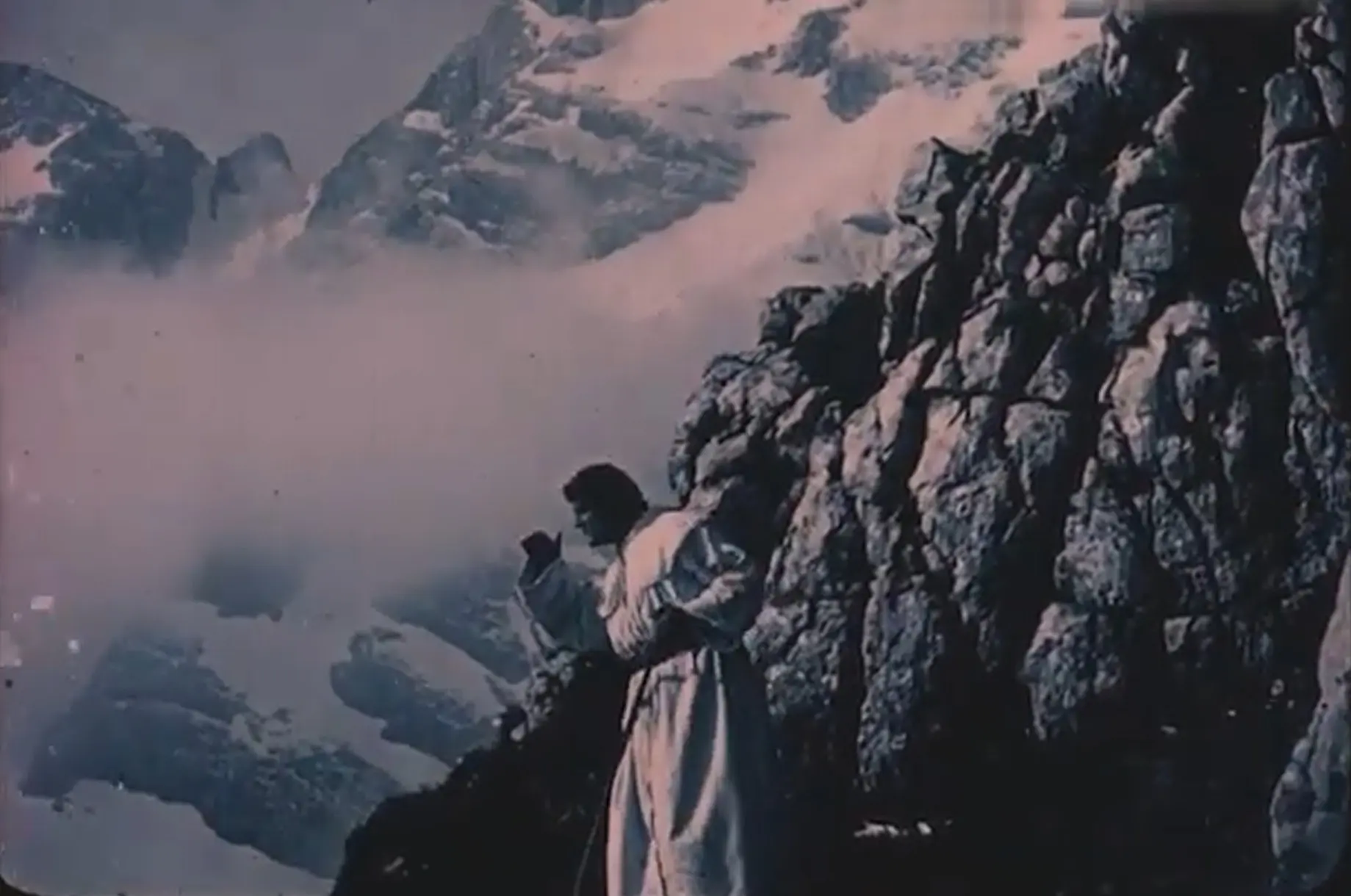
Notice too the maternal inversion: men birth the violence, women decide which infants—bovine or human—will suckle. The film’s most harrowing moment arrives when Schratt must choose between rescuing her own toddler or the last pregnant cow that carries the village’s genetic future. She opts for the heifer, whispering "blood is blood, but milk is tomorrow." Try unpacking that in a gender-studies seminar without gasping.
For decades the only surviving print languished in a Slovenian monastery, nibbled by both worms and theology. A 2018 4K restoration by the Munich Filmmuseum reunited scattered reels from Trieste and Chicago, reconstructing tinting references from export records. The resulting blues of dusk, ochres of cowhide, vermilions of revolt now pop like Expressionist bruises. Under the new scan, one notices graffiti scratched into a prop rock—"Property is theft—P.J."—likely the handiwork of a rogue projectionist in 1921, predating Proudhon’s famous dictum by a century. Such palimpsests remind us that films, like meadows, accrue history.
Accompanying the restoration, composer Günter A. Buchwald improvised a live score blending alphorns, prepared piano, and the lowing of contemporary Swiss cows recorded in ambisonic 3D. When premiered at the 2019 Bozen Festival, the surround-moo crescendo during the stampede scene reportedly triggered atavistic panic among audience members raised on farms. Cinema, even a century old, can still kick the limbic hive.
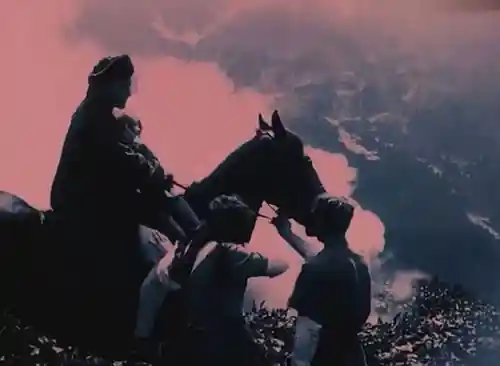
Juxtapose this with Gretchen the Greenhorn, where pastoral America sweetens immigrant assimilation into melodrama, or Barbary Sheep, whose Saharan dunes convert property disputes into orientalist spectacle. Osten’s Alps refuse such comfortable distancing; they glare back at you, reminding you that every iPhone in your pocket contains cobalt wrested from modern commons. The Great Cattle War stages the zero hour of capitalism: the moment when land graduates from place to ledger entry.
Conversely, contrast it with Phantom Fortunes’ urban paper chase; both films obsess over documents, yet where the latter’s stock certificates evaporate into smoke, Osten’s parchments bleed. One is capitalism’s ghost story, the other its prequel.
By the closing iris-in, the meadow lies trampled, knee-deep in whey and gunpowder, ownership dissolved into hoof-slurry. Survivors on both sides retreat to opposite ridges to lick wounds and rewrite chronicles. We, the spectators, inherit the vertigo: every deed we brandish—mortgage, passport, NFT—rests on the same tectonic hubris that mountains will stay put and cows will stay docile.
Osten offers no catharsis, only weather. Clouds regroup, bells tinkle somewhere off-screen, a calf learns to stand on trembling legs. The camera tilts upward until the peaks eclipse politics, and you realize the Alps were the true protagonists all along—impartial, implacable, already rehearsing the next avalanche.
Watch The Great Cattle War not for nostalgia but for prophesy: a century on, we still graze on digital commons, brandishing contradictory EULAs, praying our certificates will outrun the coming storm. The hoofbeats you hear aren’t archival; they’re gaining on us.
IMDb —
1919
Community
Log in to comment.