DbcultAccessing Vault...
5.3/10
Senior Film Conservator
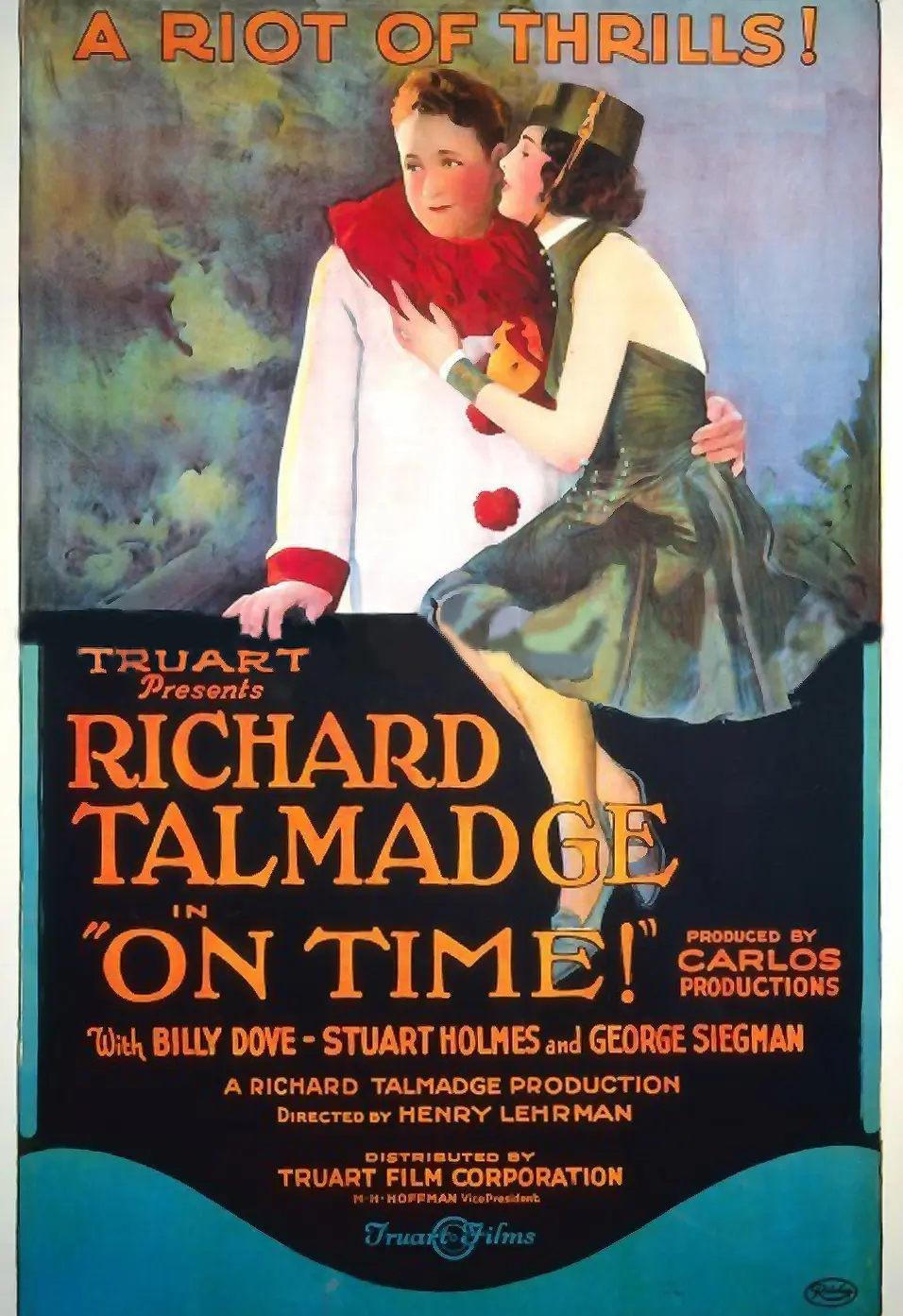
A definitive 5.3/10 rating for a film that redefined the boundaries of cult cinema. On Time remains a cornerstone of transgressive art.
The year 1924 was a period of frantic evolution for the silver screen, a time when the grammar of cinema was being written in the sweat of stuntmen and the ink of pulp novelists. On Time stands as a dizzying monument to this era, a film that refuses to be tethered to a single genre, oscillating wildly between romantic farce, gothic horror, and high-octane adventure. Starring the indomitable Richard Talmadge, the film serves as both a showcase for his preternatural athleticism and a biting commentary on the industry's obsession with manufactured stardom.
The premise begins with a grounded, almost Dickensian melancholy. Harry Willis, played by Talmadge with a restless energy, is a man whose ambitions have outpaced his reality. Having promised his beloved Helen (Billie Dove) a life of luxury, he returns defeated. This setup mirrors the social anxieties found in other contemporary works like The On-the-Square Girl, where the pressure to perform financially dictates the protagonist's moral compass. However, where other films might lean into the pathos of poverty, On Time pivots into the absurd.
The introduction of the $10,000 wager acts as the film's inciting incident, pulling Harry into a peripatetic nightmare. The script, co-authored by the legendary Ralph Spence and Garrett Fort, displays a penchant for the macabre that Fort would later refine in his work on Universal’s horror staples. The sequence involving the attempted brain transplant—a gorilla’s consciousness into a human vessel—is a jarring tonal shift that feels like a precursor to the sci-fi tropes explored in Die Legende von der heiligen Simplicia, albeit with a distinctly American vaudevillian twist.
To discuss On Time without centering on Richard Talmadge’s physical performance would be an exercise in futility. Talmadge was not merely an actor; he was a kinetic force. His movements possess a fluidity that rivals the best work in The Champeen, yet there is a frantic desperation here that feels unique. Whether he is navigating the social minefield of a costume ball or engaging in a multi-man brawl in a Chinese temple, his stunts are executed with a precision that makes modern CGI feel hollow and lifeless.
The temple sequence, while reflective of the era's problematic exoticism, is a masterclass in set design and choreography. It evokes the high-stakes tension of The Crow's Nest, but replaces the western grit with an atmospheric, almost claustrophobic intensity. The way Talmadge utilizes the environment—climbing pillars, swinging from rafters—transforms the screen into a three-dimensional playground of peril.
The true genius of the film lies in its rug-pulling finale. The revelation that Harry’s harrowing twenty-four hours were a staged "screen test" is a stroke of meta-fictional brilliance that predates modern deconstructions of the medium. It shifts the entire perspective of the film from a survival thriller to a satire on the artifice of Hollywood. This thematic depth elevates On Time above standard silent fare like The Stork's Mistake or the more straightforward comedy of Three Strikes.
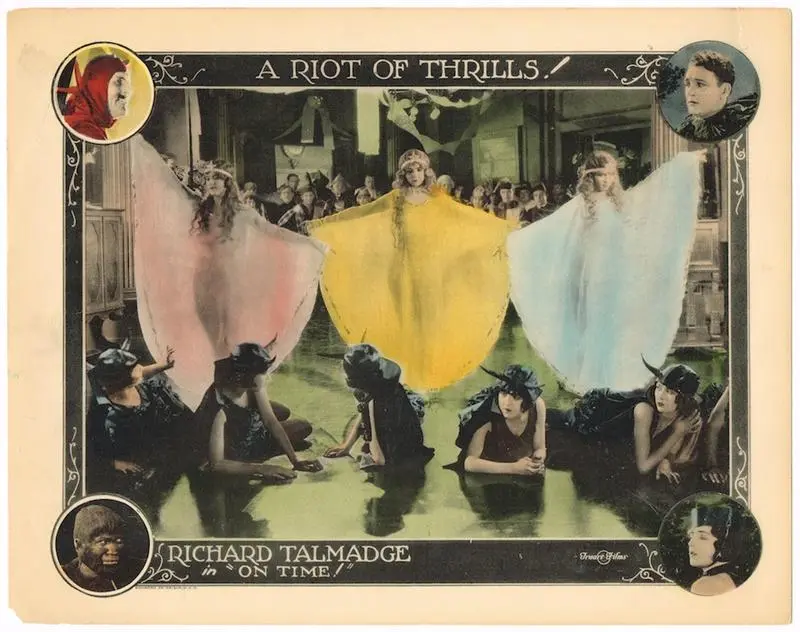
By framing the protagonist's suffering as a prerequisite for fame, the writers comment on the voyeuristic nature of the audience. We, like the unseen directors in the film, have spent an hour enjoying Harry's torment for our entertainment. It’s a sophisticated narrative choice that one might expect from a more somber production like Strife, yet it fits seamlessly within this wild adventure.
The ensemble cast provides a sturdy framework for Talmadge’s acrobatics. Billie Dove, often cited as one of the most beautiful women of the silent era, brings a luminous presence to Helen. While her role is traditionally domestic, her chemistry with Talmadge provides the emotional stakes necessary to ground the more outlandish sequences. Contrast her performance with the melodramatic weight seen in Három hét, and you see a precursor to the modern "leading lady" who serves as both prize and pillar.
Stuart Holmes and George Siegmann provide the requisite villainy. Siegmann, in particular, as the mad doctor, leans into the expressionistic shadows, creating a figure of genuine menace that feels out of place in a comedy—which, as we later learn, is exactly the point. The visual contrast between the bright, airy scenes of Harry’s courtship and the deep, ink-black shadows of the doctor’s lab showcases a sophisticated understanding of lighting that echoes the moody atmosphere of L'assassino del corriere di Lione.
In the grand tapestry of 1920s cinema, where films like Luffar-Petter were introducing future icons (Greta Garbo) and The College Orphan was exploring youth culture, On Time carves out a niche for the "action-satire." It is a film that understands the inherent ridiculousness of the hero's journey. It doesn't ask you to believe in the gorilla brain; it asks you to believe in the effort required to make you believe in it.
While it lacks the heavy-handed moralizing of Idle Tongues or the tragic inevitability of a Romeo and Juliet adaptation, it offers something arguably more valuable: a glimpse into the joyful, experimental heart of early Hollywood. It is a film that celebrates the "movie star" as a construct of endurance, grit, and a little bit of madness.
For the modern viewer, On Time is a fascinating artifact. It moves with a pace that puts many contemporary blockbusters to shame. Its refusal to stay in its lane—leaping from romance to horror to meta-commentary—makes it a precursor to the genre-bending cinema of the 21st century. It is less a cohesive story and more a series of escalating dares, both for the protagonist and the audience. If you seek the raw, unadulterated energy of the silent era, look no further. This film is a testament to the idea that sometimes, to find your place in the world, you have to survive a gorilla brain transplant first.
Highly recommended for fans of: The Runaway and Solskinsbørnene.
IMDb —
1921
Community
Log in to comment.