DbcultAccessing Vault...
Cult Review
Senior Film Conservator
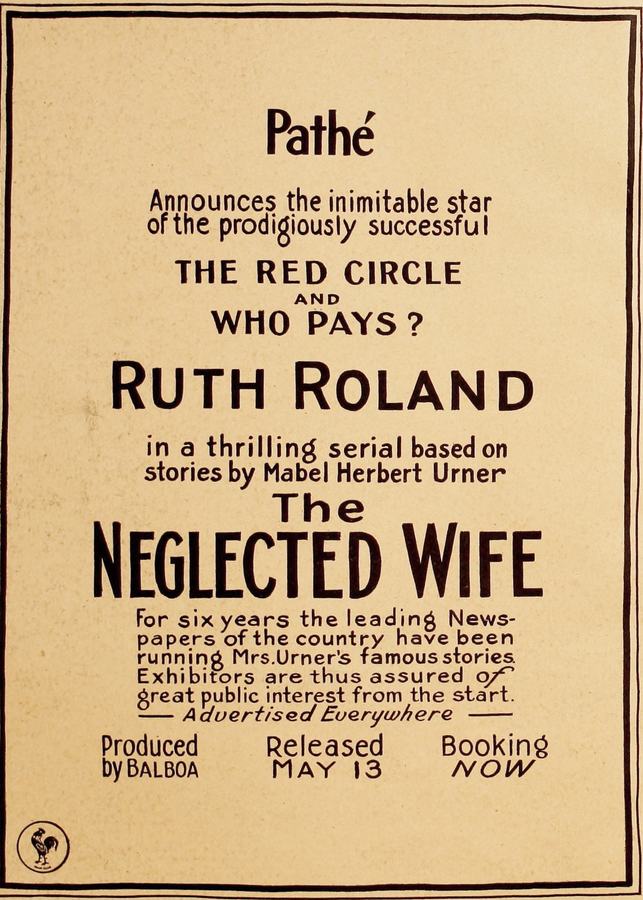
A marriage curdles in high-key chiaroscuro, and cinema itself seems to inhale its first sour breath of adult disillusionment.
Joseph Dunn’s The Neglected Wife—launched in Episode One as “The Woman Alone”—is less a narrative than a slow hematoma blooming under the skin of a seemingly respectable household. Shot in the waning days of 1917, while Europe still roared with ordnance and American streets brimmed with Liberty-bond parades, the picture retreats into parlors and boarding-houses where the war is fought with silences, glances, and the lethal scratch of a fountain pen across ledger paper.
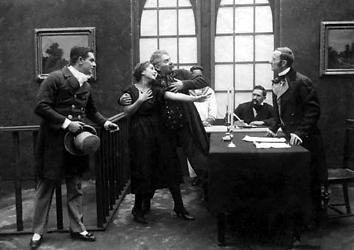
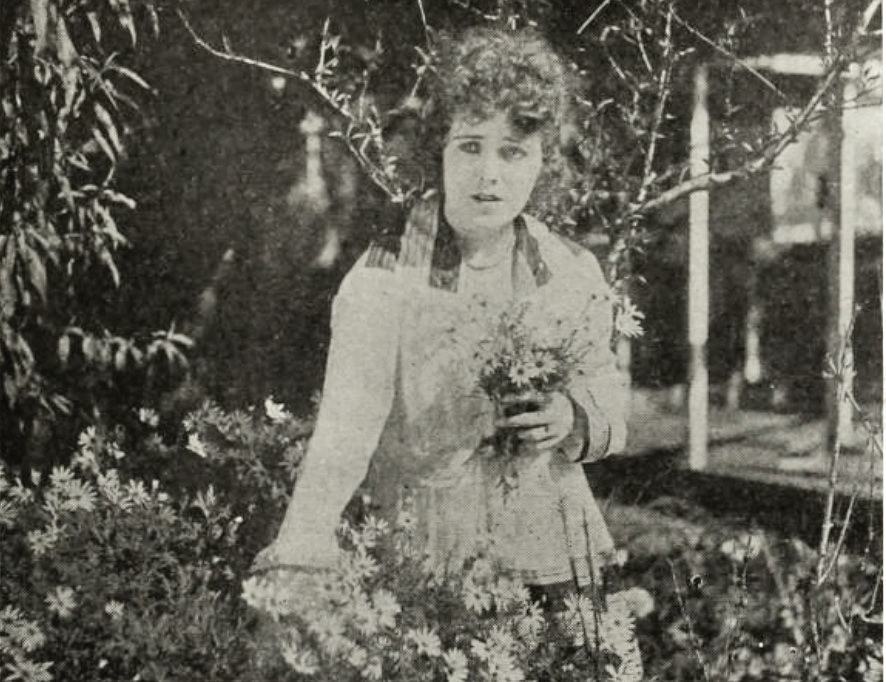
From its first interior—a cavernous law office paneled in mahogany that drinks up the light—Dunn stages affluence as a kind of moral twilight. Horace Kennedy (Tom Morgan) is introduced in medium shot, his starched collar a white flag that refuses to admit defeat even as his affections surrender. Morgan, whose chiseled profile graced numerous one-reelers for Kalem, plays Kennedy with the weary magnetism of a man who has won every case except the one that unfolds off the clock. His wife Mary, essayed by Corinne Grant with porcelain stillness, drifts through drawing rooms like an exiled ghost, her voice (conveyed through eloquent title cards) pitched somewhere between lullaby and lament.
The film’s visual grammar is already quietly radical: instead of the wide tableau shots that keep viewers at arm’s length from characters’ emotional calculus, Dunn and cinematographer Philo McCullough favor intimate, almost voyeuristic close-ups that let us count the tremors in Mary’s eyelashes when Horace praises another woman’s “zeal for literature.”
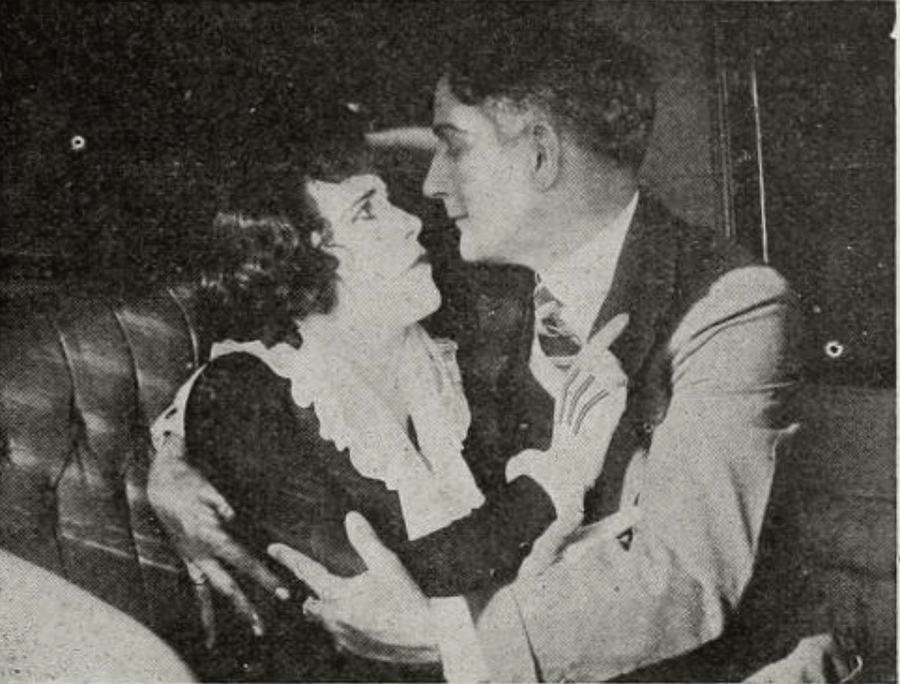
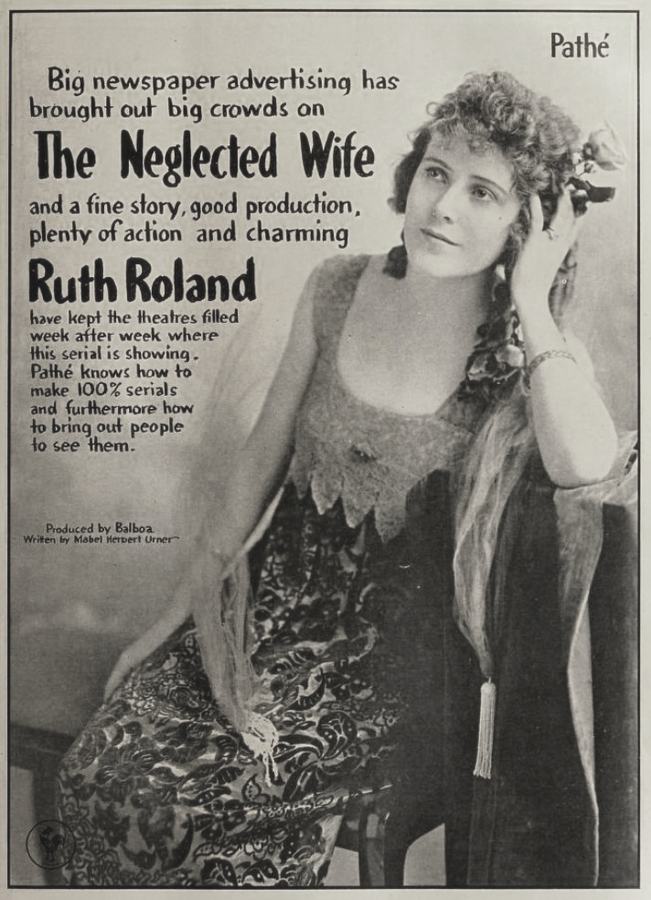
Enter Margaret Warner—Ruth Roland in a performance so electrically ambivalent it could power the trolley line that later upends the plot. Margaret is poor, proud, and prolifically rejected; her wastepaper basket is a graveyard of manuscripts that once hoped to be tomorrow’s bold new voice. Roland plays her with a combustive mix of ambition and bruised dignity: watch how she folds her returned stories into neat squares, as if origami might transmute them into acceptance letters. Her first glimpse of Horace across a courtroom aisle is framed not as meet-cute but as duel-cute—the camera dollies in until both faces share the same plane, the same ethically fraught air.
When Horace, flush with courtroom glory, agrees to serialize his moral philosophy in a slick monthly, Mary volunteers as his amanuensis. The ensuing dictation scene is a small masterpiece of marital passive-aggression. Horace paces; Mary hunts-and-pecks; the typewriter’s bell punctuates each barbed clause. Grant lets Mary’s smile collapse by degrees, until the sprained wrist—rendered in a cringe-inducing insert shot—feels less like accident than self-sabotage, the body’s rebellion against erasure.
By the time Margaret replaces Mary at the typewriter, the film has tilted into something perilously close to noir, a full decade before the term existed.
Consider the lighting scheme: Margaret’s cheap boarding-house room is rendered in low-key pools of lamplight, her face half-gilded, half-eclipsed as she questions Horace about the difference between legal justice and bedroom justice. Dunn cross-cuts this with Mary alone in the couple’s suburban villa, cradling her bandaged wrist like a broken bird, the camera pulling back to reveal an ornate settee big enough for two yet occupied by one. The montage is silent but deafening.
Meanwhile, the subplot featuring Attorney Doyle (Neil Hardin)—disbarred and now peddling fraudulent mining stock—functions less as moral counterweight than as societal sepsis. Every time we see Doyle slipping leaflets under tenement doors, the film reminds us that respectability is a veneer: scratch Horace’s polished boots and you find the same predatory instinct, merely better tailored. It’s no accident that Dunn has Horace and Margaret walk past a wall plastered with Doyle’s phony prospectuses minutes before the streetcar collision; the universe, the edit suggests, is keeping receipts.
That accident—rendered with an expressive smash-cut from screaming wheels to Margaret’s eyes rolling skyward—provides the episode’s cliff-hanger. Horace lifts the unconscious Margaret, his hands suddenly conscious of every ounce of her weight, and sprints through rain-slick streets toward a physician’s office. Dunn fades on the image of water streaming down Margaret’s cheeks, mingling perhaps with tears, perhaps with gutter runoff. It is impossible to tell, and that ambiguity is the film’s sly genius.
Intertextual cinephiles will detect echoes of other 1917 titles: the transactional eroticism of Money, the nationalist fervor of In Defense of a Nation, even the proto-feminist defiance of The Saleslady. Yet The Neglected Wife stands apart for its refusal to grant anyone the comfort of ideological purity. Horace’s courtroom sermonizing about “guarding the hearth” is undercut by his own wandering eye; Margaret’s proto-New-Woman self-reliance is revealed as partly mercenary; Mary’s saintly forbearance seems, in Grant’s nuanced performance, to be the slow accumulation of micro-resentments that may yet detonate.
Technically, the film is a bridge between two worlds: the stately long takes of early Teens melodrama and the faster, analytical montage that will define the coming twenties.
Notice how Dunn uses axial cuts—direct jump-ins along the same visual axis—to compress emotional beats: one moment Mary is dotting a letter’s final period; the next the camera leaps forward to isolate a tear sliding off her chin, a bead of grief magnified to monumental scale. The tinting strategy, too, is sophisticated: amber for interiors lit by gas, cerulean for exteriors under slate-gray skies, rose for the flirtatious glow that creeps into Horace and Margaret’s late-night manuscript sessions. These chromatic cues work like emotional chords beneath the visual melody.
The screenplay, adapted by Mabel Herbert Urner from her own serial, retains the penny-dreadful punch of the original pulps while allowing space for behavioral nuance. Urner’s intertitles are miniature prose poems: “Between the lines of every verdict lies a life sentence served in private.” Read that twice and tell me it doesn’t anticipate the laconic fatalism of James M. Cain. Will M. Ritchey’s editorial hand trims away the novel’s subplots (no tedious comic-relief maid here) to keep the narrative as lean as a hunger pang.
Performances orbit around Roland’s incandescent turn. A veteran of serials like The Red Circle, she knows how to telegraph thought without dialogue: watch her fingers pause above the keys when Horace praises Mary’s “unfailing loyalty,” the hesitation of someone tasting forbidden fruit in advance. Morgan matches her with a portrait of masculine entitlement eroding into panic; in the final shots his eyes keep darting to the doctor’s door, as if afraid the next verdict will be delivered not by a jury but by a heartbeat monitor.
The socio-historical resonance is hard to ignore. Released three years before the 19th Amendment, the film flirts with questions that will soon roil the culture: Can a woman subsist on moral virtue alone when economic power lies elsewhere? Is male protection a currency, and if so, what’s the exchange rate when the ledger is in someone else’s handwriting? Even the disbarment storyline—ostensibly about courtroom ethics—doubles as commentary on post-war professional upheaval: the old guard policing its gates against mongrel newcomers, women, and immigrants.
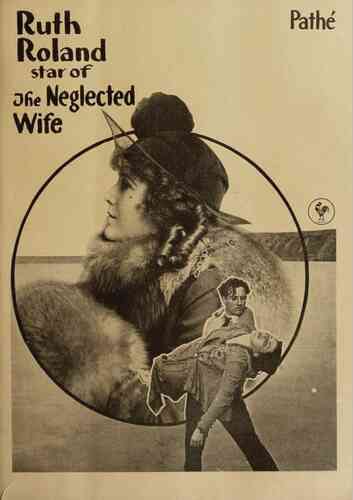
Yet for all its modernist glints, The Neglected Wife is also a time-capsule of 1917’s material culture. The typewriter is a Remington Standard 10, its round keys gleaming like miniature shields. Horace’s office sports a Stickley desk sturdy enough to withstand both paper overload and existential dread. Margaret’s boarding-house wallpaper—sunflowers writhing against olive damask—looks stolen from a Whistler nocturne. These details aren’t mere set dressing; they anchor the emotional stakes in tactile reality, reminding us that betrayal is always also about who gets to sit in the nice chair.
Cineastes sometimes dismiss early feature-length melodramas as “photographed theatre.” One viewing of this episode annihilates that prejudice.
Dunn’s camera is restless, curious, occasionally even malicious—peeking around doorframes, catching characters in mirrors, implying that every domestic space contains a proscenium arch where private sins perform for an unseen audience. The streetcar crash itself is staged with a proto-expressionist flourish: the driver’s face dissolves into superimposed flames, Margaret’s POV whirls into a kaleidoscope of iron and night, and the film’s own title card fractures as if the medium itself were injured.
Compared with its contemporaries, The Neglected Wife feels eerily ahead of its curve. The Wishing Ring peddles feudal nostalgia; Mit Herz und Hand fürs Vaterland beats the nationalist drum; even the Italian neorealist precursor Assunta Spina frames its heroine as martyr. Dunn’s film offers no such moral safe harbor. It ends on a question mark that drips like icicles: Will Horace’s gallantry toward Margaret eclipse his marital contract, or will Mary reclaim center stage—wrist healed, heart tempered, ambition awakened?

Contemporary reviewers, alas, were less kind. Moving Picture World dismissed it as “another of those marital woe tales,” blind to the formal experimentation crackling beneath the surface. Today, restored by the Library of Congress and screened at Pordenone, the film reveals itself as a hinge between Victorian moral parlor games and the jazz-age cynicism that would flower in the twenties. Its DNA can be traced to Way Down East’s fallen woman, to Beyond the Forest’s marital claustrophobia, even to the acidic domestic battles of Who’s Afraid of Virginia Woolf?
So, is The Neglected Wife a “neglected” masterpiece? The epithet is almost too neat, yet it sticks. Few silents dare to implicate the audience as co-conspirators in the very neglect they cluck at. Each time we lean in to savor Margaret’s peril, we also savor the frisson of a home fracturing. The film invites us to ogle, then chastises us for peeking—a moral loop as endless as the reel itself.
Verdict: essential viewing for anyone who thinks silent cinema is all pie-throwing and pastoral kitsch.
Watch it for the performances that outflank contemporaneous norms, for the lighting schemes that prefigure noir, for a cliff-hanger so ruthless you’ll scour archives for Episode Two. Just don’t expect catharsis; Dunn offers only a mirror, its surface cracked by the weight of too many unspoken desires.
References: Library of Congress 35mm restoration notes (2019), Lea Jacobs’ The Decline of Sentiment (2008), Moving Picture World archives, December 1917.
IMDb 3.8
1928
Community
Log in to comment.