DbcultAccessing Vault...
7/10
Senior Film Conservator
A definitive 7/10 rating for a film that redefined the boundaries of cult cinema. Flaming Fathers remains a cornerstone of transgressive art.
Is Flaming Fathers worth your time in the modern era? Short answer: yes, but only if you have an appetite for the specific, high-velocity neurosis of 1920s slapstick. This film is for those who appreciate the evolution of the 'embarrassing dad' trope and the mechanical precision of Hal Roach’s comedy factory; it is not for viewers who require a complex plot or those who are easily put off by the broad, ethnic-coded caricatures typical of the silent era.
To understand this film, you have to understand the specific energy of Max Davidson. He doesn't just act; he vibrates with a frequency of pure, unadulterated exasperation. In an era where many silent stars were defined by their athleticism or their pathos, Davidson was defined by his blood pressure. This short isn't a narrative journey so much as it is a 20-minute explosion of a man who is fundamentally incompatible with the concept of a 'relaxing day at the beach.'
This film works because Max Davidson’s face is a more expressive tool than most modern CGI, turning a simple struggle with a beach umbrella into a high-stakes psychological drama.
This film fails because the narrative structure is virtually non-existent, relying entirely on a string of loosely connected gags that occasionally lose their rhythmic momentum in the second act.
You should watch it if you want to see the exact moment where the legendary Leo McCarey began perfecting the 'slow burn' comedy style that would later define the works of Laurel and Hardy.
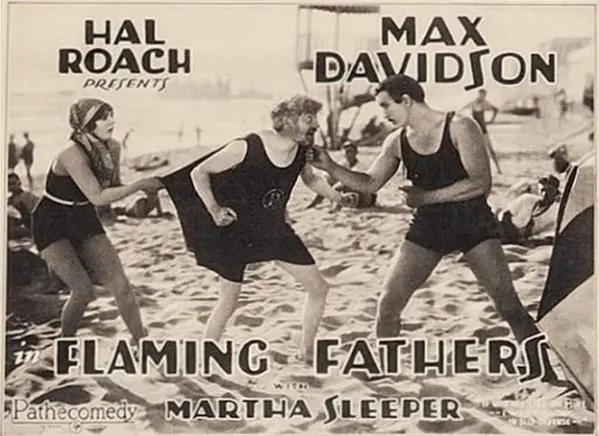
Comedy is the most perishable of cinematic genres, yet Flaming Fathers retains a surprising amount of its bite. The premise—a father following his daughter to the beach to stop an elopement—is merely an excuse for a series of escalating disasters. The beach itself acts as an antagonist. It’s a landscape of shifting sands, intrusive strangers, and the ever-present threat of the law.
The humor is derived from friction. Papa Gimplewart is a man of the city, a man of layers and rules, thrust into a world of semi-nudity and leisure. When he tries to change into his bathing suit, it isn't just a physical gag; it’s a battle against the very fabric of reality. He gets caught, he trips, he offends. It’s clunky. It’s awkward. And it’s deeply human.
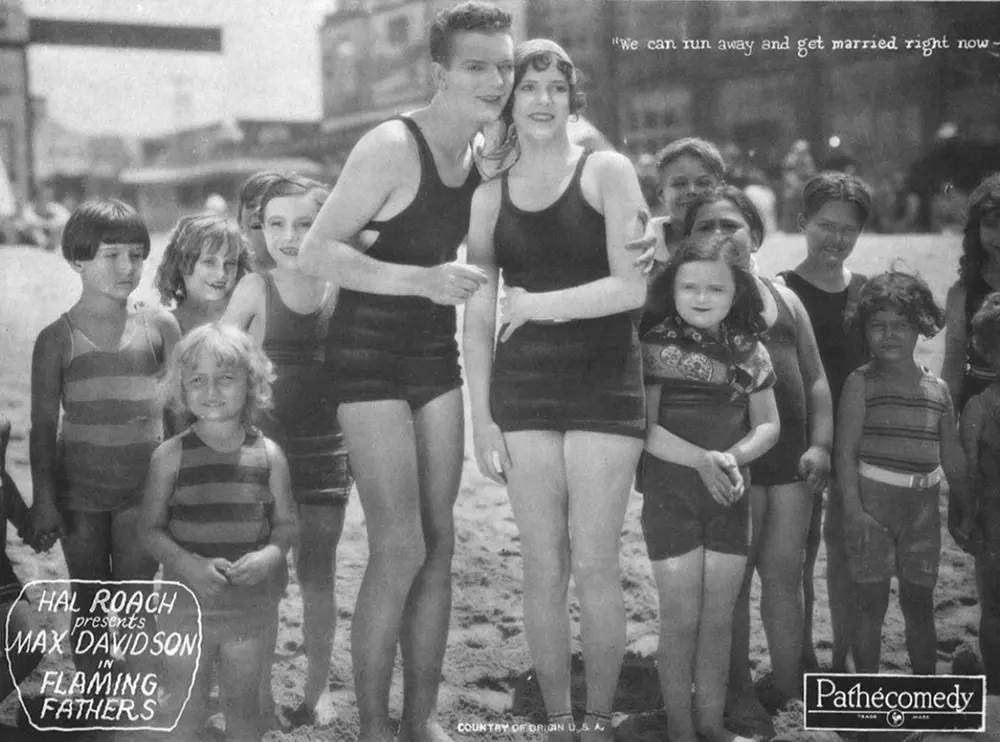
Max Davidson is a human rubber band. In Flaming Fathers, he plays Papa Gimplewart with a level of commitment that borders on the manic. Unlike the graceful slapstick of Buster Keaton, Davidson’s movement is jagged and frantic. He is the progenitor of the 'cringe' comedy we see in modern shows, making the audience feel his embarrassment in every frame.
Take the scene where he interacts with the cop, played by the formidable Tiny Sandford. Sandford is the perfect foil—immovable, silent, and judgmental. The height difference alone is a visual joke, but the real comedy comes from Davidson’s desperate attempts to appear innocent while his own body betrays him. It’s a dynamic we see repeated in other Roach productions like His Jonah Day, where the protagonist's own bad luck becomes his primary obstacle.
The supporting cast, including Martha Sleeper and Eddie Clayton, mostly serve as straight-men to Davidson’s whirlwind of anxiety. Sleeper, in particular, provides a necessary lightness that contrasts with her father's heavy, neurotic presence. While they don't get the big laughs, their normalcy is the anchor that prevents the film from floating off into total abstraction.
While Hal Roach is the name on the door, the fingerprints of Leo McCarey are all over this short. McCarey had a unique ability to find the humor in the mundane, and he pushes the beach setting for every ounce of its comedic potential. He understands that a gag isn't just about the payoff; it’s about the anticipation. The way Gimplewart eyes a crowded patch of sand is just as funny as the moment he eventually falls into it.
Compare this to something like The Girl and the Graft or Bowled Over. In those films, the comedy often feels more transactional. In Flaming Fathers, there is a sense of atmospheric dread. You know things are going to go wrong for Gimplewart; the only question is how much skin he’ll lose in the process. This is the McCarey touch—the humor of inevitable disaster.
The cinematography is functional, as was standard for the time, but the use of location is impressive. Shooting on a real beach adds a level of chaos that a studio set couldn't replicate. The wind, the real waves, and the genuine reactions of background extras (who often look genuinely confused by Davidson’s antics) add a layer of verisimilitude to the absurdity.
We cannot discuss Flaming Fathers without addressing its cultural context. Davidson’s 'Gimplewart' character was part of a series of Jewish-themed comedies. To a modern eye, some of the characterizations might feel like broad stereotypes. However, within the context of the 1920s, Davidson was actually bringing a level of humanity to these roles that was often missing from the cruder caricatures of the Vaudeville era.
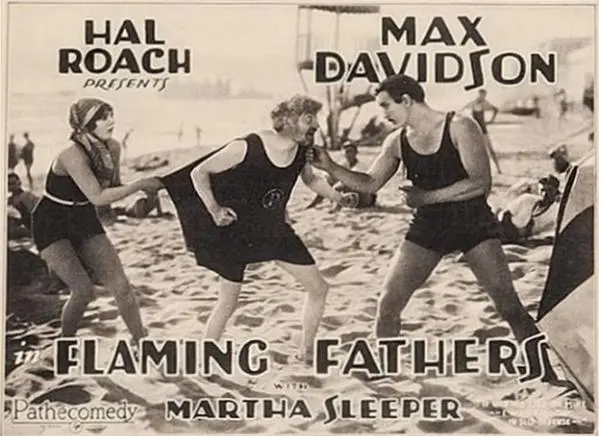
He wasn't just a punchline; he was a protagonist. We root for him, even as we laugh at his misfortune. This nuance is what separates a Roach production from lesser shorts of the period. There is a genuine warmth beneath the sand and the screaming. It’s about a father who, however misguidedly, cares about his daughter’s future.
This thematic depth is also present in films like The Return of Peter Grimm, though that film leans much harder into the dramatic. Flaming Fathers keeps its feet firmly planted in the surf, refusing to let the sentimentality drown out the slapstick.
If you are looking for a masterpiece of narrative cinema, look elsewhere. But if you want to see a raw, unpolished gem of physical comedy, then Flaming Fathers is essential. It is a loud movie for a silent one. It captures a specific moment in film history when the rules of comedy were being written in real-time on the beaches of California.
It is short, punchy, and occasionally brilliant. It’s flawed. But it works. The sheer commitment of Max Davidson to his own misery is something that transcends the decades. You don't need to know the history of the Roach studio to find the image of a man in a wet wool suit being chased by a cop funny. That is a universal language.
Pros:
Cons:
Flaming Fathers is a frantic, sandy relic that still manages to pull a laugh out of a modern audience. It isn't the most sophisticated film in the Leo McCarey catalog, but it is one of the most energetic. Max Davidson carries the weight of the world on his shoulders, and watching that weight crush him into the sand is a perverse, timeless delight. It’s a minor classic that deserves a spot in any silent comedy marathon. It’s messy, it’s loud, and it’s undeniably effective. Watch it for the history, stay for the headache-inducing hilarity.
IMDb 6.2
1934
Community
Log in to comment.