DbcultAccessing Vault...
7.9/10
Senior Film Conservator
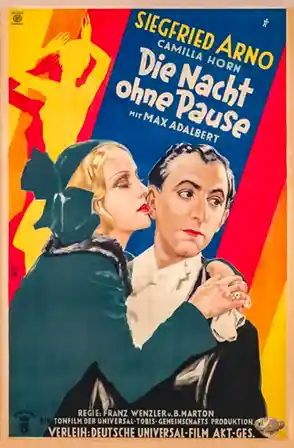
A definitive 7.9/10 rating for a film that redefined the boundaries of cult cinema. Die Nacht ohne Pause remains a cornerstone of transgressive art.
So, "Die Nacht ohne Pause" – The Night Without a Break – is it something you need to carve out time for today? Honestly, probably only if you've got a soft spot for really old German comedies, the kind that rely heavily on doors slamming and desperate lies. If you like your laughs broad and a bit creaky, and don't mind a slower pace, you might get a kick out of it. But if you're expecting anything fast-paced or modern, this one will likely feel like a drag. It’s for a very specific mood, maybe a rainy Sunday afternoon when you’re just curious.
The premise itself is pure farce gold. Julius (Willy Stettner) is caught red-handed, or at least, his wife Regine (Ilse Korseck) thinks she's caught him. The "incriminating evidence" is kept vague enough that it could be anything, which is part of the fun. You just know it’s something silly, not truly damning, but enough to set a wife’s mind racing.
What Julius does next is the whole movie. Instead of owning up, or even trying a believable denial, he just throws his poor, unsuspecting assistant, Max (Paul Richter), under the bus. Max, bless his heart, seems like the kind of guy who wouldn't hurt a fly, let alone embark on a secret affair. This immediately makes Julius look like an even bigger cad, which is just brilliant.
The movie then has to work to make us believe Regine would actually buy this. And for a while, she does! You see her expression flicker between anger, disbelief, and then this odd sense of pity for Max. Ilse Korseck plays it with a certain wide-eyed earnestness that sells the absurdity. It’s a very specific kind of performance, very much of its time.
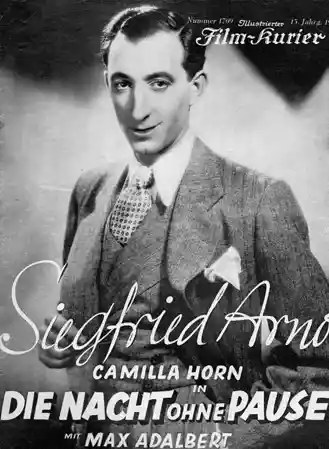
The chaos that ensues is what the title promises. Max suddenly finds himself in a very compromising position, and every attempt he makes to clear his name just seems to dig him deeper. There’s a scene where he’s trying to explain something, and Julius just keeps interrupting him with these loud, overly friendly interjections. It’s meant to look helpful but is clearly designed to keep Max from speaking the truth. You just want to reach into the screen and shake Max, tell him to just blurt it out! 😠
Other characters wander in and out, adding to the confusion. Gustl Gstettenbaur, playing some sort of younger, eager-to-please character, gets caught up in the crossfire. His reactions are often the most genuine, a kind of bewildered exasperation. You feel for him, really. He just wanted to do his job, maybe grab a coffee, and instead he's in the middle of this domestic battlefield.
The film's pacing definitely feels different from today. There are moments where a reaction shot lingers, perhaps a touch too long. It’s not necessarily bad, it just lets you really feel the awkwardness. Sometimes it feels less like a comedic beat and more like the director just needed to fill a few more seconds. But then, it also allows you to soak in the era, the way people dressed, the way they moved. It's a real time capsule.
And when Julius finally has to face the music? Well, it’s not quite as explosive as you might hope. The wrap-up is charmingly simple, almost too neat. But then, this isn't a film about grand revelations. It's about the pure, unadulterated messiness of a very silly lie.
It's not a movie that will stick with you for days, but it offers a pleasant enough distraction. A bit like a very light dessert. It satisfies a particular craving for old-world charm and simple misunderstandings. A nice little peek into a bygone comedic style. You might even find yourself chuckling at the sheer audacity of Julius's lies. Max Adalbert also has a brief, but memorable, turn that just adds another layer to the general befuddlement. He doesn't say much, but his presence just screams "why am I here?".
IMDb 7.3
1928
Community
Log in to comment.