DbcultAccessing Vault...
Cult Review
Senior Film Conservator
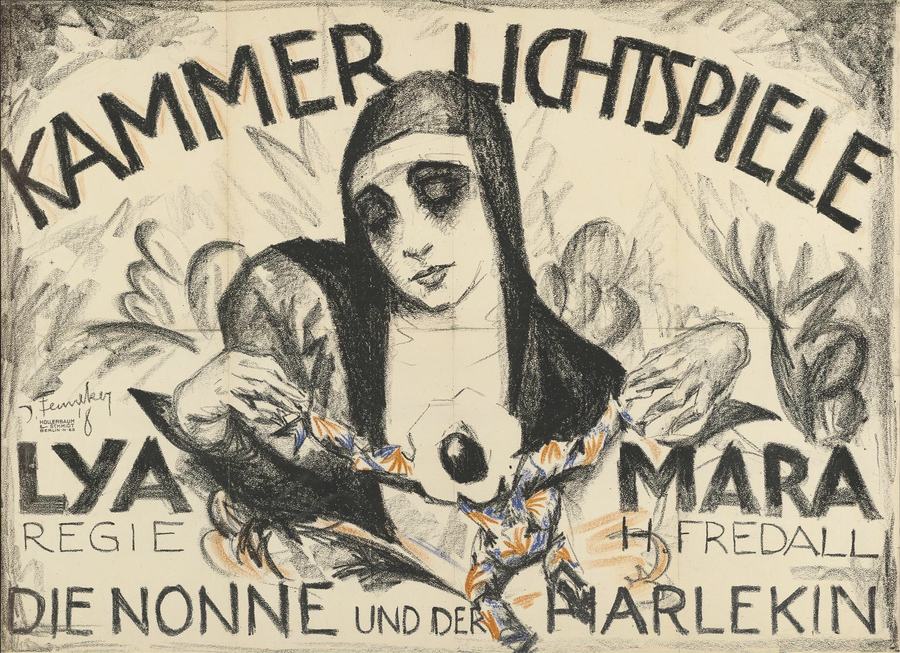
In the annals of German silent cinema, a period renowned for its profound artistic experimentation and psychological depth, Die Nonne und der Harlekin emerges not merely as a relic of a bygone era, but as a vibrant, pulsating testament to the enduring power of human emotion. Helmed with an almost surgical precision by Frederic Zelnik and penned with an evocative grace by Franz W. Koebner, this film transcends its historical context, offering a timeless meditation on the crushing weight of societal expectation, the intoxicating allure of forbidden desire, and the relentless quest for individual liberation. It is a work that, even decades later, resonates with a startling contemporaneity, challenging viewers to confront their own definitions of faith, freedom, and the myriad contradictions inherent in the human spirit.
The visual grammar of Die Nonne und der Harlekin is perhaps its most striking feature. Zelnik, a master of atmospheric composition, crafts a world bifurcated by stark, almost brutal contrasts. The convent, where Sister Agnes (Lya Mara) has pledged her life, is rendered in an architectural language of severe lines and oppressive shadows. It is a place of muted tones, where the white of the nun's habit, rather than signifying purity, often feels like a shroud, a uniform of spiritual incarceration. The camera lingers on the cold stone walls, the narrow corridors, the repetitive rituals, effectively conveying the suffocating rigidity of Agnes's existence. This visual rhetoric of confinement is shattered, however, by the sudden, kaleidoscopic irruption of the Harlequin's world. His presence, a riot of geometric patterns, vibrant hues (even in monochrome, the implication of color is palpable), and unrestrained movement, acts as a visual metaphor for the very antithesis of Agnes's cloistered life. Paul Bildt's Harlequin is a whirlwind of theatricality, a living embodiment of chaos and joy, his every gesture a defiant rejection of solemnity. The juxtaposition of these two worlds – one of disciplined silence, the other of boisterous performance – creates a powerful dialectic that drives the film's emotional core.
Lya Mara's performance as Sister Agnes is nothing short of transcendent. Without the crutch of spoken dialogue, she conveys an entire universe of internal turmoil through the subtlest shifts in her gaze, the tremor of her hands, the almost imperceptible tensing of her jawline. Her eyes, often downcast, occasionally lift with a desperate, yearning intensity that speaks volumes of her repressed desires. She doesn't just act the part; she inhabits Agnes's spiritual crisis with an authenticity that is both heartbreaking and profoundly compelling. Her initial encounters with the Harlequin are masterclasses in understated reaction – a flicker of curiosity, a blush of shame, a widening of eyes that betray a soul awakening to sensations long dormant. This portrayal elevates the film beyond a simple melodrama, transforming it into a poignant psychological study of a woman grappling with the very foundations of her identity. Hermann Vallentin and Heinrich Schroth, in their supporting roles, provide crucial anchors to the institutional power structure, their performances often embodying the stern, unyielding face of religious authority, further emphasizing Agnes's isolation and the enormity of her personal struggle.
Franz W. Koebner's screenplay, while deceptively simple in its premise, weaves a rich thematic tapestry. At its heart lies the eternal conflict between spiritual devotion and carnal, human yearning. Agnes's vows represent an absolute commitment to the divine, a renunciation of the earthly. Yet, the Harlequin, with his infectious zest for life, his vibrant artistry, and his undeniable charm, represents a potent challenge to this absolute. He is not presented as an evil tempter but rather as a catalyst, a mirror reflecting Agnes's own suppressed humanity. The film bravely explores the idea that true faith, if it is to be profound, must confront and integrate, rather than merely suppress, the full spectrum of human experience. This is a theme that echoes through cinematic history, finding later resonance in works that explore similar institutional pressures and personal awakenings, such as the moral quandaries faced by characters in The Crucible, albeit in a different historical context and with a distinct flavor of societal condemnation.
Beyond the sacred and the profane, Die Nonne und der Harlekin is a potent commentary on freedom – or the lack thereof. Agnes is physically and spiritually confined, her choices circumscribed by the rigid doctrines of her order. The Harlequin, by contrast, embodies boundless liberty, moving from town to town, unfettered by convention. Their burgeoning connection is not just a romantic one; it is a profound philosophical dialogue rendered through glances and gestures. It questions the very nature of happiness: can it truly be found in absolute devotion, or does it require the embrace of the messy, unpredictable realities of human connection? This quest for self-determination, often against overwhelming odds, is a recurring motif in cinema, seen in the internal struggles of characters navigating personal crises akin to those in Daybreak, where a single moment can alter the trajectory of a life, or the societal pressures faced in Strejken, highlighting collective struggles against oppressive systems.
Frederic Zelnik’s directorial prowess is evident in every frame. He understands the unique demands of silent cinema, where visual storytelling must compensate for the absence of dialogue. His use of deep focus, allowing multiple planes of action to unfold simultaneously, adds layers of psychological complexity. The editing is deliberate, almost rhythmic, mirroring the internal struggle of Agnes. Moments of quiet contemplation are juxtaposed with bursts of dynamic action, particularly during the Harlequin's performances, creating a palpable sense of tension and release. Furthermore, the film's innovative use of intertitles – not merely as expositional tools, but often imbued with poetic language or mirroring the characters' internal monologues – elevates them to an artistic component rather than a mere necessity. This sophisticated approach to narrative construction ensures that the audience is not simply observing the plot but is deeply immersed in the emotional landscape of the characters.
The supporting cast, including Frederic Zelnik himself in a subtle but impactful role (a testament to the multi-hyphenate talents of the era), along with the formidable presence of Hermann Vallentin and Heinrich Schroth, contribute significantly to the film's textured reality. Their performances, while less central than Mara's, are crucial in establishing the societal and religious framework against which Agnes's rebellion plays out. Paul Bildt's Harlequin is particularly memorable; he manages to convey both a carefree spirit and an underlying sensitivity, ensuring that his character is not a mere caricature of temptation but a complex individual capable of genuine connection. His scenes with Mara crackle with an unspoken chemistry, a testament to the power of non-verbal communication in skilled hands. The interplay between these actors creates a dynamic ensemble that truly brings Koebner's vision to life, much like the intricate human relationships explored in Modern Love, which dissects contemporary romantic entanglements with a similar keen eye for human frailty and connection.
Die Nonne und der Harlekin, like many silent films, has experienced periods of obscurity, only to be rediscovered and re-evaluated by subsequent generations of cinephiles and scholars. Its narrative, though set in a specific historical and cultural context, delves into universal human experiences that remain relevant. The film's exploration of personal freedom versus institutional control, the tension between spiritual ideals and earthly desires, and the profound impact of individual choice, resonates deeply even today. It stands as a powerful reminder of the sophisticated storytelling capabilities of early cinema, demonstrating that the absence of synchronized sound did not equate to a lack of emotional or intellectual depth.
In an era dominated by rapid technological advancements in filmmaking, it is particularly instructive to revisit works like this. They force us to appreciate the fundamental elements of cinematic art: composition, performance, editing, and thematic resonance. The film's influence, while perhaps subtle, can be traced in later works that explore similar themes of societal pressure and individual breaking points, reminiscent of the entrapment felt by characters in Quicksand or the moral dilemmas presented in Public Be Damned. The film's enduring power lies in its ability to evoke profound empathy for Sister Agnes, to make her struggle feel intensely personal and universally relatable. Her journey from cloistered obedience to a nascent understanding of her own desires is a testament to the enduring human spirit's capacity for growth and self-discovery.
Ultimately, Die Nonne und der Harlekin is a film that speaks in the unspoken language of the soul. It is a cinematic poem that explores the fragile boundary between duty and desire, between the sacred and the secular. Through its masterful direction, evocative cinematography, and a truly unforgettable central performance by Lya Mara, it crafts a narrative that is both deeply specific to its time and utterly timeless in its emotional impact. It serves as a potent reminder that the most profound stories are often told not through grand pronouncements, but through the subtle interplay of light and shadow, gesture and gaze, silence and implied sound. For those willing to immerse themselves in its rich, nuanced world, this silent masterpiece offers an experience that is as intellectually stimulating as it is emotionally resonant, a true testament to the artistry of early German cinema. It compels us to consider the price of devotion, the burden of choice, and the irresistible draw of a life lived authentically, even if that authenticity comes at a profound personal cost. Much like the dramatic revelations and moral reckonings in It May Be Your Daughter or the intricate character studies in The Arrival of Perpetua, this film leaves an indelible mark, inviting contemplation long after the final frame fades to black.
IMDb 4.8
1931
Community
Log in to comment.