DbcultAccessing Vault...
Cult Review
Senior Film Conservator
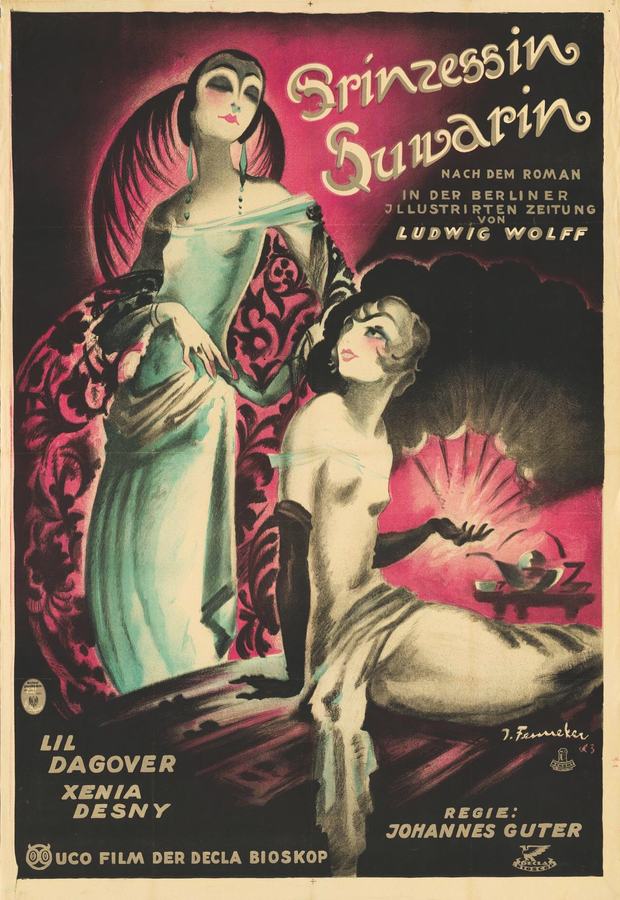
The tapestry of early 20th-century European cinema often wove narratives of profound social upheaval and personal transformation, and Die Prinzessin Suwarin stands as a poignant exemplar of this era's storytelling prowess. Released in 1923, this German silent film, a collaborative effort penned by the formidable Thea von Harbou and Ludwig Wolff, plunges its audience into the tumultuous aftermath of the Russian Revolution, viewed through the lens of a displaced aristocrat. The film's enduring resonance lies not merely in its historical context but in its meticulous dissection of identity, class, and the human capacity for reinvention amidst adversity. It’s a compelling journey of a woman stripped of her former grandeur, forced to forge a new existence in a world that has little use for titles and inherited wealth. This narrative arc, a common yet always captivating theme, is elevated by the film's evocative visual language and the nuanced performances that define it.
At its core, Die Prinzessin Suwarin is a tale of two worlds colliding, personified by its titular character and the burgeoning industrialist, Cyrus Proctor. The opening sequence, depicting two passenger ships docking in the bustling port of Hamburg, immediately establishes a stark dichotomy. On one vessel, we find Princess Suwarin, portrayed with a compelling blend of fragility and resolve by the incomparable Lil Dagover. Her arrival is not one of triumphant return but of desperate exile, a ghost of her former self, having fled the Bolshevik homeland that irrevocably shattered her aristocratic existence. From the other ship emerges Cyrus Proctor, a millionaire whose very presence exudes the unassailable confidence of new money and burgeoning capitalism. The narrative deftly orchestrates their parallel arrival and subsequent convergence within the confines of the same grand hotel, a temporary haven that serves as a subtle commentary on the superficial equality afforded by wealth, even as their personal circumstances remain worlds apart. This initial setup immediately draws parallels to the broader societal shifts occurring across Europe, where old orders crumbled and new economic powers rose, a theme explored with similar gravitas in films like The Whispering Chorus, which also delved into the moral quandaries of a rapidly changing world.
Lil Dagover's portrayal of Suwarin is a masterclass in silent film acting. She conveys the weight of a lost empire through subtle glances and restrained gestures, her eyes often betraying a profound melancholy beneath a veneer of aristocratic composure. The princess, dispossessed and disoriented, quickly realizes that her noble birthright holds no currency in the pragmatic world of post-war Germany. Her journey from regal exile to job-seeker is painted with a stark realism that resonates deeply. The film meticulously tracks her descent from a life of inherited privilege to the indignity of seeking employment, a stark reminder of the levelling effect of political upheaval. This struggle for survival and identity in a foreign land forms the emotional backbone of the narrative, urging the audience to empathize with her plight. The narrative avoids mawkish sentimentality, instead focusing on Suwarin's quiet determination, a quality that makes her an undeniably compelling protagonist. The visual storytelling, characteristic of the era, uses shadows and light to emphasize her internal struggles, painting a picture of a soul caught between a glorious past and an uncertain future.
The script, crafted by the masterful hands of Thea von Harbou, known for her intricate plots and strong female characters, and Ludwig Wolff, navigates Suwarin's new reality with remarkable sensitivity. Her search for work leads her to an unexpected destination: a film production company. This setting is not merely a backdrop but a thematic counterpoint to Suwarin's own life. The world of cinema, a realm of manufactured illusion and glamorous artifice, contrasts sharply with the raw, unvarnished reality of her exile. Here, she encounters Tina Bermonte, the dazzling movie star, whose life of fabricated drama and public adoration stands in stark opposition to Suwarin's quiet desperation. Bermonte, likely portrayed with the typical theatricality of silent film stars, represents the aspirational glamour of the era, a dream that Suwarin observes from the periphery. This juxtaposition allows the film to subtly comment on the burgeoning culture of celebrity and the escapism offered by the silver screen, even as it highlights the harsh truths of economic survival. This engagement with the entertainment industry as a setting for deeper human drama is a compelling narrative choice, reminiscent of the behind-the-scenes struggles and aspirations seen in films like All Night, though with a distinct European flair.
It is within this world of flickering lights and manufactured dreams that Suwarin finds an unexpected connection. She falls in love with Andrej Klipman, an auxiliary director, a figure who likely embodies a more grounded, perhaps intellectual, presence in contrast to the overt glamour of Bermonte or the rigid hierarchy of her past. This romance is pivotal, signifying Suwarin's complete break from her former life and her embrace of a new identity. It suggests a love born not of social obligation or inherited status, but of shared humanity and mutual respect, a profound shift from the arranged marriages and political alliances that would have defined her aristocratic past. The casting for Klipman, though not explicitly detailed in the plot, would have been crucial to convey this sense of authentic connection. The film’s exploration of love across social divides or in unexpected circumstances is a timeless theme, echoed in the romantic entanglements found in films such as Her Private Husband or A Desert Wooing, though Die Prinzessin Suwarin imbues it with a unique poignancy given the protagonist's profound displacement.
The film's strength is further amplified by its robust ensemble cast. While Lil Dagover carries the emotional weight, the supporting players contribute significantly to the film's rich texture. Figures like Xenia Desni, Anton Edthofer, Ernst Pröckl, Hans Scholl, Heinrich Gotho, Heinrich Schroth, and Yuri Yurovsky would have populated Hamburg's vibrant, post-war landscape, each adding a layer of authenticity to the narrative. The presence of Rudolf Klein-Rogge, an actor renowned for his intense and often formidable screen presence (famously in The Keys to Happiness), would undoubtedly have lent a particular gravitas, perhaps as an antagonist or a character embodying the harsh realities Suwarin faces. Similarly, Alfred Abel, often cast in roles of authority or quiet dignity, and Lucie Mannheim, known for her versatility, would have rounded out the cast with compelling performances, each contributing to the film's immersive atmosphere. Even smaller roles, like those likely filled by Guido Herzfeld, would have been carefully crafted to enhance the sense of a bustling, complex world, echoing the intricate character work found in films that truly capture a societal moment.
Visually, Die Prinzessin Suwarin likely employs the dramatic lighting and expressive mise-en-scène characteristic of German silent cinema, though perhaps not reaching the full-blown Expressionist heights of some contemporaries. The contrast between the opulent hotel and the more mundane film studio, or the bustling streets of Hamburg, would have been rendered with careful attention to detail, each setting reflecting Suwarin's evolving emotional state. The cinematography would have emphasized the grandeur of her past through faded elegance and the starkness of her present through more utilitarian, almost documentary-style shots. The emotional arc of the film, guided by the intricate script, allows for a nuanced exploration of a woman's journey from despair to hope, from a life dictated by birth to one chosen through resilience. It transcends a simple romance or a historical drama, becoming a profound meditation on identity, adaptation, and the enduring human spirit in the face of monumental change. The film, in its quiet power, reminds us that even when stripped of everything, the capacity for love and self-discovery remains, a beacon in the darkest of times.
In its entirety, Die Prinzessin Suwarin emerges as more than just a historical artifact; it is a timeless narrative about displacement and the forging of a new self. The collaboration between Thea von Harbou and Ludwig Wolff on the script ensures a narrative rich in character development and thematic depth, while Lil Dagover’s central performance anchors the film with compelling grace. The film's ability to weave together the personal struggle of a princess with the larger societal shifts of post-WWI Europe, all within the nascent world of cinema, makes it a remarkable achievement. It stands as a testament to the power of silent cinema to convey complex human emotions and societal critiques without uttering a single word, relying instead on the artistry of its performers, the vision of its creators, and the enduring resonance of its themes. This is a film that speaks volumes about finding one's place in a world irrevocably altered, a theme as relevant today as it was a century ago.

IMDb 5.7
1935
Community
Log in to comment.