DbcultAccessing Vault...
Cult Review
Senior Film Conservator
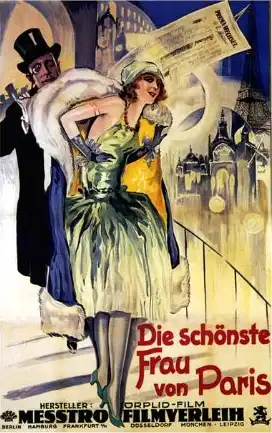
Alright, let’s talk about Die schönste Frau von Paris. Is it worth tracking down today? For most folks, probably not, no. But if you’re into silent cinema, especially German silent films from the 20s, then **absolutely** this one’s a little gem. If you hate intertitles or anything that moves slower than a TikTok, you'll be bored stiff. Just being honest. 🤷♀️
The whole thing hangs on Colette (Elga Brink), the titular 'most beautiful woman' working as a dancer in some fancy Parisian club. And boy, they really want you to know she's beautiful. There's a lot of shots of her just… standing there, looking ethereal. I actually found myself thinking, 'Okay, yes, we get it, she's gorgeous.' But you can't deny Brink has this real presence, even in black and white. Her eyes just kinda draw you in.
The plot, such as it is, involves two men falling for her. You have Rudolf Klein-Rogge as the older, very rich Count. He’s got this intense stare, very much the powerful type. And then Werner Fuetterer as the young, handsome artist who just can't seem to catch a break. You know the drill, right? Love triangle, class differences, lots of yearning looks.
One scene that really stuck with me is early on, when the Count first spots Colette dancing. He's just sitting there, completely still, while everyone else around him is a blur of movement and chatter. It’s such a **sharp contrast**. You see him, then you see her on stage, and the film cuts back to him, and he hasn't moved an inch. It tells you everything you need to know about his immediate obsession.
The Paris setting itself is, well, Paris! Not always clear if it's actual Paris or a very good studio set, but the atmosphere is there. The costumes are lovely, especially Colette's. There's one dress she wears that has these really delicate beads that catch the light even through the old film grain. It was just a small detail, but I noticed it.
There's a moment when the artist, struggling to pay for a meal, accidentally knocks over a vase. The way the waiter reacts, almost a cartoonish level of disdain, it actually made me chuckle. It felt very human, that little bit of clumsy embarrassment.
Another thing I kept noticing was how much they used reflections. Mirrors in Colette’s dressing room, shop windows, even puddles on the street. It added a layer to the idea of beauty and perception, you know? Like, is she the most beautiful, or is it just how everyone *sees* her?
The pacing is… deliberate. This is a silent film, so don’t expect quick cuts. Some scenes go on for what feels like ages, just to show someone walking across a room or thinking hard. It asks you to slow down. But then, when Colette finally makes a decision, it feels weighty because you’ve spent so much time just watching her *exist*.
I did find myself a little confused by some of the intertitles. They pop up, give you a sentence or two, and then vanish. Sometimes you wish they'd lingered a touch longer. Or maybe I just read slow. Who knows?
Warwick Ward, playing Colette's dance partner, has some great physical comedy moments too. He’s often in the background, making these exaggerated faces or gestures. It lightens the mood a bit when the main drama gets a little heavy. You almost feel bad for him, always the second fiddle.
This film really makes you appreciate how much expression actors had to convey without words. Elga Brink just *radiates* this quiet melancholy. You don't need to read an intertitle to know she's feeling trapped, or hopeful, or sad. It's all right there on her face. And those lingering shots? They really pay off.
So, yeah. If you're a fan of the era, or just curious about what cinema was like almost a hundred years ago, give Die schönste Frau von Paris a shot. It's not a thrill ride, but it has this quiet charm. And a lot of very pretty people.
Did I mention the Count’s hat? It’s a very good hat. Very strong character choice. 🎩
IMDb —
1933
Community
Log in to comment.