DbcultAccessing Vault...
Cult Review
Senior Film Conservator
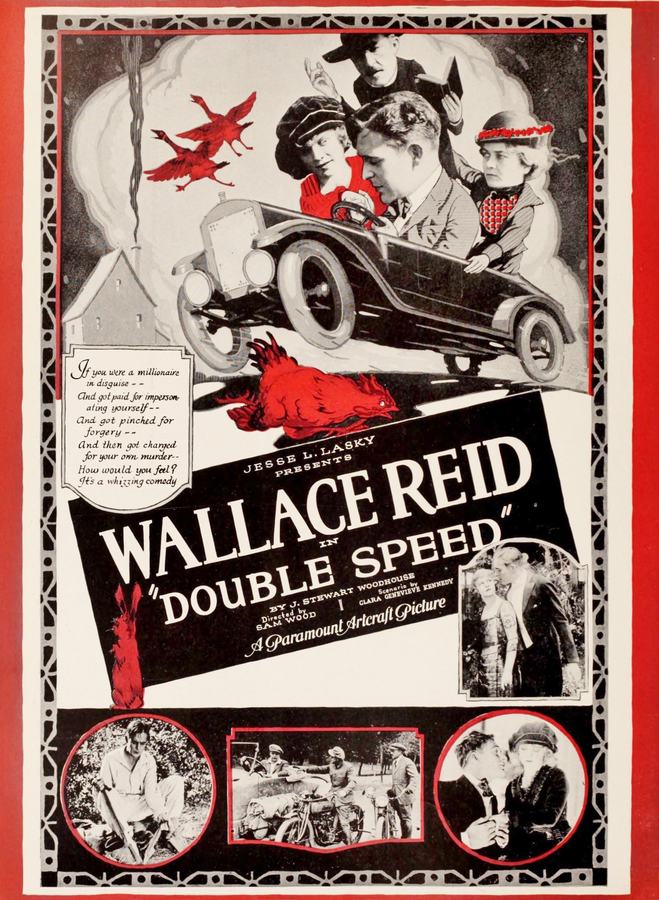
Picture a decade still coughing up the dust of world war, its arteries throbbing with bootleg gasoline and peroxide optimism; now drop a daredevil named Speed Carr inside a coast-to-coast crucible where pistons replace destiny. The resulting combustion, Double Speed, is less a conventional race film than a fugue state on celluloid, equal parts gasoline elegy and identity whodunit.
Director Harry A. Pollard—often dismissed as a journeyman—here orchestrates a hallucinatory map of the United States where every mile marker functions like a stanza in an epic poem. The east-coast start line unfurls beneath elevated tracks that resemble blackened ribs against the dawn sky, while the west-coast terminus dissolves into a sunset so overexposed it looks nuclear. In between, we get prairie fires mistaken for auroras, and Utah salt flats that behave like liquid mercury. The geography mutates so gleefully that you half expect the title cards to sprout wings.
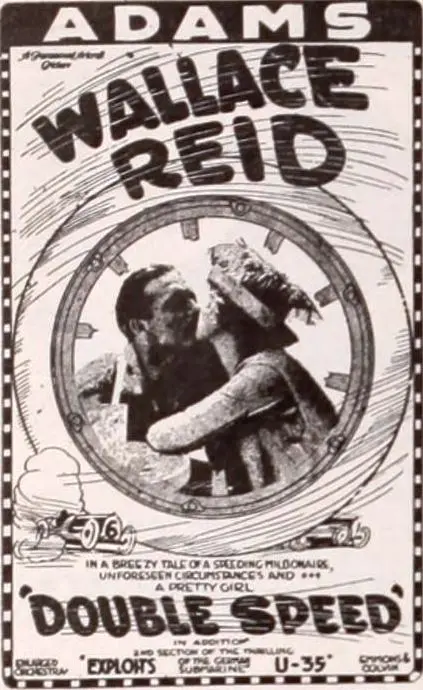
Wallace Reid, that tragically short-lived embodiment of rosy vigor, plays Carr as a man who trusts speed to outrun metaphysics. Watch his knuckles whiten on the steering column: they telegraph not fear but the realization that identity is merely the sum of velocity plus angle of trajectory. Reid’s charisma was once derided as "toothpaste-commercial sincerity," yet here it curdles into something more feral—a matinee idol discovering the abyss in his rear-view mirror.
Wanda Hawley’s character—officially listed as "Betty Bowen, journalist"—operates like a one-woman Greek chorus armed with a Graflex camera. She hitchhikes into the storyline, commandeers a courier motorcycle, and edits the film’s reality by literally slicing negatives in a darkroom sequence Pollard intercuts with Carr’s nocturnal dash through the Badlands. The metaphor is brazen: perception itself is a cut-and-paste job.
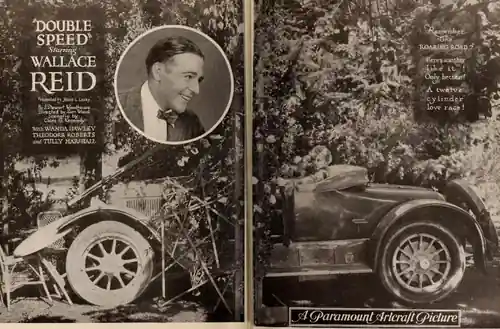
Tully Marshall’s whiskey-breathed mogul, bankrolling the race under the proviso that his dying daughter witness "one last miracle of speed," supplies the moral ballast. When he murmurs, "Time’s just another railroad baron—robs us all at the station," the line echoes like an epitaph for the silent era’s impending extinction.
Legend has it that the sequence where Carr’s car leaps a yawning gap in the Colorado plateau was achieved by anchoring a Studebaker to a telegraph cable and praying. The surviving prints—scarred with emulsion cracks—only amplify the peril; every flicker feels like nitrate threatening to return to its elemental volatility. Compare this anarchic bravado to the comparatively staid melodrama of Gladiola or the pastoral fatalism of Gypsy Anne, and you realize Double Speed is the jagged piece that never fit the era’s puzzle.
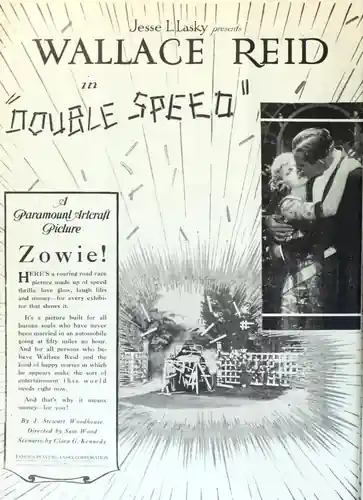
Clara Genevieve Kennedy’s scenario—embellished by Byron Morgan’s racetrack expertise—treats dialogue (via intertitles) like semaphore signals from a sinking ship. Note the repeated motif: "Who are you when no one can see your license plate?" It’s a question that migrates from pulp existentialism to prophetic statement on celebrity culture, predating by a century the Instagram era’s curated anonymity.
Reid’s supporting ensemble operates like synchronized pistons. Theodore Roberts as the railroad tycoon turned saboteur chews every frame with such relish you can almost taste the celluloid. Yet the miracle is that even minor drivers—each granted a single close-up as they swerve off the route—register as novellas of dashed hope. Consider the uncredited actress who, after crashing into a hay wagon, simply stares into the lens while adjusting her cloche hat: in that three-second gesture lies an entire subaltern history of women elbowing room inside mechanized modernity.
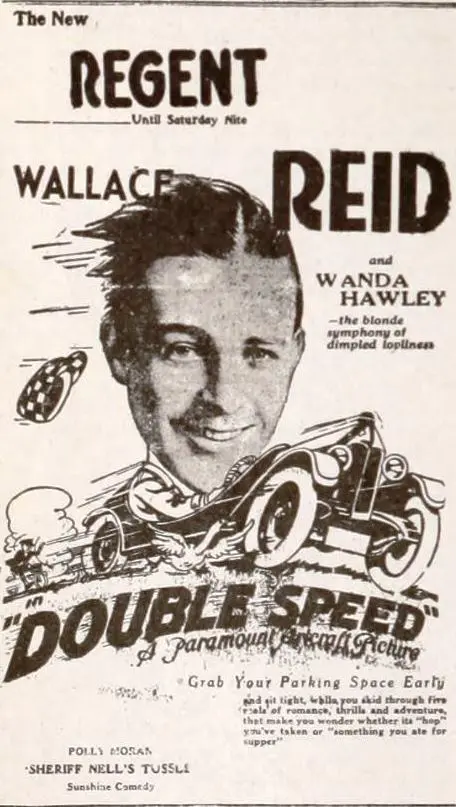
Cinematographer Frank Zucker toggles between hand-cranked under-cranking (rendering the cars demonic projectiles) and languid day-for-night shots where the desert glows like a petrified bruise. The tonal whiplash anticipates the neon-noir aesthetic that wouldn’t emerge until Kiss Me Deadly (1955). One reel, tinted amber, shows petrol barrels exploding in superimposed negative, turning flames into cobalt lilies—an image so unhinged it feels imported from Surreist Paris rather than Paramount’s backlot.
The rhythm refuses the polite cadences of contemporaries like The Jury of Fate. Instead we get match-cuts that splice carburetors with human heartbeats, cross-fades that transmute blood into motor oil. The effect is both visceral and philosophical: man and machine liquefy into one racing corpus, hurtling toward either transcendence or obliteration—distinctions blur, much like in A Gamble in Souls, though that film preferred cards over carburetors.
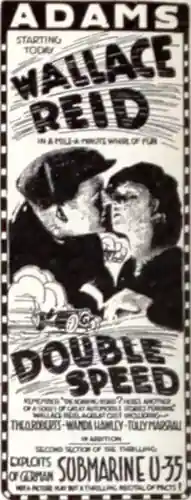
Seen today with a live score—preferably something percussive like a prepared-piano assault—the film regains its intended adrenal thrum. Yet even in utter silence, the phantom growl of engines seems to vibrate inside your sternum. That hallucinated soundscape testifies to the movie’s raw suggestive power; it doesn’t merely depict speed, it uploads velocity directly into your nervous system.
Only a 63-minute reassembly survives, cobbled from a 16 mm reduction print discovered in a São Paulo asylum’s attic. Scratches proliferate like varicose veins, and entire swaths—rumored to include a desert sandstorm shot in two-strip Technicolor—are lost to nitrate rot. Yet what remains feels miraculously coherent, partly because the narrative itself obsesses over incompleteness, substitutions, vanishings.
If Sowers and Reapers moralizes over karmic retribution at an agricultural pace, Double Speed posits karma as a tailwind. Likewise, while Romance and Rings treats courtship like a steeplechase, Pollard’s film recognizes that twentieth-century courtship will henceforth occur at 100 mph, with skid-marks for love letters.
So, is Double Speed a fractured relic or a prophetic text? Both. Its incompleteness mirrors our own collective drive toward a finish line that keeps receding. Reid’s death from morphine addiction the following year casts an ectoplasmic pall over every grin he flashes here. Yet the film refuses to calcify into museum piece; its restless cutting, its deranged stunts, its refusal of sentimental brake-pumping all conspire to make it feel—against logic—contemporary.
Watch it at 2 a.m. when insomnia has already loosened the seams of your reality. Let the warped piano of your mind supply the soundtrack. You’ll exit certain of only one thing: identity is just a question of how quickly you can swap plates before the highway patrol of existence clocks your true name. And that, in 1919 or 2024, is the only race worth flooring the accelerator for.
IMDb 6.1
1926
Community
Log in to comment.