DbcultAccessing Vault...
Cult Review
Senior Film Conservator
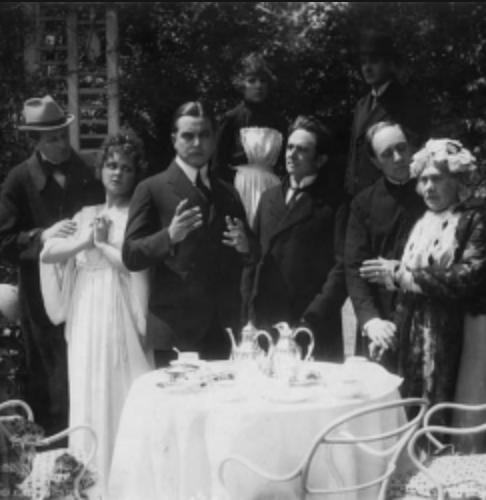
From the shadowy depths of early cinematic expression emerges Die Stimme des Gewissens, a film that, even in its considerable vintage, resonates with an unsettling contemporary pertinence. Penned by the formidable Stanislaw Przybyszewski, whose literary prowess often plumbed the murky waters of psychological torment and existential dread, this motion picture is far more than a mere narrative; it is an excavation of the human psyche’s most treacherous terrains. It plunges headlong into a world defined by what its cryptic plot synopsis so artfully terms 'the street of sexual covetousness and disobedience,' a descriptor that immediately establishes a tone of moral ambiguity and impending doom. This isn't a gentle stroll down a sunlit lane; it's a stumble through a fog-laden alley where every shadow seems to conceal a lurking temptation or a whispered betrayal.
The film’s thematic core, a searing indictment of unchecked desire and its catastrophic repercussions, is masterfully woven into a narrative fabric that feels both allegorical and viscerally real. We are introduced to a milieu where 'murderous and vicious love-traders' operate with chilling impunity, their machinations serving as the catalysts for a spiraling descent into moral decay. These aren't just figures of speech; they are the architects of the characters' ruin, embodiments of the destructive power of transactional affection and emotional exploitation. The film posits love not as a redemptive force, but as a dangerous currency, susceptible to manipulation and ultimately, devaluation. This cynical portrayal of human relationships, while stark, feels surprisingly prescient, reflecting anxieties that persist through generations about authenticity and predation in matters of the heart. It’s a bold statement, particularly for its era, challenging the romanticized notions often prevalent in popular storytelling.
Emmy Schleinitz, with a performance that must have been both captivating and disquieting, anchors much of the film’s emotional weight. One can imagine her expressions, captured on monochrome celluloid, conveying the gradual erosion of innocence or the dawning horror of complicity. Her character, likely a central figure ensnared by the film’s pervasive moral quagmire, navigates the treacherous currents of yearning, betrayal, and eventually, profound regret. Hugo Werner-Kahle, too, likely delivers a turn that is equally pivotal, perhaps embodying the very 'love-trader' or a figure similarly entangled in the web of deceit. The interplay between these central figures, augmented by the contributions of Henry Berg, Else Schilling, Gretl Ruth, Ferdinand Onno, and Louis Nerz, would have been crucial in fleshing out the complex moral landscape Przybyszewski envisioned. Each actor, in their own way, contributes to the oppressive atmosphere of foreboding, their silent performances speaking volumes about the human condition under duress. The ensemble cast, a veritable tapestry of early cinematic talent, collectively paints a portrait of a society teetering on the brink of ethical collapse, where personal desires often eclipse communal well-being, leaving a trail of shattered lives in their wake.
The narrative’s progression, marked by 'drunken hopes, and in convulsive despair,' is a testament to its unflinching realism, eschewing simplistic morality tales for a more nuanced exploration of human fallibility. Characters are not merely good or evil; they are complex beings driven by impulses they barely understand, often succumbing to temptations that promise fleeting solace but deliver lasting torment. The initial intoxicating rush of forbidden pleasure, perhaps a clandestine affair or a morally dubious business venture, inevitably gives way to a crushing realization of consequences. This arc of hopeful delusion followed by bitter disillusionment is a powerful dramatic engine, propelling the story forward with an inexorable momentum. It reminds one of the tragic spirals seen in films like The Woman of Lies, where deception, once unleashed, consumes all in its path, or the profound sense of lost potential explored in Blind Youth, where innocence is sacrificed at the altar of misguided ambition. The film, in its stark portrayal, suggests that the true cost of such transgressions is not merely external punishment, but an internal, psychological fracturing that leaves indelible scars, a testament to the enduring weight of moral culpability.
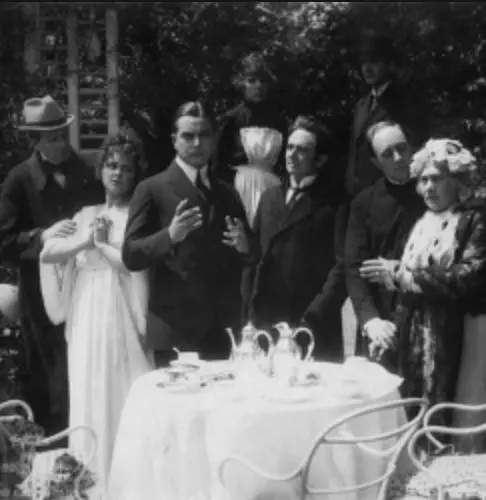
What truly elevates Die Stimme des Gewissens beyond a conventional melodrama is its titular concept: the 'voice of conscience.' This isn't a benevolent, guiding whisper, but rather a relentless, 'convulsive despair' born of 'resentment' – a self-inflicted torment that gnaws at the soul. It suggests that the ultimate arbiter of justice is often internal, a profound and inescapable sense of guilt that far outstrips any external punitive measures. The film posits that the psychological burden of one's actions can be a more potent and enduring punishment than any legal consequence. This psychological depth is a hallmark of Przybyszewski's work and lends the film an intellectual gravitas uncommon for its period. It forces the audience to confront the uncomfortable truth that sometimes, the most brutal prisons are those we construct within ourselves, brick by brick, with every moral compromise. The film masterfully externalizes this internal struggle, perhaps through visual metaphors or the actors’ intense portrayals of inner turmoil, making the abstract concept of conscience a tangible, almost palpable, presence that haunts every frame.
The directorial choices, though lost to the mists of time for many, must have been instrumental in translating Przybyszewski’s intricate psychological landscape onto the silver screen. One can imagine a reliance on stark contrasts, chiaroscuro lighting, and perhaps a subtle use of symbolism to convey the film’s grim undertones. The visual grammar of early cinema, often characterized by theatrical staging and expressive gestures, would have found fertile ground in this narrative. The struggle between light and shadow could have been used to represent the moral battle within characters, while close-ups, if employed, would have amplified the emotional intensity of Emmy Schleinitz’s or Hugo Werner-Kahle’s performances. The very title, 'The Voice of Conscience,' implies an auditory element, which in silent film, would have necessitated innovative visual or intertitle-based solutions to convey its pervasive, haunting presence. Perhaps a recurring motif, a visual echo, or even a specific character's silent, anguished cry could have served as its manifestation, a constant reminder of the moral reckoning to come, a specter that refuses to be ignored.
In its exploration of betrayal and its aftermath, Die Stimme des Gewissens finds intriguing parallels with other cinematic works of its epoch. The intricate web of deceit and the profound sense of moral compromise evoke the labyrinthine plotting of films like Rupert of Hentzau, albeit perhaps with a more internal, psychological focus rather than external political intrigue. The transactional nature of relationships, particularly the 'love-trader' element, brings to mind the harsh realities depicted in Dollars and the Woman, where human connection is often subjugated to material gain or social standing. Yet, where some films might offer a clear villain and hero, 'Die Stimme des Gewissens' delves into a more ambiguous territory, suggesting that culpability is often shared, and the lines between victim and perpetrator are frequently blurred. This nuanced approach to morality is a key differentiator, granting the film a timeless quality that transcends its historical context and speaks to universal human flaws, challenging simplistic notions of good and evil.
The legacy of Stanislaw Przybyszewski, a figure often associated with the Young Poland movement and European modernism, imbues the film with an intellectual weight that is palpable. His literary style, often characterized by Symbolism and Naturalism, would have undoubtedly influenced the film’s aesthetic and narrative choices. The emphasis on psychological states, the exploration of the subconscious, and the unflinching portrayal of human depravity are all hallmarks of his written work. To see these themes translated into moving images, even in the nascent stages of cinema, is a fascinating prospect. The film serves not just as entertainment, but as a historical document, offering insight into the artistic and philosophical currents that were shaping European culture at the time. It’s a reflection of an era grappling with modernity, with the erosion of traditional values, and with the burgeoning understanding of the complexities of the human mind. The film, therefore, is a vital piece of the puzzle in understanding the evolution of cinematic storytelling, particularly its capacity for profound psychological drama, cementing its place in the annals of thought-provoking cinema.
One cannot discuss Die Stimme des Gewissens without acknowledging its audacious portrayal of 'sexual covetousness and disobedience.' This was a daring subject matter for its time, challenging societal norms and pushing the boundaries of what was considered acceptable for public consumption. The film does not shy away from depicting the destructive power of illicit desires, but rather confronts them head-on, exploring their genesis and their devastating consequences. This unflinching gaze into the darker aspects of human nature sets it apart from more conventional narratives of the period. It aligns it with works that dared to explore the underbelly of society, the hidden passions and transgressions that simmer beneath a veneer

IMDb 5
1933
Community
Log in to comment.