DbcultAccessing Vault...
Cult Review
Senior Film Conservator
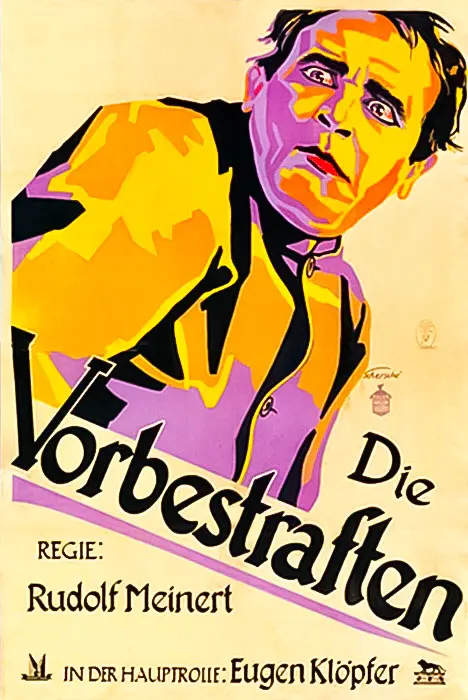
Is Die Vorbestraften worth your time in the modern era? Short answer: Yes, but only if you possess the patience for a bleak, unflinching look at the human condition that offers no easy exits.
This film is specifically for students of Weimar-era cinema and those who appreciate the 'Zille-film' aesthetic of 1920s Berlin. It is absolutely not for viewers seeking escapism or the high-octane thrills of contemporary crime dramas.
1) This film works because it refuses to sentimentalize the plight of the impoverished, using stark expressionistic lighting to mirror the internal despair of its protagonists.
2) This film fails because its commitment to relentless misery occasionally tips into melodrama, particularly in the third act where the coincidences feel forced.
3) You should watch it if you want to see a masterclass in silent-era physical acting, specifically the heavy, weighted movements of Albert Steinrück.
Die Vorbestraften is worth watching because it provides a visceral, historical window into the anxieties of pre-war Germany. It captures a society on the brink of collapse, where the law is a blunt instrument and empathy is a luxury few can afford.
Unlike the more polished Hollywood productions of the same era, such as The Conquest of Canaan, which treats social redemption with a degree of optimism, Die Vorbestraften is steeped in Germanic pessimism. It is a vital piece of film history that challenges the viewer to confront their own biases regarding justice and rehabilitation.
The brilliance of Die Vorbestraften lies in its title—'The Previously Convicted.' It suggests a permanent state of being. The film argues that the prison walls are merely replaced by the walls of the tenement house.
One particularly haunting scene involves the protagonist attempting to secure manual labor, only for his past to be revealed by a whispering colleague. The camera lingers on the protagonist's hands—strong, capable, yet rendered useless by a piece of paper. This focus on the physical cost of social exclusion is where Meinert excels.
The film shares a spiritual DNA with other social-conscience films like Open Your Eyes, but it lacks the moralizing tone. Instead, it opts for a gritty, almost documentary-like observation of poverty. It’s raw. It’s uncomfortable. And that is why it remains effective.
Albert Steinrück delivers a performance that is nothing short of monumental. In an era where silent acting often drifted into theatrical pantomime, Steinrück remains grounded. Every slump of his shoulders tells a story of a decade of hard labor and lost dignity.
Compare his performance to the more stylized work in Disraeli. While the latter relies on the artifice of historical persona, Steinrück feels like a man you could have met in a Berlin soup kitchen in 1927. He doesn't play for the back row; he plays for the lens.
The supporting cast, including Margarete Schlegel, provides the necessary emotional counterpoint. Schlegel’s portrayal of the wife is not one of a weeping martyr, but of a woman exhausted by the logistical nightmare of survival. Their chemistry is built on shared silence and the weary exchange of glances over meager meals.
Rudolf Meinert, working with writers Erich Kraft and Rudolf Meinert himself, creates an atmosphere of claustrophobia. The streets of Berlin are not presented as grand boulevards but as narrow, shadow-drenched traps.
The cinematography utilizes high-contrast lighting that would later define film noir. There is a specific shot of a staircase—steep, dark, and seemingly infinite—that serves as a perfect metaphor for the uphill battle of the ex-convict. It’s visual storytelling at its most potent.
The pacing is deliberate. Some might call it slow. I call it honest. Reintegration is not a series of fast-paced montages; it is a slow, agonizing crawl through daily humiliations. Meinert understands that the audience needs to feel the boredom and the dread of the protagonist's wait for a change that may never come.
To watch Die Vorbestraften without considering the political climate of the Weimar Republic is to miss half the film. This was a time of hyperinflation, political extremism, and a crumbling social safety net. The film acts as a mirror to a society that was rapidly losing its humanity.
It echoes the themes found in Menschen und Masken, focusing on the masks people must wear to survive. For the 'vorbestraften,' the mask is one of anonymity, and the tragedy occurs when that mask is ripped away.
The film is a bold political statement. It doesn't just blame the individual; it blames the collective. It suggests that the 'criminal' is a product of a system that provides no exit ramps from poverty. This was a dangerous and radical idea for 1927, and it still feels radical today.
Pros:
Cons:
Die Vorbestraften is a difficult watch, but a necessary one. It lacks the whimsical charm of Monkeys Prefer Blondes or the romanticism of Le rêve, but it possesses a gravity that those films lack. It is a work of cold, hard truth.
The film succeeds because it makes the viewer complicit. We are the neighbors whispering behind the protagonist's back. We are the employers turning him away. By the time the credits roll, you aren't just thinking about the characters; you're thinking about the world you live in.
It’s a grim masterpiece. It works. But it’s flawed. Its flaws, however, are the flaws of a filmmaker swinging for the fences, trying to change the world with a camera. That ambition alone makes it essential viewing for any serious cinephile.
IMDb —
1917
Community
Log in to comment.