DbcultAccessing Vault...
6.3/10
Senior Film Conservator
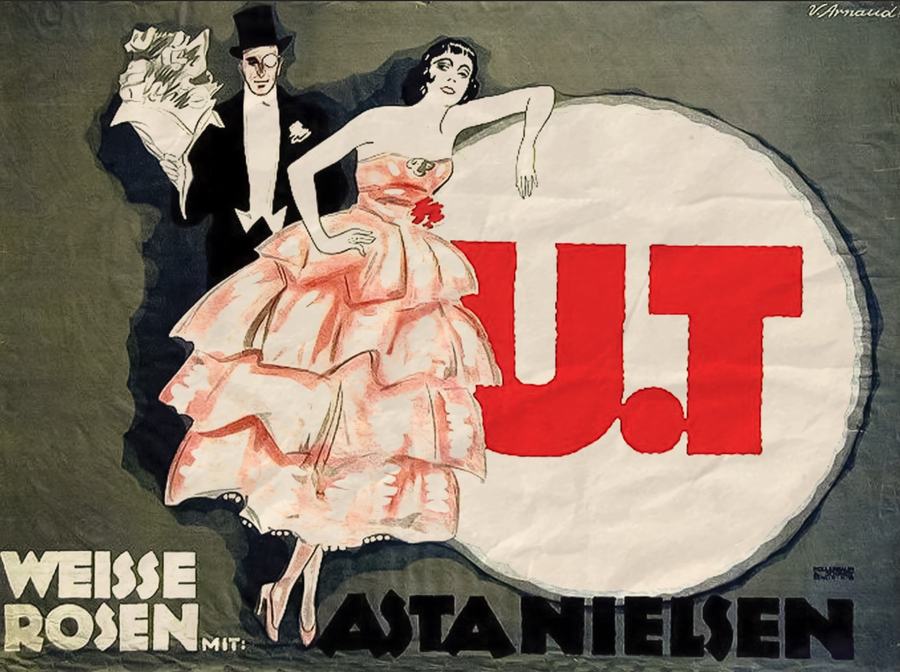
A definitive 6.3/10 rating for a film that redefined the boundaries of cult cinema. Die weißen Rosen remains a cornerstone of transgressive art.
Urban Gad’s Die weißen Rosen is less a film than a séance held inside a seashell: every frame carries the hush of North Sea foam, every intertitle flickers like a match struck inside a gossip’s mouth. Shot on the eve of Weimar’s inflationary tsunami, this 1923 curiosity survives only in a 35 mm nitrate print hoarded by an Antwerp cine-club, its edges chewed by vinegar syndrome yet glowing with the phosphorescence of a story that refuses to drown.
We open on Ostende’s casino pier, painted the colour of week-old mussels, where Hedda—played by Senta Eichstaedt with the brittle poise of a porcelain figurine that has learned to wink—prepares for her role in a tawdry operetta. She needs that necklace: a triple-strand choker of white roses carved from baroque pearls, once smuggled out of Haiti inside a piano. De Rochord (Carl Auen), her betrothed, hands it over like a gauntlet, his smile part affection, part collateral. The camera lingers on his signet ring pressing the clasp shut—an omen embossed in gold.
Enter the gang: Alfred Abel’s monocled mastermind channels Robert Walser’s fey sociopaths; Ernst Hofmann is a card-sharp with cheekbones sharp enough to slice the deck itself; Asta Nielsen, billed fourth but stealing scenes like a pickpocket on amphetamines, slinks through the shadows as the troupe’s petroleuse, her kohl-rimmed gaze promising arson for whoever undervalues her. They lift the pearls during a backstage blackout cued by a deliberately blown fuse—Gad cuts to the orchestra pit where the conductor keeps time, oblivious, his baton slicing the dark like a guillotine.
The fallout is operatic: de Rochord publicly jilts Hedda, the local papers run caricatures of her as a siren with octopus tentacles, and her theatre shutters its doors. But Hedda refuses the role of ruined ingénue. She trades her tulle skirts for a fisherman’s pea coat, rents a room above a tavern that smells of brine and unpaid rent, and begins a nocturnal odyssey through Ostende’s subaltern geography: the tidal crypts where smugglers chain barrels of jenever; the Kursaal turned field hospital during the war, its chandeliers wrapped in muslin; the photographic studio of Magnus Stifter’s cynical detective who sells crime-scene stills as postcards.
Gad’s visual grammar here anticipates Powell & Pressburger: superimpositions of playing cards over Hedda’s determined profile, irises that shrink to keyhole vantages as she eavesdrops on dockworkers arguing over fence rates. The city itself becomes a palimpsest of desire and debt, every cobblestone stamped with the crest of a defaulted bank. When Hedda finally confronts Nielsen’s firebrand in an abandoned wintergarden—its glass roof cracked, vines curling like accusations—the two women circle each other amid the skeletal remains of wicker chairs. Their exchange, conveyed only in glances and the rustle of leaves, is more erotically charged than any clinch de Rochord could offer.
Resolution arrives not via courtroom but curtain call: Hedda strides onstage for opening night, the necklace glinting like captured starlight, de Rochord humbled in the wings. Gad refuses a kiss; instead he cuts to the audience where Karl Harbacher’s newspaperman tears up tomorrow’s defamatory copy, the confetti drifting like snow. The final shot tilts up from the footlights to the rafters where a single white rose—pressed earlier between the pages of Hedda’s script—falls in slow motion, landing on the boards with the soft thud of absolution.
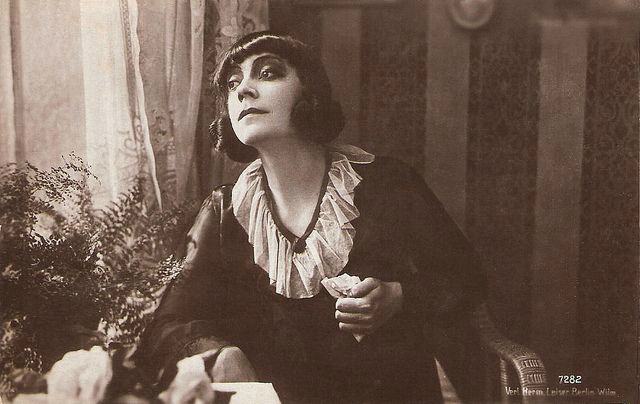
Eichstaedt’s Hedda is a masterclass in restrained hysteria: watch how her pupils dilate when she spots the necklace in a pawnbroker’s tray, the tremor in her gloved hand no louder than a sparrow’s heartbeat. Opposite her, Carl Auen’s de Rochord exudes the chilly entitlement of minor nobility whose emotions are leased, never owned. Yet the film’s voltaic jolt comes from Asta Nielsen in proto-garçonne mode—she swaggers in knickerbockers, cigarette aglow, a genderqueer revenant haunting the corridors of propriety. Their wordless standoff in the cloakroom of the Royal Baths—shot only in mirrors—feels like something out of The Captive filtered through Cocteau’s blood-red lens.
Gad and cinematographer Guido Seeber embrace a palette of bruised maritime hues: sea-foam greens, rust browns, the occasional arterial splash of lobster-shell orange. The pearls themselves are lit to mimic moonlight on wet sand—every close-up turns them into miniature planetaria. Compare this tactile fetishism to the elemental starkness of Robinson Crusoe or the stained-glass lyricism of The Legend of Provence; Gad instead courts decadence, the camera practically inhaling the musk of velvet and the metallic sting of fog.
Though silent, the film is scored for the mind: the clack of typewriters becomes snare drums, the hush of tide through breakers a timpani roll. Contemporary Belgian screenings enlisted Jacques Laszlo’s jazz quartet to improvise over the reel, weaving saxophone sighs between intertitles. Seek out the 2016 restoration with Maud Nelissen’s composition—her use of musical saw to emulate gull cries is nothing short of sorcery.
Urban Gad, often pigeonholed as merely Nielsen’s Svengali, here interrogates the economics of engagement: a woman’s worth measured in carats, a man’s honor in solvency. Hedda’s reclamation of the necklace doubles as seizure of authorship; she scripts her own third act rather than accepting the scarlet-letter epilogue assigned by patriarchal gazetteers. In doing so she foreshadows the self-liberation of Vanity Fair’s Becky Sharp, yet with less carnivalesque satire and more Baltic chill.
For decades Die weißen Rosen languished on FIAF’s most-wanted list, misfiled under verloren until a crate marked Projector Bulbs in a Bruges convent revealed the dupe negative. The current DCP, graced with Dutch intertitles, streams on ArteKino with optional French subtitles—though purists will pilgrimage to Cinematek Brussels where the sole surviving 35 mm print still smells faintly of iodine and sea salt.
If you hunger for more silent crime romances after this, consider the hypnotic fatalism of Huo wu chang or the Expressionist paranoia of Playing with Fire. Yet few balance opulence and insurgency with the tightrope grace Gad achieves here. Die weißen Rosen is a bauble worth pilfering time for—just don’t expect to return unscarred.
IMDb —
1919
Community
Log in to comment.