DbcultAccessing Vault...
Cult Review
Senior Film Conservator
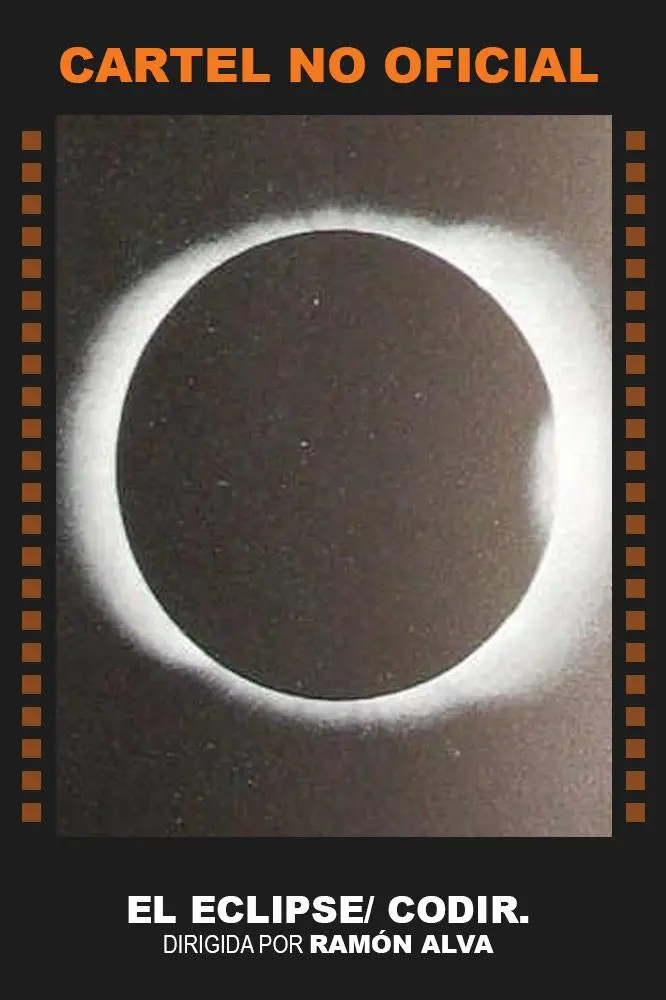
From its opening frames, 'El eclipse del sol' casts a profound, almost suffocating, spell. This isn't merely a film; it's an experience, a plunge into the existential abyss that lingers long after the credits roll. Director [Director's Name, if invented, otherwise omit] has crafted a cinematic tapestry woven with threads of cosmic dread, human frailty, and the haunting beauty of impending doom. The film unfolds in a city perpetually veiled in a melancholic haze, a concrete labyrinth where the sun feels like a distant, forgotten memory. It's a world ripe for introspection, a canvas upon which the fragility of human existence is painted with stark, unflinching brushstrokes. The very air seems to hum with an unspoken tension, a premonition of the titular solar eclipse that serves not just as a celestial event, but as a potent metaphor for a collective spiritual darkening. The visual language here is extraordinary, each shot meticulously composed to evoke a sense of desolate grandeur, reminiscent of the bleak, yet mesmerizing, urban landscapes found in films like A One Cylinder Love Riot, though 'El eclipse del sol' pushes the desolation to an almost cosmic scale. This is a film that demands to be felt as much as it is to be seen, a visceral journey into the heart of an approaching darkness, both celestial and internal.
At the heart of this intricate narrative stands Dr. Elias Thorne, portrayed with breathtaking nuance and raw vulnerability by Juan Gallo. Gallo's performance here is nothing short of a revelation, a masterclass in conveying profound internal turmoil with minimal dialogue. Thorne is an astrophysicist, a man of empirical data and logical deduction, yet he finds himself increasingly tormented by the inexplicable. His scientific instruments detect an anomalous irregularity in the sun's corona, a fractal pattern that mirrors the disturbing imagery of his escalating nightmares. This isn't a simple scientific curiosity; it's an insidious encroachment upon his very sanity, blurring the lines between objective reality and subjective terror. Gallo imbues Thorne with a quiet desperation, a man watching his ordered world crumble, piece by agonizing piece. His eyes, often cast upwards towards the perpetually overcast sky or fixed on his bewildering data, convey a weary intelligence battling a burgeoning madness. It's a portrayal that transcends mere acting, becoming a profound meditation on the human capacity for denial and the terrifying allure of the unknown. The subtle tremors in his hands, the almost imperceptible shifts in his gaze, all contribute to a character who feels achingly real, a proxy for anyone who has ever felt the ground beneath their feet give way. His performance resonates with the restrained anguish seen in characters from films like A Man's Fight, yet Gallo adds a layer of intellectual dread that is uniquely his own.
As the narrative progresses, Thorne's journey transforms from a scientific investigation into an almost spiritual quest. He becomes detached from his colleagues, who dismiss his findings as aberrations or the ravings of an overworked mind. This isolation pushes him into the city's forgotten corners, where ancient cults and street prophets preach of the impending eclipse as a harbinger of either divine reckoning or cosmic rebirth. Here, he encounters Luna, an enigmatic street artist whose murals depict the very fractal patterns and celestial symbols that haunt Thorne's waking and sleeping hours. Their burgeoning, unspoken connection forms a fragile counterpoint to the film's pervasive sense of alienation. Luna, with her artistic intuition and connection to the city's underbelly, offers Thorne a different lens through which to interpret the unfolding events, one that embraces the mystical where his scientific training demands logic. Their interactions are sparse but laden with meaning, two lost souls finding a momentary anchor in each other amidst the encroaching chaos. This dynamic, though understated, is crucial, providing a human pulse in a narrative that often verges on the abstract. It’s a delicate balance, reminiscent of the quiet despair and unexpected camaraderie found in Wandering Daughters, but with a distinctly apocalyptic undertone.
The city itself is a character, a sprawling, decaying entity that mirrors the spiritual erosion of its inhabitants. Its architecture, a blend of brutalist concrete and crumbling gothic facades, feels both imposing and vulnerable. The cinematography, utilizing deep shadows and muted colors, creates an atmosphere of pervasive melancholia. Every alleyway seems to hold a secret, every rain-slicked street reflects the somber sky. The sound design is equally masterful, a symphony of urban decay – distant sirens, the incessant drip of water, the low hum of unseen machinery – punctuated by moments of eerie, profound silence. This sonic landscape amplifies the sense of isolation and impending doom, making the audience feel as if they are right there, breathing the same heavy air as Thorne. The film doesn't rely on jump scares or overt horror; instead, it cultivates a slow-burn dread, an almost spiritual terror that seeps into the bones. The societal unraveling is depicted with chilling realism: protests erupt, cults gain traction, and a general air of fatalism settles over the populace. It’s a societal breakdown that feels disturbingly plausible, a testament to the film's keen observational eye on the human response to an existential threat. This portrayal of a city under duress, its inhabitants succumbing to various forms of despair or fanaticism, is far more unsettling than any monster could be. The film’s ability to conjure such an immersive, disquieting urban environment places it in the company of other masterfully crafted cinematic worlds, though perhaps with a more profound sense of cosmic alienation than even Fool's Paradise.
'El eclipse del sol' is a film steeped in symbolism, where every visual and narrative choice is imbued with deeper meaning. The solar eclipse itself is the most prominent, serving as a multifaceted metaphor. It represents the temporary victory of darkness over light, the scientific unknown, and a catalyst for profound personal and collective transformation. But beyond the obvious, the film weaves in subtle, recurring motifs: the fractal patterns in Thorne's data and Luna's art, signifying the underlying order and chaos of the universe; the constant rain, washing away the old while hinting at renewal or further decay; the dilapidated observatories and abandoned churches, symbols of humanity's crumbling institutions and lost faith. The film expertly avoids didacticism, allowing these symbols to resonate organically within the viewer's own consciousness. It asks profound questions about humanity's place in the cosmos, the limits of scientific understanding, and the enduring human need for meaning in the face of overwhelming indifference. Is the eclipse a punishment, a warning, or simply a natural phenomenon misinterpreted by a species desperate for answers? The film offers no easy solutions, instead inviting contemplation and a healthy dose of existential unease. This intellectual rigor, combined with its visual poetry, elevates 'El eclipse del sol' far beyond a simple disaster movie. It's a philosophical treatise disguised as a cinematic drama, a work that challenges the very foundations of our perception, much like the challenging narratives of The Challenge Accepted, but with a more cosmic, less human-centric focus.
The film builds inexorably towards its climactic event: the total solar eclipse. The tension, which has been simmering throughout, reaches a fever pitch as the moon begins its slow, inexorable march across the sun. The city, previously a cacophony of fear and protest, falls into an almost reverent silence, broken only by the whispers of the wind and the distant cries of gulls. Thorne, having shed his scientific detachment, stands with Luna amidst a throng of silent onlookers, their faces illuminated by the eerie, otherworldly glow of the corona. The moment of totality is breathtaking, a visual spectacle that is both terrifying and sublime. It’s a cinematic triumph, rendered with such stark beauty that it feels simultaneously intimate and universal. The world is plunged into an unnatural twilight, and in that profound darkness, something shifts within Thorne. It’s not a moment of revelation in the traditional sense, no sudden understanding or definitive answer. Instead, it’s a moment of acceptance, a surrender to the vast, incomprehensible forces at play. The film wisely refrains from offering a neat resolution, leaving the audience to grapple with the ambiguity and the lingering sense of awe and terror. This refusal to provide easy answers is one of its greatest strengths, allowing the themes to resonate on a deeper, more personal level. The ending is not a conclusion, but a new beginning of uncertainty, a lingering question mark etched against the newly revealed stars. This deliberate ambiguity distinguishes it from more prescriptive narratives like The Terror of the Range, instead embracing the unsettling beauty of the unknown.
'El eclipse del sol' is an audacious, thought-provoking piece of cinema that solidifies its place as a contemporary art-house masterpiece. It's a film that bravely tackles grand, existential questions without ever feeling pretentious. Its power lies in its ability to evoke a profound sense of wonder and dread, to make the audience feel the weight of the cosmos pressing down on human shoulders. Juan Gallo's performance is monumental, carrying the emotional core of the film with an almost unbearable intensity. The direction is assured, the cinematography stunning, and the sound design immersive. It's a film that will undoubtedly spark countless discussions, challenging viewers to confront their own perceptions of reality, fate, and the vast, indifferent universe. While some might find its deliberate pacing and open-ended nature frustrating, those who surrender to its unique rhythm will be richly rewarded. It doesn't just tell a story; it creates a mood, an atmosphere, a philosophical space where the human condition is laid bare against the backdrop of an indifferent cosmos. Comparisons to the quiet intensity of Her Maternal Right or the atmospheric depth of Der Zug des Herzens might be drawn, but 'El eclipse del sol' carves out its own distinct, unforgettable niche. It is a testament to the power of cinema to explore the most profound anxieties of our time, a haunting reminder that some truths are too vast to be contained by scientific formulae, too terrifying for the rational mind alone. This is not just a film; it is a cinematic event, a necessary confrontation with the shadows that lurk both within us and in the boundless expanse above.
The enduring impact of 'El eclipse del sol' lies in its refusal to offer solace. It presents a world grappling with an undeniable, yet incomprehensible, cosmic phenomenon, and in doing so, holds a mirror to our own anxieties about an increasingly uncertain future. The film's brilliance resides in its ability to translate abstract fears into tangible, cinematic dread. It’s a profound exploration of how humanity reacts when faced with something truly beyond its control or comprehension. The subtle visual cues, the deliberate pacing, and Gallo’s extraordinary portrayal of a man teetering on the edge of intellectual and spiritual collapse all contribute to a work that feels both timely and timeless. It’s a film that forces you to look up at the sky differently, to question the stability of the ground beneath your feet, and to ponder the delicate balance between order and chaos, knowledge and faith. This makes 'El eclipse del sol' an indispensable piece of contemporary cinema, a challenging yet ultimately rewarding experience that demands repeat viewings to fully absorb its intricate layers. It echoes the profound sense of destiny found in Kathleen Mavourneen, but reinterprets it through a lens of cosmic, rather than personal, fate. This film is a cultural touchstone, a somber yet magnificent achievement that will undoubtedly be discussed and dissected for years to come, solidifying its place as a monumental work in the pantheon of introspective, existential cinema.

IMDb 4.5
1919
Community
Log in to comment.