DbcultAccessing Vault...
Cult Review
Senior Film Conservator
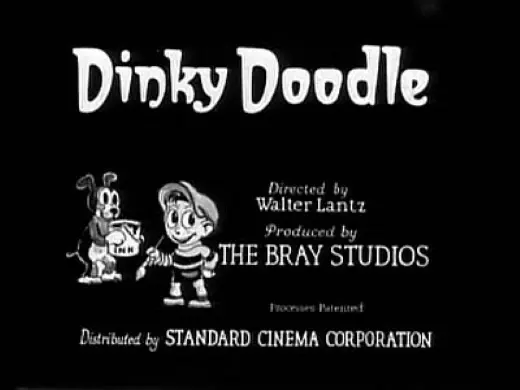
Is “Dinky Doodle in the Army” worth watching today? Short answer: Yes, but with significant caveats that frame it more as an archaeological expedition into animation history than a purely entertaining viewing experience. This film is unequivocally for animation historians, cinephiles interested in the foundational elements of the art form, and those with a deep appreciation for early 20th-century pop culture. It is decidedly not for viewers seeking modern narrative sophistication, high production values, or even consistently laugh-out-loud humor, as its charms are largely contextual and historical.
This film works because it offers an invaluable, unvarnished glimpse into the nascent stages of American animation, showcasing the raw inventiveness and boundless energy that defined the era. It fails because its simplistic narrative, rudimentary animation techniques by contemporary standards, and reliance on dated comedic tropes make it a challenging watch for anyone not deeply invested in its historical significance. You should watch it if you wish to understand the evolutionary lineage of cartoon characters, appreciate the genesis of slapstick animation, or simply enjoy the peculiar charm of a bygone era in filmmaking.
To truly appreciate “Dinky Doodle in the Army,” one must first understand its place within the grand tapestry of animation history. Dinky Doodle, a character largely forgotten by mainstream audiences today, was a pioneering figure in the early days of animated cinema. Created by Walter Lantz, the visionary behind Woody Woodpecker, Dinky represented the experimental spirit of an industry still finding its feet. These early shorts were less about intricate plotlines and more about the sheer novelty of moving drawings, a magic trick unfolding before audiences’ eyes.
“Dinky Doodle in the Army” isn't just a cartoon; it's a timestamp. It captures the essence of a time when animation was a wild frontier, unburdened by the conventions that would later define it. The humor is broad, the animation often rough, and the pacing relentless. It’s a raw, unfiltered look at the genesis of what would become a global art form.
Comparing Dinky Doodle to later, more refined characters like Bugs Bunny or even Lantz’s own Woody Woodpecker is like comparing a Model T to a modern sports car. Both serve the purpose of transportation, but their engineering, aesthetics, and user experience are worlds apart. Dinky Doodle is the Model T of animation – clunky, charming, and historically vital.
The plot of “Dinky Doodle in the Army” is, by modern standards, almost non-existent. It’s less a narrative arc and more a series of loosely connected vignettes centered around Dinky’s induction into and subsequent experiences within the military. From the moment he dons his uniform, Dinky is plunged into a world of exaggerated drills, comical superiors, and a general sense of organized chaos. The film doesn't aim for character development or emotional depth; its sole purpose is to elicit chuckles through visual gags.
One might observe Dinky struggling with a drill sergeant whose commands defy logic, or attempting to navigate an obstacle course that seems to have a mind of its own. The humor largely stems from the absurd juxtaposition of Dinky’s earnest, if clumsy, efforts against the fantastical unreality of his military environment. It’s the kind of simplistic, physical comedy that predates dialogue-heavy cartoons, relying entirely on the animators' ability to convey humor through movement and reaction.
“The narrative here is a mere skeleton, serving only to hang a series of inventive, if often repetitive, visual gags. It’s a testament to the era’s priorities: movement over meaning, laughter over logic.”
Walter Lantz, credited as a writer and likely a primary creative force, along with Shamus Culhane, who also animated, were operating at a time when animation techniques were still in their infancy. The direction in “Dinky Doodle in the Army” is characterized by its frenetic energy and a clear focus on visual impact. Shots are often dynamic, designed to maximize the comedic potential of each gag. There’s a raw, unpolished quality to the animation that, paradoxically, lends it a unique charm.
One can discern the early stages of squash-and-stretch principles, though not yet refined to the fluidity seen in later Disney or Warner Bros. productions. Characters often move with a rubbery elasticity, their forms distorting wildly for comedic effect. Backgrounds are simple, often functional rather than artistic, serving merely to provide context for Dinky’s antics. For instance, a barracks scene might feature crude bunk beds and lockers, but the focus remains squarely on Dinky’s exaggerated struggles with morning reveille.
The lack of sophisticated rotoscoping or multiplane camera techniques means that depth and realism are sacrificed for speed and comedic exaggeration. This isn't a flaw; it's a stylistic choice born of necessity and the prevailing aesthetic of the era. The animation is less about creating believable worlds and more about crafting a spectacle of movement, a continuous stream of visual puns and physical comedy. It works. But it’s flawed.
While Shamus Culhane is credited in the cast, his contribution, in the context of early animation, is primarily through the animation itself rather than traditional voice acting. The 'performance' in “Dinky Doodle in the Army” is entirely visual, a testament to the animators' skill in bringing a character to life through movement and expression. Dinky Doodle’s personality shines through his exaggerated reactions – his wide-eyed surprise, his frantic attempts to follow orders, his inevitable comedic failures.
Culhane’s animation, even in its rudimentary form, imbues Dinky with a distinct persona. He's not just a drawing; he's a character with an almost childlike innocence and an unwavering, if often misplaced, enthusiasm. Consider a scene where Dinky attempts to march in formation: his legs might get tangled, his hat might fly off, or he might accidentally salute a tree. Each of these moments is a 'performance' crafted by the animator, conveying emotion and humor without a single spoken word.
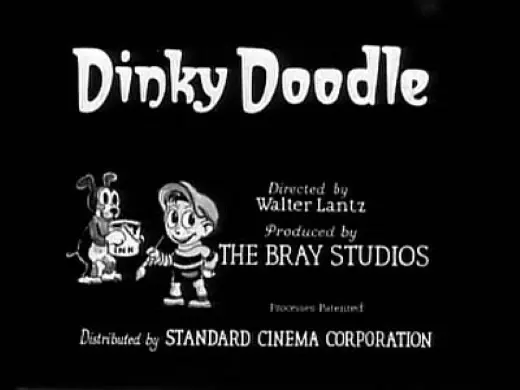
This focus on purely visual characterization is a fascinating aspect of early animation, highlighting how much could be communicated through simple lines and movement before sound and complex dialogue became standard. It’s a masterclass in silent storytelling, relying on universal physical comedy tropes to connect with the audience.
The pacing of “Dinky Doodle in the Army” is relentlessly fast. These early shorts were designed to be quick, impactful bursts of entertainment, often serving as pre-feature attractions in cinemas. There’s no time for slow builds or contemplative moments; the film plunges directly into its comedic scenarios and rarely lets up. This rapid-fire approach ensures that even if a particular gag doesn't land, another is just seconds away.
The tone is overtly lighthearted and comedic, bordering on the absurd. There’s no real sense of danger or genuine conflict, even within the military setting. The army here is less a place of serious duty and more a backdrop for slapstick chaos. This whimsical tone is a hallmark of many early cartoons, where the world exists purely to facilitate humor and fantasy.
Modern audiences, accustomed to more varied pacing and emotional depth, might find the constant barrage of gags a little exhausting or even monotonous. However, viewed within its historical context, this relentless pace is a strength, a clear demonstration of the animators’ commitment to entertaining the audience with every frame. It’s a sprint, not a marathon, and it largely succeeds in its own terms.
For the uninitiated, watching “Dinky Doodle in the Army” might feel like a chore. Its animation is primitive. The humor is dated. Its narrative is thin.
However, for anyone serious about understanding animation, it's essential. It offers a direct lineage to every cartoon character you know. It showcases the raw invention of pioneers like Walter Lantz.
It's a historical artifact. Nothing more, nothing less. But what an artifact it is.
It’s a valuable educational tool, revealing how far the medium has come from these humble beginnings. It’s also a nostalgic trip for those who appreciate the peculiar charm of early 20th-century pop culture. Its simplicity is both its greatest strength and its most glaring weakness, depending on your perspective. Modern audiences, weaned on Pixar and Ghibli, might find its crude charm more quaint than compelling, and that's perfectly okay. The film doesn't demand universal adoration, only recognition for its place in history.
One of the most surprising observations about films like “Dinky Doodle in the Army” is how their very obsolescence contributes to their charm. In an era saturated with hyper-realistic CGI and sophisticated storytelling, there’s something profoundly refreshing about the raw, unpolished honesty of early animation. The visible limitations—the jerky movements, the simplified designs, the repetitive gags—aren’t flaws to be overlooked, but rather integral parts of its identity.
This film, much like The Speed Spook or Cuckoo Love, reminds us that animation wasn't born fully formed. It crawled, stumbled, and eventually soared. Watching Dinky Doodle is like looking at the blueprints of a grand cathedral—you see the foundational ideas, the initial struggles, and the raw ambition that would eventually lead to breathtaking achievements. It’s not just about what’s on screen, but what it represents for the entire trajectory of the art form. Its rudimentary nature, far from being a detraction, makes it a more compelling historical document.
I’d even argue that its failures, by modern standards, are its greatest successes. They tell a story of innovation under constraint, of creativity bubbling up from limited resources. It forces us to reconsider our definition of 'quality' and appreciate the foundational steps that allowed for later 'masterpieces'.
“Dinky Doodle in the Army” is not a film you watch for pure, unadulterated entertainment in the modern sense. It’s a historical artifact, a fascinating relic from the dawn of an art form. Its value lies not in its ability to compete with today’s animated blockbusters, but in its capacity to transport us back to a time when moving drawings were a novelty, a wonder, and a canvas for boundless, if unsophisticated, creativity. Walter Lantz and Shamus Culhane’s work here is a foundational stone, a testament to the pioneering spirit that built the animation industry.
While it might not elicit consistent belly laughs from a contemporary audience, it certainly deserves a respectful nod for its place in cinema history. It’s a short, sharp burst of early cartoon energy, imperfect yet utterly essential for anyone truly wishing to understand the lineage of animated storytelling. So, if you approach it with the right mindset—that of an explorer venturing into the past—“Dinky Doodle in the Army” offers a surprisingly rewarding, if academically inclined, viewing experience. It’s a salute to the past, and one that still echoes, however faintly, today.
IMDb —
1915
Community
Log in to comment.