DbcultAccessing Vault...
Cult Review
Senior Film Conservator
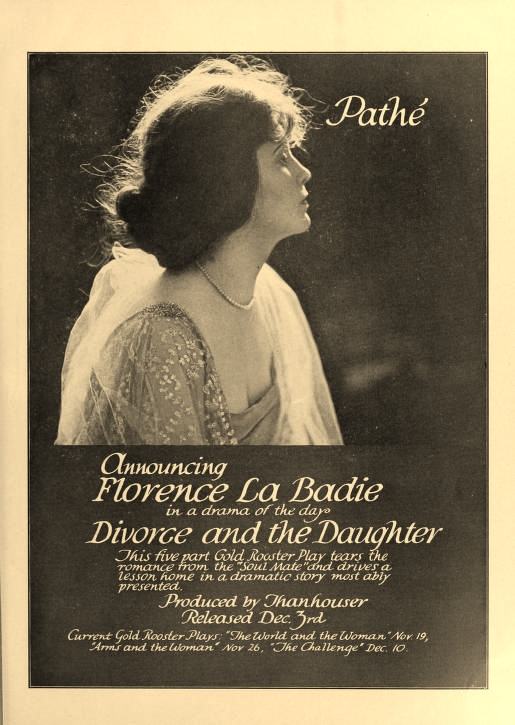
The 1916 cinematic landscape was a crucible of moral interrogation, a period where the silent screen acted as both a mirror and a magnifying glass for a society grappling with the death of Victorian restraint. In Divorce and the Daughter, directed with a keen eye for architectural symbolism, we witness the devastating impact of wealth when it acts as a solvent rather than a foundation. The film opens not with a celebration of success, but with the quiet, creeping rot of an inheritance that serves as a catalyst for a husband's mid-life spiritual defection. This isn't merely a story of a man leaving his wife; it is a study of how the pursuit of 'aesthetic freedom' can become a weapon of domestic destruction. Much like the thematic undercurrents found in La fièvre de l'or, the sudden influx of capital reveals the inherent instability of the protagonist’s character, transforming a stable provider into a delusional dilettante.
When our protagonist moves his family into a palatial estate to pursue the life of a 'bohemian' artist, the film meticulously documents the artifice of his new existence. His studio becomes a sanctuary of vanity, a place where the 'free love' he eventually advocates for is nothing more than a justification for his infidelity. The cinematography utilizes the vast, cold spaces of the new mansion to emphasize the growing distance between the family members. Unlike the gritty struggles depicted in Les Misérables, Part 2: Fantine, where poverty is the external antagonist, here the enemy is the luxury that permits the luxury of selfishness. The father’s transition into a 'modern' artist is portrayed with a cynicism that feels remarkably contemporary; he isn't seeking truth in his art, but an escape from the accountability of his marriage.
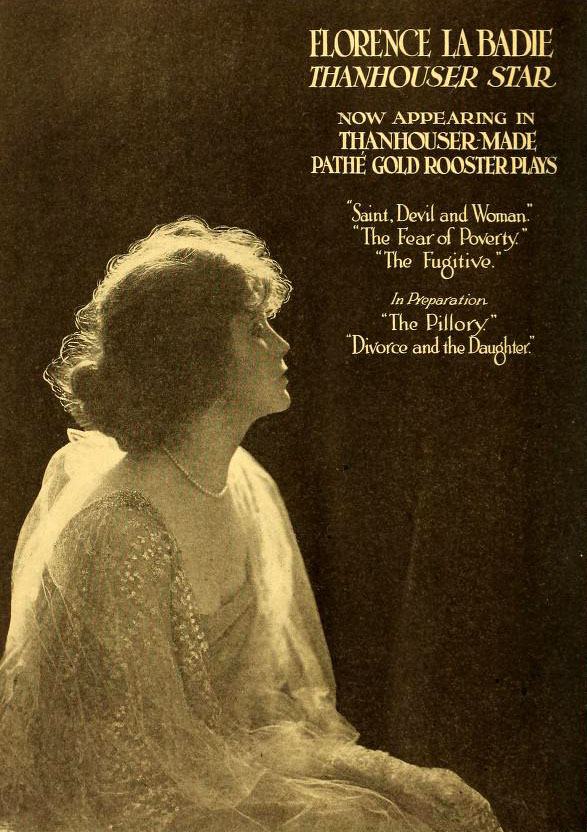
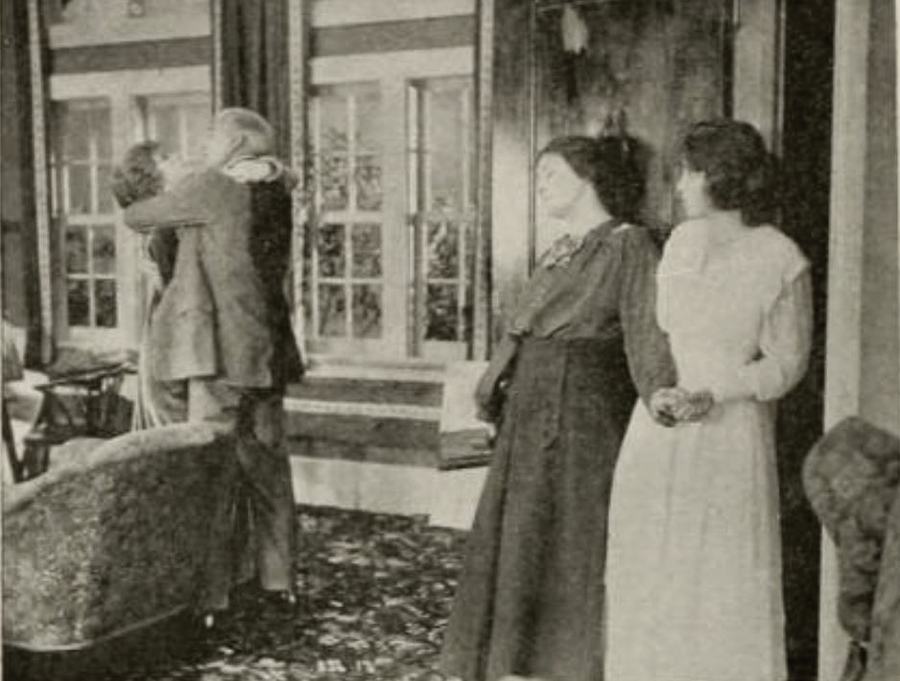
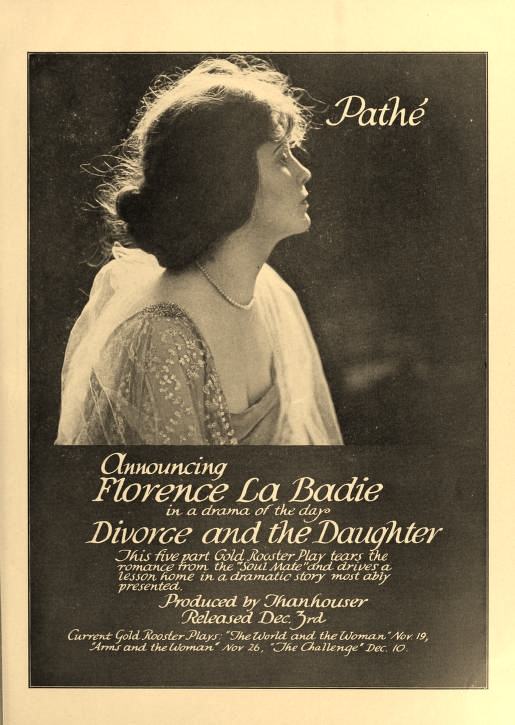
Florence La Badie, an actress of haunting expressive depth, portrays Alicia with a vulnerability that anchors the film’s more melodramatic flourishes. Her performance is a masterclass in silent-era nuance, capturing the precise moment her world view shifts from security to skepticism. When her mother leaves, Alicia doesn't just lose a parent; she loses her faith in the institution of marriage itself. This disillusionment leads her to break her engagement with a wealthy doctor—a figure representing the old guard of stability and social standing. In her search for meaning in the wreckage of her home, she falls prey to the 'free love' movement, a plot point that allows the film to engage in a fascinating, if period-specific, critique of radical social shifts. The film suggests that Alicia’s rebellion is not a choice made in strength, but a reaction to the vacuum left by her father’s moral bankruptcy.
The introduction of Herbert Rawlins serves as the film’s most potent cautionary element. Rawlins is the quintessential charismatic predator, utilizing the language of 'sharing' and 'freedom' to isolate Alicia from her support systems. The irony, which Agnes Christine Johnston’s screenplay handles with surgical precision, is that Rawlins is far more possessive and controlling than the traditional doctor Alicia rejected. This subversion of the 'free love' ideal provides a dark, psychological layer to the film that distinguishes it from standard domestic dramas of the era like The Unwelcome Wife. Rawlins doesn't want to share Alicia with the world; he wants to own her under the guise of liberating her from societal norms. The tension in these scenes is palpable, as the audience watches Alicia exchange one form of domesticity for a much more dangerous, unregulated form of servitude.
Agnes Christine Johnston was a pioneer in early Hollywood, and her work on Divorce and the Daughter demonstrates why she was so highly regarded. The script avoids the easy path of total moralizing, instead allowing the characters’ motivations to emerge from their trauma. The dialogue (conveyed through title cards) possesses a sharp, almost cynical edge that cuts through the sentimentality often found in 1916 productions. There is a structural elegance here that reminds one of Sold, where the commodification of the female body and spirit is explored with unflinching honesty. Johnston understands that divorce is not just a legal ending, but a psychological beginning for the children involved—a theme that resonates with a timeless, tragic frequency.
Visually, the film is a fascinating artifact of the Thanhouser Film Corporation’s house style. The use of natural light in the 'bohemian' studio scenes creates a hazy, dreamlike atmosphere that contrasts sharply with the stark, high-contrast lighting of the family’s previous, more humble life. This visual dichotomy reinforces the theme of the father’s delusion; his new life is literally and figuratively 'out of focus.' When compared to the grander, more operatic visuals of Das Phantom der Oper, this film feels grounded and intimate, focusing on the horror of the everyday rather than the horror of the grotesque. The 'complications' mentioned in the plot summary manifest as a series of claustrophobic encounters that heighten the sense of Alicia being trapped in a web of her father's making.
While the film ultimately leans toward a traditionalist resolution, there are undeniable feminist undercurrents in the way it depicts the mother’s departure. She is not portrayed as a villain for leaving her husband; rather, her exit is framed as a necessary survival tactic in the face of his narcissism. This nuanced portrayal of a woman’s agency within a failing marriage is a significant departure from the more rigid moral codes seen in films like The Governor's Boss. Alicia’s journey, too, is one of seeking selfhood, even if she takes a disastrously wrong turn. The film acknowledges the legitimacy of her desire for something more than a transactional marriage, even as it warns against the predators who exploit that very desire. In this sense, it shares a thematic DNA with A Militant Suffragette, exploring the dangers women face when they step outside the prescribed boundaries of their social roles.
Looking back from a century’s distance, Divorce and the Daughter remains a compelling document of a world in transition. It captures the anxiety of a generation caught between the stability of the past and the chaotic promise of the future. The performances, particularly from La Badie and the sinisterly charming Samuel N. Niblack as Rawlins, elevate the material beyond its melodramatic roots. It is a film that demands to be viewed not just as a relic, but as a sophisticated narrative that understands the inherent link between financial greed and moral erosion. It lacks the fantastical elements of La secta de los misteriosos, but its psychological mysteries are far more haunting because they are so grounded in the reality of human weakness.
The final act of the film brings the various threads of 'free love' and 'bohemian' artifice to a crashing halt. The resolution is both a relief and a sobering reminder of the permanence of certain choices. While the father may find a way to reconcile his artistic dreams with reality, the daughter’s innocence is a casualty that cannot be restored. This somber realization is what gives the film its lasting power. It is a cautionary tale that refuses to offer easy absolution, making it one of the more intellectually honest films of its era, standing alongside works like The Warrior in its exploration of the costs of personal ambition.
Technically, the film’s pacing is remarkably modern. There is a rhythm to the editing that builds tension during Alicia’s interactions with Rawlins, utilizing close-ups to convey her growing realization of his true nature. This use of the camera to reveal internal psychology was still a developing art in 1916, and Divorce and the Daughter stands as a testament to the rapid evolution of cinematic language. It may not have the epic scale of The Conqueror, but its emotional stakes are just as high. For anyone interested in the roots of the domestic thriller or the history of social-issue cinema, this film is an essential, if harrowing, viewing experience. It serves as a stark reminder that when the walls of the home are torn down by vanity, the wind that blows in is rarely as liberating as promised.
IMDb 5.7
1935
Community
Log in to comment.