DbcultAccessing Vault...
Cult Review
Senior Film Conservator
Marcel L’Herbier’s Le Torrent (1924) arrives like a sudden cloudburst over the parched historiography of silent cinema, soaking every textbook cliché about ’20s French impressionism until the ink runs hallucinatory. The film is, on celluloid, the sound of a stone dropped into a well: the ripple circles outward, disturbing reflections of nuns, counts, engineers, and adulterous wives until the very architecture of the château seems to exhale in post-coital shivers.
From the first iris-in, the Serrant is no mere backdrop; it is an omnivorous id, gnawing at the estate’s foundations the way repressed appetite gnaws at propriety. Cinematographer Léonce-Henri Burel floods the negative with aqueous light—lamps burn underwater-green, shadows ripple like kelp across brocade walls. When Hélène’s carriage crosses the stone bridge, the river’s roar drowns the clatter of hooves: a sonic premonition achieved entirely through montage, the cut from churning foam to Louise Lagrange’s dilated pupils syncing heart and hydraulic pulse.
Compare this to the static colonial exoticism of Die Lieblingsfrau des Maharadscha where landscape is merely ornamental drapery. In L’Herbier’s world, geography performs psychotherapy: the closer the river swells, the more corset strings snap.
Lagrange’s Hélène is introduced in a wheelchair, yet her stillness vibrates like a tuning fork. Every close-up is a battleground where medicine and eros wrestle: the camera tracks along her paralyzed legs, but the lace hem quivers as though the limb itself dreams of sprinting. When Paul (Jaque Catelain, all angular cheekbones and Bovarish angst) lifts her from the chair, the cutaway to a caged thrasher flapping against wire is so blatant a metaphor it circles back to poetry. The bird’s frantic wingbeats sync with the flicker of a strobe-lit chandelier—L’Herbier’s wink at the audience that even symbols can sprain their ankles.
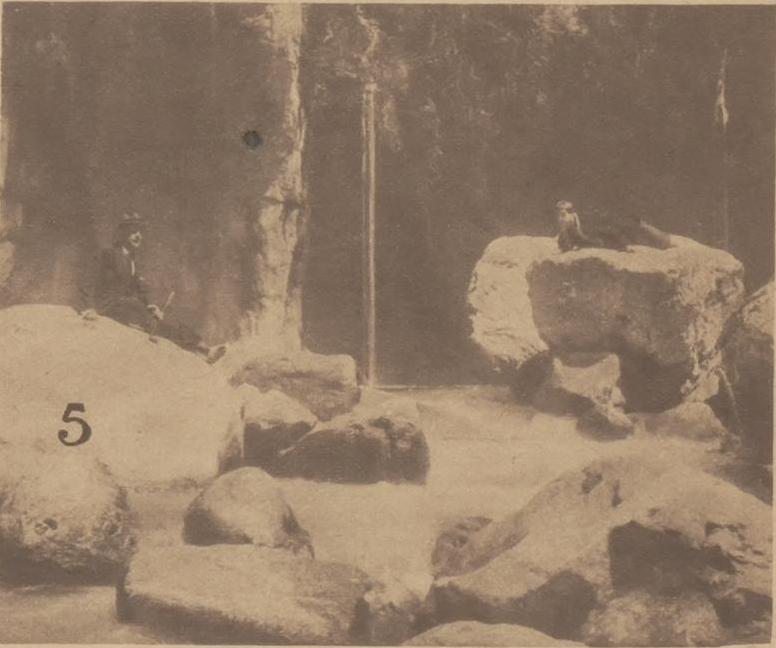
In The Jungle Child disability becomes moral lesson; here it is merely the costume desire wears when it wishes to enter the ballroom undetected.
Gabriel Signoret’s Count Adrien kneels before a life-size Crucifix that looks suspiciously like himself—same patrician nose, same gaunt torment. His masochistic piety is filmed like a fashion plate: shafts of sodium light carve out the velvet of his robe until the fabric appears liquid, a priestly chocolate fondue. In one bravura sequence, he flagellates himself while Cécile (Suzanne Delvé) spies from the gallery, her rosary clicking like castanets. The editing alternates between the whip’s impact and the twitch of Cécile’s pupils, equating sacred pain with voyeuristic pleasure so effortlessly you’ll never look at a Stations of the Cross the same way again.
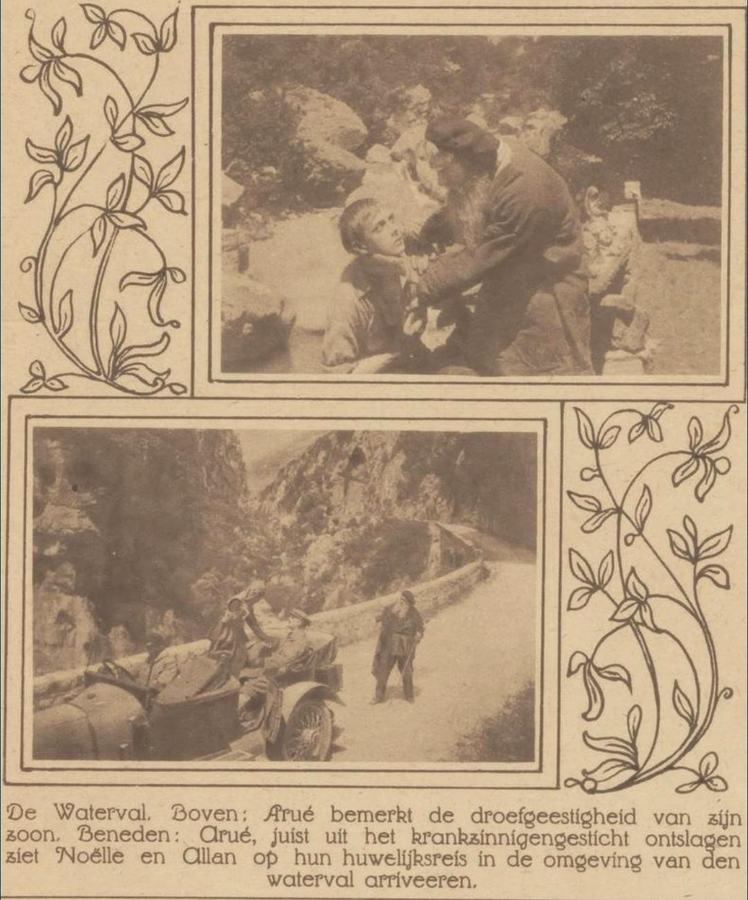
Delvé’s Cécile is the film’s sly Scheherazade, spinning tales of piety while undressing maids with her gaze. L’Herbier never labels her desire; instead he lets it seep like damp through plaster. Watch the way she fingers the lace on Hélène’s nightgown during the fever scene, or how she teaches the choirboys to shape their mouths around Latin vowels that sound suspiciously like kisses. The Hays-less freedom of pre-Code Europe allows a moment where Cécile, left alone with the drowned body of a peasant girl, closes the corpse’s eyes with a tenderness she never shows the living. The river, again, is complicit: water beads on the dead girl’s lashes like tears Cécile herself will never cry.
Contrast this coded liquidity with the more heteronormative torrents of Phantom Fortunes where female desire is a tidy plot coupon to be redeemed by the final reel.
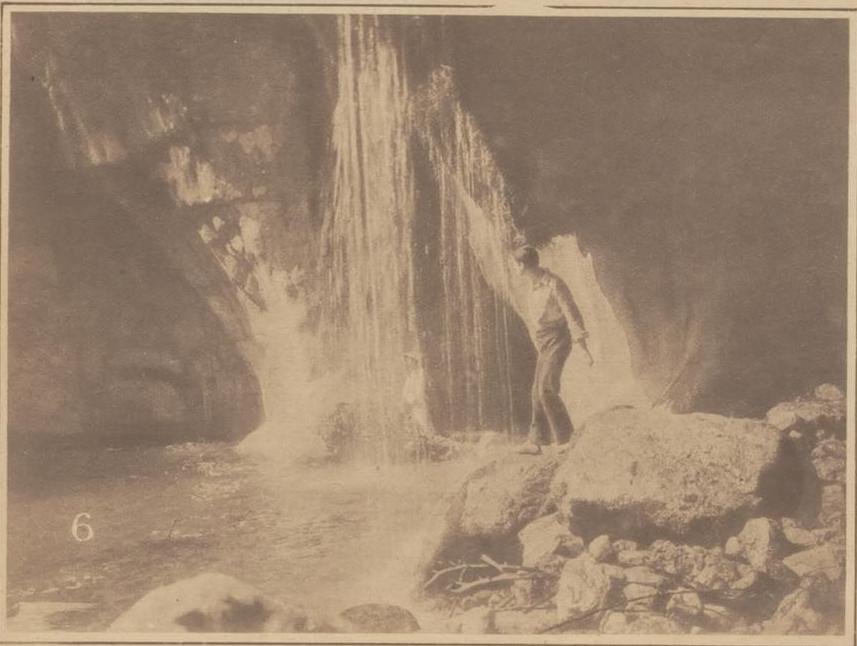
Paul arrives armed with slide rules and modernist swagger, believing concrete can plug the moral leaks of aristocracy. Catelain plays him like a boy who read too much Jules Verne and not enough Freud: every time he explains hydrostatic pressure, his hands sketch erotic spirals in the air. The film’s central suspense is not whether the dam will hold but which will burst first—earthwork or libido. In a proto-eco moment, Paul surveys the hillside and declares, “We must teach the river to forget its old bed,” a line that lands with the chill of colonial manifest destiny. Yet the film refuses to crown him savior; when the flood scythes his carefully surveyed charts into soggy pulp, L’Herbier cuts to a close-up of Paul’s boots filling with water, a miniature baptism into humility.
When the rupture arrives, it is not a set piece but a synesthetic opera. Frames overlap: the Count’s chandelier becomes a constellation of fireflies, Cécile’s hair loosens into Medusa snakes, Hélène’s wheelchair rolls riderless through corridors like a ghost seeking its absent saint. Burel’s camera dives underwater to capture horses drowning in slow motion, manes billowing like Ophelia’s veil—an image so visceral it reeks of wet earth even on 35mm. Intertitles disappear; the film becomes purely haptic, communicated through the percussion of flood against piano, the slosh of silk against skin. You taste iron, mold, and the copper tang of first sex.
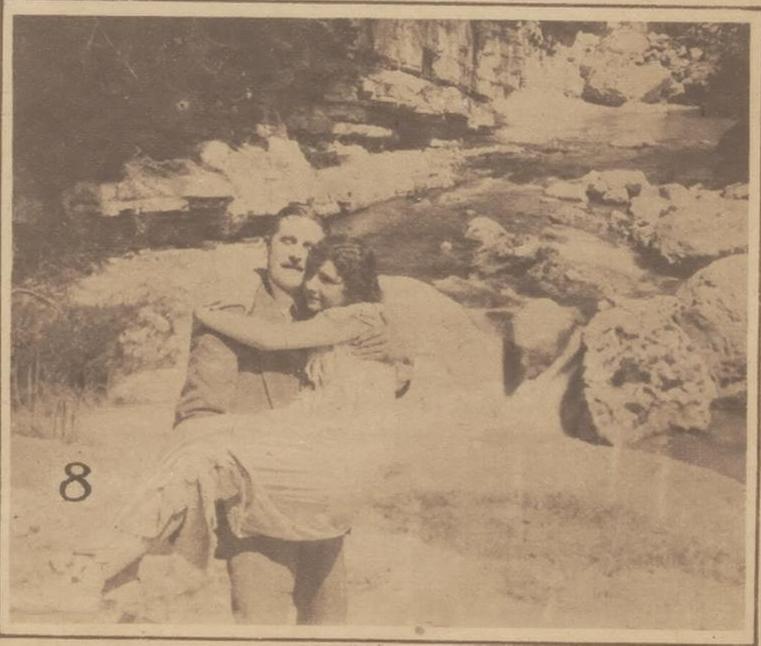
Where The Mill on the Floss sentimentalizes deluge as divine judgment, Le Torrent treats it as the moment social choreography dissolves into animal contact improvisation.
Paul drags Hélène into the family vault, limestone walls weeping calcium tears. Their lantern projects shadows that make the carved effigies appear to breathe. As water rises to waist level, Hélène’s paralysis breaks: she stands, trembling, and the camera pirouettes 360°, a ballroom waltz among the dead. She does not embrace Paul; instead she opens her arms to the flood, accepting the river as lover and grave both. The erotic charge here is almost unbearable—wet fabric clings to torsos, breaths mingle with ripples, and the boundary between resurrection and surrender dissolves like salt in rainwater.
The epilogue is a haiku of devastation: dawn mist, a child’s wooden horse bobbing on the becalmed flood, the château hollowed into a stage set. No survivors are visible; only the toy, its painted eyes staring back at us, asking whether the torrent was tragedy or cleansing. L’Herbier withholds catharsis the way a skilled lover withholds climax, leaving an ache that vibrates long after the projector’s flicker dies.
Lagrange’s eyes perform their own silent film within the film: pupils contracting like aperture blades, she can convey orgasmic terror without moving a muscle. Signoret sculpts self-loathing into a baritone physicality—watch the way his fingers tremble around the whip handle as though it were a woman’s thigh. Delvé is all feline calculation; even her blink arrives on a delay, like a cat deciding whether to pounce. Catelain, often dismissed as pretty placeholder, earns his auteur stripes here: his body carries the strain of someone who has calculated the universe but still finds himself trumped by a single heartbeat.
Though originally released with a live score by André Caplet, most restorations now use a 1995 composition by the Arditti Quartet—strings that scrape like wind against wet stone. The new 4K restoration by Gaumont harvests every droplet of petrichor: you can count the pores on Lagrange’s neck, taste the mildew on chapel walls. The tinting follows L’Herbier’s handwritten notes—amber for interiors, viridian for night exteriors, a bruised lavender for the crypt—colors that throb like fresh contusions.
Unlike the moral absolutes of The Millionaire Baby or the Gothic sentimentality of Blind Man's Holiday, Le Torrent occupies a liminal zone closer to Isterzynye Dushi’s tortured spiritualism, yet with a sensuality those Russian reels dared not confess.
Ninety-nine years on, Le Torrent still feels wet to the touch. It is the rare silent film that refuses to behave like a museum relic; instead it leaks into your present, staining your certainties the way river water seeps through supposedly watertight boots. L’Herbier does not ask whether desire is sinful or sacred—he simply lets the dam break and watches who learns to swim.

IMDb —
1920
Community
Log in to comment.