DbcultAccessing Vault...
Cult Review
Senior Film Conservator
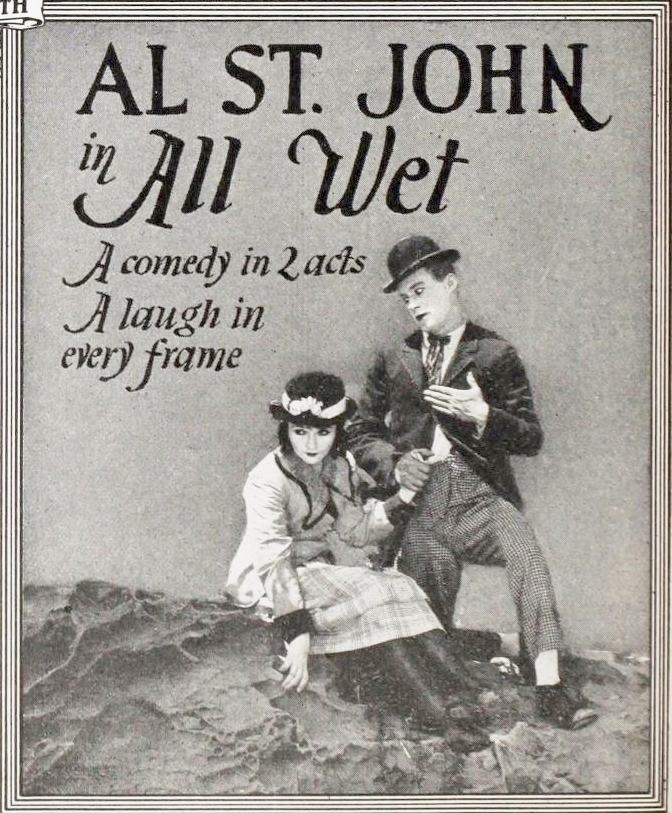
In the burgeoning era of the 1920s, cinema was less about the spoken word and more about the visceral, rhythmic language of the human body. All Wet (1922), a vehicle for the incomparable Al St. John, stands as a testament to this physical lexicon. While contemporary audiences might be more familiar with the stoicism of Keaton or the pathos of Chaplin, St. John offered a brand of chaotic energy that felt almost dangerously spontaneous. This film, centered on the perennial anxiety of home ownership, strikes a chord that resonates even a century later. The plot—a newly married couple falling prey to a predatory real estate agent—is the perfect scaffold for St. John’s particular brand of architectural anarchy.
Unlike the brooding emotionality found in European imports like Deti veka, American shorts of this period were obsessed with the mechanics of the modern world. In 'All Wet', the 'modern world' is a rickety house that seems to have a personal vendetta against its occupants. The film’s pacing is relentless, a characteristic shared with other high-octane comedies of the time such as The Three Must-Get-Theres, though St. John swaps Max Linder’s dapper parody for a more grounded, albeit rubbery, desperation.
The film opens with an idyllic premise: the pursuit of the domestic hearth. Norma Conterno plays the bride with a charm that balances St. John’s manic energy. However, the true catalyst of the narrative is the 'crooked real estate agent,' a role that Otto Fries inhabits with a delightful, mustache-twirling villainy. The house they are sold is less a dwelling and more a deathtrap, leading to a sequence of events where the title 'All Wet' becomes a literal, soaking reality. The choreography of the stunts here is nothing short of miraculous. St. John, who honed his skills under the tutelage of his uncle, 'Fatty' Arbuckle, demonstrates a spatial awareness that turns every room into a potential stage for disaster.
Consider the sequence where the structural integrity of the house begins to fail. This isn't just slapstick; it's a commentary on the fragility of the post-war boom. While films like Homespun Folks romanticized the rural stability of the American heartland, 'All Wet' suggests that the urban or suburban promise is built on shifting sands—or in this case, leaky pipes and fraudulent contracts. The inclusion of Tiny Ward and Si Jenks adds layers to the comedic ensemble, providing a variety of physical types that heighten the visual humor through sheer contrast.
Technically, the film utilizes the limitations of 1922 cinematography to its advantage. The use of deep focus in the outdoor scenes allows the viewer to anticipate the coming doom long before the characters do. This creates a sophisticated level of dramatic irony that keeps the audience engaged. In comparison to the more theatrical staging of Romeo and Juliet versions of the era, 'All Wet' feels remarkably cinematic, embracing the camera's ability to capture movement across expansive, chaotic sets. The editing is crisp, dictated by the rhythm of the falls and the splashes, ensuring that the comedic timing never falters.
The 'wet' aspect of the film involves elaborate water gags that were notoriously difficult to film in the early 20s. The sheer volume of water used in the climax of the film rivals the adventurous spirit of A Dangerous Adventure, yet here it is channeled into the service of the risible rather than the perilous. St. John’s ability to remain expressive while being doused, tumbled, and tossed is a feat of endurance that modern CGI-heavy comedies cannot replicate. There is a tangible sense of danger; when a wall collapses, you feel the weight of the wood and the chill of the water.
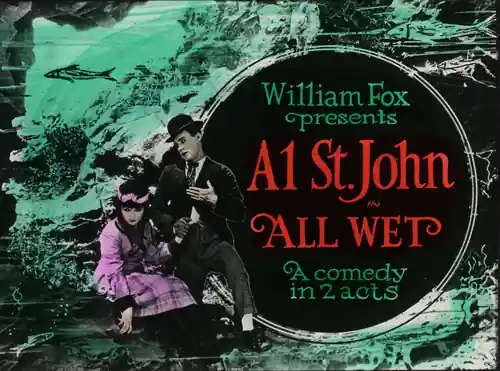
When we look at 'All Wet' alongside contemporaries like Das amerikanische Duell, the cultural divide in cinematic priorities becomes stark. While the Europeans were often exploring the psychological depths of conflict, American directors like Al St. John were exploring the physical limits of the environment. Even within American cinema, compare this to the social drama of Rebuilding Broken Lives; 'All Wet' tackles the same theme of domestic struggle but through the lens of the absurd. It suggests that sometimes, the only way to deal with the collapse of one's dreams is to take a pratfall.
The film also shares a certain DNA with the investigative tropes seen in Reporter Jimmie Intervenes or the corporate cynicism of The Running Fight. The real estate agent is a proto-corporate villain, a precursor to the white-collar criminals that would inhabit later noir and social thrillers. In 'All Wet', however, justice isn't found in a courtroom but in the chaotic equalization of a house falling down around the villain's ears. It is a primitive, satisfying form of cinematic justice.
Al St. John remains one of the most underrated figures of the silent era. Often relegated to the role of the 'sidekick' in his later B-western career as 'Fuzzy Q. Jones', his early 1920s work shows a creator in full command of his craft. 'All Wet' is a prime example of his ability to write, direct, and star in a cohesive piece of art. His writing, though focused on gags, shows a keen understanding of narrative escalation. He doesn't just throw water at the screen; he builds a reservoir of tension that bursts at the exact moment of maximum comedic impact.
Consider the subtlety of Si Jenks’ performance or the sturdy presence of Ford West. These actors provide the necessary friction against which St. John’s fluidity can shine. This ensemble work is reminiscent of the tight-knit casts in Little Wildcat or the sophisticated interplay in You'd Be Surprised. There is a sense that everyone on set was fully committed to the absurdity of the premise.
In the grand tapestry of 1922, a year that gave us heavyweights like 'Nosferatu' and 'Dr. Mabuse the Gambler', 'All Wet' might seem like a lightweight contender. Yet, its value lies in its purity. It is a distillation of the human struggle against an indifferent, and often hostile, material world. It lacks the Gothic pretension of Die Frau mit den Karfunkelsteinen or the lyrical tragedy of Tabaré, but it possesses a kinetic honesty that is undeniably powerful. It captures a moment in time when the world was moving fast, houses were being built faster, and the only way to keep your head above water was to learn how to swim through the wreckage.
Ultimately, 'All Wet' is more than just a series of falls. It is a rhythmic, beautifully timed exploration of the 'little man' facing the giants of greed and gravity. Whether St. John is dangling from a joist or navigating a flooded parlor, he embodies a resilient spirit that refused to be dampened. For anyone interested in the roots of physical comedy or the social anxieties of the early 20th century, this film is an essential, albeit damp, piece of the puzzle. It reminds us that while the house may fall, the laughter—much like Al St. John himself—is remarkably difficult to break.
Critic's Note: If you enjoyed the frantic pacing of this review, consider exploring the darker domestic themes in Wrath or the regal absurdities of Nearly a King. The silent era offers a spectrum of human experience that 'All Wet' perfectly anchors with its comedic brilliance.

IMDb —
1922
Community
Log in to comment.