DbcultAccessing Vault...
Cult Review
Senior Film Conservator
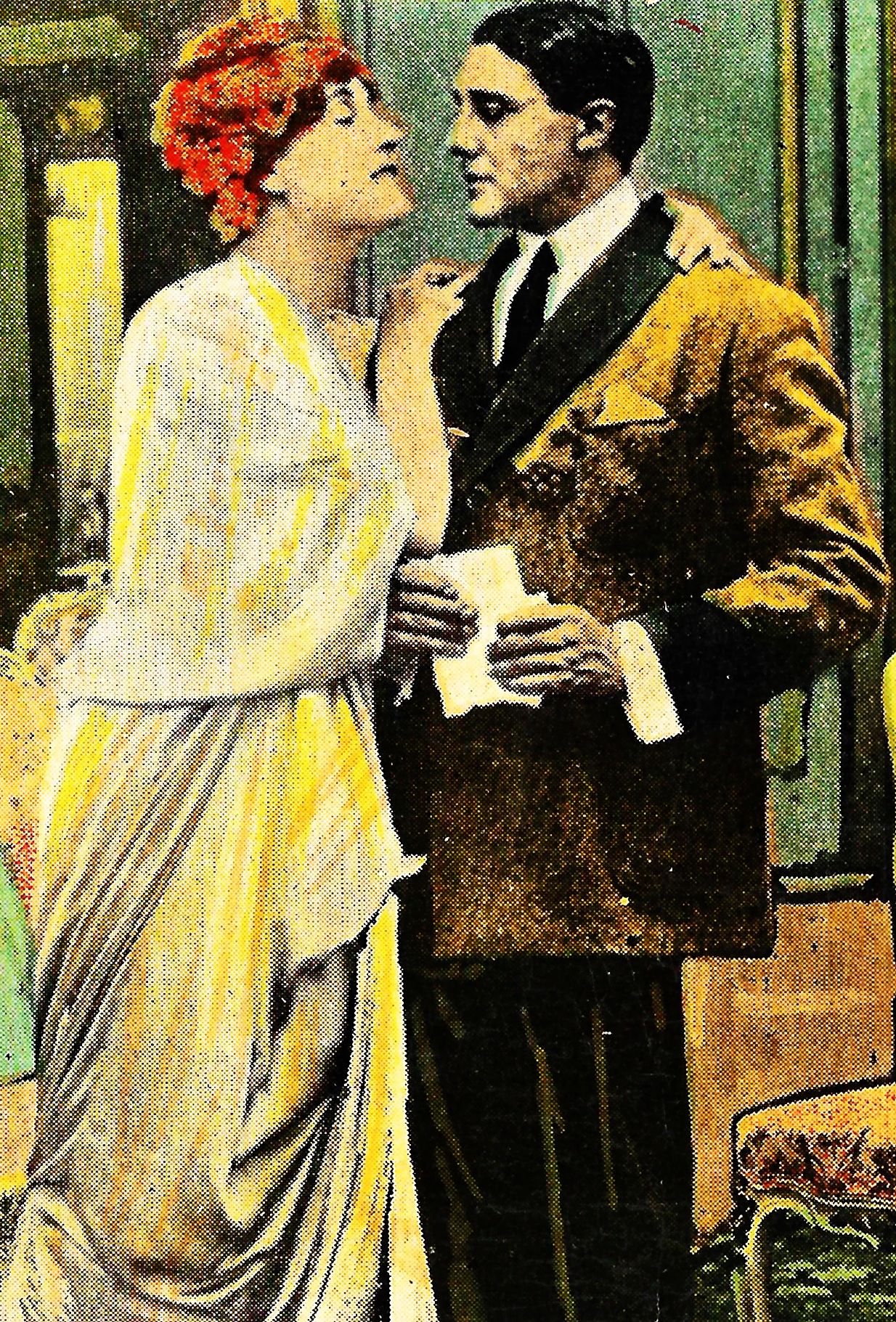
In an age where silent cinema often prioritized spectacle over substance, La principessa di Bagdad emerges as a rare alchemy of both. This 1913 Italian production, helmed by the visionary Luciano Doria and infused with the cerebral lyricism of Alexandre Dumas fils’s adapted script, transcends its era’s limitations to deliver a haunting meditation on power, identity, and the cost of defiance. The film’s eponymous heroine, portrayed with piercing vulnerability by Elsa Lazzerini, is not merely a monarch but a symbol of fractured sovereignty—a woman whose very existence embodies the tension between inherited duty and personal liberation.
The film’s opening sequence, a slow pan across the gilded corridors of the Bagdadian palace, immediately establishes its central metaphor: opulence as a cage. The camera lingers on peacocks preening in marble courtyards, their iridescent plumage a mockery of the prisoners within. Princess Isabella (Lazzerini) is introduced not as a ruler but as a figure of arrested development, her embroidered slippers tracing the same circuits her ancestors walked, each step a repetition of a life scripted by others. Doria’s direction, while constrained by early 20th-century technology, employs shadow play and mirrored reflections to externalize her internal claustrophobia. When she gazes into a hand mirror, the reflection is occasionally distorted—a visual cue that her autonomy is an illusion.
Hesperia, the vizier played with venomous charm by an unnamed co-star, serves as the film’s moral antagonist and its most fascinating paradox. Her ambition is unapologetically predatory; she does not seek to overthrow the princess but to absorb her, to mold her into a figurehead who legitimates Hesperia’s own rise. This dynamic evokes echoes of The House with the Golden Windows (1913), where maternal control replaces political machinations. Hesperia’s manipulations—slipping poison into wine, orchestrating false seductions—are not mere scheming but a perverse art form, a dance of power where the princess is both participant and pawn.
Andrea Habay’s character, the exiled nobleman Giacomo, is a breath of fresh air in the film’s otherwise stifling atmosphere. His entrance—via a daring escape from a dungeon, his face lit by the flicker of a distant oil lamp—resembles a scene from Captain Starlight, or Gentleman of the Road (1914), yet his purpose here is far more ideological. Giacomo’s romance with the princess is not driven by passion but by purpose; their stolen moments in the palace gardens are charged with the electricity of shared defiance. Habay’s performance is a masterclass in understatement—his furrowed brow, the way he tucks his hand into his coat as if grasping an invisible weapon, all scream rebellion without a single shouted line.
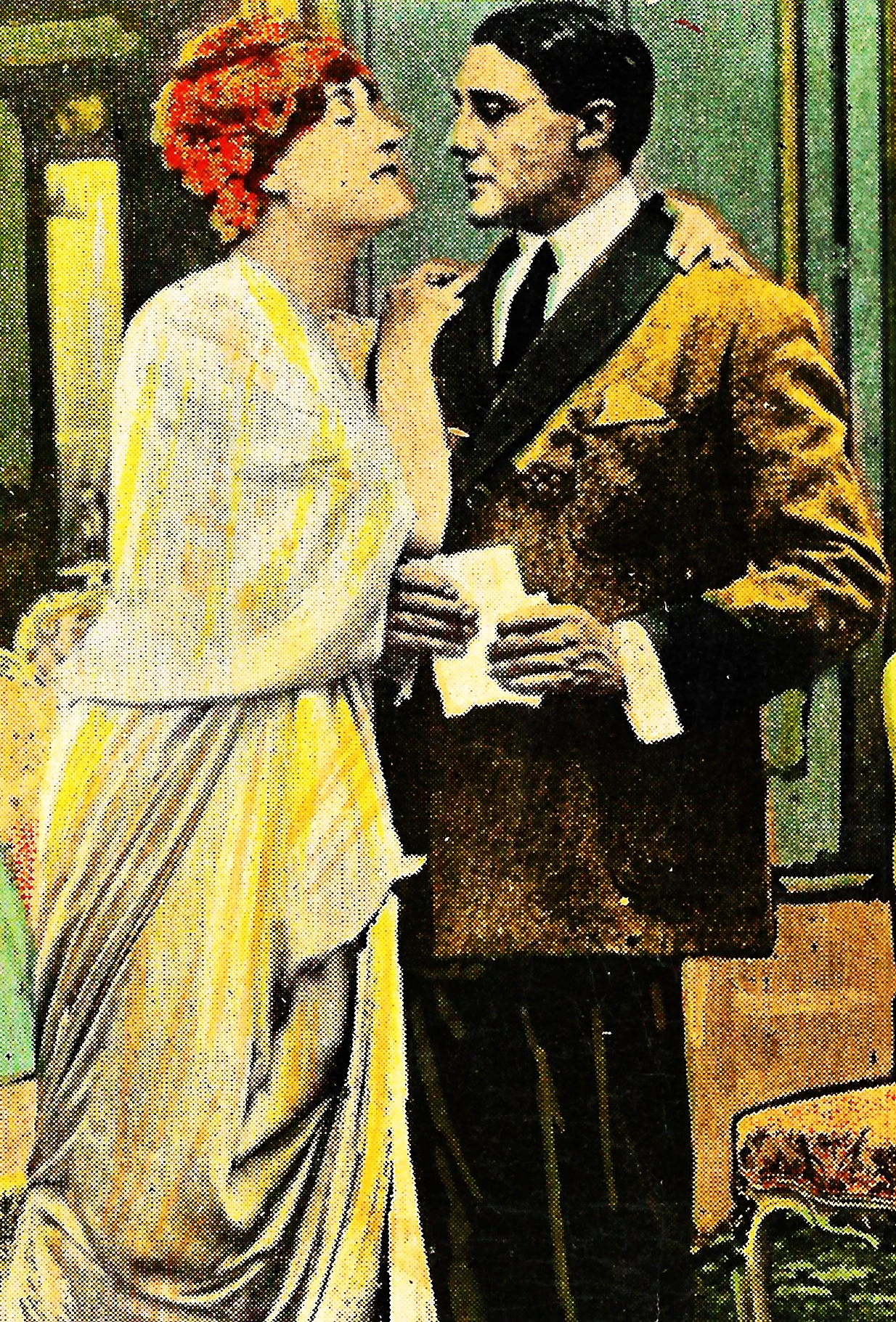
Doria’s cinematographer, whose name history has forgotten, deserves equal praise for transforming the palace into a character. The interplay of light and shadow is not merely aesthetic but thematic. During a pivotal confrontation, the princess is bathed in a shaft of golden sunlight, a fleeting moment of agency before the storm clouds roll in. The use of negative space is also telling: in wide shots, she is often positioned at the edge of the frame, a visual echo of her marginalization within her own kingdom. The film’s climax—where she immolates herself in a brazier, the flames reflected in the eyes of the court—calls to mind the tragic finale of When a Woman Sins (1915), yet here the act is not a failure but a metamorphosis, her spirit ascending as ash into the palace’s gilded rafters.
The script, adapted from Dumas fils’s 1874 play La princesse de Bagdad, retains the original’s preoccupation with existential futility. The playwright’s characteristic introspection is evident in monologues delivered to the empty void—a technique Doria translates into silent film through lingering close-ups. One such moment, where the princess stares into the void for 47 seconds, is a masterstroke of silent acting by Lazzerini, her eyes welling not with despair but with the realization that her story has been written by others. This echoes the meta-commentary of Anna Held (1915), where performance and reality collide.
Though a product of its time, La principessa di Bagdad resonates with contemporary audiences precisely because it refuses to offer easy resolutions. The film’s final scene, where the palace gates are stormed and a new regime installed, is undercut by the knowledge that history will repeat itself. This cyclical fatalism, so often absent from early cinema’s moral binaries, is both its greatest strength and its most unsettling aspect. It is a film that asks not how to defeat tyranny, but how to survive it with one’s soul intact.
In an era where silent films are often judged by their technological novelty rather than their narrative depth, La principessa di Bagdad stands as a testament to the power of visual storytelling. Its exploration of power, identity, and rebellion transcends the limitations of its medium, offering a timeless meditation on the human condition. For scholars and cinephiles alike, this film is not merely a relic of the past but a mirror reflecting our own struggles against the forces that seek to define us.

IMDb —
1918
Community
Log in to comment.