DbcultAccessing Vault...
Cult Review
Senior Film Conservator
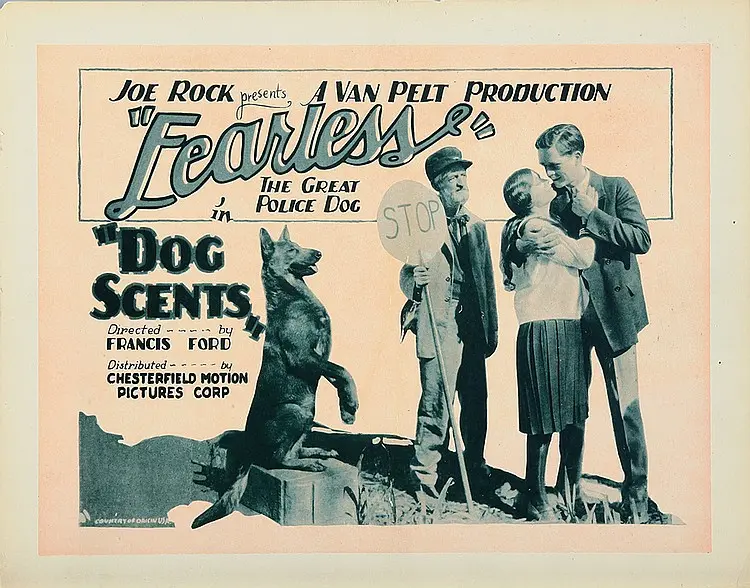
Is Dog Scents worth watching today? Short answer: yes, but with significant caveats that anchor it firmly in its historical context. This silent-era picture, while a charming artifact featuring a remarkably talented canine, is primarily for dedicated silent film enthusiasts, animal lovers with a penchant for early cinema, and those curious about the foundational elements of narrative filmmaking.
It is decidedly not for viewers seeking modern pacing, complex character arcs, or dialogue-driven storytelling. Expect a leisurely stroll through a bygone era, not a sprint.
Stepping into the world of Dog Scents is akin to opening a time capsule. The film, unburdened by the complexities of sound, relies entirely on visual storytelling and the expressive power of its cast — human and canine alike. It’s a testament to the era’s filmmaking ingenuity, proving that compelling narratives don't always need words.
This film works because of its undeniable charm, the surprisingly effective performance from Fearless the Dog, and its straightforward, heartwarming plot. It fails because its simplicity can feel rudimentary to modern sensibilities, its human performances are broad even for the era, and its pacing often meanders.
You should watch it if you appreciate the historical significance of silent cinema, enjoy animal-centric stories, or are looking for a gentle, uncomplicated viewing experience that offers a glimpse into early Hollywood’s narrative techniques.
The true revelation of Dog Scents is undoubtedly Fearless the Dog. In an era where animal actors were still finding their footing, Fearless delivers a performance that is not only competent but genuinely engaging. His actions drive much of the plot, conveying intelligence, loyalty, and even a touch of comedic timing without the aid of a single spoken word.
There's a particular scene where Fearless, sensing danger or deception, actively tries to alert Edmund Cobb's character by tugging at his trousers and barking insistently. This isn't just a dog performing a trick; it's a dog acting with clear intent, guided by a director who understood how to harness animal instincts for dramatic effect. It's a masterclass in silent animal performance, rivalling even the later Rin Tin Tin in sheer screen presence. The way Fearless tracks the villain's movements, almost with a detective's keenness, is genuinely impressive and often carries the emotional weight that the human actors sometimes struggle to convey.
His expressive eyes and body language are central to the film’s appeal. Without Fearless, Dog Scents would likely fade into obscurity as just another period piece. With him, it becomes something more memorable, a charming early example of how animals can be compelling protagonists.
While Fearless steals the show, the human cast of Dog Scents plays their parts with the exaggerated gestures and facial expressions typical of the silent era. Edmund Cobb, as Fearless's owner, embodies the earnest, slightly naive protagonist. His performance is serviceable, conveying a sympathetic demeanor, but lacks the nuanced depth that some of his contemporaries managed even without dialogue.
Ruth Renick, as the damsel in distress, provides the necessary vulnerability and purity that such a plot demands. Her expressions of concern and eventual relief are clear, if not particularly profound. Her role is largely reactive, serving as the object of both the villain's greed and Fearless's protective instincts. You won't find the emotional complexity of a Lillian Gish here, but Renick fulfills her role adequately.
Warren Heath, on the other hand, fully embraces the mustache-twirling villain archetype. His performance is a caricature of malevolence, with wide-eyed glares and sneering smiles that leave no doubt as to his nefarious intentions. While effective in its simplicity for the story, it leaves little room for ambiguity or character growth, which can feel dated. He is the villain you love to hate, or perhaps, the villain you just find a bit silly by modern standards.
Lafe McKee and Max Asher fill out the supporting roles with familiar faces from the era, providing background texture and occasional moments of comic relief or exposition through pantomime. Their contributions, while minor, are essential to building the film's world, however small it may be.
Clarence Locan's direction in Dog Scents is straightforward and functional, prioritizing clarity over artistic flourishes. The film's visual language is accessible, ensuring that even without intertitles, the audience could largely follow the unfolding events. Locan understands the power of close-ups for emotional emphasis, particularly when focusing on Fearless's reactions or the villain's conniving expressions.
The cinematography, while not groundbreaking, effectively captures the rustic setting and the action sequences. There are no grand sweeping shots or innovative camera movements that would define later silent epics, but the framing is always competent. A notable moment involves a chase scene, where the camera follows Fearless through a series of obstacles, maintaining a sense of urgency without resorting to rapid cuts. It’s a pragmatic approach to filmmaking, focused on telling the story efficiently.
The use of natural light in outdoor scenes is particularly effective, lending an authenticity to the rural backdrop. Locan's choice to keep the visual narrative clean and uncluttered allows the audience to focus on the performances and the simple machinations of the plot. This simplicity, while a potential weakness for some, is also its strength, making it an easy entry point for those new to silent films.
The pacing of Dog Scents is deliberate, typical of films from this period. It takes its time to establish characters and situations, allowing scenes to play out without the rapid-fire editing we expect today. This can lead to moments where the narrative momentum flags, particularly in expositional scenes that rely heavily on intertitles or prolonged pantomime.
However, when Fearless is on screen, the energy noticeably picks up. His actions inject a much-needed dynamism into the film, providing natural beats of excitement and tension. The tone is consistently lighthearted and optimistic, even when danger looms. It's a feel-good film, designed to entertain and reassure rather than challenge its audience.
The film's thematic resonance is quite simple: loyalty, justice, and the innate goodness of animals. Fearless embodies unwavering devotion, acting as a moral compass in a world where human intentions can be murky. It’s a comforting message that resonates across time, albeit one delivered without much subtlety. The film champions the underdog, or in this case, the under-human, proving that courage comes in all forms.
Absolutely, if you approach it with the right mindset. Dog Scents is a valuable piece of cinematic history, offering a charming glimpse into early 20th-century storytelling. Its primary appeal lies in Fearless the Dog's remarkable performance and its endearing, uncomplicated narrative. It’s a foundational text for understanding how animal actors became stars and how silent films conveyed emotion and plot without dialogue.
This film, while undeniably a product of its time, holds up as a delightful example of early animal-centric cinema. It works. But it’s flawed.
For those who appreciate the evolution of film and the unique artistry of the silent era, Dog Scents offers genuine enjoyment. It's a reminder that compelling stories and memorable characters don't always need high budgets or complex special effects; sometimes, all it takes is a loyal dog and a simple tale of good overcoming evil. While it might not have the dramatic weight of Dombey and Son or the comedic timing of A Hickory Hick, it carves out its own niche with canine charisma.
Dog Scents is more than just a historical curiosity; it’s a genuinely charming silent film that owes almost all of its enduring appeal to its remarkable canine star, Fearless. While its human counterparts deliver performances that are largely forgettable outside of their period context, Fearless elevates the entire production, turning a simple tale of small-town villainy into a memorable display of animal intelligence and loyalty. It’s a film that demands patience and an appreciation for the conventions of early cinema, but for those willing to engage with it on its own terms, it offers a heartwarming and surprisingly engaging experience. It’s a delightful, if minor, entry in the annals of silent film, proving that sometimes, the best actor on set has four legs and a wagging tail. Give it a watch if you’re curious about the roots of animal stardom and the straightforward charm of a bygone cinematic era. You might just find yourself rooting for the dog.
IMDb 6.2
1935
Community
Log in to comment.