DbcultAccessing Vault...
Cult Review
Senior Film Conservator
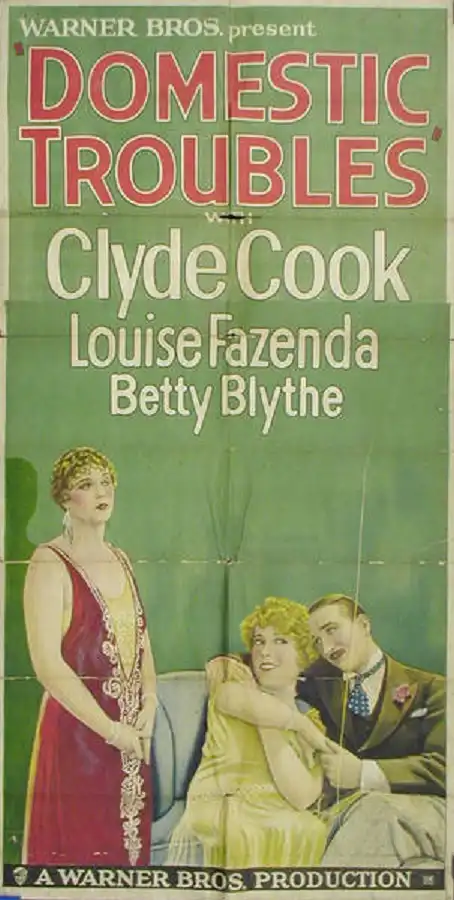
If you've got a soft spot for silent-era slapstick and character gags, Domestic Troubles might just be a surprising little gem for a lazy afternoon. Otherwise, this 1928 flick is probably going to feel a bit too quaint, maybe even a little loud in its quietness, for modern tastes. Folks who appreciate the nuances of physical comedy from a bygone era? You're in for a treat. Anyone expecting snappy dialogue or deep emotional arcs will be quite disappointed.
The whole thing hinges on these twin brothers, James and Horace Bullard. They're practically polar opposites, which, you know, is the entire setup for comedy here. James is the fun-loving dandy, all charm and theatrical gestures. Horace, on the other hand, is the stiff, prudish sort. This is a formula, for sure. 🤷♀️
Their wives are just as mismatched. James ends up with a proper club-woman, very organized and perhaps a tad bossy. Horace gets hitched to a 'butterfly' — a flighty, delicate type who probably spends her days giggling and chasing sunshine. The film really leans into these archetypes.
There's this scene where James, trying to be all suave, nearly knocks over a whole display of porcelain dolls. The way he recovers, all wide-eyed and apologetic, is actually pretty funny. It’s not just the physical pratfall, but his exaggerated facial expressions that sell it.
Horace, poor Horace, seems to spend most of his time looking utterly baffled by his wife's antics. One moment, she's trying to teach him some ridiculous dance step, and he just stands there, a pillar of awkwardness. You can almost feel the exasperation radiating off the screen. It's a very specific kind of quiet panic.
I remember one intertitle that pops up, something about 'a man's home is his castle, until the queen moves in.' It's a bit cliché, even for 1928, but it does set the stage for the marital friction. These titles are often the punchline, and sometimes they land, sometimes they don't quite. Salome, with its dramatic, almost poetic intertitles, felt like a whole different beast.
The pacing, for a silent film, feels… well, it has its moments. Some gags go on a beat too long, but then there are little bursts of energy. Like when Horace's wife tries to redecorate their entire parlor herself, moving furniture around with an almost manic glee. The chaos is palpable, even without sound.
Clyde Cook, who plays one of the brothers (I keep mixing them up, honestly, they're twins after all!), has this incredible rubbery face. His reactions alone are worth watching for. He can convey so much with just a twitch of his eyebrow or a sudden slump of his shoulders. It’s very expressive.
Betty Blythe, as one of the wives, really commits to the 'club-woman' persona. She's got this no-nonsense gaze that could cut through steel. You see it when she's trying to organize a charity event and her husband is just… not helping. Her exasperation feels real, even under the layers of silent film acting.
There’s a small, almost throwaway moment where one of the brothers tries to quietly sneak a snack into the bedroom late at night. The way he tiptoes, all hunched over, is classic physical comedy. It doesn't really advance the plot much, but it makes you smile. 😊
Ultimately, Domestic Troubles is a simple story about personalities clashing. It’s not breaking any new ground, even for its time. But it’s got a certain charm, an earnestness in its silliness.
It feels like a Sunday afternoon kind of movie, something to put on and just appreciate the effort. It’s a snapshot of what passed for light entertainment before talkies took over. Some gags still hold up, others feel very much of their time. It's a mixed bag, but one worth picking through if you're into the history of film. I quite liked the small, almost unnoticed detail of the patterned wallpaper in Horace's house; it just screams 'uptight' in a subtle way.
IMDb 6.1
1928
Community
Log in to comment.