DbcultAccessing Vault...
Cult Review
Senior Film Conservator
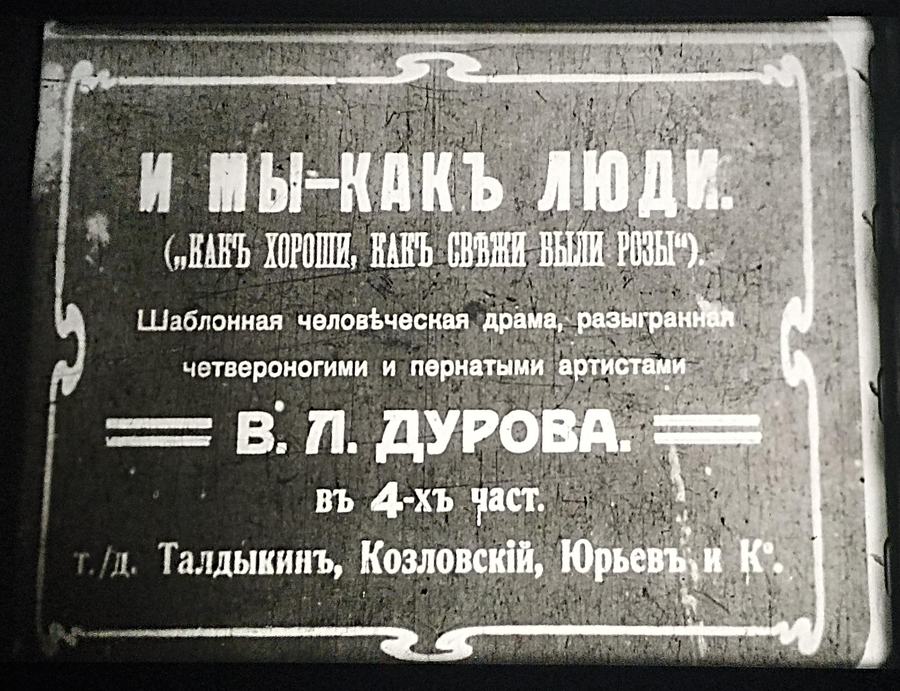
In the annals of early cinema, where innovation often sprang from sheer necessity and boundless imagination, few films stand as starkly unique and conceptually audacious as Vladimir Durov’s “I my kak liudi” (And We Too, Like People). Released at a nascent stage of cinematic evolution, this film isn't merely a curiosity; it is a profound philosophical statement, a daring exploration of anthropomorphism, and an astonishing technical achievement. Durov, a name synonymous with pioneering animal training and the legendary Durov Animal Theatre in Moscow, transcended the boundaries of the stage to bring his menagerie to the silver screen, crafting a melodrama where the protagonists are not human actors, but a meticulously directed ensemble of dogs, cats, goats, and various avian species. This wasn't a simple documentary or a collection of animal tricks; this was an attempt to imbue creatures with human-like emotional arcs, to tell a story of love, jealousy, and reconciliation through their seemingly innocent actions.
The premise itself is breathtaking in its ambition. Imagine a narrative, complete with dramatic tension and emotional resolution, conveyed entirely through the carefully orchestrated movements, reactions, and interactions of animals. Durov, functioning as both writer and director in the most literal sense, didn't just train his animals; he seemingly directed them to *act*. The film presents a domestic drama, a microcosm of human society, where a loyal dog’s affections are challenged by a conniving cat, leading to a cascade of events that mirror the complexities of human romantic entanglements. Other animals—a stoic goat, a watchful bird—serve as a kind of silent chorus, their presence adding layers of observation and occasional intervention, much like minor characters in a classical play. The genius lies not just in the animals performing specific actions, but in how those actions are edited and framed to suggest a coherent emotional narrative, compelling the audience to project human feelings onto these non-human characters. It’s a testament to the power of suggestion and the audience’s innate desire to find meaning in movement.
Vladimir Durov’s methodology was revolutionary. Unlike conventional animal trainers who focused on rote tricks, Durov sought to understand and leverage the natural instincts and behaviors of his animals, then subtly guide them into sequences that could be interpreted as human drama. He didn't force unnatural acts; rather, he cultivated an environment where the animals’ inherent curiosity, playfulness, and even territorial instincts could be molded into a narrative. This approach lends an astonishing authenticity to the ‘performances’ in “I my kak liudi.” The dog’s earnest glances, the cat’s sly maneuvers, the goat’s indifferent wisdom – these are not mere pantomimes but seemingly genuine expressions filtered through a directorial lens. The film thus becomes a masterclass in non-verbal storytelling, forcing the viewer to engage with visual cues and inferred emotions in a way that perhaps few other films of its era demanded. It challenges the very definition of 'acting' and 'performance,' pushing the boundaries of what cinema, even in its infancy, could achieve.
The success of this film hinges entirely on Durov’s unique relationship with his animals. He wasn't just a trainer; he was a psychologist, an artist, and a storyteller. He understood that to convey a human melodrama through animals, one had to tap into universal themes of love, rivalry, and reconciliation that resonate across species, or at least appear to. The film's title, “And We Too, Like People,” is not merely a descriptive phrase but an explicit invitation to the audience to see humanity reflected in the animal kingdom. It’s a daring proposition, one that asks us to suspend our disbelief and embrace a form of allegorical empathy. This level of nuanced direction, especially without the benefit of sound or complex cinematic grammar, makes “I my kak liudi” an unparalleled artifact of early cinematic experimentation.
Beyond its technical marvels, “I my kak liudi” resonates deeply on a thematic level. It taps into the ancient tradition of fables and allegories, where animals embody human traits and moral lessons. Here, the domestic squabbles and amorous rivalries among the animals serve as a potent metaphor for the intricate and often messy tapestry of human relationships. The dog, perhaps symbolizing unwavering loyalty and simple affection, finds itself at odds with the cat, a creature often associated with independence, cunning, and a certain self-serving charm. This dynamic sets up a classic melodramatic conflict, a love triangle stripped down to its most elemental form. The film, in its silent, animalistic eloquence, manages to evoke genuine sympathy for its characters, drawing the audience into their plight despite their non-human nature. It’s a testament to the universality of certain emotional experiences, suggesting that the pangs of jealousy or the warmth of companionship are not exclusive to our species.
The film’s power lies in its ability to make us reflect on our own behaviors. Are we not, too, driven by instinct, by desires for affection, by rivalries for attention? By presenting these very human struggles through the lens of the animal world, Durov creates a safe, distanced space for introspection. We can observe the folly and the beauty of these 'human' emotions without the immediate discomfort of seeing ourselves directly portrayed. This allegorical distance allows for a purer, more unvarnished contemplation of human nature. In this regard, it shares a spirit of social commentary, albeit through a highly unconventional lens, with films like The Toll of Mammon, which explores moral dilemmas and societal pressures, or even Down with Weapons, which uses its narrative to critique human conflict, though Durov’s approach is far more subtle and metaphorical.
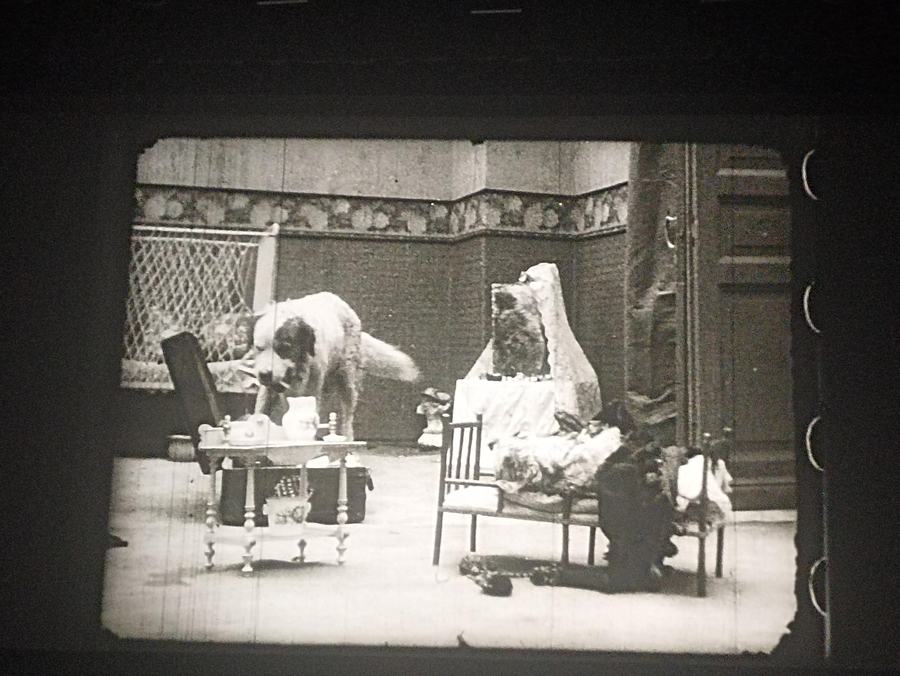
In an era dominated by silent cinema, all films relied on visual storytelling, but “I my kak liudi” took this reliance to an extreme, presenting a narrative where even the intertitles, if present, would serve only to contextualize the actions rather than deliver dialogue. This places it in an interesting dialogue with films that explored the nuances of non-verbal communication, such as The Menace of the Mute, where the absence of speech is central to the plot. However, Durov's film goes further by using non-human 'actors' to convey complex emotional states, relying entirely on their choreographed movements and the audience's interpretive capacity. The editing, therefore, becomes paramount, stitching together seemingly disparate animal actions into a cohesive and emotionally resonant sequence. The careful framing, the close-ups on animal faces (to the extent possible), and the pacing of the scenes are all designed to maximize the dramatic impact and facilitate the audience's understanding of the unfolding 'plot.'
This experimental spirit aligns it, in a conceptual sense, with other boundary-pushing works of its time, such as Drama v kabare futuristov No. 13, which challenged conventional theatrical and cinematic norms through its avant-garde aesthetics and narrative structure. While the futurist drama might have relied on human performers and abstract visuals, Durov’s film achieves a similar level of radical departure by fundamentally altering the very nature of cinematic performance. It's a testament to the diverse avenues of innovation explored during cinema's formative years, demonstrating that experimentation wasn't limited to avant-garde artists but could also emerge from unexpected corners like the animal circus.
Vladimir Durov was not just a filmmaker but a cultural institution in Russia. His Animal Theatre, founded in 1912, was renowned for its humane training methods and the sophisticated acts performed by his animals. “I my kak liudi” emerged from this rich tradition, bringing the unique spectacle of his theatre to a wider audience through the new medium of film. It’s a snapshot of a particular moment in Russian cultural history, where entertainment, scientific curiosity, and artistic expression intertwined. The film’s existence speaks volumes about the early cinema’s voracious appetite for novelty and its willingness to embrace unconventional narratives. It predates many animated features that would later anthropomorphize animals for storytelling, presenting a live-action, albeit highly manipulated, version of the same concept.
Considering its place among other dramas of the era, such as Manya, die Türkin or Sadounah, which relied on human actors to convey tragic or romantic narratives, “I my kak liudi” stands out as an anomaly. While those films explored human passions directly, Durov's work chose an indirect, allegorical route, proving that the essence of melodrama—its heightened emotions, its conflicts of the heart—could transcend the species barrier, or at least appear to. It challenges our very perception of performance and narrative, asking us to consider if the emotional core of a story is truly dependent on human actors, or if it can be conjured through ingenious direction and the audience's willingness to empathize.
The film’s impact, while perhaps not widely documented in mainstream film history, is undeniable for those who delve into the fringes of early cinema. It represents a bold, almost playful, challenge to the conventions of storytelling. It’s a reminder that cinema, in its nascent years, was a wild frontier, constantly being redefined by visionaries willing to push the boundaries of what was thought possible. It prompts us to consider the ethics of animal performance, a debate that continues to this day, but within the historical context, it was an act of profound artistic ambition. The legacy of “I my kak liudi” is not just about a few animals performing tricks; it’s about a director’s audacious attempt to capture the essence of human drama using the most unlikely of casts, leaving an indelible mark on the landscape of cinematic innovation and the enduring power of allegorical storytelling.
Ultimately, “I my kak liudi” transcends its status as a mere historical curiosity. It is a work that, even today, prompts reflection on the nature of empathy, the art of persuasion, and the boundless potential of cinema as a medium. It’s a fable brought to life, a testament to Vladimir Durov’s unparalleled skill and imaginative vision. The film doesn’t just show us animals acting; it invites us to consider how much of ourselves we project onto the world around us, and how readily we embrace narratives, even when delivered by a cast of creatures. It stands as a unique monument in film history, a silent, furry, and feathered testament to the universal language of emotion and the enduring allure of storytelling, regardless of who, or what, is doing the telling. Its distinctiveness makes it a compelling counterpoint to more conventional melodramas like Jewel or The Waif, demonstrating that the heart of human drama can beat just as strongly in the most unexpected of cinematic vessels. It remains a fascinating, heartwarming, and thought-provoking piece that continues to challenge our perceptions of what cinema can be.
IMDb 4.8
1918
Community
Log in to comment.