DbcultAccessing Vault...
Cult Review
Senior Film Conservator
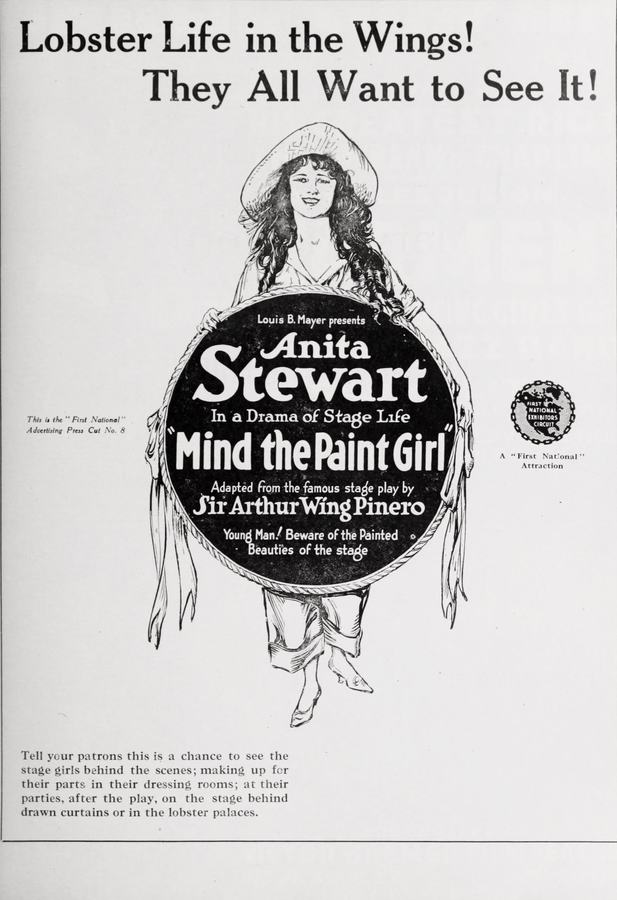
In the pantheon of silent cinema, few works capture the intersection of theatrical artifice and the brutal reality of social stratification with as much caustic elegance as the 1919 adaptation of Arthur Wing Pinero’s Mind the Paint Girl. This is not merely a tale of a chorus girl’s ascent; it is a surgical examination of the 'Gaiety Girl' phenomenon, a period where the boundary between the stage and the peerage became increasingly, and often dangerously, porous. The film operates as a meta-commentary on the medium of performance itself, utilizing the character of Lily Upjohn (portrayed with a luminous complexity by Anita Stewart) to dissect how the public persona can eventually cannibalize the private self.
The film opens with a stark juxtaposition of environments that immediately establishes the high stakes of Lily’s journey. Her origins in the London slums are rendered with a gritty naturalism that recalls the socio-political urgency of Op hoop van zegen. However, unlike the tragic inevitability found in Dutch realism, Pinero’s narrative offers the theatre as a trapdoor out of poverty. When Lily enters the Pandora Theatre, she isn't just seeking employment; she is seeking a total reinvention of her biological destiny. The cinematography captures the Pandora not as a place of art, but as a factory of illusion, a theme mirrored in the deceptive aesthetics of The House of Lies.
The central conceit of the film—the song 'Mind the Paint Girl'—is a stroke of narrative genius. It arises from a moment of physical clumsiness, a splash of paint from a scaffold, which serves as a metaphor for the indelible mark the industry leaves on its subjects. The song warns men that what they see on stage is merely pigment and powder, a sentiment that echoes the moral anxieties explored in The Moral Fabric. Lily becomes a sensation not for her talent alone, but for her embodiment of this warning, a paradox where the actress becomes famous by admitting her own falsity.
While Anita Stewart provides the film’s radiant center, it is Conway Tearle’s portrayal of Nicholas Jeyes that provides its dark, gravitational pull. Jeyes is a character of profound psychological wreckage, a man who has traded the structured honor of a military commission for the chaotic, unrequited proximity of a stage door. His obsession is not portrayed as a romantic ideal, but as a deleterious sickness. In many ways, his trajectory mirrors the tragic obsessions found in Inherited Passions, where the weight of the past and the intensity of desire lead to inevitable moral decay.

Jeyes represents the casualty of the 'stage door Johnnie' culture. His jealousy is not born of love, but of a perceived loss of ownership. As Lily drifts toward the more stable and socially appropriate Lord Francombe, Jeyes’ degeneration becomes a visceral spectacle. The film does not shy away from the ugliness of his descent; he is a man hollowed out by the very 'paint' the song warns against. This portrayal of masculine fragility is far more nuanced than many of its contemporaries, standing in sharp contrast to the more straightforward heroics seen in The Dummy or the patriotic vigor of America Preparing.
The visual language of Mind the Paint Girl is heavily reliant on the contrast between the 'painted' world of the theatre and the 'unpainted' reality of the domestic sphere. The use of chiaroscuro in the backstage scenes creates a sense of claustrophobia, suggesting that for all the glamour, the theatre is a gilded cage. This visual storytelling is reminiscent of the atmospheric depth found in Obryv. The director utilizes close-ups of Stewart to emphasize the mask-like quality of her stage makeup, forcing the audience to look for the human beneath the artifice.
In one particularly striking sequence, the camera lingers on the process of transformation—the application of the very 'paint' that gives the film its title. This scene serves as a precursor to the modern fascination with the 'celebrity behind the scenes,' yet it carries a much heavier weight. It suggests that once the paint is applied, the original Lily Upjohn ceases to exist. This theme of identity loss is a recurring trope in early cinema, notably explored in The Girl with the Champagne Eyes, where the protagonist's visual identity is inextricably linked to her moral standing.
The climax of the film, set during Lily’s birthday celebration, is a masterclass in theatrical tension. When Jeyes bursts in to find Lily in the arms of Francombe, the audience expects a traditional melodramatic explosion. Instead, what follows is a harrowing, almost pathetic, monologue of ruin. Jeyes doesn't demand Lily; he laments his own destruction. This shift from the external conflict to internal psychological trauma is a hallmark of Pinero’s writing and is captured with haunting precision on screen. It evokes the same sense of inevitable suffering found in O aniforos tou Golgotha.
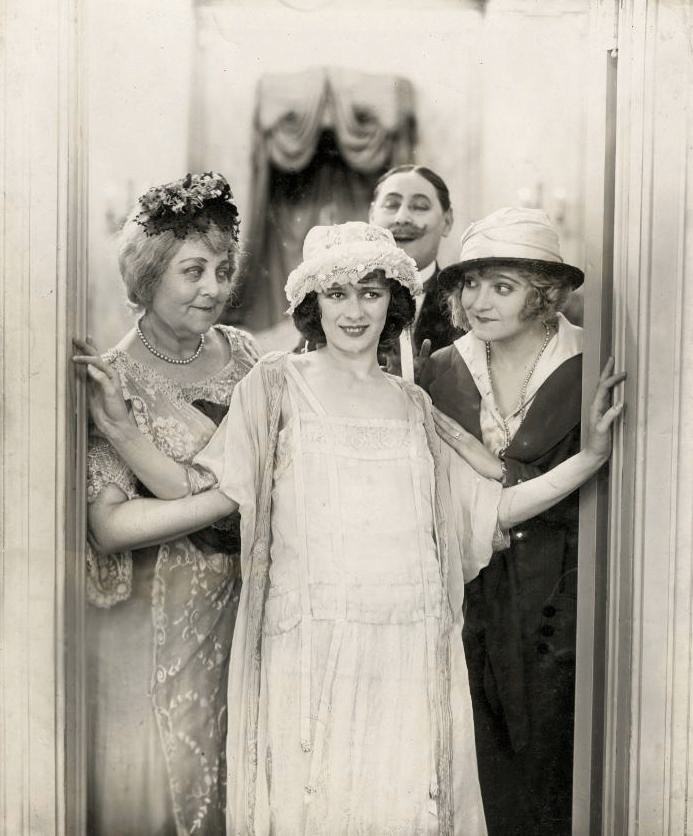
Perhaps the most radical element of Mind the Paint Girl is its ending. In an era where the marriage plot was the standard resolution for any narrative involving a fallen or rising woman, this film chooses a path of startling independence and masculine reconciliation. The fact that Jeyes and Francombe find a common ground in their shared exhaustion, and that neither marries Lily, is a profound subversion of audience expectations. It suggests that the 'paint' has made Lily untouchable, a figure to be admired from afar but never truly possessed. This ending places the film in a unique category, far removed from the sentimental conclusions of Merely Mary Ann or Naked Hearts.
To understand the impact of this film, one must consider the era of its release. 1919 was a year of profound global transition. The world was emerging from the shadow of the Great War, and the old social orders were crumbling. The character of Nicholas Jeyes, a man who lost his way in the pursuit of a phantom, likely resonated deeply with a public mourning a lost generation of men. The film’s skepticism regarding the 'theatre of life' mirrors the disillusionment found in The Price of Tyranny.
Furthermore, the film’s treatment of Lily’s agency is remarkably modern. While she is the object of desire, she is also the primary economic driver of her own life. She is not a victim in the mold of the protagonist in The Flower of No Man's Land; she is a professional who understands the value of her brand. The 'paint' is her armor as much as it is her mask. Even the controversial themes of social engineering and reproductive choices hinted at in the broader cultural discourse of the time—as seen in Birth Control—find a faint echo here in the way Lily manages her own body and career as assets.
Ultimately, Mind the Paint Girl stands as a towering achievement of the late silent period. It manages to be both a glittering entertainment and a somber reflection on the cost of fame. Anita Stewart delivers a career-defining performance, navigating the transition from the wide-eyed innocence of the slums to the calculated poise of the starlet with remarkable subtlety. The film’s refusal to provide a tidy, romantic closure is its greatest strength, leaving the viewer with a haunting question about the nature of love in an age of performance.
As we look back at this artifact of 1919, we see a world that is strikingly similar to our own—a world obsessed with the 'paint' of social media, the performance of identity, and the tragic fallout of parasocial obsession. It is a film that demands to be seen not just as a historical curiosity, but as a living, breathing piece of social commentary. Like the protagonist of Called Back, we find ourselves returning to these old stories to find truths that remain stubbornly relevant. Mind the paint, indeed; for beneath the colors lies a reality that is far more complex and far more beautiful than the illusion suggests.
IMDb 6.5
1932
Community
Log in to comment.