DbcultAccessing Vault...
5.4/10
Senior Film Conservator
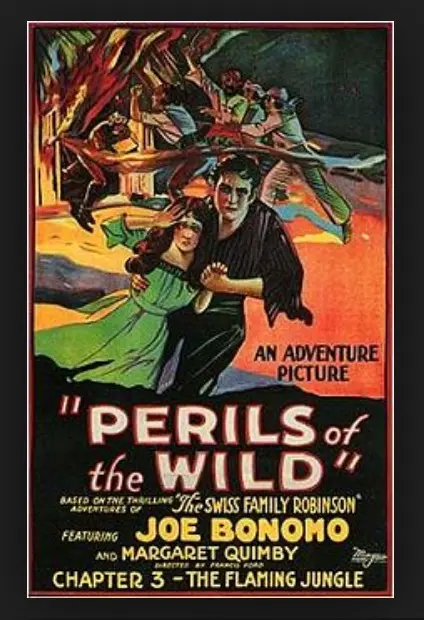
A definitive 5.4/10 rating for a film that redefined the boundaries of cult cinema. Perils of the Wild remains a cornerstone of transgressive art.
In the nascent era of cinematic storytelling, when the silver screen was still finding its voice, films like Perils of the Wild (1920) emerged as ambitious testaments to the power of visual narrative. Drawing inspiration from Johann David Wyss's enduring literary classic, The Swiss Family Robinson, and adapted for the screen by William Lord Wright and Isadore Bernstein, this film ventures far beyond a simple adaptation, weaving a labyrinthine tale of adventure, betrayal, and relentless human spirit. It’s a fascinating artifact, not merely for its historical significance but for the sheer audacity of its narrative ambition, particularly for its time.
The film plunges us headfirst into a journey ostensibly bound for Australia, aboard Captain William Robinson’s vessel. But this is no ordinary voyage; the cargo of gunpowder foreshadows an explosive destiny, both literal and metaphorical. The ensemble cast, featuring names like John Wallace, Jack Murphy, and a nascent Boris Karloff, navigates not just the turbulent seas but also the tempestuous waters of human ambition and desire. The addition of Emily Montrose as a passenger introduces a potent romantic undercurrent, becoming the focal point of a simmering rivalry between Frederick Robinson and the enigmatic Sir Charles Leicester. Sir Charles, however, is no mere suitor; he is a man cloaked in deceit, a notorious sea rover and pirate chief hiding in plain sight. This layering of identities, this Trojan horse within the ship’s confines, immediately elevates the narrative beyond a simple shipwreck drama, injecting it with a potent dose of psychological suspense. The tension is palpable from the outset, a silent ticking clock counting down to inevitable disaster.
The descent into chaos is meticulously orchestrated. A raging storm serves as the perfect crucible for exposing latent villainy. As the ship is battered by nature's fury, a fire ignites dangerously close to the gunpowder hold. It’s a moment of exquisite terror, a double threat that tests the mettle of every soul aboard. In this crucible, Sir Charles Leicester sheds his guise of gentleman passenger, seizing command with ruthless efficiency. The crew, perhaps already swayed by his nefarious influence, abandons their loyalties, transforming the vessel into a pirate stronghold mid-ocean. This sudden, violent shift in power dynamics, from a structured maritime expedition to a lawless pirate takeover, must have been utterly electrifying for audiences of the era. One can almost feel the frantic energy, the desperate struggle of Frederick Robinson in the ship’s bowels, heroically battling the encroaching flames, a lone bastion of integrity against overwhelming odds. This sequence, even imagined through the lens of early silent film, speaks to a profound understanding of suspense and character-driven drama.
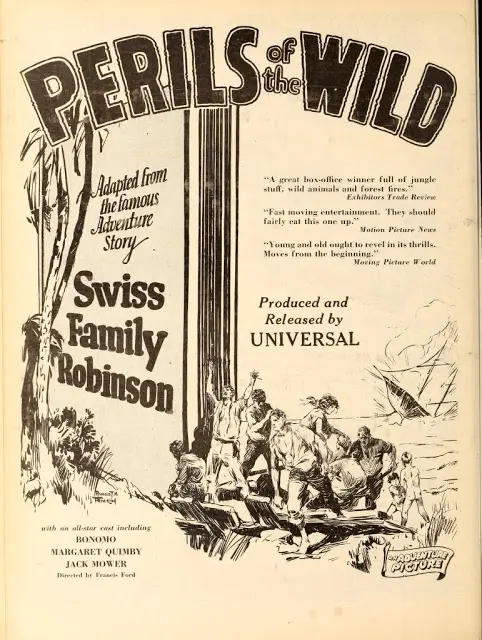
The ship's ultimate demise, succumbing to the inferno and the waves, is not an end but a terrifying rebirth. The pirates, true to their self-serving nature, abandon the foundering vessel, leaving the Robinsons to their watery fate. Yet, through sheer resilience and perhaps a touch of cinematic providence, the family survives, cast adrift only to find solace in the calm after the storm. Their subsequent arrival on a distant, seemingly uninhabited island offers a fleeting promise of sanctuary. But Perils of the Wild, true to its name, is never content with simple solutions. The island, far from being a pristine paradise, reveals itself to be the pirates' clandestine base, teeming with Sir Charles’s loyal followers. This twist is a masterstroke, transforming the traditional shipwreck narrative into a prolonged game of cat and mouse, a struggle for survival not just against nature, but against a persistent, human evil. The Swiss Family's initial attempts to establish a new home, to erect their tent and adjust to this wild existence, are immediately imbued with a profound sense of precariousness. Every rustle in the jungle, every distant sound, becomes a potential harbinger of renewed conflict.
The success of such a sprawling narrative in the silent era hinged entirely on the power of visual storytelling and the expressive capabilities of its cast. Without dialogue, actors had to convey complex emotions, motivations, and plot points through exaggerated gestures, facial expressions, and physical prowess. The cast of Perils of the Wild, including the formidable John Wallace and the versatile Jack Murphy, would have been tasked with this monumental challenge. Their performances, viewed today, offer a window into the theatrical conventions that heavily influenced early cinema. The intensity of Frederick Robinson’s struggle in the hold, the calculated menace of Sir Charles Leicester, and the vulnerability of Emily Montrose would have relied on a precise choreography of movement and expression.
Perhaps one of the most intriguing aspects of this film is the early appearance of Boris Karloff. While his role here might have been minor, these early experiences were foundational to his later transformation into a horror icon. Watching Perils of the Wild today, one is afforded the rare opportunity to witness the nascent stages of a legendary career, to observe the raw talent before it was refined into the unforgettable characters he would later embody in films like The Unholy Three. His presence, however brief, adds a layer of fascination, prompting us to consider how such formative roles shaped his unique screen persona. The subtlety of his early work, even in a supporting capacity, is a testament to the dedication required of actors in this demanding period of film history.
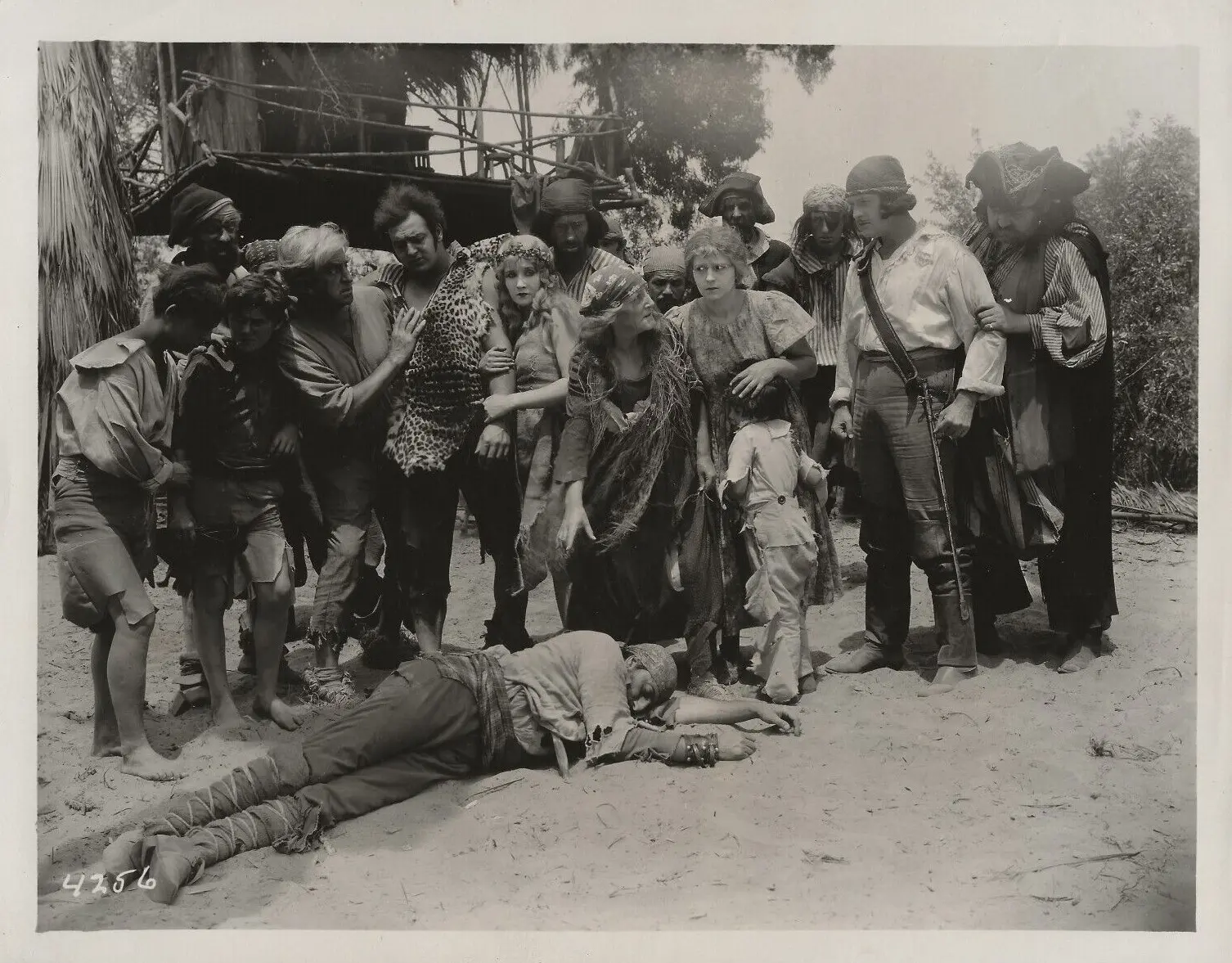
The cinematography, though limited by the technology of the time, would have played a crucial role in establishing the expansive scope of the maritime journey and the claustrophobic terror of the shipboard fire. The visual language of silent film often relied on striking compositions, dramatic lighting, and innovative editing to convey meaning. Sequences depicting the storm and the ship’s sinking would have demanded considerable ingenuity in special effects and model work, pushing the boundaries of what was achievable. The juxtaposition of the vast, indifferent ocean with the intimate, desperate struggles of the characters would have been a powerful visual motif, much like the stark realities faced by characters in films such as The Italian, which similarly explores themes of hardship and survival against formidable backdrops.
At its core, Perils of the Wild is a profound meditation on survival. It explores not just the physical struggle against the elements and human adversaries, but also the moral and psychological battles fought within. The Robinson family, a symbol of domesticity and order, is thrust into an anarchic world, forced to adapt or perish. Their resilience, their ingenuity in setting up a new home on a hostile island, speaks to the enduring human capacity for hope and perseverance. This theme resonates deeply with the spirit of classic adventure tales and finds echoes in other films of the era that celebrated human fortitude, such as the determination seen in The Wildcat, where characters similarly face daunting challenges with fierce resolve.
The betrayal by Sir Charles Leicester is another central theme, highlighting the fragility of trust and the insidious nature of hidden malevolence. His dual identity and his calculated manipulation of circumstances provide the film with its primary antagonist and a constant source of dramatic tension. The romantic rivalry between him and Frederick for Emily’s hand adds a personal stake to the larger conflict, transforming the struggle for survival into a battle for love and honor. This intricate web of personal and existential threats elevates the film beyond mere spectacle, grounding it in universal human experiences. The exploration of romantic rivalry was a common trope in early cinema, seen in films like Pick Out Your Husband, though perhaps rarely with such life-or-death consequences.
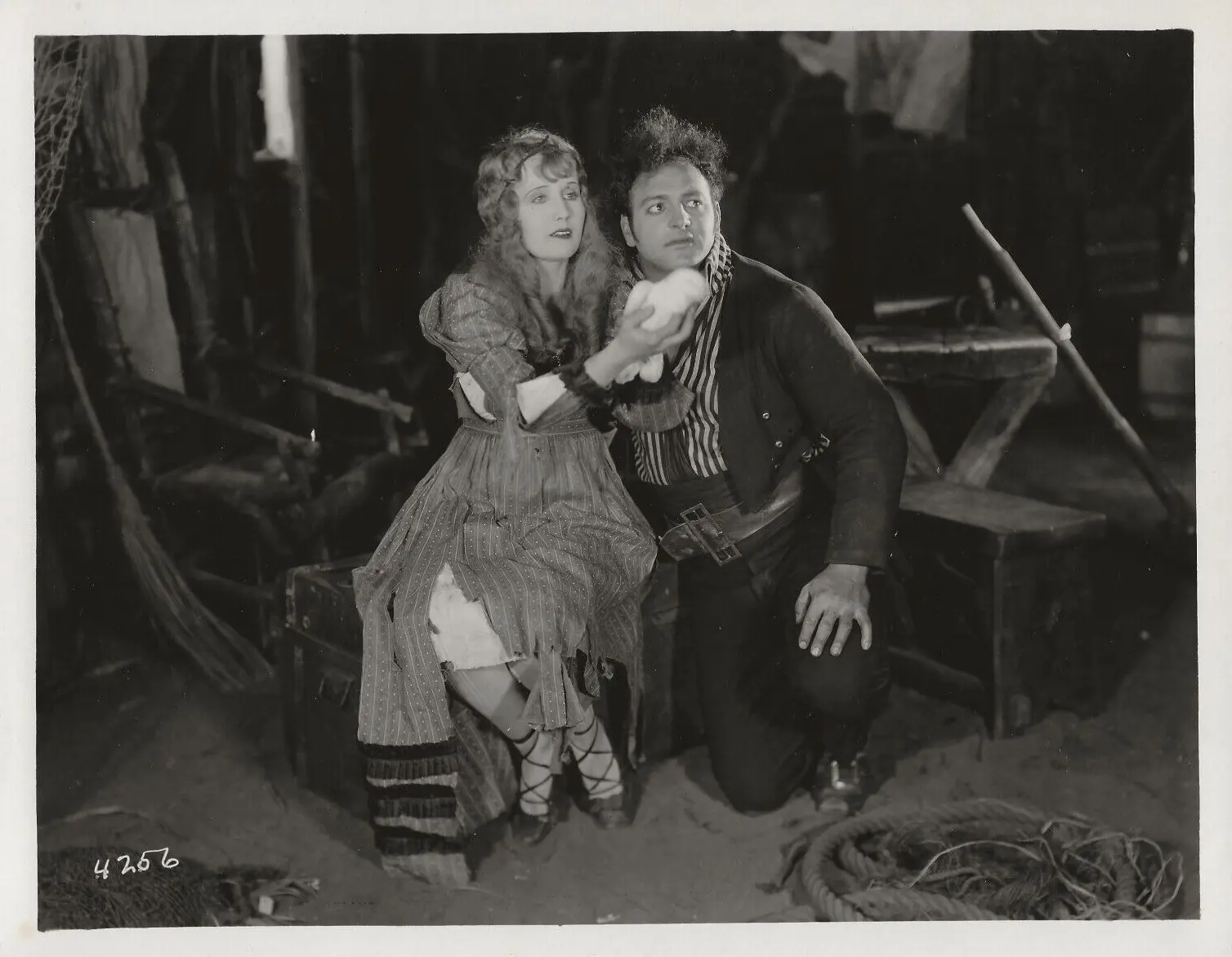
To appreciate Perils of the Wild fully, one must place it within its historical context. The year 1920 was a vibrant period for cinema, a time of rapid innovation and experimentation. Films were growing longer, narratives more complex, and the technical capabilities of the medium were expanding at an astonishing pace. This film, with its ambitious plot and multiple dramatic arcs, is a product of that era’s burgeoning confidence in cinematic storytelling. It predates the full blossoming of the Hollywood studio system but already exhibits many of the hallmarks of classical narrative structure: clear protagonists and antagonists, escalating stakes, and a satisfying (or at least cathartic) resolution. The very title suggests a commitment to high-stakes drama, a promise of thrills and excitement that audiences craved. The tension generated by the impending explosion, a classic suspense device, can be seen as a precursor to later thrillers, reminiscent of the confined-space drama and ticking-clock scenarios found in films like Time Lock No. 776.
While perhaps not as widely remembered as some of its contemporaries, Perils of the Wild stands as a compelling example of early adventure cinema. It demonstrates the enduring appeal of the Robinson Crusoe archetype, infused with the added spice of piracy and romantic intrigue. The film’s ability to sustain a narrative across multiple dramatic shifts – from a sea voyage to a shipwreck, from survival at sea to a perilous existence on a pirate-infested island – speaks volumes about the writers' (Johann David Wyss, William Lord Wright, Isadore Bernstein) skill in adapting and expanding upon classic themes for a new medium. It is a testament to the imaginative power of silent film, where the absence of spoken dialogue allowed for a universal language of emotion and action to captivate audiences across diverse backgrounds.
The film’s focus on the family unit, under siege by both natural forces and human malevolence, provides a relatable emotional core amidst the grand spectacle. The courage and resourcefulness displayed by the Robinsons in the face of overwhelming adversity would have resonated deeply with audiences, offering both escapism and a reflection on the human spirit's capacity to endure. This emphasis on family and enduring hardship can be found in other dramas of the period, such as Always in the Way, though often with different narrative contexts. The sheer scale of the adventure, from open ocean to uncharted island, marks it as a significant undertaking for its time, requiring considerable logistical effort and creative vision.
In essence, Perils of the Wild is more than just a forgotten film; it's a vibrant echo from an era when cinema was still defining itself, fearlessly tackling grand narratives with a blend of theatricality and nascent cinematic technique. It offers a rich tapestry of adventure, suspense, and human drama, all set against a backdrop of breathtaking peril. For cinephiles and historians alike, it provides invaluable insights into the development of genre filmmaking, the craft of silent acting, and the audacious spirit of early producers and directors. Its intricate plot, featuring a compelling villain, a heroic struggle, and a classic tale of survival, solidifies its place as a fascinating, if often overlooked, piece of cinematic heritage. To experience Perils of the Wild is to step back in time, to witness a grand adventure unfold through the silent, yet profoundly expressive, language of early film, reminding us that the foundational elements of compelling storytelling are truly timeless.
IMDb —
1917
Community
Log in to comment.