DbcultAccessing Vault...
Cult Review
Senior Film Conservator
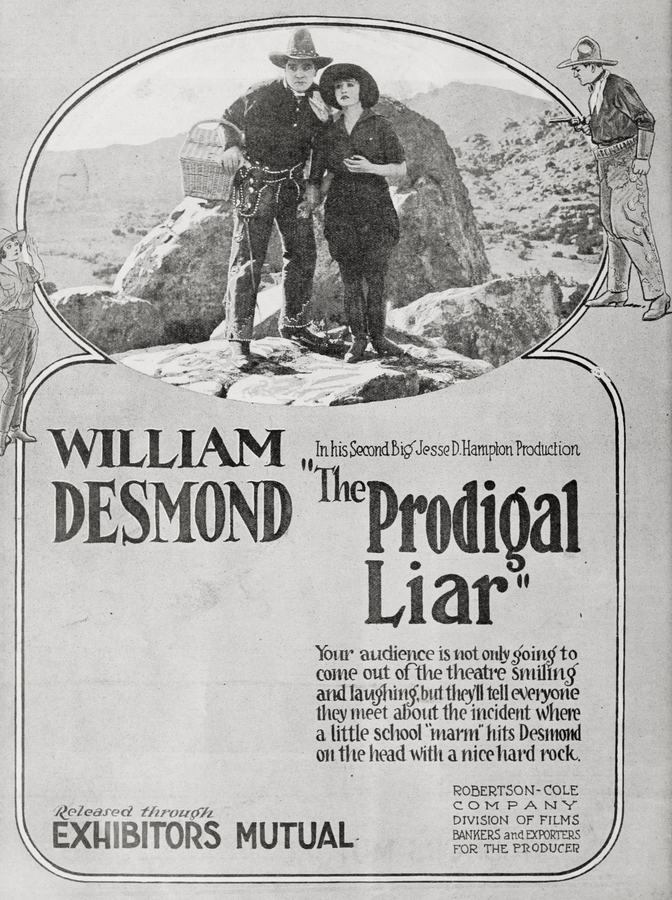
In the annals of early cinema, few narratives capture the whimsical spirit of the burgeoning film industry quite like 1919's The Prodigal Liar. This silent Western, penned by the inventive George Elwood Jenks, transcends mere genre trappings to deliver a surprisingly nuanced exploration of identity, manufactured heroism, and the peculiar magnetism of a well-spun yarn. It’s a film that, even a century later, prompts reflection on the nature of truth in romance and the allure of the rugged individual, even when that ruggedness is entirely fabricated.
At its core, the film presents a delightful, if ethically dubious, premise: the rancher Jim Rainey, portrayed with a certain roguish charm by Louis Morrison, finds himself in a pickle. His niece, Hope Deering (Betty Compson, whose luminous presence consistently elevates the material), is journeying from the genteel climes of New England to his Western spread, brimming with romanticized notions of frontier adventure and passionate encounters. Jim, perhaps feeling the weight of expectation or simply possessing a mischievous streak, decides to conjure the very archetype of the Western badman for her. This isn't just a simple prank; it's an elaborate theatrical production, a testament to the lengths one might go to craft an experience, even if it’s built on sand.
Jim's method for fulfilling Hope's romanticized desires is nothing short of ingenious, if morally questionable. He takes a photograph of his friend, Percival Montgomery Edwards, affectionately known as "Monte," and affixes it to a wanted poster for the notorious, and conveniently incarcerated, murderer Steve Logan. This act of visual subterfuge sets the stage for the entire narrative. The audacity of it, the sheer theatricality, speaks volumes about the early cinematic era's embrace of melodramatic plots and larger-than-life characters. It's a precursor to many a mistaken identity trope, a narrative device that still resonates today, albeit usually with less felonious intent. One might draw a faint parallel to the comedic misunderstandings in films like Checkers, though the stakes here are decidedly higher, bordering on the criminal.
The real genius, or perhaps folly, of Jim's plan rests on the shoulders of Monte, played by the effortlessly charismatic William Desmond. Desmond, a prolific actor of the silent era, brings a wonderful blend of reluctant charm and burgeoning confidence to the role. Persuaded by Jim to assume Logan's identity, Monte takes up residence in Logan's actual dugout abode, a detail that adds a layer of verisimilitude to the charade. His transformation isn't just external; it's a gradual immersion into a persona, a performance within a performance. He tantalizes Hope with lurid, fabricated tales of his misdoings, painting himself as a hardened outlaw with a mysterious past. It’s a classic romantic trope: the bad boy with a hidden heart, only here, the badness is entirely manufactured. This manipulative romanticism echoes themes found in stories like Carmen, where dangerous allure is central, though The Prodigal Liar injects a distinct comedic irony.
Hope Deering, as embodied by the captivating Betty Compson, is not merely a passive recipient of Monte's manufactured charm. She is an active participant in her own fantasy, projecting her romantic ideals onto this carefully constructed figure. Compson's portrayal captures Hope's blend of innocence and a yearning for excitement, making her attraction to Monte's dangerous persona entirely believable within the film's heightened reality. She falls deeply in love, her heart ensnared by the thrilling narrative of a man whose life as a badman, Monte explains, began when he was struck on the head. This ludicrous explanation, readily accepted by Hope, highlights the power of narrative and the human desire to rationalize even the most outlandish circumstances when driven by emotion.
Jim, ever the meddler, seizes upon this detail with a truly bizarre suggestion: if a blow to the head started his badness, surely another blow could cure him. He instructs Hope to administer this peculiar therapy. This moment, ostensibly comedic, also serves as a potent symbol of the film's central theme: the manipulation of reality for a desired outcome. The audience, privy to the deception, watches with a mix of amusement and a growing sense of foreboding, knowing that such an elaborate lie cannot possibly hold indefinitely. This kind of physical comedy mixed with underlying tension is a hallmark of many silent-era films, from slapstick shorts to more elaborate comedies of manners.
The narrative takes a dramatic turn with the inevitable escape of the real Steve Logan, played by Frank Lanning, whose presence immediately injects a genuine sense of menace. Logan, a truly dangerous character, breaks out of prison and, through a stroke of cinematic irony, witnesses Hope knocking Monte unconscious. This pivotal moment shatters the carefully constructed illusion, bringing the harsh realities of the frontier crashing down upon the romanticized fantasy. Logan's abduction of Hope is a stark reminder that while manufactured danger can be thrilling, real danger is terrifying. The film expertly transitions from a lighthearted romantic comedy of errors to a genuine suspense Western, demonstrating the versatility of silent film storytelling.
Monte, awakening to the chaos and realizing the grave consequences of his charade, is propelled into action. This is where William Desmond's performance truly shines. His character, previously a reluctant participant in a lie, must now become a genuine hero. The transformation from a feigned badman to a true protector is compelling. He pursues Logan and Hope with a newfound determination, driven not by pretense, but by a nascent, authentic love for Hope and a desperate need to rectify the situation he unwittingly helped create. This arc of a character rising to the occasion, finding true courage in adversity, is a timeless narrative device, seen in countless tales of redemption and self-discovery.
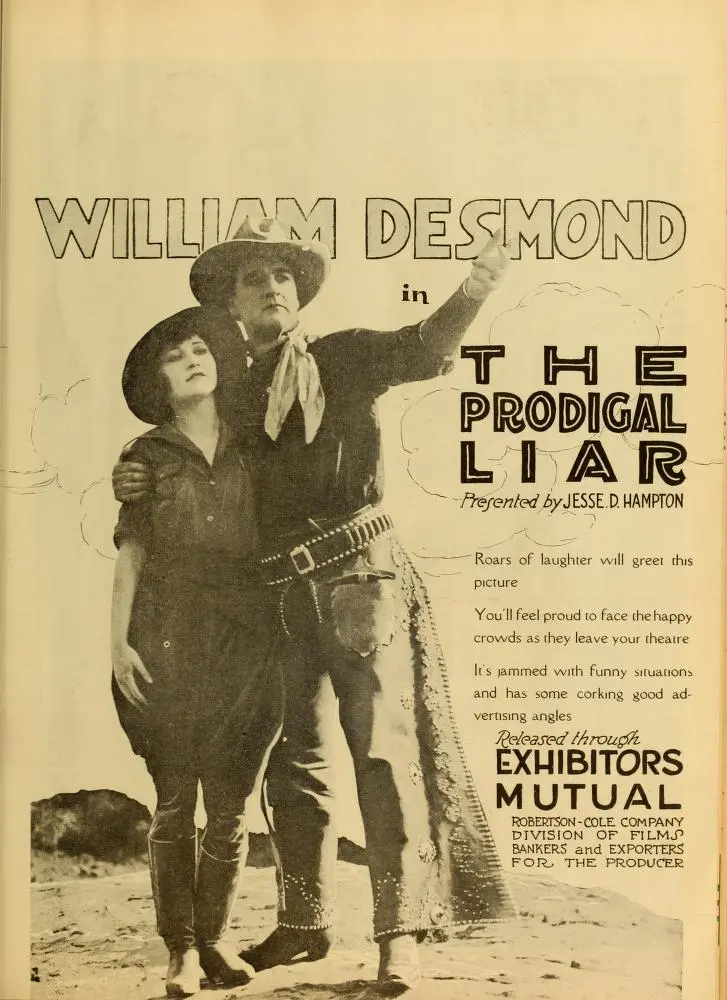
The climax of The Prodigal Liar is a masterclass in silent film tension and resolution. Logan, cornered by a posse, threatens to kill Hope to ensure his escape. It's a desperate, brutal move that underscores the real danger he poses. In this critical moment, Monte performs his most audacious act yet. He approaches Logan, places his signet ring against the outlaw's neck, and, with a steely gaze, convinces Logan that it is a gun. The bluff works. Logan, believing he faces imminent death, surrenders. This scene is a powerful testament to the power of perception and the psychological warfare that can prevail even in the most physically demanding situations. It’s a moment where Monte’s earlier theatricality is ironically repurposed for genuine heroism.
The ingenuity of this resolution cannot be overstated. It avoids a straightforward shootout, opting instead for a clever, character-driven solution that plays directly into Monte's established persona as a master of deception. He doesn't need a real gun; he needs the conviction to make his lie believable, a skill he has honed throughout the film. This echoes the cleverness found in narratives where wit triumphs over brute force, a satisfying conclusion for audiences who appreciate a hero who uses his brains as much as his brawn. Think of the strategic cunning in films like Detective Brown, where intelligence is the ultimate weapon.
In the aftermath, Hope finally learns the truth about Monte, the elaborate deception orchestrated by her uncle, and Monte's true identity as Percival Montgomery Edwards, not the fearsome Steve Logan. One might expect a furious rejection, a sense of betrayal. Yet, in a beautifully understated resolution, she still loves him. This ending is perhaps the most profound aspect of The Prodigal Liar. It suggests that while the initial attraction might have been based on a lie, Monte's subsequent actions—his genuine concern, his pursuit, and his courageous act of saving her—forged a new, authentic connection. His journey from an amiable stooge to a man who genuinely earned his heroic stripes transforms the nature of their relationship.
Betty Compson's subtle performance in these final moments conveys a depth of understanding and forgiveness that elevates the film beyond simple comedic fare. It speaks to the idea that love, once sparked, can adapt and grow, even through revelations of past deceit. It's not the initial story that matters most, but the character revealed beneath the layers of artifice. This theme, of love enduring despite significant obstacles and revelations, is a timeless one, explored in countless romantic dramas and comedies across cinematic history, often with varying degrees of success and believability.
Released in 1919, The Prodigal Liar arrived during a fascinating period for American cinema. The Western genre was already firmly established, but films were increasingly experimenting with mixing genres, incorporating elements of comedy, romance, and even psychological drama. George Elwood Jenks's screenplay is a prime example of this genre fluidity, deftly balancing humor with moments of genuine peril and emotional resonance. The film also showcases the burgeoning star power of actors like Betty Compson and William Desmond, whose on-screen chemistry undoubtedly contributed to its appeal.
The film's exploration of identity and the construction of self, even if through deceit, resonates deeply. It subtly questions what makes a hero: is it inherent character, or the circumstances one is thrust into? Is it the truth of one's past, or the courage demonstrated in the present? Monte's journey from a fabricated outlaw to a genuine rescuer provides a compelling answer. This thematic depth, embedded within a seemingly straightforward Western romance, is what gives The Prodigal Liar its lasting power and makes it more than just a historical curiosity.
Comparing it to other films of the era, one can see elements that would become staples. The mistaken identity plot, for instance, is a classic, often used for comedic effect as in The Prince and the Pauper, but here it's imbued with a Western sensibility and a dramatic payoff. The romanticization of the outlaw figure, while satirized initially, ultimately gives way to a more grounded, earned heroism. It's a film that plays with audience expectations, first by presenting a charming rogue, then by revealing his true nature, and finally by demonstrating his capacity for genuine courage.
In conclusion, The Prodigal Liar is a fascinating artifact of early American cinema, offering a rich tapestry of deception, romance, and unexpected heroism. It's a testament to the creative storytelling of its era and the enduring appeal of characters who, through their trials, discover their true selves. For anyone interested in the evolution of the Western, the nuances of silent film acting, or simply a compelling story of love found amidst an elaborate charade, this film remains a captivating watch, a delightful journey into a world where even a lie can pave the way for an unexpected truth.
IMDb —
1918
Community
Log in to comment.