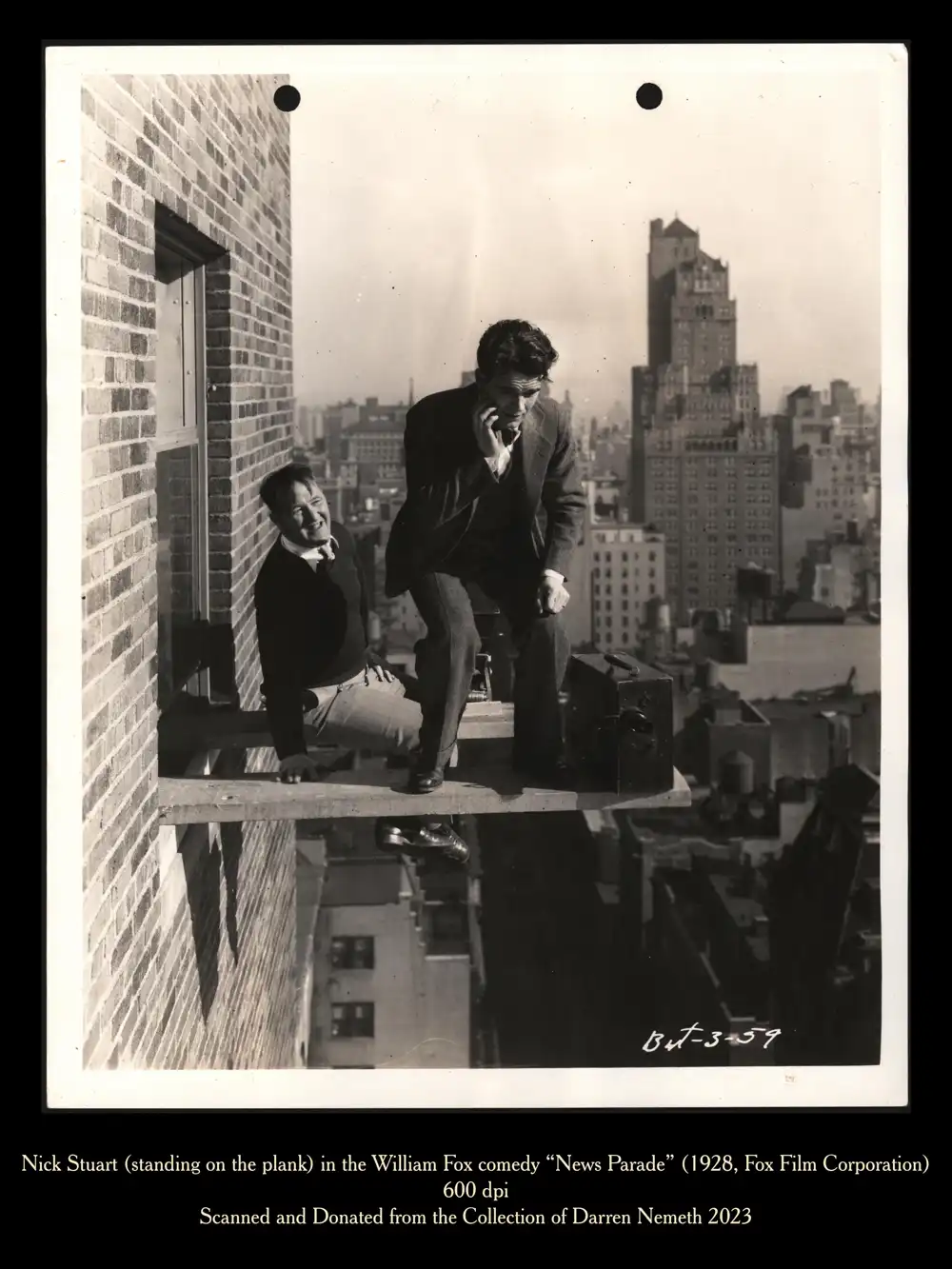
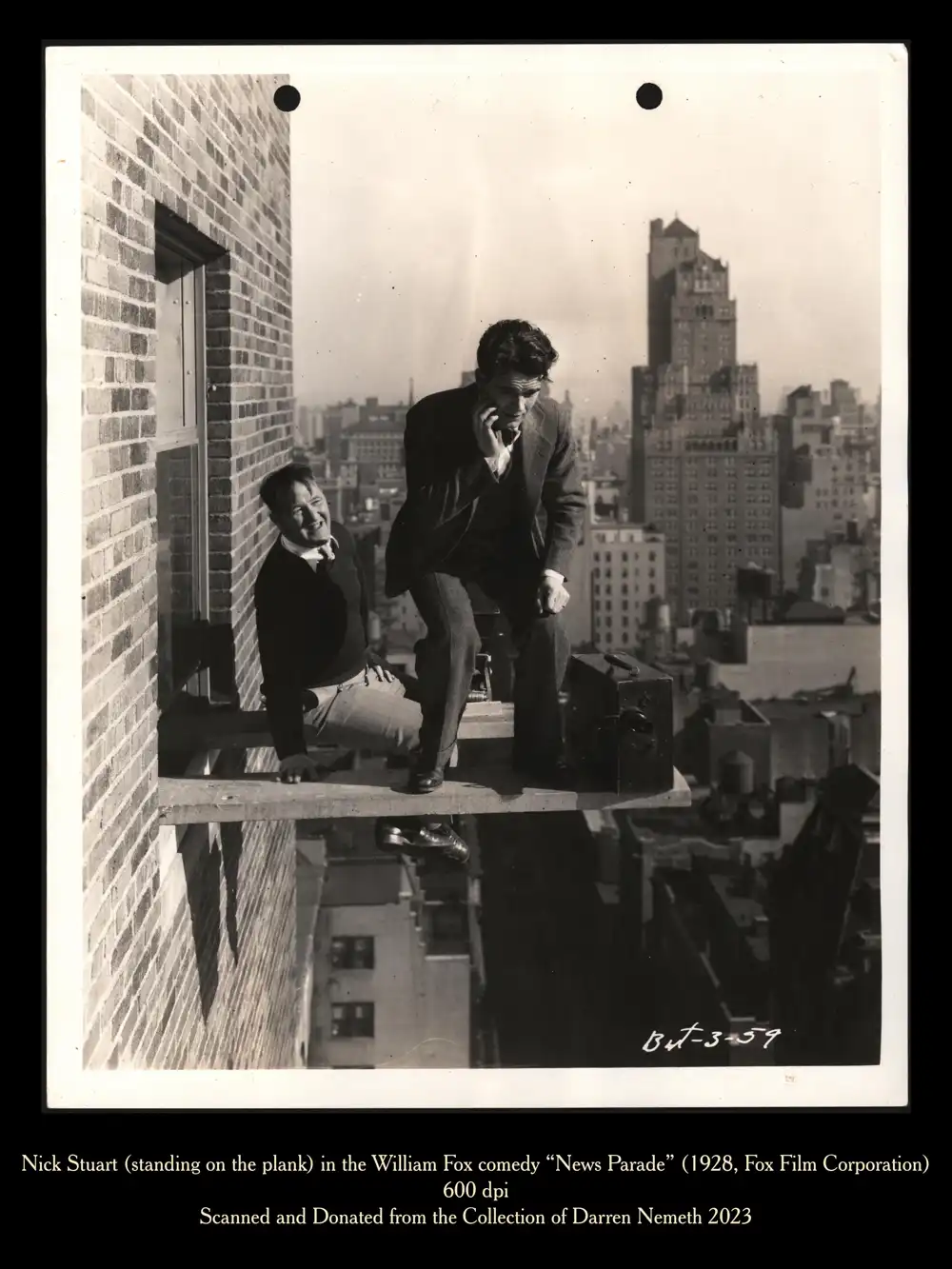
News Parade is not going to be for everyone, let's just get that out of the way. If you're someone who loves digging into the very early days of sound cinema, the kind of person who finds charm in the clunkiness of it all, then sure, give it a shot. You'll probably appreciate the sheer ambition, the raw attempt at something new. But if you're looking for anything resembling a modern narrative flow or even consistently good acting, you're going to have a rough time. Most people will likely find it an academic curiosity at best, a baffling relic at worst.The film starts with this frantic energy, almost like it's trying to prove how exciting news reporting can be. Earle Foxe, as the main rival reporter, P.J. Devlin, has this wonderfully over-the-top sneer that feels straight out of a stage melodrama. His counterpart, Franklin Underwood's Speed Johnson, is supposed to be the more earnest, likable guy, but honestly, Underwood often looks a bit lost. There's a scene early on where he's trying to get a quote from some dignitary, and his body language is just... stiff. Like he's waiting for a cue that never quite arrives, or maybe the director just told him to 'stand there and look intrepid.' It's one of those moments where the acting feels less like a performance and more like a human trying to remember their lines in front of a giant, intimidating microphone.And the sound. Oh, the sound. It’s a character unto itself here. Sometimes it's surprisingly clear, then suddenly the dialogue will get swallowed by what sounds like distant street noise, or a sudden, unexplained hum. There's a particular sequence, a chase through what looks like a studio backlot dressed up as a city alley, where the footsteps are so exaggeratedly loud it almost becomes comedic. It sounds less like running and more like someone thumping two coconuts together a foot from the mic. You can practically hear the foley artist sweating.The editing is another thing. It’s often choppy, sometimes feeling like they just cut wherever the camera operator decided to stop rolling, rather than for any real narrative rhythm. One shot of Sally Phipps, playing the plucky love interest, lingers on her face for a good ten seconds after her line, just staring into the middle distance. Is she thinking? Is she bewildered? Is the editor asleep? It pulls you right out of whatever emotional beat they were trying to hit. It feels less like artistic choice and more like a technical limitation they just had to live with.
Scene from News Parade
Cinematic perspective: Exploring the visual vocabulary of News Parade (1928) through its definitive frames.
Then there's the pacing. It's wildly uneven. You'll get these bursts of activity, reporters literally running around, shouting into early microphones, trying to beat each other to a story. Then it'll slam into a scene of two characters sitting stiffly in an office, delivering exposition with all the dynamism of a radio play. The contrast is jarring. You can almost feel the movie trying to figure out if it wants to be a zippy actioner or a drawn-out dramatic piece.Cyril Ring pops up in a few scenes as a rival editor, and he's got this great, smarmy energy that actually works. He understands the theatricality needed for early talkies in a way some of the other cast members seem to be grappling with. His exchanges with Foxe are some of the only times the dialogue feels like it has some snap, some actual back-and-forth. You can tell they're playing off each other, not just reciting.The costumes are mostly fine, period-appropriate suits and dresses. But there's this one shot of a background extra in a crowd scene, wearing a hat that looks two sizes too big for his head, almost comically askew. It’s a tiny detail, but it stuck with me. You wonder if anyone noticed, or if it was just 'good enough for the newsreel.' It adds to that slightly ramshackle, almost documentary feel the film sometimes accidentally stumbles into.Honestly, the whole thing feels a bit like watching a live theatrical performance where the actors are trying to hit their marks for a camera that's barely moving. The camera is often static, almost reverent of the spoken word, which, ironically, often makes the visual storytelling suffer. When it does move, it’s usually a jerky pan or a sudden, unmotivated tilt. The art of cinematic movement was clearly still finding its feet here.Is it a good movie? Probably not by most modern standards. But is it interesting? Absolutely. It's a fascinating peek into a transitional period, where the rules were still being written. You can see the struggle, the ingenuity, and the sheer awkwardness of a new medium trying to find its voice. For those who appreciate film history, it's a valuable, if sometimes trying, experience. For everyone else, it’s probably best left as a footnote.