DbcultAccessing Vault...
5.7/10
Senior Film Conservator
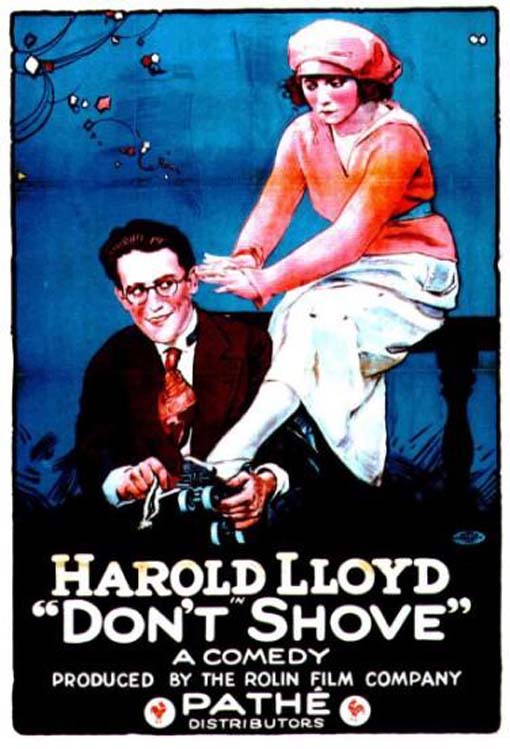
A definitive 5.7/10 rating for a film that redefined the boundaries of cult cinema. Don't Shove remains a cornerstone of transgressive art.
Stepping back into the raucous world of early 20th-century cinema, one often finds themselves delightfully ensnared by the sheer, unadulterated energy of films like H.M. Walker's 1919 short, 'Don't Shove'. This cinematic confection, starring the inimitable Harold Lloyd and the effervescent Bebe Daniels, serves as more than just a historical artifact; it's a vibrant, living testament to the foundational principles of physical comedy and romantic farce. It’s a film that encapsulates a particular moment in the evolution of storytelling, where narrative economy met boundless invention, and the result was pure, exhilarating entertainment. The title itself, a seemingly simple directive, belies the intricate choreography of chaos that unfolds, hinting at the delightful anarchy to come rather than preventing it.
The premise of 'Don't Shove' is deceptively straightforward: a birthday celebration for Bebe Daniels' character becomes the battleground for a burgeoning romantic rivalry. Yet, within this simple framework, Walker and the directorial duo of Fred C. Newmeyer and James Parrott weave a tapestry of escalating comedic tension that is nothing short of masterful. The initial scenes, set within the confines of Bebe's home, are a brilliant exercise in controlled chaos. Harold, ever the earnest suitor, arrives with his characteristic blend of hopeful enthusiasm and underlying clumsiness. His attempts to ingratiate himself, to win Bebe's affection, are immediately complicated by the presence of a larger, more imposing rival, whose very bulk and swagger serve as a physical manifestation of the obstacles Harold must overcome. This isn't just a love triangle; it's a geometric problem of social maneuvering and physical comedy.
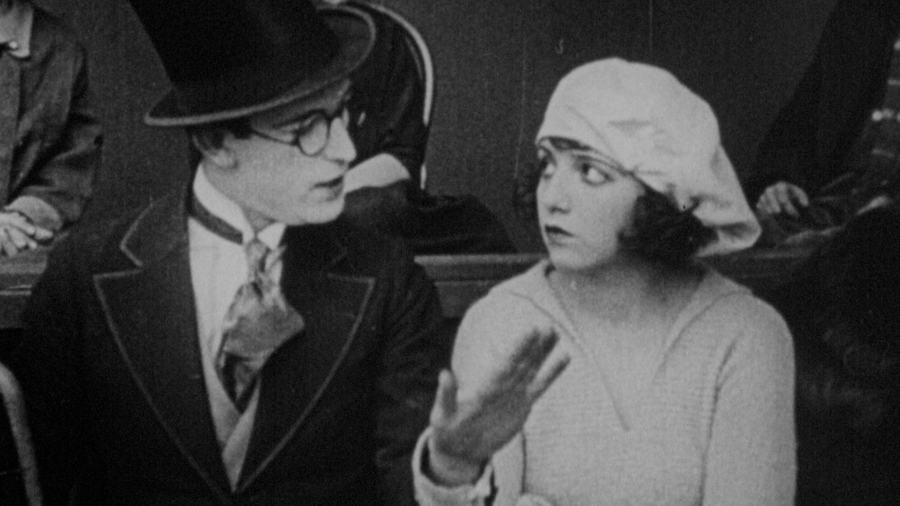
The domestic setting, often a backdrop for genteel interactions, here becomes a pressure cooker of petty slights and subtle aggressions. The rival's attempts to literally shove Harold out of the frame, to monopolize Bebe's attention, are met with Harold's ingenious, if often disastrous, counter-maneuvers. These early exchanges are a testament to the nuanced physical acting of the silent era, where a glance, a gesture, or a perfectly timed stumble could convey volumes of emotion and intent. The visual gags are plentiful, from Harold's struggles with party etiquette to his increasingly desperate attempts to outshine his competitor, each moment meticulously crafted to elicit laughter without the aid of dialogue. The supporting cast, including the ever-reliable Bud Jamison and 'Snub' Pollard, expertly fills out the background, reacting to the unfolding mayhem with a delightful mix of bewilderment and amusement, grounding the escalating absurdity in a relatable social context.
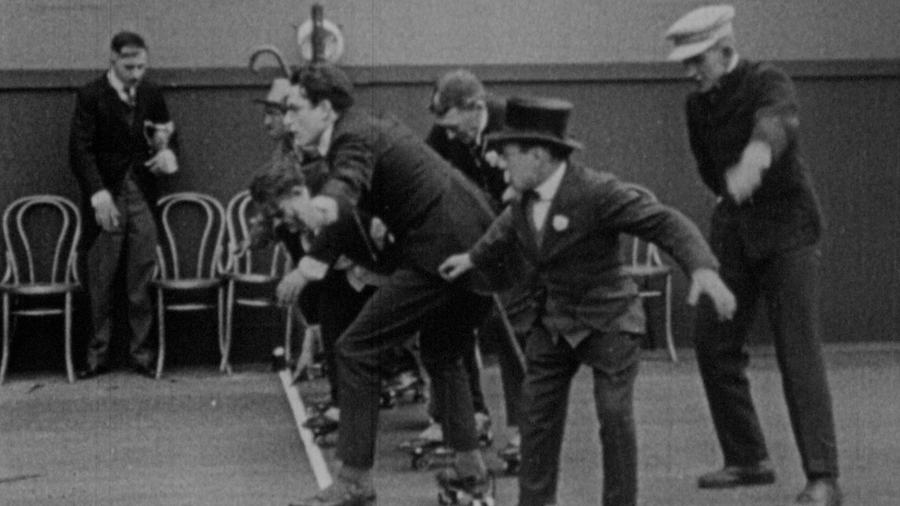
The true genius of 'Don't Shove', however, manifests itself in the second act, as the narrative shifts from the relative decorum of the birthday party to the exhilarating, high-stakes environment of a roller-skating rink. This change of scenery is a stroke of brilliance, transforming the romantic rivalry from a series of static confrontations into a dynamic, kinetic ballet of motion and mishap. The skating rink, with its slick surface and constantly moving crowd, provides the perfect stage for Harold's brand of physical comedy. Here, the potential for disaster is omnipresent, and Harold, with his signature blend of earnestness and wide-eyed vulnerability, capitalizes on every opportunity for a pratfall, a near-miss, or a spectacular tumble.
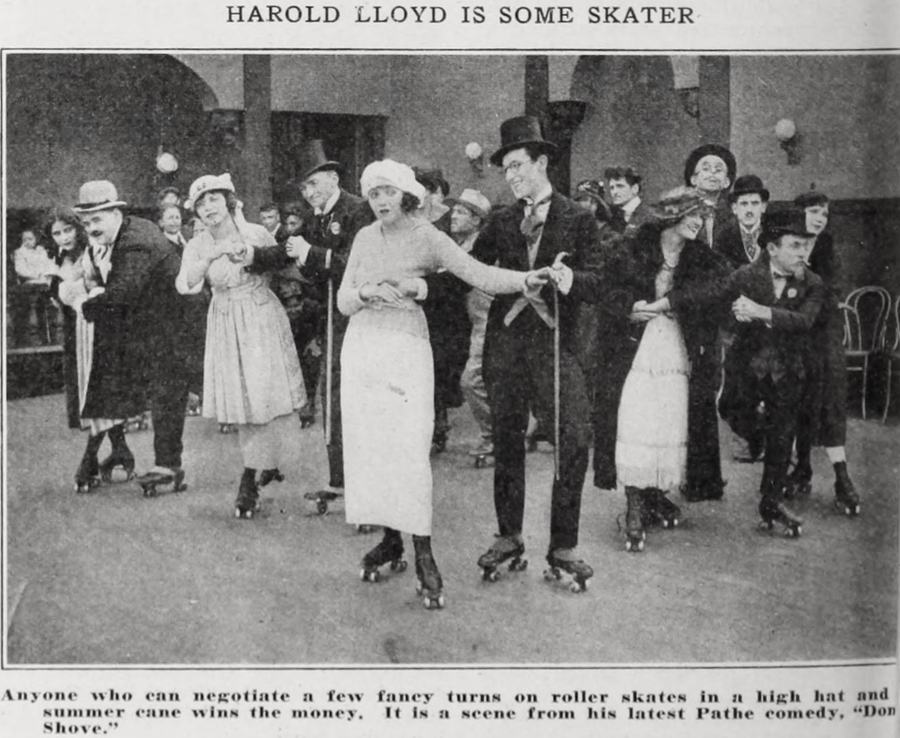
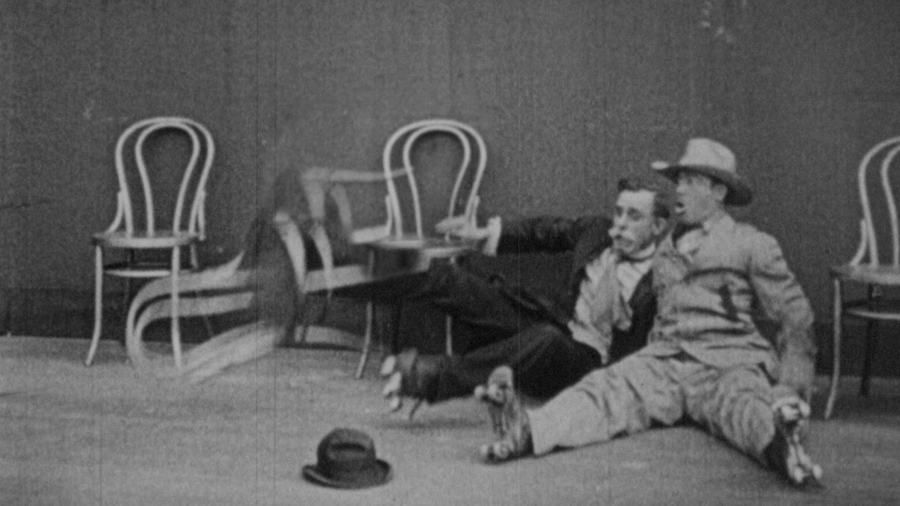
The contrast between Harold's initial awkwardness on skates and his eventual, almost accidental, mastery is a classic comedic arc. His rival, equally determined, finds himself embroiled in a series of increasingly elaborate and humiliating situations, often at Harold's unwitting instigation. The gags at the rink are not merely isolated incidents; they build upon one another, creating a crescendo of comedic chaos. The directors, Newmeyer and Parrott, demonstrate a keen understanding of spatial dynamics, orchestrating a complex dance of characters weaving in and out of each other's paths, culminating in moments of perfectly timed collisions and near-catastrophes. The camera work, while rudimentary by modern standards, is remarkably effective in capturing the frenetic energy of the scene, allowing the viewer to feel immersed in the dizzying pace of the rink.
At the heart of 'Don't Shove' lies the magnetic chemistry between Harold Lloyd and Bebe Daniels. Lloyd, even in his early 'glasses character' phase, exhibits the nascent brilliance that would soon make him one of the 'Big Three' of silent comedy. His character in this film is a delightful blend of earnestness, ambition, and a certain endearing naiveté. He's the underdog you can't help but root for, his determination often outstripping his immediate capabilities, leading to hilarious, relatable struggles. Lloyd's physical expressiveness is extraordinary; his body language alone communicates a full spectrum of emotions, from hopeful anticipation to panicked desperation. He doesn't just perform gags; he embodies the struggle, making the audience feel every bump, every near-miss, and every hard-won triumph.
Bebe Daniels, on the other hand, is an absolute revelation. Her portrayal of Bebe is far from a mere damsel in distress; she is a vibrant, active participant in the comedic drama. Her reactions are priceless, oscillating between genuine amusement at Harold's antics and a touch of exasperation at the childish rivalry unfolding around her. Daniels possesses a natural charm and a comedic timing that perfectly complements Lloyd's more frantic energy. She’s not just an object of affection; she’s an intelligent, spirited woman who navigates the advances of her suitors with a knowing smile and a playful glint in her eye. Their on-screen partnership, evident here, was a significant factor in Lloyd's early successes, providing a romantic anchor to his often-absurdist adventures. The way she subtly encourages Harold, even as he fumbles, adds a layer of warmth and genuine affection to the slapstick proceedings.
'Don't Shove', like many films of its era, serves as a powerful reminder of the universal language of physical comedy. Long before sophisticated dialogue or intricate plots dominated cinema, films like this relied on the raw, visceral impact of movement, expression, and meticulously choreographed chaos to engage audiences. The humor is immediate, unburdened by linguistic barriers, making it perpetually accessible. This enduring quality is precisely why silent films, particularly those featuring masters like Lloyd, Chaplin, and Keaton, continue to captivate new generations. They speak to a primal human enjoyment of folly, of aspiration thwarted, and of perseverance against overwhelming odds.
The craftsmanship involved in staging these elaborate gags, often without the benefit of special effects or retakes, is truly astonishing. The actors were not just performers; they were acrobats, stunt people, and physical comedians of the highest order. The directors, Fred C. Newmeyer and James Parrott, were instrumental in shaping these performances and orchestrating the visual rhythm of the film. Their understanding of comedic pacing, of when to accelerate the action and when to allow a moment to breathe, is palpable throughout 'Don't Shove'. This film, a product of the prolific Hal Roach studio, showcases the efficiency and ingenuity that characterized much of the short-form comedy production during this golden age.
Beyond its immediate comedic value, 'Don't Shove' offers a fascinating glimpse into the social mores and recreational activities of the late 1910s. The birthday party scene, with its parlor games and social interactions, provides a window into domestic life, while the skating rink sequence captures the vibrant energy of public leisure. The film, like its contemporaries, was designed to be consumed quickly, often as part of a larger program of shorts and newsreels. This format necessitated a fast pace, clear characterizations, and immediate comedic payoffs, all of which 'Don't Shove' delivers in spades. It’s a testament to the fact that compelling storytelling doesn't require a feature-length runtime; sometimes, the most potent narratives are those delivered with conciseness and punch.
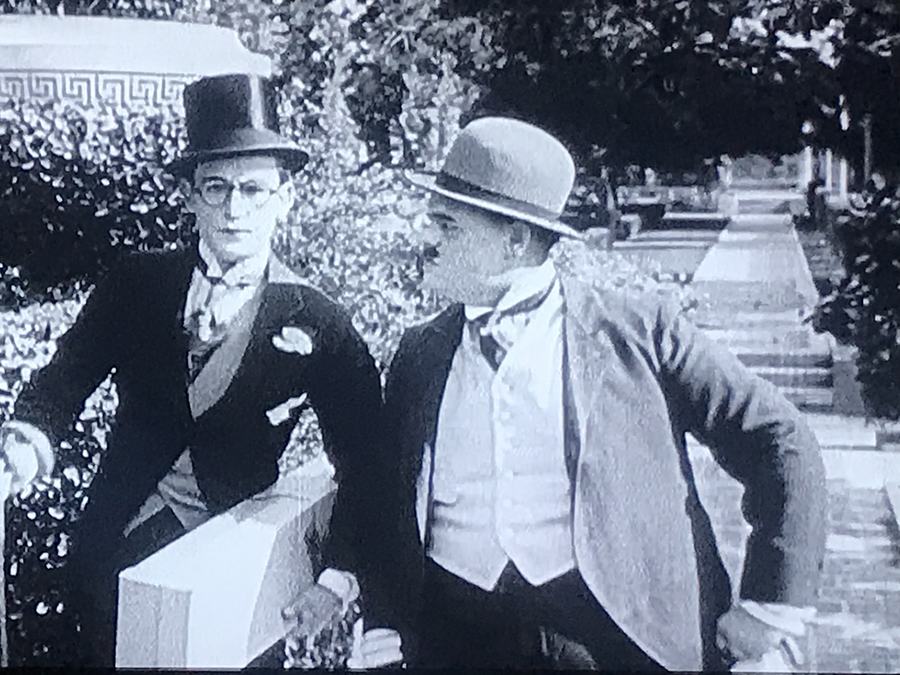
While many films of this period, such as the dramatic The Darkening Trail or the more somber The Last Sentence, focused on weighty themes and narrative complexity, 'Don't Shove' revels in its joyous simplicity. It doesn't aim for profound social commentary or deep psychological insight; its ambition is purely to entertain, to make its audience laugh, and in this, it succeeds spectacularly. The film's uncomplicated structure allows the comedic performances and inventive gags to take center stage, proving that sometimes, less is indeed more. Its focus on broad physical comedy, while distinct from the more character-driven narratives of films like The Hater of Men, showcases a different, equally valid, path to cinematic engagement.
The directorial efforts of Fred C. Newmeyer and James Parrott are particularly noteworthy in 'Don't Shove'. They understood the nuances of silent comedy, particularly the importance of clear sightlines for gags, the precise timing required for physical humor, and the need to maintain a relentless pace without overwhelming the audience. The blocking of the actors, especially in the crowded skating rink, is exceptionally well-executed, ensuring that each character's actions contribute to the overall comedic tapestry. The cinematography, while constrained by the technology of the era, is effective in capturing the essential elements of each scene, allowing the viewer to follow the rapid-fire action without confusion. The editing, too, plays a crucial role, cutting between reactions and actions to maximize comedic impact, a technique that remains fundamental to film comedy today.
Consider the precision with which the various tumbles and near-misses on the ice are choreographed. These are not random accidents but carefully planned sequences designed to build suspense and deliver a satisfying punchline. The involvement of a larger ensemble cast, including George Marks, Noah Young, and Eddie Boland, adds layers of reactive comedy, their expressions of shock, amusement, or annoyance amplifying the central conflict between Harold and his rival. The film’s ability to weave these elements into a cohesive, laugh-out-loud experience speaks volumes about the collective talent behind its creation. H.M. Walker's writing, though primarily a framework for physical gags, demonstrates a clear understanding of character dynamics and comedic escalation, providing the sturdy backbone upon which the directorial and acting talents could truly shine.
In conclusion, 'Don't Shove' stands as a vibrant, essential piece of early silent comedy. It's a film that, despite its age, feels remarkably fresh and immediate. Its humor is timeless, rooted in universal human experiences of rivalry, romance, and the sheer absurdity of life. Harold Lloyd's performance is a masterclass in physical comedy, a testament to his burgeoning star power, and Bebe Daniels shines as a captivating and spirited leading lady. The film's transition from a domestic farce to a kinetic free-for-all at the skating rink is a brilliant structural choice, allowing for an exponential increase in comedic energy and inventiveness. It's a prime example of how much could be achieved with relatively simple means, relying instead on ingenuity, talent, and a deep understanding of what makes people laugh.
For anyone interested in the foundational elements of film comedy, the evolution of cinematic storytelling, or simply in enjoying a good, hearty laugh, 'Don't Shove' is an absolute must-see. It doesn't just entertain; it educates, demonstrating the enduring power of silent film to transcend generations and cultural shifts. Its influence, though perhaps subtle, can be traced through countless subsequent comedies, proving that the principles of well-executed slapstick and engaging character dynamics are truly eternal. So, next time you're looking for a dose of pure, unadulterated joy, don't hesitate to dive into the delightful pandemonium of 'Don't Shove'. You'll be glad you did, even if Harold gets a little roughed up along the way.
IMDb —
1919
Community
Log in to comment.