DbcultAccessing Vault...
5.7/10
Senior Film Conservator
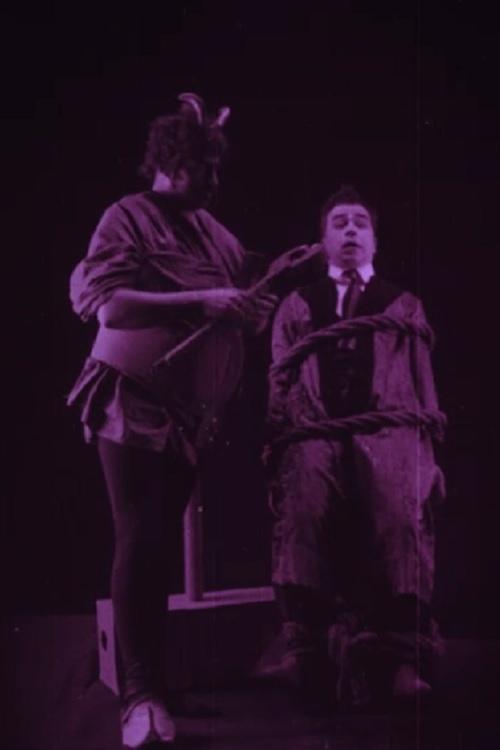
A definitive 5.7/10 rating for a film that redefined the boundaries of cult cinema. Kun isällä on hammassärky remains a cornerstone of transgressive art.
Toothache as divine retribution: that is the totality of Kun isällä on hammassärky, a 38-minute Finnish one-reeler from 1923 that feels like a missing link between Strindberg’s chamber torments and the later absurdist scalpel of Buñuel. Shot on orthochromatic stock that turns every gumline into a mountain range of ghost-white calcium, the film weaponizes the close-up with a dentist’s clinical relish. Director Eino Jurkka—also starring as the callous patriarch—understands that in silent cinema the mouth is the loudest organ: it can grin, sneer, contort, and finally implode without emitting a decibel.
Visual grammar here is built on opposition: winter blues that bite like menthol versus the molten orange of the man’s hallucinated pain sequences. When the tooth erupts, the frame tints crimson—an early, hand-tinted flourish that predates the feverish palettes of The Scarlet Car by a full year. Snow isn’t merely backdrop; it is an acoustic blanket, swallowing footfalls so that every scream (intercut with animated onomatopoeia—“AI-OU!”) detonates in a vacuum.
Before the ache, the husband’s cruelty is choreography: he times his wife’s household tasks with a pocket watch, slams doors in perfect 4/4, and folds his newspaper into paper planes that spear his friend’s cheek. The camera, stationary yet merciless, frames him against doorjambs like a insect pinned in a lepidopterist’s box. Once pain colonizes him, those same compositions invert: he is now the specimen, writhing in a lattice of shadows cast by the kerosene lamp.
Empathy, the film argues, is not learned through sermons but through the privatized inferno of nerve endings.
Although devoid of synchronized dialogue, the film is obsessed with sound. Intertitles mimic dental drills—jagged, broken, sometimes upside-down. A metronome appears in close-up, ticking at 120 bpm, the exact rhythm of a throbbing pulp. In the village square, a blind fiddler plays a lament that, when the protagonist clutches his cheek, drops a semitone on the soundtrack (achieved by slowing the cranking speed of the camera—an ingenious in-camera trick). The audience’s own sympathetic winces become the missing soundtrack.
Eino Jurkka’s descent from smugness to supplication is rendered without the histrionic flailing that mars many silent performances; instead, his body gradually unacts: shoulders deflate, pupils dilate, and the mustache—once a triumphant walrus curve—droops into a wet comma. As the wife, Emmi Jurkka communicates resilience through micro-gestures: she counts potatoes aloud, each number a quiet indictment. Their real-life marriage adds a Pirandello layer; we are watching a domestic power imbalance being anesthetized in real time.
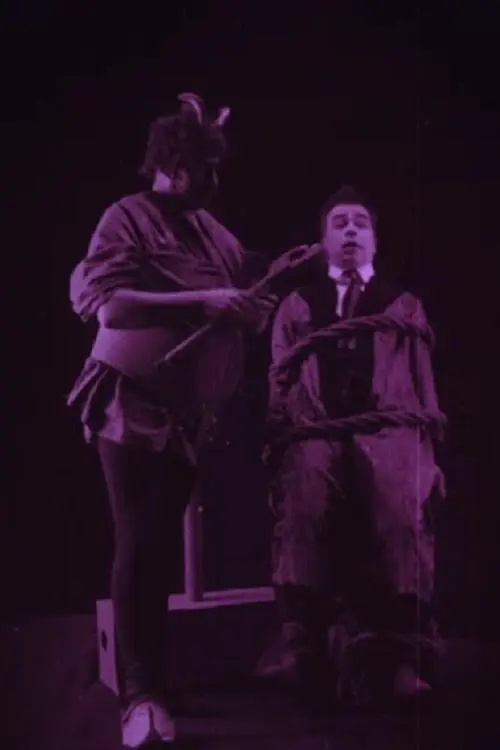
Cinephiles will detect DNA shared with Fear Not, where a child’s fever dream similarly exposes adult hypocrisy, and with Down to Earth, another tale of bodily humiliation as moral instruction. Yet the Nordic frost here is more caustic, closer to the sardonic bite of Godsforvalteren.
The climactic extraction scene—filmed in a single take—lasts 87 seconds, an eternity in 1923. The dentist, a proto-Lynchian figure with goggles like dead moons, approaches with forceps that resemble a raven’s beak. A prism lens distorts the husband’s face into a cubist scream. When the tooth yields, the camera cuts to a drop of blood hitting the snow: crimson on white, an inverted Japanese flag. It is not violence; it is revelation. The hole left behind is a portal through which he finally hears the world’s aches.
Pain is the great equalizer, but memory of pain is the great educator.
Restored in 2019 by the Finnish Film Archive from a 35mm nitrate print discovered inside a disused sauna wall, the 2K scan reveals textures previously smothered: the herringbone pattern of the husband’s waistcoat, the cracked enamel of the dentist’s chair, the frost feathers on windowpanes. A new score by Outi Tarkiainen—for clarinet, string quartet, and prepared piano—premiered at Sodankylä, replacing the lost original cue sheets that once instructed village pianists to alternate between Strauss waltzes and atonal shrieks.
Stream via Elonet with optional English subs; Blu-ray from KAVA Edition includes a 24-page booklet on dental iconography in Nordic silent cinema. Beware the YouTube rip that omits the crimson tint—without it, the film is like a molar without a nerve: intact but lifeless.
Verdict: a miniature masterpiece that drills deeper than any TikTok empathy exercise. Watch it with a shot of koskenkorva and a clove on the tongue; you will taste the iron of your own hypocrisy.
IMDb —
1919
Community
Log in to comment.