DbcultAccessing Vault...
Cult Review
Senior Film Conservator
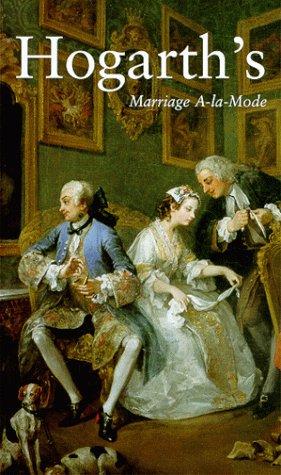
To watch Marriage a la Mode in the modern era is to participate in an archaeological dig of the human psyche. Released in 1914, a year more frequently associated with the birth of industrial warfare than the nuances of domestic drama, this film stands as a startlingly mature meditation on the failure of the romantic contract. Directed by and starring Leopold Wharton, with a script by Robin H. Townley, the work eschews the frantic pacing of the era’s popular serials. Instead, it invites a slow, almost agonizing contemplation of how two people, bound by law and custom, can drift into separate, unreachable solar systems while occupying the same drawing room. The film doesn't merely tell a story; it captures the atmospheric pressure of societal expectation, showing how it eventually crushes the very life out of its subjects.
Leopold Wharton, often overshadowed by the more flamboyant innovators of his time, demonstrates here a sophisticated understanding of the frame as a psychological container. Unlike the adventurous spirit found in A Son of the Immortals, which sought to expand the horizons of the screen, Marriage a la Mode finds its power in contraction. The mise-en-scène is cluttered with the artifacts of wealth—heavy drapery, ornate furniture, and stiff collars—all of which serve to emphasize the protagonists' suffocation. There is a specific scene involving a dinner table that rivals the later works of Stroheim in its ability to convey cold, calculated distance through mere positioning. While many films of 1914 relied on histrionic gestures, Wharton encourages a more restrained performance style that feels eerily modern. This restraint makes the eventual outbursts of emotion feel earned, rather than performative.
When we contrast this with other contemporary explorations of female agency and domestic strife, such as The Selfish Woman, we see a distinct shift in tone. Where other films might moralize or cast blame, Wharton and Townley are more interested in the systemic failure of the institution itself. The film shares a thematic DNA with Milestones of Life, yet it lacks that film’s occasionally sentimental outlook. In Marriage a la Mode, the milestones are not markers of progress, but headstones for buried desires. The presence of 'the other'—a common trope seen in The Other Woman—is handled here not as a scandalous plot twist, but as an inevitable consequence of a hollowed-out primary relationship. It is the vacuum of the marriage that draws in external chaos, a concept that Wharton illustrates with a grim, almost clinical precision.
The cinematography in Marriage a la Mode utilizes light and shadow to articulate the internal states of its characters in a way that predates the full-blown Expressionism of the next decade. There are moments of chiaroscuro that suggest a moral ambiguity far beyond the black-and-white ethics of early cinema. One cannot help but compare the murky visual depths here to the intoxicating darkness found in Hop - The Devil's Brew. However, while that film deals with the literal intoxication of narcotics, Wharton deals with the social intoxication of status. The 'cloven tongue' of gossip and reputation, a theme explored literally in The Cloven Tongue, is here an invisible force that dictates the characters' every move, forcing them into a performance of happiness that becomes their ultimate undoing.
The pacing of the film is deliberate, almost fatalistic. It carries the weight of a Greek tragedy, much like Caino, though its setting is the parlor rather than the mythic past. The screenplay by Robin H. Townley understands that the most profound violence is often psychological. There are no physical brawls for possession as seen in By Right of Possession; instead, the battle is for the soul. The protagonist’s realization that his life is a mere facsimile of existence is a haunting sequence that lingers long after the final frame. This isn't the romanticized struggle of A Daughter of the Sea; it is the gritty, unwashed reality of urban sophistication. The film operates with the precision of a crime procedural, reminiscent of the investigative tension in L'assassino del corriere di Lione, but the crime being investigated is the murder of a human spirit by the hands of convention.
Leopold Wharton’s dual role as actor and director allows for a singular vision that is rare for this period. He portrays the husband not as a villain, but as a man trapped by his own lack of imagination and the rigid structures of his class. This nuance is what elevates the film above standard melodrama. It doesn't offer the easy escapism of The Ship of Doom or the rugged individualism of Love's Lariat. Instead, it holds up a mirror to the audience, asking uncomfortable questions about the cost of conformity. The film’s exploration of aging and the loss of youthful idealism mirrors the themes found in Over the Hill, yet it maintains a cynical edge that feels more aligned with the burgeoning modernist movement. It is a world where the 'monster' isn't a literal creature as in The Monster and the Girl, but the social mask that one is forced to wear until it becomes the face.
In the final analysis, Marriage a la Mode is a profound testament to the power of early cinema to tackle complex social issues with grace and grit. It avoids the whimsical wandering of Rolling Stones in favor of a focused, laser-like intensity. The film remains a vital piece of cinematic history, not just for its technical achievements, but for its emotional honesty. It captures a moment in time when the old world was beginning to crumble, and the new world had yet to be born. In the silence of its characters, we hear the roar of a changing society, and in their isolation, we find a universal truth about the human condition. Leopold Wharton and Robin H. Townley created more than a film; they created a haunting, beautiful, and devastating map of the human heart under siege. It is a work that demands to be seen, discussed, and remembered as a foundational text of domestic realism.
IMDb —
1923
Community
Log in to comment.