DbcultAccessing Vault...
Cult Review
Senior Film Conservator
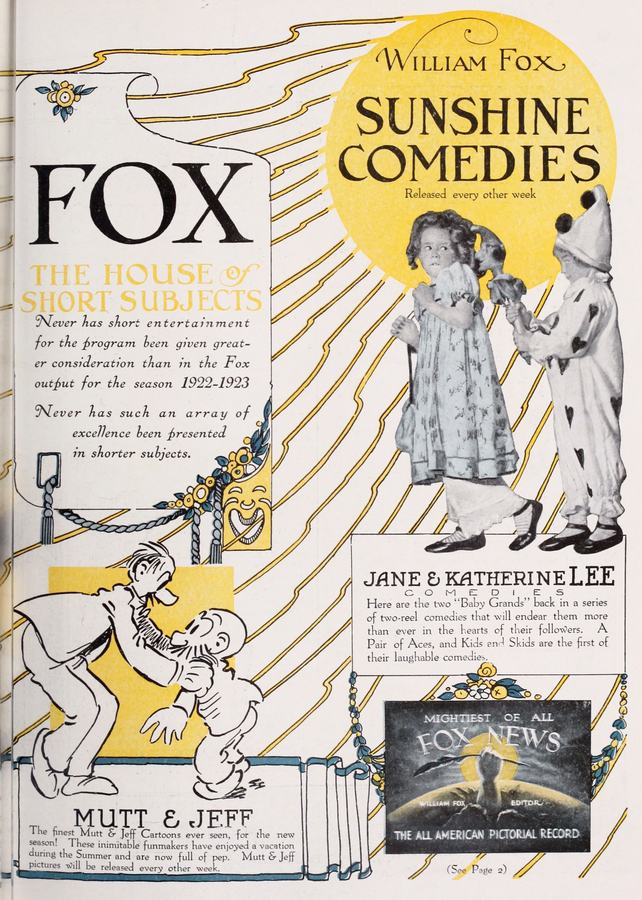
Stepping into the spectral glow of early silent cinema, one often encounters films that defy easy categorization, works that exist as much for their historical context as for their intrinsic artistic merit. Among these intriguing anomalies, 'Double Trouble' (1922) stands as a particularly fascinating case study. This isn't a film born from a singular, linear screenplay but rather a meticulously crafted pastiche, a cinematic quilt stitched together by the resourceful Ralph Spence from the fabric of five pre-existing two-reel comedies. These original shorts, featuring the charming and energetic Lee Kiddies – Katherine Lee and Jane Lee – were initially released under the Fox banner. Spence's reassembly, therefore, doesn't just offer a viewing experience; it presents a unique lens through which to examine the economic realities, creative pragmatism, and evolving narrative strategies of the nascent film industry.
At its core, 'Double Trouble' is a testament to the ingenuity of early filmmakers working within tight constraints. Ralph Spence, rather than conceiving a new story from scratch, engaged in what we might today call a form of meta-cinematic curation. He took disparate comedic episodes, each likely self-contained and designed for quick consumption, and attempted to forge them into a longer, more substantial offering. This practice was not entirely uncommon in an era where film stock was precious, production costs were a constant concern, and the demand for new content was insatiable. Yet, the deliberate act of re-titling and re-editing five distinct works into a single feature-length presentation elevates this endeavor beyond mere cost-cutting; it becomes an act of re-authorship, a reinterpretation that inherently alters the original intent and reception of the individual components.
The challenge for Spence, and indeed for the contemporary viewer, lies in discerning whether this assemblage achieves a new, coherent narrative, or if it remains a collection of loosely connected vignettes. Unlike the tightly structured, grand narratives of films like Dr. Mabuse, the Gambler, which meticulously builds its intricate plot over several hours, 'Double Trouble' likely oscillates between moments of accidental thematic resonance and jarring narrative shifts. The success of such a venture hinges on Spence's ability to create smooth transitions, to find common threads in the Lee Kiddies' antics, and to imbue the re-edited whole with a sense of purpose that transcends its origins as episodic entertainment. This is where the 'art' of the critic comes into play: evaluating not just what is presented, but *how* it came to be presented, and what that process reveals about the medium itself.
Central to the appeal of 'Double Trouble', both in its original episodic form and its reassembled state, are the Lee Kiddies, Katherine and Jane Lee. Child actors in the silent era held a unique place, often embodying innocence, mischief, and a certain unvarnished charm that resonated deeply with audiences. Their presence would have been a significant draw for Fox, and their comedic talents the raw material for Spence's project. One can imagine their youthful exuberance, their pratfalls, and their wide-eyed reactions forming the backbone of the film's humor. Unlike the often melodramatic performances seen in adult-led dramas like The Ruling Passion, the Lee Kiddies would have offered a lighter, more wholesome form of entertainment, a refreshing antidote to the more serious fare of the day.
The challenge for child performers, then as now, was to maintain a naturalistic quality amidst the artificiality of the film set. The success of the Lee Kiddies suggests they possessed that elusive quality, an ability to captivate viewers with their authentic youthful energy. Their comedic timing, whether instinctive or carefully directed, would have been paramount in ensuring the original shorts landed their punchlines. In 'Double Trouble', their performances are recontextualized; an expression of surprise from one short might now lead into a chase sequence from another, creating new, unintended comedic rhythms. This re-editing process places an even greater emphasis on the raw charisma of the Lee Kiddies, as their individual moments must now carry the weight of a larger, if fragmented, narrative.
The very existence of 'Double Trouble' speaks volumes about the economic landscape of early Hollywood. Film studios, particularly those like Fox, were constantly seeking ways to maximize their assets and minimize waste. Re-editing existing footage was a cost-effective strategy, allowing them to extract further value from material that had already recouped its initial investment. This pragmatism stands in stark contrast to the singular artistic visions often associated with later cinematic eras. It highlights a period where film was as much an industrial product as it was an art form, driven by market demand and the relentless need for content to fill vaudeville houses and nickelodeons. One might compare this to the modern practice of creating compilation albums from previously released singles, though the cinematic version presents far greater challenges in maintaining narrative flow and thematic consistency.
Consider the alternative: producing entirely new features. This would entail fresh scripts, new sets, additional cast and crew, and significant financial outlay. By opting for a re-assemblage, Fox and Spence demonstrated a shrewd understanding of their resources. This approach also sheds light on the nascent concept of intellectual property and film archiving. Before standardized practices were in place, old footage was often seen as raw material for new creations, rather than sacrosanct artifacts. While films like Life Story of John Lee, or The Man They Could Not Hang might have been preserved for their historical or dramatic significance, the comedic shorts featuring the Lee Kiddies were ripe for re-imagining, perhaps deemed more ephemeral in their original form.
For a modern audience, watching 'Double Trouble' would undoubtedly be a unique experience. The absence of a pre-conceived, overarching plot means that narrative coherence might be a casualty of the re-editing process. Viewers accustomed to the tightly woven narratives of contemporary cinema, or even the structured storytelling of other silent films like The Woman Beneath, might find its episodic nature disorienting. However, this very disjunction can be its strength. It invites a different mode of viewing, one that focuses on individual moments, on the sheer energy of the performances, and on the ingenuity of Spence's editing choices.
The film becomes a mosaic of gags, a series of comedic set pieces featuring the Lee Kiddies in various predicaments. Each segment, originally intended to stand alone, now contributes to a larger, albeit often fragmented, comedic tapestry. It's a testament to the enduring power of slapstick and physical comedy that even when divorced from their original contexts, these moments can still elicit a chuckle. The humor of the Lee Kiddies, likely broad and accessible, would have provided a common thread, a through-line of youthful mischief that binds the disparate parts. One might draw a parallel to certain experimental or avant-garde works, such as some interpretations of Zhuangzi shi qi, which challenge traditional narrative structures, though 'Double Trouble' does so out of commercial necessity rather than artistic rebellion.
Beyond its immediate entertainment value, 'Double Trouble' offers invaluable insights into the history of cinema. It reminds us that the medium was, in its formative years, a Wild West of experimentation, where rules were still being written, and innovation often sprang from practical constraints. It highlights the often-overlooked role of the editor and re-assembler, individuals who could fundamentally reshape existing content into something new. Spence's work here is a precursor to countless 'found footage' films, compilation documentaries, and even the modern phenomenon of internet memes that repurpose existing media for new comedic or narrative ends.
Moreover, the film serves as a poignant reminder of the ephemeral nature of early cinema. Many two-reel comedies from this era have been lost to time, their delicate nitrate stock succumbing to decay or fire. The act of reassembling these shorts into 'Double Trouble' inadvertently became a form of preservation, albeit one that altered the original works. Had these individual shorts not been deemed worthy of a second life in this compilation, they might have vanished entirely. This makes the film not just a curiosity, but a crucial historical document, offering a glimpse into the performances of Katherine and Jane Lee and the comedic sensibilities of the 1920s.
Comparing it to other films of the period, such as the more overtly commercial Snappy Cheese or the dramatic Welcome Little Stranger, 'Double Trouble' occupies a unique space. It's not aiming for profound artistic statement, nor is it a simple genre piece. It's a pragmatic, yet surprisingly inventive, solution to a commercial problem, imbued with the unexpected charm of its youthful stars. It teaches us about the fluidity of cinematic narrative, the power of recontextualization, and the enduring human desire for laughter, regardless of how its delivery is packaged.
Ultimately, 'Double Trouble' challenges conventional notions of cinematic authorship. Is the author the original director of each two-reeler? Or is it Ralph Spence, the architect of this new composite? The answer, perhaps, is both, and neither. It's a collaborative ghost, a collective memory of early comedic performance given new life through editorial intervention. This film, far from being a mere footnote, becomes a compelling argument for the dynamism of the cinematic form, reminding us that even the most humble and commercially driven projects can offer profound insights into the evolving art and industry of motion pictures. It's a delightful, if disorienting, journey back to a time when cinema was still finding its voice, one re-cut frame at a time. Its legacy, however subtle, resonates in every subsequent act of creative repurposing, from Next to the countless digital collages we see today. It's a reminder that even 'trouble' can be doubled into something fascinating.
IMDb —
1920
Community
Log in to comment.