DbcultAccessing Vault...
Cult Review
Senior Film Conservator
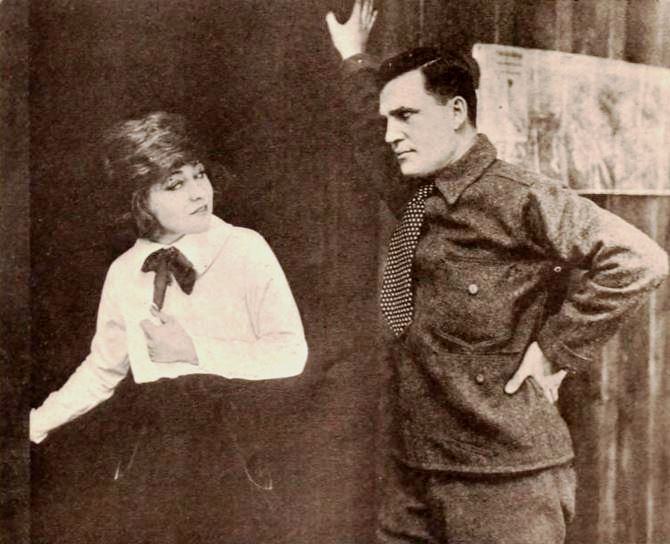
Ah, the silent era. A time when cinematic narratives, unburdened by dialogue, often soared on wings of grand gesture, exaggerated emotion, and plots that, by today's standards, might seem delightfully absurd. Among these, The Man Hunt (1922) emerges not as a forgotten relic, but as a charming, if peculiar, testament to the era's storytelling sensibilities. It’s a film that asks us to suspend disbelief and embrace the inherent theatricality of its time, inviting us into a world where an heiress’s pursuit of love becomes an elaborate, almost farcical, game of cat and mouse.
At its heart, this film is a fascinating exploration of agency, wealth, and the often-convoluted path to romantic fulfillment. Our protagonist, Betty Hammond, portrayed with vivacious spirit by Ethel Clayton, finds herself suddenly endowed with a substantial inheritance. This newfound fortune, rather than simplifying her life, complicates it immensely, attracting a swarm of suitors more interested in her coffers than her character. It’s a predicament that, even a century later, resonates with a certain truth about the corrupting influence of money on human relationships. Clayton embodies Betty with a delightful blend of determination and a touch of impishness, making her quest for genuine affection both relatable and amusing.
The film swiftly establishes Betty’s disillusionment with the superficiality of her new social circle. Her decision to seek out James Ogden, her childhood sweetheart, is a nostalgic turn, a yearning for an unblemished connection untainted by her present circumstances. This pivot takes her from the gilded cages of high society to the rugged, unpolished landscape of California’s mining properties, where Jim (Rockliffe Fellowes) serves as superintendent. Fellowes, known for his strong, often stoic presence, brings a grounded realism to Jim, making him the perfect foil for Betty’s more impetuous nature. His performance anchors the film, providing a sense of integrity amidst the unfolding chaos.
Betty’s initial strategy – to conceal her identity and work as Jim's stenographer – is a classic trope, one that allows for both comedic misunderstandings and a more organic development of their relationship, away from the shadow of her wealth. This narrative device, while familiar, is executed here with a certain charm. The audience is privy to Betty's secret, creating a delicious tension as we wait for Jim to inevitably discover the truth. When he does, his reaction is swift and decisive: he discharges her. This moment is crucial, highlighting Jim's principled stand against deception and his refusal to be manipulated, even by someone he clearly holds a latent affection for. It's a refreshing display of character, particularly for a male lead in an era where female protagonists often had to resort to more subtle, less direct means to achieve their desires, as seen in films like Sylvia of the Secret Service, where the heroine's agency is often tied to her covert operations.
But Betty, being Betty, is not easily deterred. Her direct proposal to Jim, born of frustration and a perhaps misguided belief that practicality should trump passion, is met with another firm refusal. Jim's admission that he doesn't yet love her, despite her beauty and fortune, is a pivotal moment. It elevates the film beyond a mere romantic comedy into a more thoughtful commentary on the nature of true affection. He isn't swayed by her money, nor by her assertive charm, demanding an emotional connection that transcends material considerations. This refusal sets the stage for the film’s most outlandish, and arguably most entertaining, sequence.
Frustrated by Jim's unwavering integrity, Betty resorts to an extraordinary measure: she hires several men to abduct both Jim and Parson Brown to a secluded cabin, intending to force a marriage. This is where The Man Hunt truly leans into its comedic potential, venturing into territory that borders on slapstick and screwball. The absurdity of the situation is played for maximum effect, reminiscent of the exaggerated antics found in other silent comedies of the period, though perhaps less overtly physical than a film like Tillie's Tomato Surprise. The sheer audacity of Betty’s plan, combined with the bumbling execution by her hired muscle, provides a consistent source of amusement. It’s a testament to the writers, Virginia Tyler Hudson and Frederick J. Jackson, that they manage to craft such an improbable scenario while still maintaining a thread of romantic intent.
The initial abduction, however, proves fruitless. The best-laid plans of heiresses and their hired goons often go awry, and this one is no exception. Just as the scheme seems destined for failure, the narrative takes another unexpected turn with the introduction of Bigfoot Ben, a lumberman who, in a classic cinematic reversal, kidnaps Betty herself. This twist is a stroke of genius, turning the tables on our orchestrating heroine and forcing Jim into the role of rescuer. It’s a moment that allows Fellowes to showcase Jim’s heroic qualities, transforming him from a reluctant object of affection into a man of action. The dynamic shift is crucial; it allows Jim to act out of genuine concern and affection, rather than being merely reactive to Betty’s machinations.
The rescue sequence is likely staged with the kind of rudimentary but effective action that characterized silent films, relying on the visual drama of pursuit and confrontation. It’s in these moments that the physical performances of the actors, unhindered by dialogue, truly shine. The urgency of Jim's pursuit, the peril Betty faces, and the eventual confrontation with Bigfoot Ben would have been conveyed through expressive body language and facial cues, a language universal to the silent screen. This dramatic climax provides the necessary catalyst for the emotional resolution that follows.
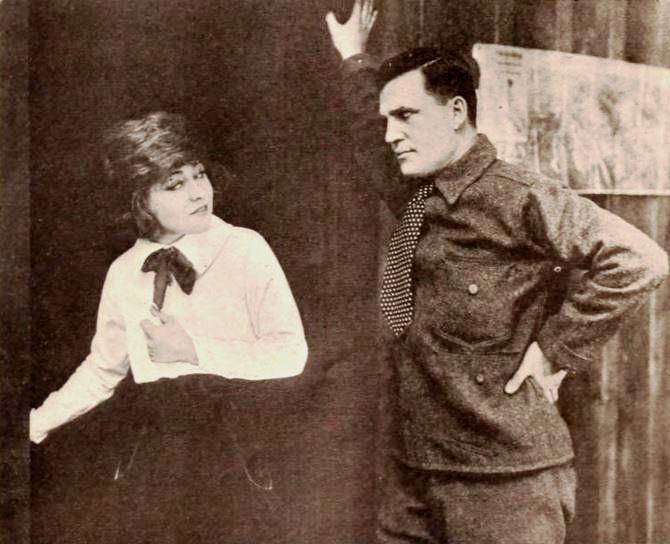
Post-rescue, the final pieces of the puzzle fall into place. Jim learns the full extent of Betty's elaborate schemes, including her hiring of Bigfoot Ben to play the villain. This revelation, rather than alienating him, seems to solidify his feelings. Perhaps it's the sheer audacity of her pursuit, or the realization that beneath all the elaborate plotting lay a genuine desire for him. In a moment of understated yet powerful emotion, Jim admits his love and proposes. It’s a satisfying conclusion, not because Betty gets her way through manipulation, but because her extreme measures ultimately reveal the depth of her desire, prompting Jim to acknowledge his own burgeoning affection. The film, in its own quirky way, suggests that sometimes the most circuitous routes lead to the most heartfelt destinations.
The performances across the board, from the leads to the supporting cast including Herbert Barrington, John Ardizoni, John Dungan, Henry Warwick, Jack Drumier, and Al Hart, contribute to the film's overall charm. While Ethel Clayton and Rockliffe Fellowes carry the bulk of the emotional and comedic weight, the ensemble helps to flesh out the world of the film, adding texture to the small-town dynamics and the various characters caught up in Betty's whirlwind. The writers, Virginia Tyler Hudson and Frederick J. Jackson, crafted a narrative that, despite its outlandish premise, manages to explore themes of love, wealth, and autonomy with a surprising degree of insight for its time.
Cinematically, The Man Hunt is a product of its era. It likely employs the conventional camera work and editing techniques prevalent in the early 1920s, focusing on clear storytelling through visual means. The absence of sound means that the visual composition, the actors' expressions, and the pacing of the cuts were paramount in conveying mood, character, and plot. One can imagine the use of intertitles to bridge narrative gaps and convey dialogue, adding to the period charm. While it may not boast the groundbreaking visual experimentation of some of its contemporaries, its strength lies in its engaging story and the charisma of its stars.
Examining The Man Hunt through a modern lens offers intriguing insights into societal norms and gender roles of the early 20th century. Betty Hammond is, in many ways, a progressive figure for her time. She is an heiress who actively pursues her desires, even if those desires manifest in rather unorthodox ways. This contrasts with more passive female characters often seen in cinema, or those whose agency is solely tied to their beauty or fragility. Betty's directness, her willingness to manipulate circumstances to achieve her ends, speaks to a burgeoning sense of female empowerment, albeit one still operating within the confines of a patriarchal society where marriage was often seen as the ultimate goal.
Her story can be seen as a playful subversion of traditional romantic narratives. Instead of waiting to be courted, she orchestrates the entire courtship, turning the tables on the typical male-led pursuit. This active role is something that would continue to evolve in cinema, leading to more complex and independent female characters. However, the film also subtly reinforces certain conventions, as her elaborate schemes ultimately lead to a man 'rescuing' her and then proposing, bringing the narrative back to a more conventional romantic resolution. It's a fascinating balance between challenging and upholding the status quo.
Comparing Betty's spirited pursuit to other film heroines of the era, one might draw parallels with the tenacity of characters in films like Milady o' the Beanstalk, where strong-willed women navigate challenging circumstances. Yet, Betty's direct, almost aggressive approach to securing a husband sets her apart. She's less about subtle influence and more about outright engineering, a trait that makes her both admirable and comically audacious. Her journey, from the superficiality of fortune hunters to the genuine affection she eventually finds, also touches upon the perennial cinematic theme of true love triumphing over material gain, a theme explored in countless films across genres and eras, from romantic comedies to historical dramas like When Rome Ruled.
For contemporary audiences, watching The Man Hunt requires a shift in perspective. It's not about the rapid-fire dialogue or the intricate special effects of modern cinema. Instead, it invites us to appreciate the artistry of visual storytelling, the power of expression, and the charm of a narrative that takes its sweet time to unfold. The film serves as a valuable historical document, offering a glimpse into the popular entertainment of a bygone era and the sensibilities of its audiences. It reminds us that fundamental human desires – for love, connection, and belonging – remain constant, even as the ways we depict them evolve.
The film’s comedic elements, particularly the farcical abduction, showcase a type of humor that relied heavily on situation and character reaction. While some of the humor might feel dated, the underlying human folly remains timeless. The sheer absurdity of Betty's methods, coupled with Jim's steadfast refusal to bend to her will without genuine affection, creates a compelling dynamic. It’s a narrative that, despite its silent origins, speaks volumes about the complexities of human relationships and the often-bumpy road to finding a compatible partner. In an age where digital dating apps dominate, Betty’s analog, albeit extreme, 'man hunt' offers a refreshing, albeit fictional, alternative.
Ultimately, The Man Hunt is more than just a historical curiosity. It’s a delightful romantic comedy that, through its spirited performances, inventive plot, and charmingly absurd situations, continues to entertain. It stands as a testament to the creative ingenuity of early filmmakers and the enduring power of a good story, regardless of whether it's accompanied by sound. It reminds us that love, in all its forms, often requires a bit of a chase, a few misunderstandings, and sometimes, a completely unhinged plan involving abductions, before it can truly blossom. And for that, this silent gem is well worth seeking out.
IMDb 5.7
1927
Community
Log in to comment.