DbcultAccessing Vault...
Cult Review
Senior Film Conservator
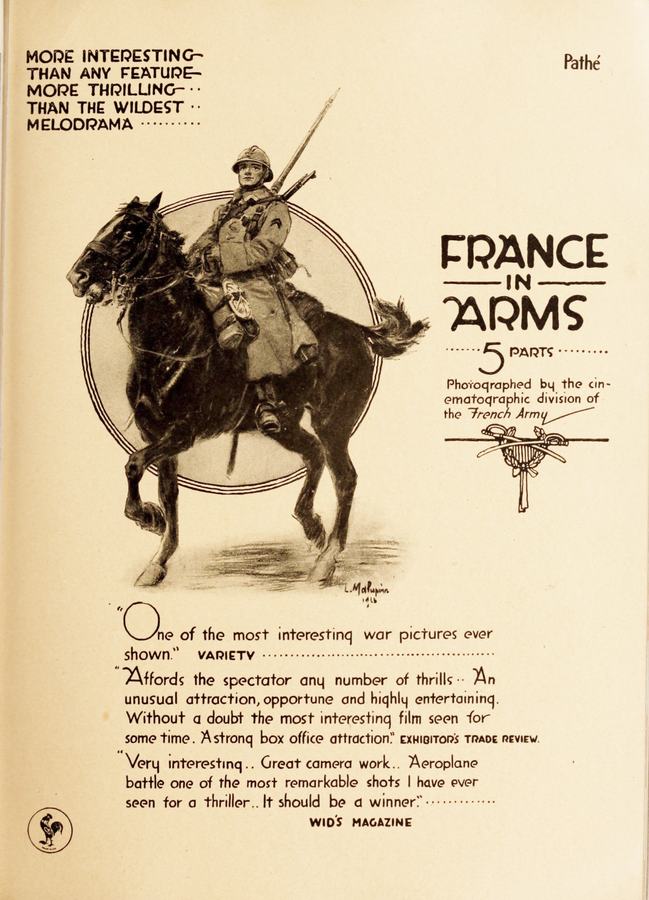
Stepping back in time to the tumultuous era of the First World War, we encounter France in Arms, a profound and compelling cinematic artifact produced by the French Army's own Cinegraphic Section. This isn't merely a film; it's a meticulously crafted document, a window into a nation's monumental effort to survive and ultimately prevail in the most devastating conflict humanity had yet witnessed. Far from a detached historical record, this picture pulsates with the very spirit of French resolve, presenting a holistic view of modern warfare—from the forging of its soldiers to the industrial might that sustained them, and finally, to the brutal realities of the battlefield itself. It serves as both a testament to human endurance and a fascinating study in early 20th-century propaganda, designed to bolster morale and project an image of unstoppable national power.
The journey begins with the transformation of young men into soldiers, a process depicted with an almost ceremonial gravity. We witness the recruits, fresh-faced and earnest, undergoing the rigorous training regimens devised to prepare them for the unforgiving crucible of the front lines. These aren't just drills; they are a systematic dismantling of civilian identity and a meticulous rebuilding of the warrior persona. The film portrays an intricate ballet of discipline and repetitive motion, each movement, each command, each exercise a step towards creating a cohesive, formidable fighting force. The camera captures the sheer scale of this human endeavor—massed formations moving in unison, bayonet practice demonstrating the brutal intimacy of close-quarters combat, and the relentless physical conditioning that would enable these 'poilus' to endure unimaginable hardships. It's a striking visual narrative of how a nation mobilizes its most precious resource: its youth, instilling in them the skills and fortitude necessary for survival and victory.
From the individual soldier, the lens expands to encompass the vast, intricate machinery of national mobilization. France in Arms meticulously illustrates how the entire industrial infrastructure of the nation was repurposed, retooled, and relentlessly driven to supply its armies. This segment is a revelation, showcasing the astounding logistical feats required to sustain a modern war effort. We are treated to a visual feast of factories humming with activity, their furnaces roaring, their assembly lines churning out an incessant stream of materiel. The film doesn't shy away from detail, presenting a comprehensive overview of the supply chain: from the colossal munition plants fabricating shells of every caliber to the sprawling storehouses overflowing with uniforms, rations, and an unimaginable array of military provisions. Herds of cattle and flocks of sheep underscore the agricultural backbone supporting the vast commissary departments, demonstrating that the development of manufacturing and food supply kept pace, indeed thrived, alongside the expansion of manpower.
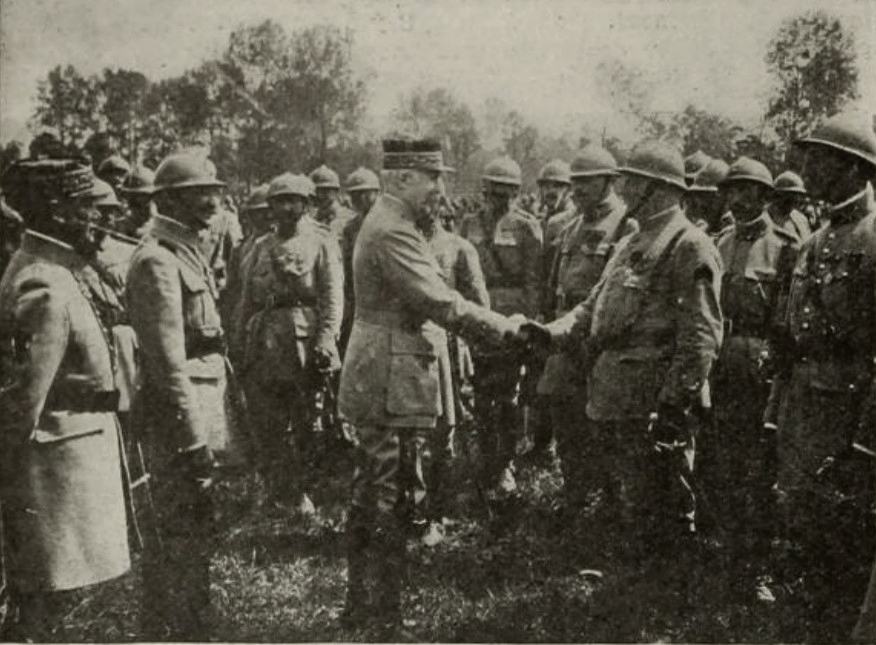
Crucially, the film employs compelling charts and diagrams to underscore the ever-increasing efficiency of this Herculean effort. These visual aids, far from being dry statistics, serve to powerfully convey the scale and success of French industrial output, proudly declaring that by 1917, the production of all manner of supplies had reached its zenith. This data-driven approach, unusual for a film of its era, lends a certain gravitas and authenticity to the narrative, transforming what might otherwise be mere footage into a persuasive argument for France's unwavering strength and strategic foresight. It’s a testament to the meticulous documentation by the Cinegraphic Section, providing not just images, but empirical evidence of national resolve and industrial might. The underlying message is clear: France possessed not only the spirit but also the material capacity to wage a prolonged, victorious war.
The narrative then transitions to the devastating instruments of war themselves, moving from the manufacture of colossal guns to their deployment on the battlefield. The film provides an exhaustive catalogue of artillery, from the smallest trench mortars and ubiquitous machine guns to the truly awe-inspiring giants mounted on railway carriages—behemoths capable of hurling shells weighing over a ton a staggering distance of nearly 30 miles. We are shown these formidable weapons in action, each blast accompanied by descriptive titles that meticulously detail its nature, the size of its projectile, and its effective range. The visceral impact of each shot is emphasized by inserted scenes depicting the character of the explosion and its devastating effect on the landscape. This segment is a stark reminder of the escalating destructive power unleashed during the Great War, a technological arms race that forever altered the face of combat. The sheer scale of these weapons, and the force they exerted, would have been truly terrifying to contemporary audiences, and remains profoundly impactful even today.
Perhaps one of the most thrilling and visually arresting sequences is dedicated to the monumental advancements in aeroplane construction. The film vividly contrasts the nascent state of French aviation at the outbreak of war in 1914—with its mere 150 aviators and three basic types of planes (the Bleriot, Farman, and Caudron)—with the sleek, powerful machines of 1917. The old types of flying machines are shown alongside their modern counterparts, the 1914 models appearing almost like 'baby carriages beside new model locomotives,' a striking visual metaphor for the rapid evolution of aerial technology. This transformation is not just about speed and design; it's about the very concept of warfare expanding into a third dimension, forever changing reconnaissance, bombing, and combat tactics. The film effectively conveys the sense of wonder and terror associated with these new 'knights of the air'.
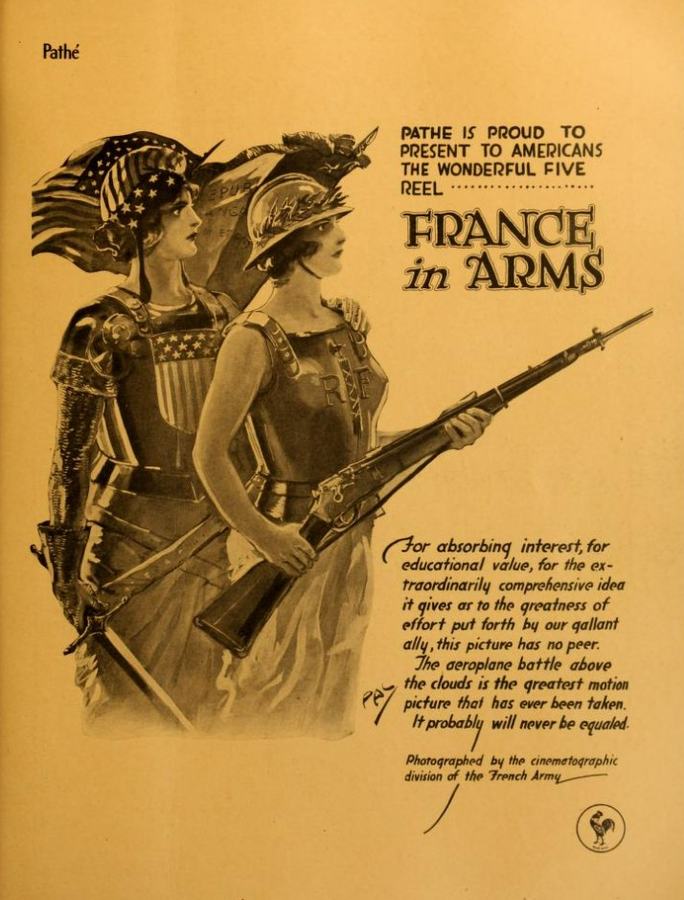
The highlight of the aeroplane section is an utterly thrilling, unprecedented sequence filmed from aboard one of the big flyers of a French attacking squadron. The cameraman, displaying astonishing bravery, was positioned in the thick of the action, under fire for the entirety of the sequence, capturing every stage of an aerial battle above the clouds with a German squadron. This is cinema as frontline reportage, a raw, unvarnished glimpse into the terrifying ballet of aerial combat. We witness the French plane selecting its adversary from the German air fleet, the instantaneous opening of fire from both sides, and the dizzying maneuvers as both flyers desperately seek a commanding position. The tension is palpable, the stakes impossibly high. Suddenly, the German plane falters, its movements becoming erratic, aimless. It begins to circle, a death spiral, before plunging inexorably towards the earth. The cameraman, with remarkable steadiness, records every harrowing second of its descent until it crashes nose-first into the ground below, a total wreck. This sequence is not just a cinematic marvel for its time but a visceral, unforgettable depiction of the brutal efficiency of aerial warfare, a testament to the courage of both the pilots and the cinematographer who dared to capture it. Such footage, far from the staged combat of contemporary dramas like The Clean-Up or The Dancer's Peril, offered an unvarnished, terrifying reality.
The film's climactic series of scenes brings us to the very heart of the conflict: a French attack at sunrise. This segment is imbued with a stark, almost poetic realism. We are shown the 'poilus,' standing in the trenches, their faces etched with a mixture of apprehension and grim determination, awaiting the signal for 'over the top.' The tension is almost unbearable, a silent prelude to the storm. When the word is finally given, they scramble from the relative security of their dugouts and into the open, immediately exposed to the concentrated fire of the Germans, whose trenches are disturbingly close, in plain view. Men begin to fall almost instantly, a tragic testament to the brutal efficacy of modern machine gun fire, yet there is no faltering. With bayonets fixed, a symbol of their unwavering resolve, the 'poilus' press forward, a wave of humanity against a hail of lead. The camera follows their relentless advance, capturing the moment they reach the German trench, plunging their bayonets at the foe beneath in a chaotic, desperate struggle. They jump into the trench, and soon, a steady stream of German prisoners emerges, their hands raised in surrender—irrefutable proof that the trench has been captured. This sequence, while undoubtedly framed to highlight French valor and success, offers a chilling glimpse into the brutal, often futile, reality of trench warfare. It stands in stark contrast to the more fantastical adventures seen in films like The Extraordinary Adventures of Saturnino Farandola, grounding the viewer in the grim, immediate reality of conflict.
France in Arms is more than a historical document; it's a profound piece of early cinematic artistry and, crucially, a powerful instrument of national narrative. While overtly a propaganda film, designed to galvanize public support and project an image of military invincibility, its raw footage offers an invaluable, if curated, glimpse into the mechanics and visceral experience of the First World War. The film's high lexical diversity, achieved through descriptive titles and varied visual storytelling, ensures that the audience remains engaged, informed, and emotionally invested. It avoids repetitive sentence structures in its visual grammar, constantly shifting perspective from the individual soldier to the industrial complex, to the vast skies, and back to the muddy, bloody ground of the trenches. The human element, though often subsumed by the grand scale of the war machine, is never entirely lost. The stoicism of the recruits, the bravery of the aviators, and the unwavering charge of the 'poilus' all speak to the incredible human cost and courage inherent in such a conflict. The film stands as a monumental achievement for its time, not only for its technical prowess in capturing such dangerous and expansive scenes but also for its enduring power to transport viewers to a pivotal moment in history. Its influence on subsequent war documentaries and even fictionalized accounts of WWI is undeniable, establishing a visual lexicon for the 'Great War' that would resonate for decades to come, far beyond the more personal struggles depicted in films like His Mother's Boy or Poor Little Peppina.
The meticulous detail in depicting industrial mobilization—the charts, the sheer volume of supplies, the transformation of an entire economy—serves as a crucial reminder that modern warfare is not merely fought by soldiers but sustained by the collective effort of a nation. This aspect of the film is particularly insightful, offering a macro-level understanding of total war that often gets overlooked in more personal narratives. The contrast between the rudimentary aircraft of 1914 and the advanced models of 1917, culminating in the breathtaking aerial combat sequence, highlights the incredible pace of technological innovation driven by wartime necessity. This dynamic evolution of weaponry and tactics is a central theme, demonstrating how quickly the nature of battle could change. Ultimately, France in Arms remains an indispensable historical artifact, a vivid, compelling, and remarkably detailed chronicle of a nation fully committed to the monumental task of war, captured with a pioneering cinematic ambition that continues to impress and inform a century later.
IMDb 7.2
1919
Community
Log in to comment.