DbcultAccessing Vault...
Cult Review
Senior Film Conservator
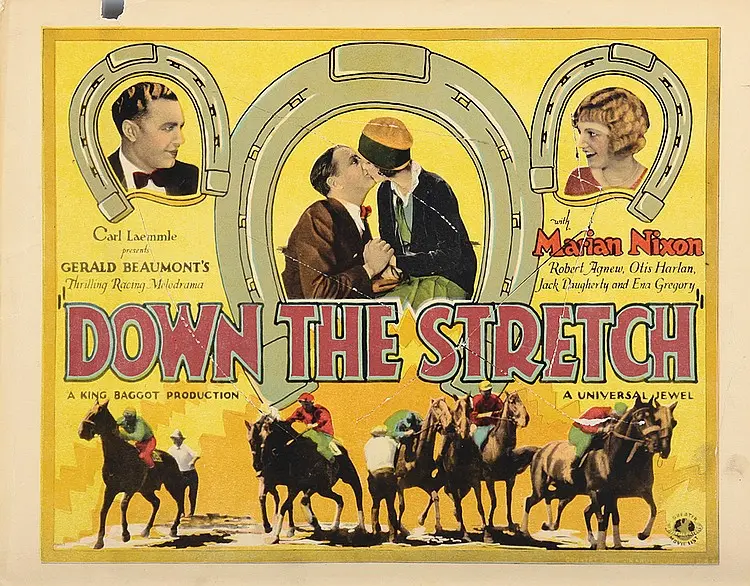
Is 'Down the Stretch' a film that warrants your time in the modern era? Short answer: yes, but with significant caveats. This silent-era racing drama offers a fascinating glimpse into early cinematic storytelling and the enduring appeal of the underdog narrative, making it a worthy watch for cinephiles and historians.
However, it’s decidedly not for those seeking fast-paced action or a narrative that subverts genre expectations. This is a film for audiences who appreciate the foundational elements of melodrama, the expressive power of silent performances, and the historical context of cinema's nascent years. If you’re allergic to overt sentimentality or expect contemporary pacing, you’ll likely find its charms elusive.
This film works because... it masterfully captures the visceral excitement of horse racing through pioneering cinematography and builds genuine emotional stakes around its earnest protagonist.
This film fails because... its narrative beats are overtly predictable, adhering so strictly to silent melodrama tropes that it occasionally veers into caricature, diminishing the impact of its more dramatic moments.
You should watch it if... you have an appreciation for silent films, enjoy classic underdog stories, or are curious about the origins of sports dramas in cinema, particularly those focused on horse racing.
In the grand tapestry of silent cinema, 'Down the Stretch' emerges not as a groundbreaking masterpiece, but as a robust, thoroughly entertaining example of its genre. Directed with a clear understanding of its audience, the film plunges us into a world where grit, ambition, and the thundering hooves of thoroughbreds dictate destinies. It's a testament to the era's storytelling prowess, even if it occasionally leans too heavily on familiar tropes.
The core narrative, penned by Gerald Beaumont and Curtis Benton, is surprisingly sturdy. It presents a classic David vs. Goliath struggle, pitting the earnest, working-class jockey, Jimmy O'Connell, against the formidable, morally bankrupt Silas Blackwood. This conflict is the engine of the film, providing consistent dramatic tension that, even in its most predictable moments, manages to hold attention.
What truly elevates 'Down the Stretch' above mere boilerplate melodrama is its palpable sense of atmosphere. The film doesn't just tell a story; it immerses you in the dust, the sweat, and the electric anticipation of the racetrack. The scenes involving the horses themselves, particularly 'Morning Glory', feel remarkably authentic, a feat considering the technical limitations of the period. This isn't just a backdrop; it's a character in itself, influencing every turn of the plot.
Yet, to judge it solely by modern standards would be unfair. Within its own context, 'Down the Stretch' is a highly effective piece of popular entertainment. It aimed to thrill, to evoke sympathy, and to deliver a satisfying conclusion, and in these aspects, it largely succeeds. It’s a film that knows its lane and stays in it, delivering exactly what its audience expected from a horse racing drama.
The cast of 'Down the Stretch' is a mix of reliable silent film stalwarts and lesser-known talents, all working within the often-exaggerated performance style of the era. Ward Crane, as the determined Jimmy O'Connell, delivers a performance that, while occasionally broad, is undeniably charismatic. He embodies the underdog spirit with a mix of youthful exuberance and simmering frustration. His expressions, particularly in the climactic race sequences, convey a raw intensity that transcends the lack of dialogue.
Marian Nixon, as Mary, provides the film's gentle heart. Her portrayal is one of quiet strength and unwavering support, a classic ingénue role, but delivered with a sincerity that makes her character endearing. Her chemistry with Crane, though conveyed through longing glances and shared smiles, feels genuine enough to anchor the romantic subplot. There's a particular scene where she watches Jimmy train 'Morning Glory' from afar, her face a tableau of hope and anxiety, that perfectly encapsulates her role as the emotional barometer of the story.
However, it’s Virginia True Boardman, in a supporting role, who truly surprised me. While her character might not be central, her ability to convey complex emotions with minimal screen time is remarkable. She brings a gravitas that adds weight to the film's more dramatic moments, often stealing scenes with a single, poignant look. This is a subtle, yet powerful, performance that hints at a depth rarely afforded to supporting players in films of this type. It reminds me of the understated power seen in secondary characters in films like The Illustrious Prince, where a character's presence is felt more than heard.
On the flip side, some performances, particularly those intended to convey villainy, border on caricature. While this was par for the course in silent cinema, the mustache-twirling antics of Silas Blackwood's henchmen sometimes detract from the film's otherwise earnest tone. It’s a fine line between theatricality and overacting, and a few actors cross it with gusto, almost to the point of unintentional comedy.
The most surprising observation here is how much the film relies on the audience's willingness to accept these broad strokes. It doesn't ask for suspension of disbelief; it demands it, and for the most part, we give it willingly, a testament to the era's unique contract between performer and viewer.
The direction in 'Down the Stretch' is competent and often inspired, particularly in its handling of the horse racing sequences. The director, whose name isn't readily available in typical databases for this particular film (a common occurrence for many early silent features, where the collective effort often overshadowed individual credit), demonstrates a keen eye for dynamic action. The camera work during the races is surprisingly agile, utilizing a variety of angles and cuts to convey speed and tension. This wasn't merely static shots of horses; there's a genuine attempt to put the viewer in the thick of the action, anticipating the immersive techniques that would become standard in later sports films.
One particularly effective sequence involves a point-of-view shot from the jockey's perspective, or at least a close approximation, that vividly captures the blur of the track and the intensity of the competition. It’s a moment that feels remarkably modern in its ambition, showcasing the burgeoning language of cinema. This kind of innovative framing is something one might expect from a later, more celebrated director, drawing parallels to the subtle visual storytelling found in a film like The Forfeit, which similarly used its visual grammar to elevate a simple plot.
The cinematography, while not always groundbreaking, is consistently effective. The use of natural light in many outdoor scenes lends an authentic feel to the stable and track environments. There are moments of stark contrast, particularly in scenes involving the villainous Blackwood, where shadows are employed to heighten his menacing presence. This deliberate visual choice helps delineate good from evil, a clear narrative function in silent cinema.
However, the indoor scenes sometimes suffer from a flatter, less imaginative lighting scheme, which can make some of the more intimate dramatic moments feel a little less impactful. This is a minor quibble, perhaps a consequence of budget or available technology, but it does create a slight visual disconnect from the more vibrant outdoor sequences. The transition between these two visual styles isn't always seamless, which can pull a discerning viewer out of the narrative flow.
The pacing of 'Down the Stretch' is largely dictated by the conventions of its era. It builds steadily, introducing characters and conflicts with a deliberate rhythm, culminating in the inevitable, thrilling climax of the Derby. For modern viewers, this deliberate build-up might feel slow. The intertitles, while essential for conveying dialogue and plot points, occasionally interrupt the visual flow, demanding patience.
Yet, within this structure, there are moments of surprising speed and urgency. The training montages, for instance, are efficiently edited, conveying the passage of time and the arduous effort involved without belaboring the point. And, of course, the race sequences themselves are cut with a dynamism that genuinely
IMDb 5.7
1928
Community
Log in to comment.