DbcultAccessing Vault...
6.2/10
Senior Film Conservator
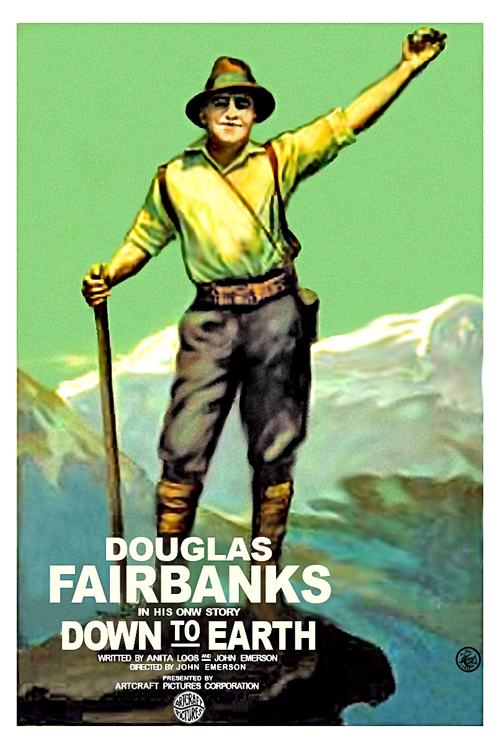
A definitive 6.2/10 rating for a film that redefined the boundaries of cult cinema. Down to Earth remains a cornerstone of transgressive art.
Picture, if you will, the year 1917: Europe is a charnel house, influenza circles like a hawk, and America soothes its jitters with glandular elixirs, uranium-laced tonics, and the soft whisper of sanatoria violins. Into this gilded fever dream swaggers Douglas Fairbanks—never merely an actor but a kinetic exclamation point—brandishing a grin sharp enough to slice through surgical tape. Down to Earth is his scalpel, a brisk 66-minute romp that vivisects the leisure class and stitches the wound with sunshine.
From its first iris-in, the film announces itself as a prankish manifesto. Intertitles, penned by the puckish Anita Loos, sparkle with flapper-age sass: “The only thing flatter than the patients’ EKGs is last season’s champagne.” Director John Emerson shoots the sanatorium like a cathedral of marble and malaise—tracking shots glide past Sèvres vases, white-veined statuary, and nurses who glide rather than walk, their shoes never touching the ground. Gustav von Seyffertitz, that walrus-mustached Teuton, presides as Dr. Loring, a physician whose stethoscope might as well be a cash register; his eyes gleam every time a new millionaire wheezes.
Fairbanks plays Buster Rutledge, a character whose surname evokes both scrapes and speed. Buster’s costume alone is ideological: open-necked linen, calves kissed by salt rather than silk. He vaults over tennis nets, vaults into trees, vaults, most crucially, into the guarded heart of Eileen Percy’s Ethel Annesley, a debutress who believes she possesses “the vapours” because a Viennese quack told her so. Their meet-cute transpires on a croquet lawn where she faints into his arms; he sprints the length of a hedge maze to fetch smelling salts, only to return, panting, with a wildflower. She inhales, sneezes, and is cured—for the moment.
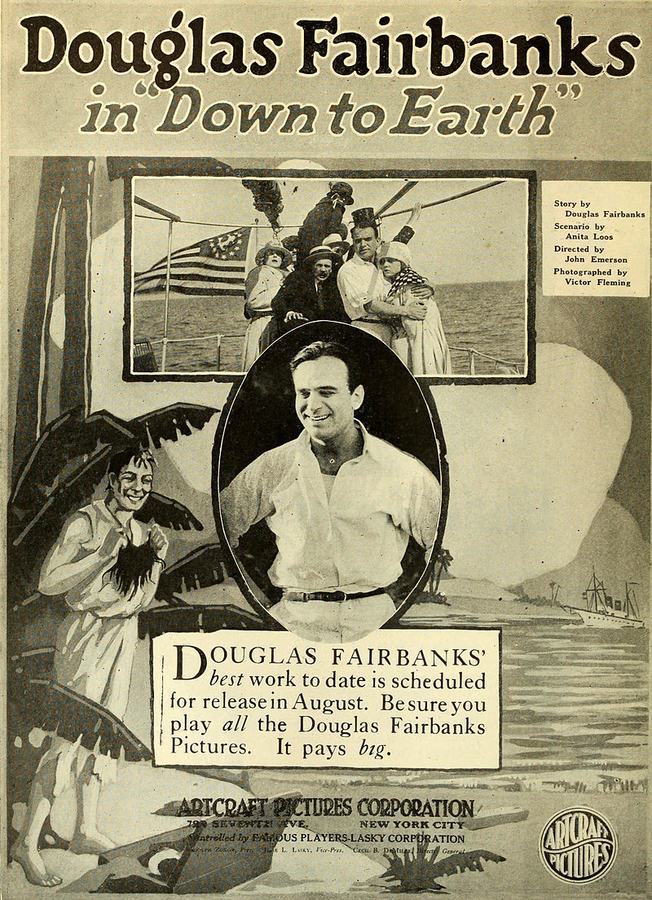
But narrative engines require fuel, so Loos and Fairbanks devise a therapeutic kidnapping. Buster charters a yacht christened The Hypocrite, stuffs it with patients, physicians, and a case of absinthe disguised as medicine, then steers into fog. A sexton’s error—deliciously never explained—rips the hull on a reef. The survivors spill onto an island that looks like Caspar David Friedrich painted it after three espressos: granite fangs, spruce spires, and a beach littered with bioluminescent plankton that turns footprints into galaxies.
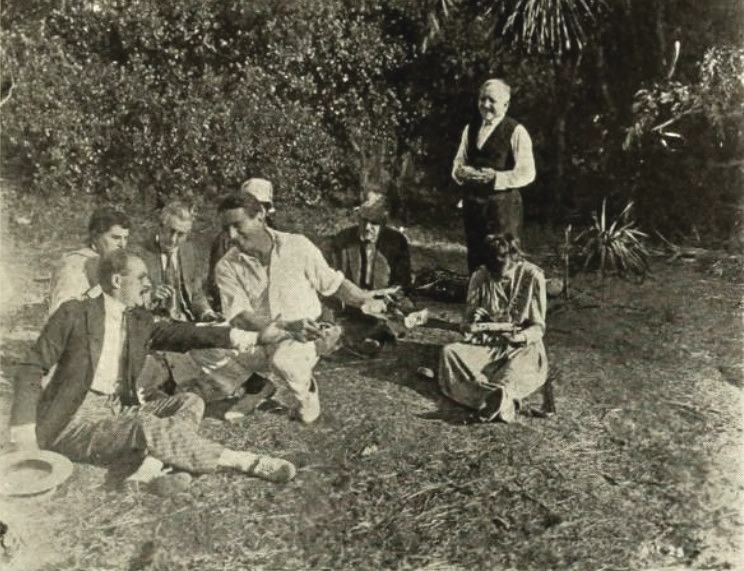
What follows is a montage suite so exuberant it could power a small city. The camera pirouettes as stockbrokers scramble up cliffs, their tuxedo tails flapping like failed wings. Bull Montana, a slab of humanity with a face carved from granite, plays Gutzon the chauffeur; he teaches starch-collared bankers to spear fish, their cufflinks glinting beneath tidal foam. Meanwhile Fairbanks, shirtless, shinny up a coconut palm, pauses to flash the audience a conspiratorial grin—he’s both Puck and Promethean fire-bringer.
Color symbolism, though monochromatic, pulses through tinting. Night sequences are soaked in cobalt, echoing the sea-blue (#0E7490) of dread and possibility; dawn revels in amber, the yellow (#EAB308) of awakening. When the last bottle of laudanum is hurled into the surf, the film’s celluloid itself seems to sigh, shifting from cyan to rose—a visual sneeze that clears the collective head.
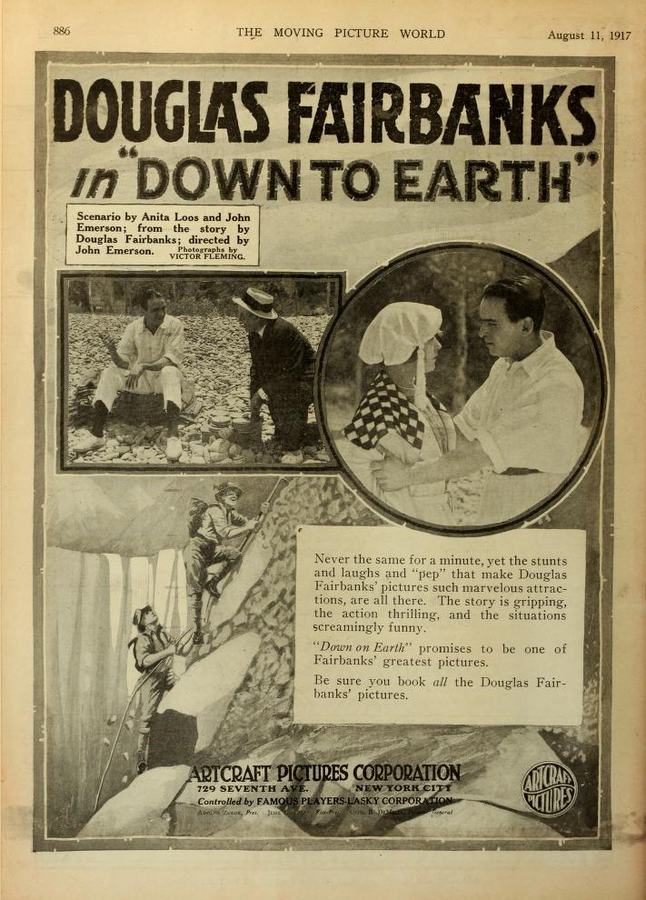
Percy’s transformation is the film’s quiet miracle. Initially swaddled in mink even on the beach, she ends the tale barefoot, hair whipping like a battle standard, racing Fairbanks along a sandbar. In medium close-up, her pupils swallow the frame; the intertitle reads, “I hear my blood—and it’s cheering.” For 1917, this is erotic electricity, a woman reclaiming embodiment without male imprimatur.
Yet the film is no libertine bacchanal; its satire bites both class and gender. When Ruth Allen’s society columnist attempts to file copy via carrier pigeon, the bird circles back, exhausted, and drops the scroll at her feet—an avian verdict on parasitic media. Charles K. Gerrard’s monocled aristocrat tries to bribe the tide with a pearl stick-pin; the ocean declines, swallowing both jewel and ego. Even Fairbanks’ hero is ribbed: Buster’s ego inflates so much that he attempts to lecture a raccoon on hygiene; the raccoon, unimpressed, burglarizes his last match.
Technically, the picture is a bridge between Fairbanks’ early comedies of manners and later swashbucklers. Watch how he ascends a cliff: a rope, a pulley, a reverse-action cut—then a human silhouette haloed against sky, arms akimbo like a civic statue. That image will reappear in 1920’s The Mark of Zorro, but here it’s still playful, a rehearsal for myth. Cinematographer William Marshall cranks the camera at variable speeds; when patients sprint from imaginary wolves, the footage is under-cranked, gifting their panic with Keystone frenzy.
Comparative glances enrich the experience. If you’ve savored He Who Gets Slapped’s carnivalesque cruelty or the spiritual masquerades of The Ghost Breaker, you’ll recognize a shared obsession with masks—here, the mask is medical authority. Where Champagneruset intoxicates itself on urban decadence, Down to Earth detoxes in boreal lungsful of pine. And unlike The Conqueror’s imperial bombast, conquest here is internal: a victory over one’s own boutique despair.
Musically, contemporary exhibitors would have unleashed anything from Victor Herbert to spontaneous birdcalls. Modern restorations often pair the film with jaunty salon orchestrations, yet I prefer solo banjo: the pluck mirrors the characters’ tentative re-connection to primal rhythms. Each time someone declares themselves cured, the banjoist slides up the neck, a micro-victory yelp.
Of course, modern viewers may squint at the film’s breezy eugenics-adjacent rhetoric—health as moral virtue, illness as bourgeois affectation. But Fairbanks and Loos are not Ayn Rand in linen; their target is performative fragility, not genuine disability. The screenplay slips in a vignette: a war veteran with shell-shock trembles at campfire smoke, and Buster’s swagger softens into reverence. He offers not counsel but companionship, sharing a blanket in silence. It’s a fleeting beat, yet it complicates the carnival, reminding us that context is king.
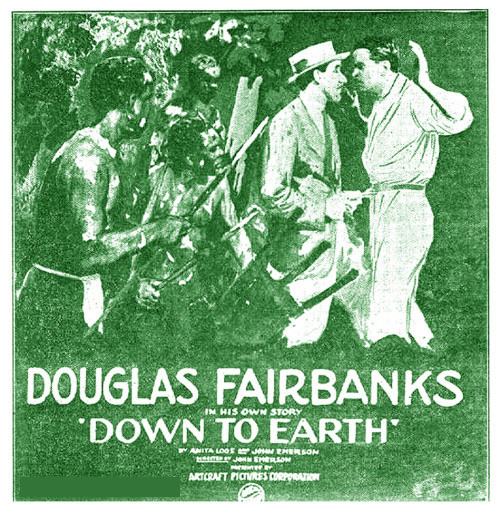
Scholars often overlook the film’s ecological premonitions. The island refuses ownership; every attempt to build a permanent villa is foiled by tide or rain. In the final shot, the survivors sail away, but the camera lingers on a half-burnt monogrammed handkerchief fluttering like a surrender flag. Nature, having served as rehab, reclaims dominion. One thinks of current wellness retreats that helicopter affluent clients to Patagonia only to discover glaciers retreating faster than their anxiety—history’s sly echo.
Performances operate at varied pitches, yet harmonize. Fred Goodwins, as a neurasthenic poet, delivers every line in iambic gasps, clutching a volume of Swinburne like a life buoy. Charles McHugh’s elderly railroad baron learns to yodel, his basso profundo ricocheting off fjords. And Douglas Fairbanks—well, he is mercury in muslin, impossible to grasp, always one grin ahead of gravity. Watch his eyes during the climactic race: they don’t telegraph victory but curiosity, as if asking the audience, “What else can we reinvent?”
Restoration notes: the 2018 4K scan by La Cineteca del Friuli reveals texture in fabrics—gossamer tweeds, linen so fine you expect salt crystals. The original French distribution negative, long misfiled under Daredevil Kate elements, supplied the most complete ending. Tinting schemas follow the 1917 Pathé color chart, with cyan-night, amber-day, and magenta for the brief ballroom flashback—a memory soaked in rosé.
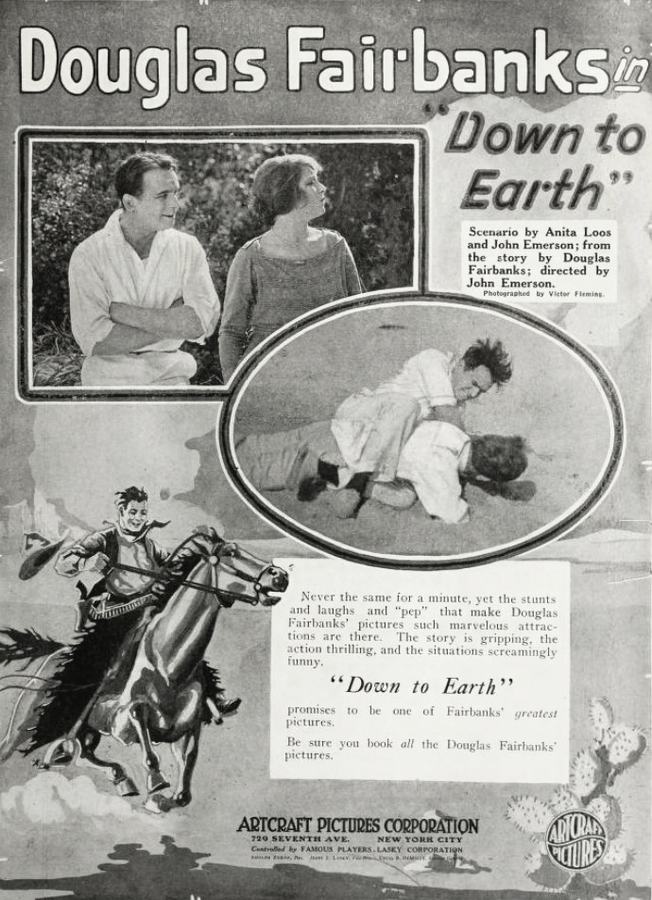
Marketing taglines of the era barked: “Can You Laugh Your Lungs Clear?” and “A Yacht Wreck—A Soul Resurrection!” Today one might tweet: “Therapy costs 200/hr; this island costs a shipwreck—ROI unbeatable.”
Inoculated against spoiler anxiety, I’ll confess the finale: the patients return to civilization, but only after signing a charter that bans private physicians and mandates monthly camping trips. Dr. Loring, now unemployed, opens a boutique selling artisanal mosquito nets. Buster and Ethel stride into the horizon, not to conquer but to wander, certain only that lungs are made for wind and legs for distance.
Down to Earth is therefore less a narrative than a proposition: what if the antidote to modernity’s neuroses is not more modernity but its opposite—sun-scald, pine-needle soles, the wet slap of fish against palm? Fairbanks, ever the acrobat, doesn’t preach; he somersaults, inviting us to follow. Some will scoff, citing privilege, colonial escapism. Others will lace boots, book forest cabins, and discover ticks. Yet the film’s joyous insurgency lingers, a burr under the saddle of every algorithm that recommends mindfulness apps at 2 a.m.
So, a century on, when boutique magazines hawk 5000 vitamin infusions and influencers stage cryotherapy selfies, revisit this celluloid time-capsule. Let its dark-orange (#C2410C) intertitles scorch your retinas, let the yellow (#EAB308) dawn creep into your bloodstream, let the sea-blue (#0E7490) night rock you awake. You may not strand oligarchs on islands, but you might, for the length of a heartbeat, mistrust any cure sold in a crystal vial. And if you catch yourself grinning at the raccoon who steals your last match, congratulations—you’ve touched ground.
IMDb —
1929
Community
Log in to comment.