DbcultAccessing Vault...
Cult Review
Senior Film Conservator
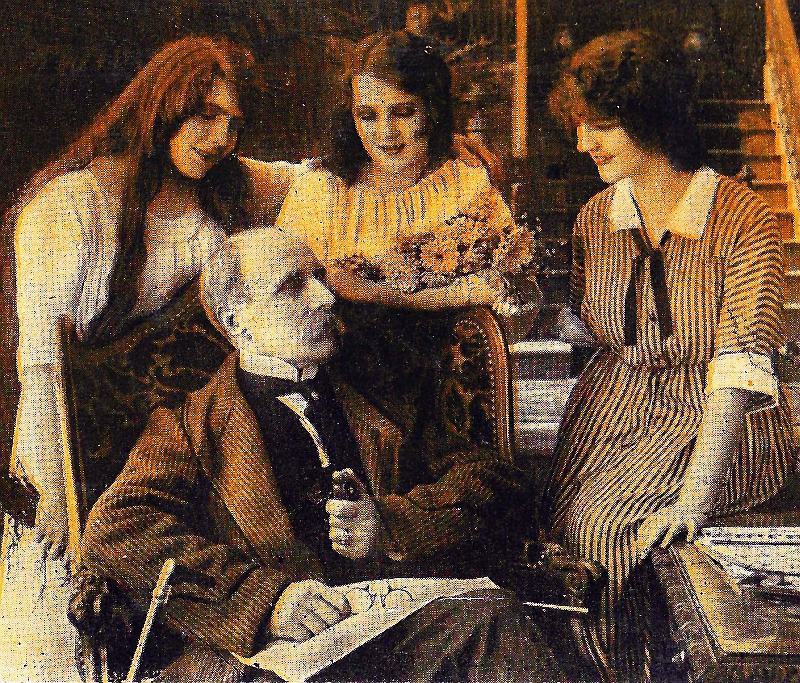
The flickering ghosts of cinema's nascent years often whisper tales of forgotten brilliance, and among them, the resurrected echoes of Lorena resonate with an almost spectral clarity. This cinematic artifact, a profound exploration of human frailty and resilience, emerges from the shadows of early 20th-century French filmmaking not merely as a historical curiosity, but as a vibrant, pulsating narrative that transcends its temporal origins. In an era often characterized by nascent technical experimentation and burgeoning narrative conventions, Lorena distinguishes itself through an emotional depth and visual sophistication that belies its vintage. It is a film that demands our attention, not just for its place in the annals of silent cinema, but for its enduring power to move, to provoke, and to illuminate the timeless struggles of the human heart.
At the core of this compelling drama is the luminous Suzanne Grandais, who, as the titular Lorena, delivers a performance of such raw intensity and nuanced vulnerability that it cements her status as one of the period's most formidable talents. Grandais imbues Lorena with an ethereal grace, yet beneath this delicate exterior beats a heart of steel, tested by a relentless torrent of societal pressures and personal betrayals. Her portrayal is a masterclass in silent acting, conveying entire soliloquies through a mere glance, a subtle shift in posture, or the trembling of a hand. The film's narrative thrust is established early, painting a vivid tableau of a society rigidly stratified, where the tender shoots of genuine affection are often trampled underfoot by the iron boots of class and convention. Lorena's clandestine romance with Lucien, the struggling artist portrayed with earnest sincerity by Félix Galipaux, forms the emotional bedrock of the film. Galipaux, a seasoned performer, brings a quiet dignity to Lucien, making his character's plight—his love pitted against an insurmountable social chasm—all the more poignant. Their scenes together are imbued with a delicate intimacy, a silent poetry that speaks volumes of their shared dreams and the cruel hand of fate poised to tear them asunder.
The insidious force driving the narrative's tragic trajectory is Baron Armand de Valois, brought to life with chilling precision by Jean Aymé. Aymé's Baron is not a cartoonish villain but a figure of sophisticated menace, his charm a deceptive veneer for a soul steeped in entitlement and possessiveness. His desire for Lorena is not born of love, but of acquisition, a cold calculation that sees her as another prized possession to be added to his opulent collection. The film’s tension mounts inexorably as the Baron orchestrates Lorena's forced separation from Lucien, leveraging his immense wealth and social standing to manipulate her circumstances. This narrative device, while a staple of melodramatic cinema, is handled with a particularly brutal effectiveness in Lorena, highlighting the suffocating constraints placed upon women in that era, their autonomy often a mere illusion. The scene where Lorena, with tears streaming down her face, is compelled to accept the Baron's proposal, is a visual symphony of despair, Grandais's silent anguish palpable even through the grainy celluloid. It's a moment that resonates with the emotional heft found in other period dramas exploring societal subjugation, echoing the quiet desperation seen in films like A Doll's House, where personal freedom often clashes violently with societal expectation.
The cinematic language employed in Lorena is remarkably advanced for its time, demonstrating a keen understanding of visual storytelling. The director—uncredited in surviving records but whose vision clearly permeates every frame—utilizes striking compositions and an intuitive grasp of montage to amplify the emotional stakes. Close-ups of Grandais's expressive face are strategically deployed to convey her inner turmoil, a technique that would become a hallmark of later cinematic masters. The use of light and shadow is particularly evocative; the opulent interiors of the Baron's mansion are often bathed in a stark, almost oppressive glow, contrasting sharply with the softer, more naturalistic lighting of Lorena's earlier, simpler life with Lucien. This visual dichotomy serves to underscore the moral and emotional chasm between the two worlds Lorena is forced to inhabit. The film's pacing, while deliberate, is never languid, maintaining a steady, melancholic rhythm that draws the viewer deeper into Lorena's unfolding tragedy. One cannot help but draw parallels to the sophisticated visual narratives of early serials like Homunculus, 1. Teil, though Lorena channels its visual prowess into a more concentrated emotional impact rather than sprawling adventure.
The supporting cast, though perhaps less prominent, provides essential texture to the film's rich tapestry. Maillard, whose character remains somewhat enigmatic, serves as a crucial catalyst in several pivotal moments, his presence often hinting at deeper conspiracies or unspoken truths. Maggy Théry, in a smaller but significant role, offers a glimpse into the lives of Parisian working-class women, providing a stark contrast to Lorena's eventual gilded cage. Berthe Jalabert, a stalwart of the era, brings a formidable presence to her role, her stern gaze and dignified bearing often representing the unyielding societal norms that Lorena struggles against. Alfred Zorilla, too, contributes to the film's atmospheric density, embodying the subtle machinations of the Baron's circle. These performances, though brief, are etched with a clarity that ensures their impact, contributing to the overall sense of a fully realized world, brimming with both beauty and inherent cruelty.
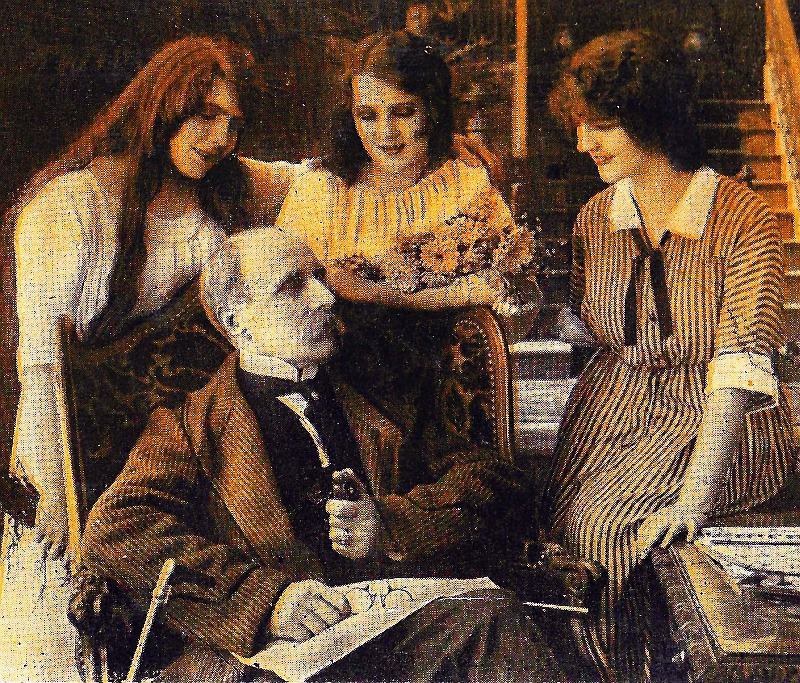
Years pass within the narrative, depicted through a series of eloquent dissolves and evocative intertitles that convey Lorena's quiet suffering and the painful secret she carries: a child, born of her love for Lucien, now hidden away from the Baron's knowledge. This adds a layer of maternal anguish to Grandais's already complex portrayal, transforming her character from a mere tragic lover into a fiercely protective mother. The film explores the profound sacrifices a woman is willing to make for her offspring, a theme that resonates across cinematic history. The yearning for reunion, both with Lucien and with her child, becomes the driving force behind Lorena's actions, culminating in a series of desperate attempts to reclaim her lost happiness. This protracted period of suffering is not gratuitous; rather, it serves to heighten the emotional stakes, making the eventual climactic confrontation all the more cathartic. The narrative structure, while adhering to the dramatic conventions of its period, manages to feel remarkably modern in its psychological penetration, exploring the long-term effects of trauma and repression with surprising subtlety.
The third act of Lorena is a tour de force of melodramatic tension, building to a crescendo of revelations and confrontations. Lorena, emboldened by years of silent endurance, meticulously plans her escape and the reunion with her child and, hopefully, Lucien. The Baron, increasingly suspicious and possessive, becomes a menacing presence, his polished exterior cracking under the strain of Lorena's subtle defiance. The film masterfully employs cross-cutting during the climax, interweaving scenes of Lorena's desperate flight with Lucien's unwitting return to Paris, creating a palpable sense of urgency and impending doom. The truth of Lorena's child, long concealed, bursts forth in a dramatic scene, exposing the Baron's cruelty and Lorena's immense sacrifice. This moment, delivered with powerful visual metaphors rather than explicit dialogue, is a testament to the potency of silent film as a medium for conveying profound emotional and moral truths. It's a sequence that might remind one of the heart-pounding suspense in other early thrillers like The Submarine Eye, but here, the stakes are purely human and emotional.
The thematic resonance of Lorena extends far beyond its immediate narrative. It is a searing indictment of social hypocrisy, a testament to the enduring power of true love against the corrupting influence of wealth and status, and a poignant exploration of female agency in a world designed to deny it. The film subtly critiques the rigid class structures of its time, demonstrating how individual destinies are often irrevocably shaped by the circumstances of birth and fortune. Yet, it also celebrates the indomitable spirit of those who dare to defy these strictures, even at great personal cost. Lorena's journey is one of immense suffering, but also of quiet strength and unwavering determination. Her character embodies a proto-feminist sensibility, a woman who, despite being trapped by societal expectations, finds ways to assert her will and protect what she holds most dear. This theme of individual struggle against oppressive systems is echoed in many films of the era, from the social commentary inherent in The Blindness of Virtue to the personal awakening portrayed in The Awakening of Ruth.
The ending of Lorena, while offering a semblance of justice and reunion, is deliberately nuanced, avoiding a simplistic happily-ever-after. The scars of Lorena's ordeal are deep, and the film acknowledges that some losses cannot be fully recovered, some wounds never entirely heal. This bittersweet resolution elevates Lorena beyond mere melodrama into the realm of profound tragedy, a narrative that understands the complexities of human existence. The final frames, depicting Lorena, Lucien, and their child, are imbued with a quiet hope, yet also a lingering sense of the trials they have endured. It's a powerful statement on the cost of survival and the enduring strength required to rebuild a life shattered by circumstance. This sophisticated approach to resolution distinguishes it from more straightforward romantic dramas like Two Men and a Woman, offering a more realistic, albeit emotionally challenging, conclusion.
In conclusion, the rediscovery of Lorena is a significant event for cinephiles and historians alike. It is a film that not only showcases the exceptional talents of Suzanne Grandais and Félix Galipaux but also stands as a testament to the artistic ambition and emotional sophistication of early French cinema. Its narrative, while rooted in the melodramatic conventions of its time, transcends them through its profound characterizations, advanced visual language, and enduring thematic relevance. To watch Lorena today is to embark on a journey back in time, not merely to observe a historical artifact, but to experience a timeless story of love, loss, and the unyielding human spirit. It reminds us that even in the silent era, filmmakers were crafting narratives with a depth and power that continue to resonate. One might even argue that its emotional impact rivals the dramatic intensity found in later works like The Kid, despite their vastly different tones. This film is more than just a relic; it is a vibrant, beating heart from cinema's past, urging us to listen to its silent, powerful song. The craft, the sheer dedication to storytelling evident in every frame, is a marvel, cementing Lorena's place as an essential piece of cinematic heritage, a true gem that deserves to be seen, studied, and celebrated for generations to come. It challenges us to reconsider the perceived limitations of early cinema, revealing a richness and complexity that continues to captivate and inspire. We are fortunate to have this window into a world long gone, yet eternally relevant through the enduring power of its art.
IMDb 7.2
1935
Community
Log in to comment.