DbcultAccessing Vault...
Cult Review
Senior Film Conservator
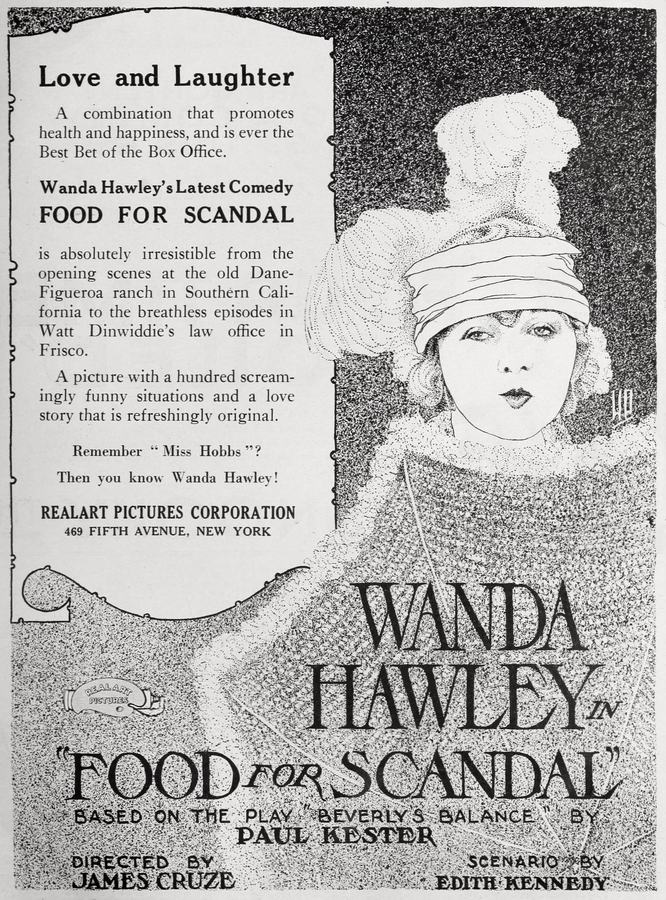
The nickelodeon curtain lifts on a charcoal vignette: a once-grand hacienda reduced to termite-chewed beams, its heiress swaddled in mourning lace that reeks of camphor and insolvency. Sylvia Figueroa—portrayed by Wanda Hawley with the brittle radiance of a hand-painted porcelain doll—clutches a sepia portrait of Watt Dinwiddle (Harrison Ford, pre-fedora matinee idol, not the future space smuggler). The camera, starved for sound, lingers on her tremoring pupils; we read every unspoken syllable: leave or rot.
Cut to a locomotive vomiting cinders across night orchards. Cinematic geography collapses miles into heartbeat montage—an editing grammar still wet with Griffith’s fingerprints—until the Golden Gate’s hallucinatory silhouette skulks into view. San Francisco, 1919, wears sequins and soot; its girders still resonate from the recent Kelly Gang hysteria imported by touring newsreels, yet here the outlaw is poverty, stalking every frame.
Sylvia’s job hunt montage—employment agencies, typewriter pools, sewing sweatshops—unspools like a bureaucratic nightmare etched by an escaped convict’s paranoia. Each slammed shutter syncs with a discordant piano sting, the accompanist ventriloquizing urban cruelty. When she capitulates to the “Vanities” casting couch (a velvet-papered maw reeking of Turkish tobacco and talcum), the film tilts into satire: chorines kick in Busby Berkeley embryonic formations while gold-digging matrons ogle from box seats. The revue’s impresario rechristens her Mabel Flowers, a nomenclature redolent of both burlesque bloom and funeral wreath.
Hawley’s metamorphosis sequence—powder puff clouds, kohl lashes, beetle-wing sequins—owes its chiaroscuro to Die Börsenkönigin yet anticipates the consumerist nightmares of Marie, Ltd. The camera fetishizes her calves ascending a spiral staircase, each step a demotion of dignity, until the iris shot crowns her the “Kissing Girl,” a commodity whose lips auction to the highest lecher.
Intertitle cards—lettered in flapper-esque zigzag—deliver the pun: “She sold kisses by the thousand—and bought heartbreak at wholesale.” Modern viewers may wince at the transactional bluntness, but 1920 censorship boards, still hungover from Victorian prudery, allowed such euphemisms to slip like contraband champagne.
Meanwhile Watt, garbed in three-piece serge, haunts mahogany-paneled brokerage houses. His mentor-to-be, Jack Horner (Lester Cuneo), exudes nouveau-riche boorishness: pinkie rings, watch-chain heft, the gait of a man who purchased ancestors at auction. Horner’s marital discord—Nancy (Ethel Grey Terry) despising his vulgar blood—recycles sibling rivalry tropes yet frames them within class warfare rather than heredity.
The screenplay, inked by Edith M. Kennedy and Paul Kester, pirouettes on a cynic’s axis: love is negotiable, reputations collateral, redemption a clause in small print. Sylvia, desperate to yank Watt from Dickensian clerkdom, barters her notoriety as co-respondent in the Horners’ divorce. The legal stratagem—scandalize the husband, award the lawyer—feels plucked from a Restoration comedy, yet the film stages it inside a Beaux-Arts courtroom awash with Rembrandt gloom.
Director Sidney Franklin (sans on-screen credit, per 1920 custom) cross-cuts Sylvia’s backstage disillusionment with Watt’s growing infatuation for respectability. A bravura sequence layers double-exposed dissolves: over Sylvia’s shoulder we glimpse Mabel Flowers’ poster—lips lacquered into a lurid grin—while Watt’s superimposed visage hovers like a conscience in torment. Silent-era audiences, unhabituated to such optical pyrotechnics, reportedly gasped; the trick anticipates the metaphysical overlays of The Leap of Despair.
Yet the film’s moral fulcrum tilts not in court but in a candle-snuffed conservatory where Nancy Horner confronts her own cupidity. Ethel Grey Terry, underappreciated tragedienne of the celluloid margins, delivers a close-up worthy of Russian melodrama: eyes glassy with unshed tears, she whispers—via intertitle—“I sought a pedigree and lost a heartbeat.” The line, cloying on paper, becomes seismic when paired with her tremorous gloved hand discarding the pearls Jack bestowed. Love, the picture argues, outbids lineage; a sentiment both quaint and quietly radical in America’s gilded twilight.
Cinematographer Juan de la Cruz (billed under anglicized moniker) exploits orthochromatic stock’s predilection for shimmer: silk gowns glow like moonlit surf, while faces swim in porcelain halation. Note the opium-den expository scene—deleted in certain regional prints—where chiaroscuro slashes carve Sylvia’s cheekbones into criminal chiaroscuro worthy of German impressionism.
Performances oscillate between stately and stagy. Ford, pre-Restless Souls fame, relies on a single ardent smolder; luckily, silent cinema forgives such limitation, allowing iris lighting to sculpt nuance his brows miss. Hawley, typecast as society ingénue, here flirts with tawdry despair; her shoulders, when she flings the feather boa back at stage-door Romeos, evoke a swan speared by arrow. Margaret McWade as the landlady supplies comic leavening, her potato-shaped silhouette a cartoon of thrift.
Composer (unknown for roadshows) would have underscored the finale with a reprise of “Till We Meet Again,” yet surviving cue sheets hint at a daring modulation from F-minor to D-major as Watt clasps Sylvia’s tainted-but-forgiven hand. The uplift feels earned because the film never sanctifies its sinners; rather, it recognizes transaction as the lingua franca of urban survival.
Comparativists will detect DNA shared with The Trail of the Lonesome Pine: both foreground women negotiating landscape and livelihood, both resolve in sentimental reconciliation against a rugged (or urban) wilderness. Yet Food for Scandal stands apart for its proto-feminist shrug: Sylvia’s body might be currency, but her agency remains non-negotiable.
Restoration efforts—spearheaded by EYE Filmmuseum and San Francisco Silent Film Festival—re-assembled a 35mm tinted print from four archival fragments. Digital cleanup trimmed scratches but preserved the amber glow of nitrate, ensuring present-day viewers feel the celluloid’s original fever. Streaming options remain scattershot: Criterion Channel occasionally rotates it under “Forbidden Pre-Code” banners, though technically it’s pre-Code by a dozen years; specialty labels like Kino Lorber issue Blu-ray paired with moralistic shorts to contextualize censorship flux.
Scholars of American modernity should note the picture’s documentary value: streetcars clanging down Market Street before the 1923 reconstruction, bohemian cafés where long-haired poets trade couplets for coffee, post-quake Victorian mansions retrofitted into boarding houses. Like a stray frame of mysterious footprints, these details persist as accidental history.
Ultimately the film survives not for its plot—scarcely more than a penny-pamphlet melodrama—but for its tonal equipoise between cynicism and clemency. It waltzes along the precipice where circus clowns trade tears for ticket sales, yet it lands on the conviction that affection, however tarnished, can still purchase absolution. That faith, naïve or not, tastes less like saccharine and more like the bitter herbs prescribed for remembrance. And in remembering, we taste the era—its privations, its gilded lies, its stubborn appetite for scandal.
IMDb —
1914
Community
Log in to comment.