DbcultAccessing Vault...
6/10
Senior Film Conservator
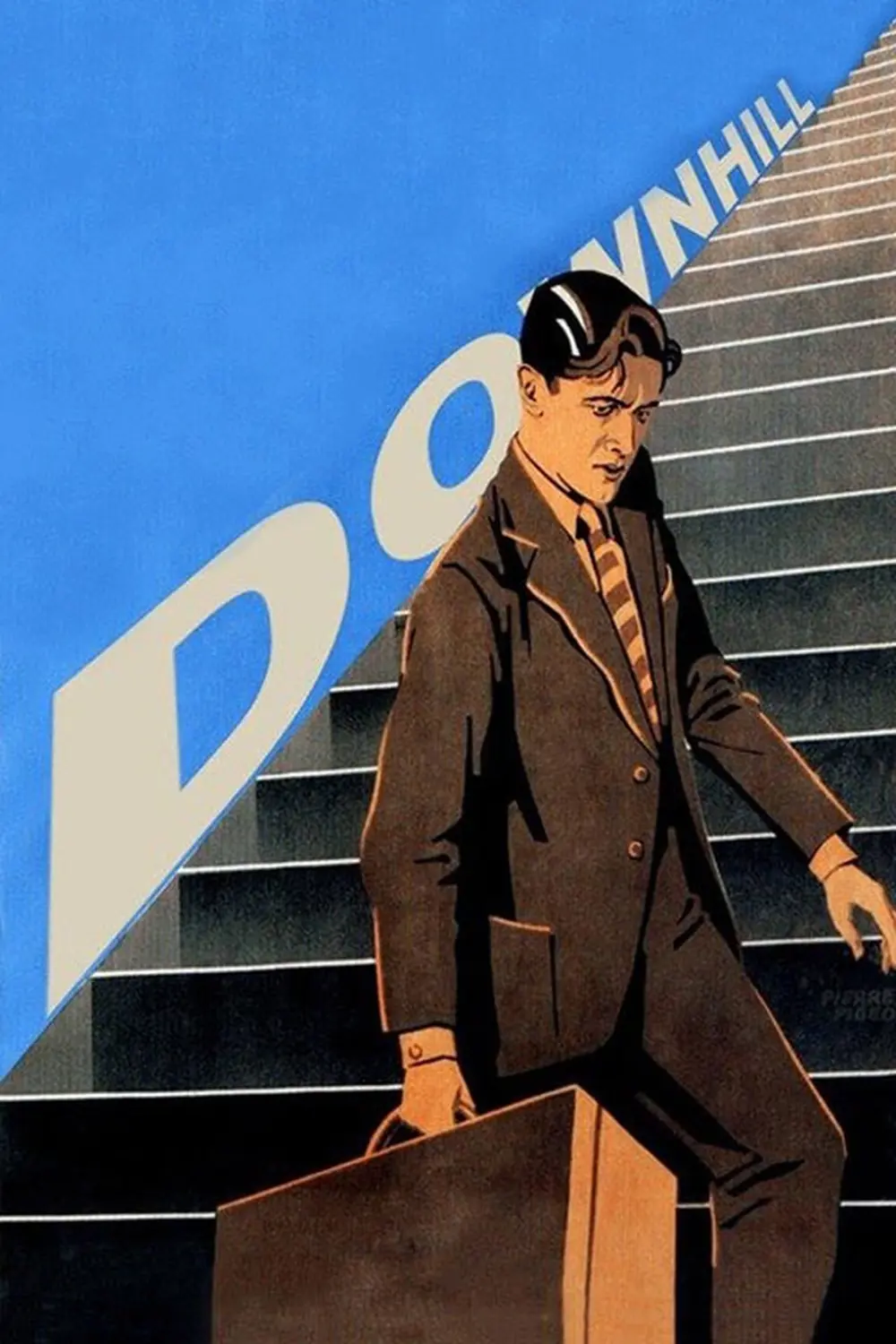
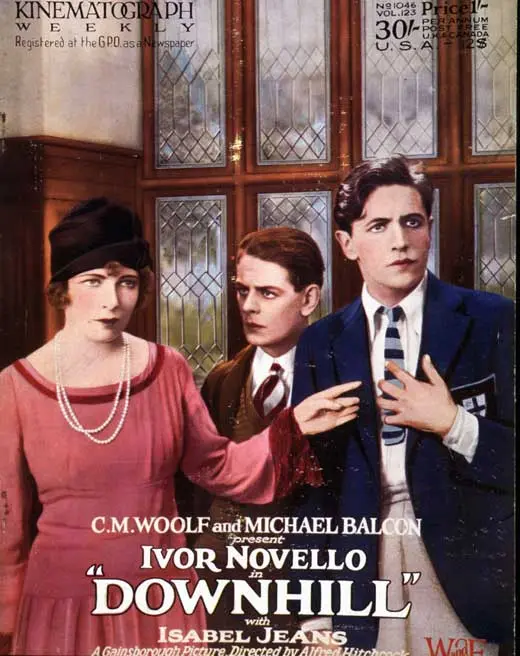
A definitive 6/10 rating for a film that redefined the boundaries of cult cinema. Downhill remains a cornerstone of transgressive art.
Should you invest your time in this silent-era relic? Short answer: yes, but only if you appreciate the technical evolution of cinema rather than just a fast-paced narrative. This film is essential for those who want to see the early fingerprints of Alfred Hitchcock, but it is definitely not for viewers who find the rigid, outdated morality of 1920s British society frustratingly illogical.
1) This film works because it utilizes innovative visual metaphors—like the literal downward movement of an elevator—to illustrate a psychological collapse that dialogue could never fully capture. 2) This film fails because the central conflict relies on a 'code of honor' so extreme it borders on the absurd, making it difficult to empathize with the protagonist's self-inflicted martyrdom. 3) You should watch it if you are a student of film history or a Hitchcock completist interested in how the 'Master of Suspense' handled melodrama before finding his thriller niche.
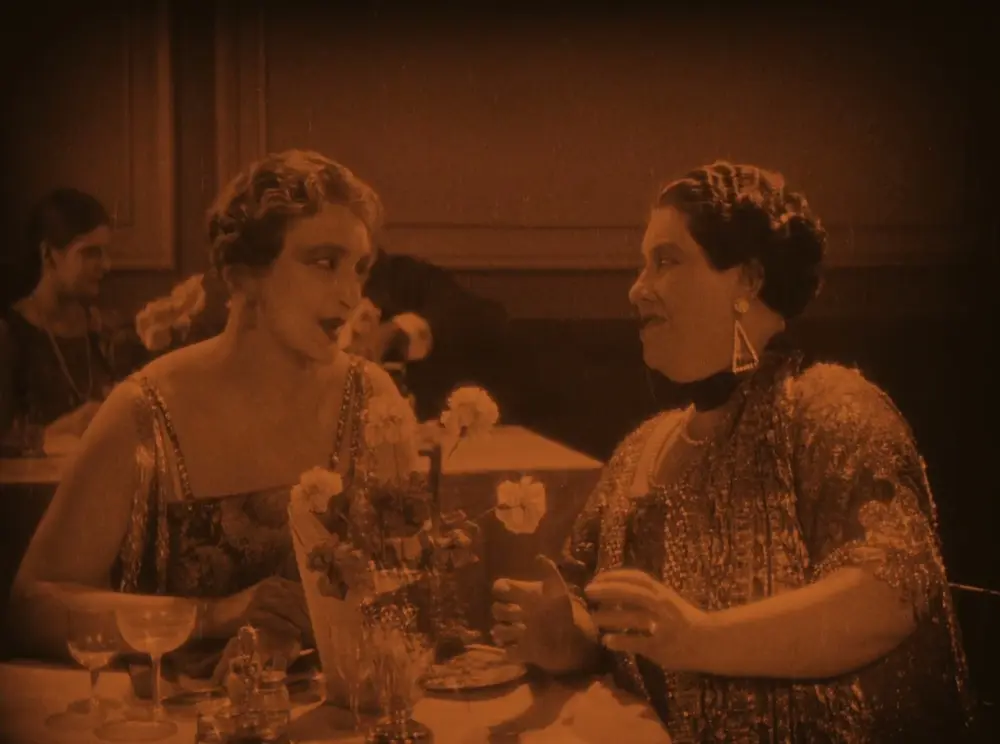
In Downhill, the title isn't just a metaphor; it is a structural mandate. Hitchcock, even this early in his career, understood that cinema is the art of showing, not telling. We see this most clearly in the transition from the school to the city. The camera doesn't just follow Roddy Berwick (Ivor Novello); it observes his shrinking stature against the increasingly oppressive architecture of his surroundings. The early scenes at the school are bright, airy, and full of horizontal movement, suggesting freedom and potential. But as soon as the 'indiscretion' occurs, the geometry of the film shifts to the vertical.
Consider the scene where Roddy is expelled. The framing is tight, the shadows are long, and the walk down the school steps feels like a descent into a tomb. Hitchcock uses a recurring motif of stairs and elevators to emphasize Roddy’s social trajectory. When Roddy is at his lowest in Paris, working as a paid companion to wealthy older women, the use of low-angle shots makes the ceiling feel like it’s pressing down on him. This is visual storytelling at its most visceral, comparable to the heavy atmospheric weight found in Joan of Arc, though with a more secular, cynical bent.
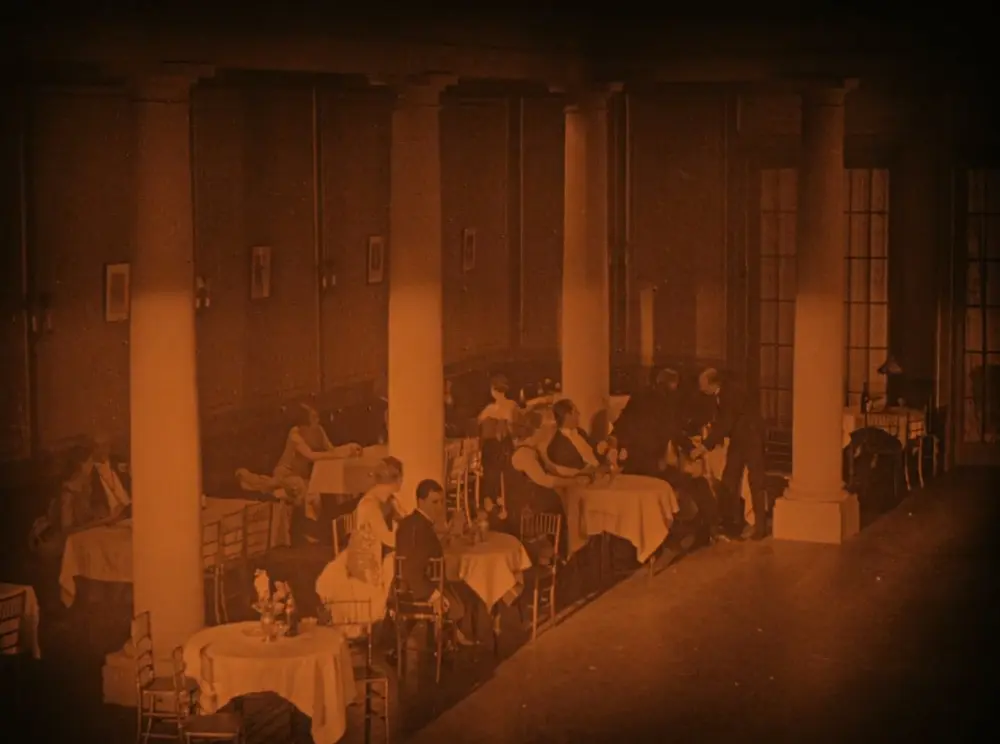
Ivor Novello was the matinee idol of his day, and his performance here is a fascinating study in star power. He co-wrote the play on which the film is based, and there is an undeniable sense of vanity in how he portrays Roddy’s suffering. He suffers beautifully. However, beneath the polished exterior, Novello manages to convey a genuine sense of bewilderment. His Roddy isn't a hero; he's a boy who played by the rules and is shocked to find that the rules were designed to crush him. Unlike the more theatrical performances in The Affairs of Anatol, Novello’s work here feels surprisingly internal during the film's quieter moments.
The supporting cast is equally sharp. Isabel Jeans, as the manipulative actress Alice, provides a venomous counterpoint to Roddy’s naivety. The scene where she celebrates her inheritance while Roddy is in another room, unaware he is being discarded, is played with a chilling lack of sentimentality. It’s a brutal moment that highlights the film’s central theme: in the real world, honor is a currency that buys you nothing but a seat at the bottom of the hill.
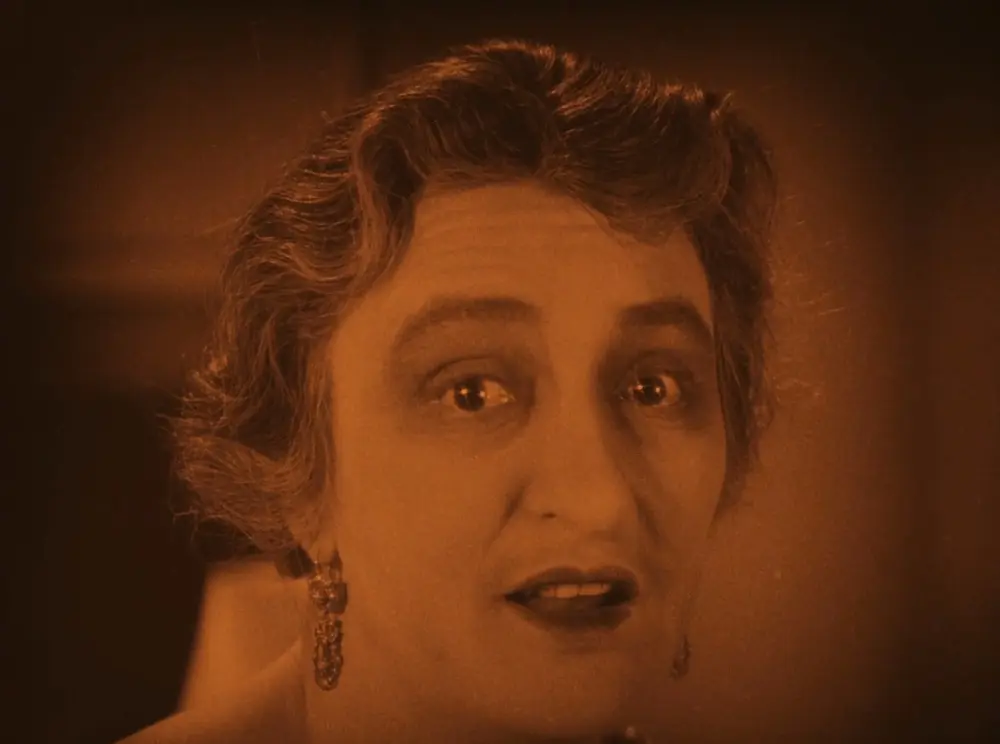
Yes, Downhill is worth watching for anyone interested in the evolution of visual language in the 1920s. While the plot feels like a dated Victorian morality play, the direction is decades ahead of its time. It provides a unique look at a young Alfred Hitchcock experimenting with the techniques that would later define his career. If you can look past the archaic social codes, you will find a film that is surprisingly modern in its cynicism.
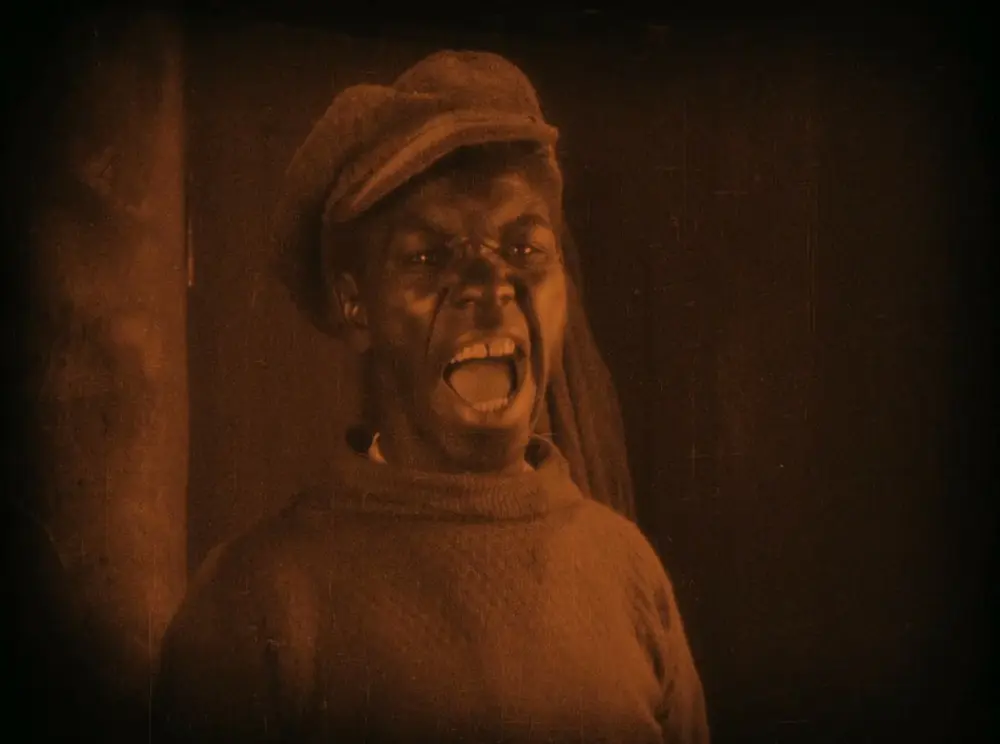
One of the most striking elements of Downhill is the fever dream sequence Roddy experiences as he falls ill on a ship back to England. Here, Hitchcock abandons realism entirely. He uses distorted lenses, superimpositions, and jarring cuts to simulate a mind unspooling. It’s a sequence that feels more at home in a German Expressionist film or a later Hitchcock thriller like Vertigo. The use of a greenish tint in some original prints (often restored in modern versions) adds to the sickly, hallucinatory atmosphere.
This sequence is a sharp departure from the more grounded dramas of the era, such as The Price of Fame. It shows a director who was already bored with standard narrative techniques and was looking for ways to put the audience directly into the protagonist's fractured psyche. It works. But it’s flawed. The transition back to reality is somewhat clunky, yet the ambition is undeniable. It is the moment where the film stops being a simple play adaptation and starts being 'A Hitchcock Film.'
The biggest hurdle for a modern audience is the inciting incident. Roddy’s decision to take the fall for Tim is treated as a noble sacrifice, but to a contemporary viewer, it looks like idiocy. This isn't a case of protecting a secret that would save lives; it’s a case of a young man letting his entire life be destroyed to save a cowardly friend from a social scandal. Because the stakes feel so artificial, the subsequent tragedy can occasionally feel unearned.
However, if we view the film as a critique of the British class system and the rigid education of the 'gentleman,' the frustration becomes part of the point. Roddy is a victim of his own upbringing. He has been taught that his word is his bond and that loyalty to one’s 'set' is the highest virtue. When that system turns on him, he has no tools to defend himself. He is a man-child cast out into a world of predators, and the film takes a perverse pleasure in watching him get torn apart. It’s a cruel film, lacking the warmth of something like David Garrick, and that cruelty is exactly what makes it linger in the mind.
Pros:
- Stunning cinematography that uses shadows and depth to tell the story.
- A powerful, if somewhat theatrical, lead performance by Ivor Novello.
- Innovative editing that was years ahead of its time.
- A fascinating look at the social anxieties of the 1920s.
Cons:
- The plot relies on an outdated and frustrating sense of 'honor.'
- The pacing slows down significantly in the middle act.
- Some of the supporting characters are one-dimensional archetypes.
Downhill is a fascinating, if uneven, entry in the Hitchcock canon. It isn't a masterpiece on the level of his later work, but it is far more than a simple curiosity. It is a film that shows a director struggling against the limitations of his source material and winning through sheer visual invention. The story may be a relic, but the camera work is alive. It’s a bleak, stylish, and ultimately rewarding experience for those willing to meet it on its own terms. Roddy Berwick’s fall is a long one, but Hitchcock makes every step of the descent worth watching. It’s a brutal lesson in the cost of silence. It works. But it’s flawed. And that’s exactly why it’s interesting.
IMDb —
1921
Community
Log in to comment.