DbcultAccessing Vault...
Cult Review
Senior Film Conservator
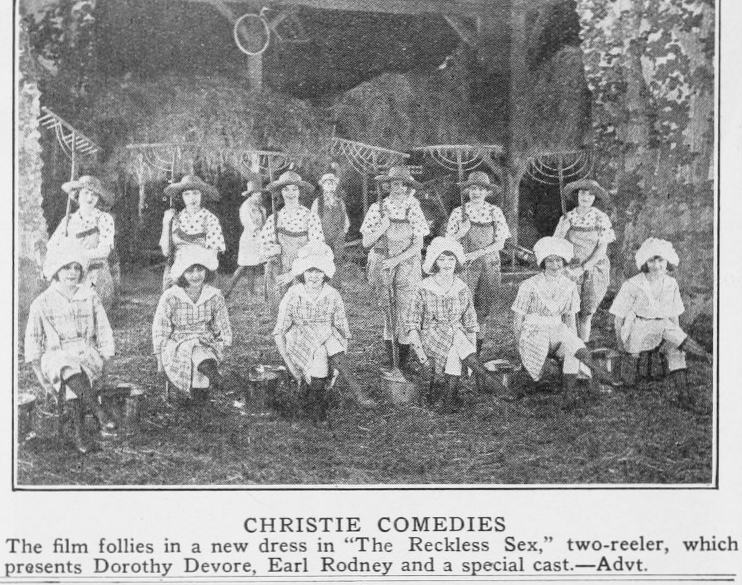
The Reckless Sex (1933) isn’t a film that announces its brilliance with fireworks—it simmers with a quiet intensity, its power lying in the tension between what is seen and what is hidden. Set in an era where societal norms dictated the contours of personal freedom, the film follows a young couple whose marriage, shrouded in secrecy, becomes the catalyst for a domestic rebellion of epic proportions. The husband, portrayed with brooding intensity by George B. French, and his wife, reimagined as a male companion by Lois Leslie in a role that defies categorization, navigate a labyrinth of deception that feels as urgent today as it did nearly a century ago.
What sets The Reckless Sex apart is its audacious use of gender disguise not as a mere narrative gimmick, but as a political statement. The couple’s decision to subvert expectations—to have the wife infiltrate the family home as a male friend—is both a practical solution and a symbolic act of defiance. This subterfuge becomes a mirror held up to the era’s strict gender roles, revealing the fragility of identities constructed by societal norms. The film’s pre-Code context is crucial here; it exists in a liminal space where Hollywood could still flirt with transgression before the Hayes Code clamped down on such audacity. This is most evident in the way the film handles themes of autonomy and consent, which feel startlingly modern in their implications.
Lois Leslie’s performance is the emotional anchor of the film. Her dual role—first as the defiant bride, then as the androgynous "boy friend"—is a masterclass in physical and vocal transformation. The audience is never quite sure where her true self resides, a ambiguity that director Ward Caulfield milks for maximum dramatic effect. Her chemistry with George B. French is charged with a mix of desperation and hope, their love story unfolding in a series of glances and gestures that speak volumes. In one particularly striking scene, Leslie’s character, dressed as a boy, confronts her mother-in-law in a confrontation that is both a battle of wits and a metaphor for the clash between tradition and progress.
The supporting cast, including Earle Rodney and Molly McGowan, add depth to the film’s exploration of familial dynamics. The parents, caught between their love for their son and their disdain for the "impostor" living under their roof, embody the generational divide that the film so skillfully dissects. Dorothy Devore’s performance as a nosy neighbor provides moments of levity, yet even she becomes a conduit for the film’s central theme: the impossibility of remaining unseen in a society that polices personal lives with ruthless precision.
Technically, The Reckless Sex is a marvel of its time. The cinematography, with its stark contrasts and use of shadow, creates a visual language that mirrors the characters’ internal conflicts. The set design, particularly the claustrophobic interiors of the family home, reinforces the sense of entrapment that permeates the narrative. One cannot ignore the influence of European expressionism here, particularly in the way light and space are manipulated to evoke psychological unease. This is a film that understands that the true horror lies not in monsters, but in the ordinary constraints of daily life.
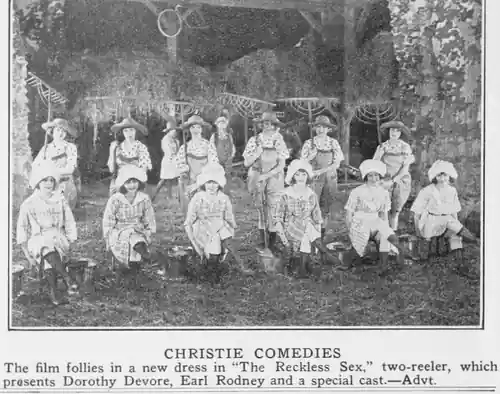
Comparisons to Red Powder (1928) are inevitable, given their shared preoccupation with societal rebellion. Yet while Red Powder leans into the visceral energy of revolution, The Reckless Sex opts for a more intimate, psychological approach. Similarly, the film’s thematic kinship with The Right to Be Happy (1935) is striking, though The Reckless Sex arrives at its themes with a rawness that the later film, bound by post-Code restrictions, could not replicate. The influence of these works underscores the uniqueness of The Reckless Sex—it occupies a rare space in Hollywood history where the line between art and provocation was still blurred.
The film’s most radical element, however, is its treatment of gender as a performance. In an era when female characters were often confined to roles of passive heroines or villainous temptresses, The Reckless Sex offers a protagonist who defies such binaries. The wife’s transformation into a "boy" is not just a plot device—it is an assertion of agency in a world that seeks to control her. This subversion is particularly resonant when viewed through the lens of contemporary debates about gender identity, making the film feel both an artifact of its time and a prophecy of ours.
Critics in 1933 would have been divided on the film’s merits. Some might have dismissed its subversive undertones as "morally ambiguous," while others would have praised its boldness. Today, The Reckless Sex is a revelation. It is a film that rewards repeat viewings, with each layer of deception revealing new insights into the human condition. The pacing, though brisk by modern standards, allows little room for complacency; the narrative hurtles toward its inevitable but satisfying climax, where the masks finally fall away and the characters must confront the consequences of their choices.
For those seeking similar films, Pinocchio (1940) offers a fairy-tale approach to identity, while The Green-Eyed Monster (1955) delves into jealousy with comparable intensity. Yet The Reckless Sex remains in a category of its own, a forgotten gem that deserves rediscovery. Its themes of love, identity, and rebellion have a timeless quality, and its technical achievements stand as a testament to the ingenuity of early Hollywood. In an age where streaming platforms often prioritize spectacle over substance, this film is a reminder of cinema’s power to provoke thought and stir emotion in equal measure.
Ultimately, The Reckless Sex is more than a melodrama—it is a cultural document. It captures the anxieties of its era while transcending them to speak to universal truths about love and identity. The film’s legacy lies not in its resolution, but in the questions it leaves hanging in the air long after the credits roll. What does it mean to be seen? How much of ourselves are we willing to sacrifice for love? These are the questions that The Reckless Sex dares to ask, and in doing so, it secures its place as a vital piece of cinematic history.

IMDb —
1931
Community
Log in to comment.