DbcultAccessing Vault...
6.9/10
Senior Film Conservator
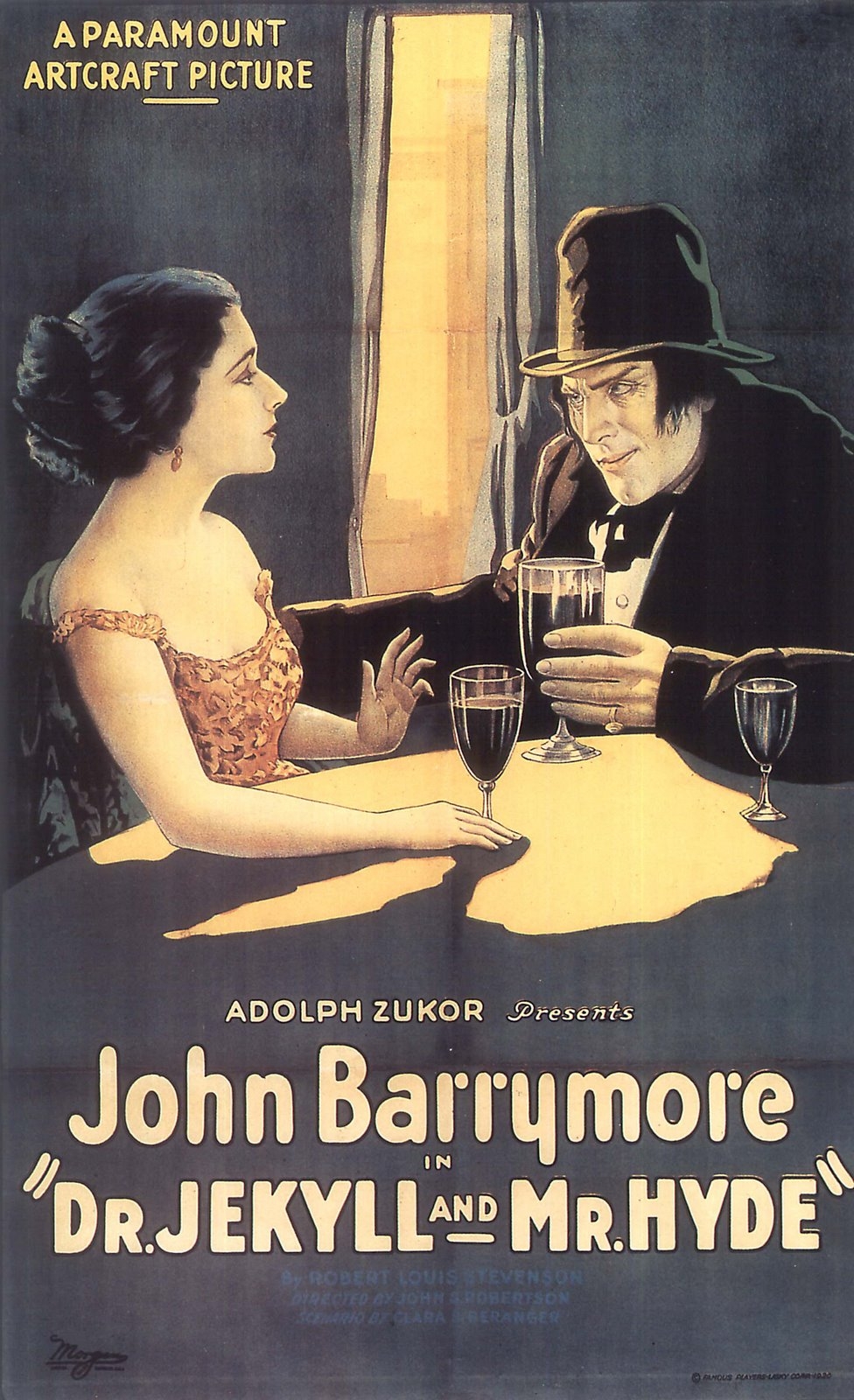
A definitive 6.9/10 rating for a film that redefined the boundaries of cult cinema. Dr. Jekyll and Mr. Hyde remains a cornerstone of transgressive art.
The cinematic landscape of the early 20th century was a fertile ground for exploring the shadowy corners of the human psyche, and few films dared to delve as deeply or as disturbingly as the 1920 adaptation of "Dr. Jekyll and Mr. Hyde". This silent masterpiece, a chilling meditation on duality and the inherent darkness lurking within the most respectable of men, stands as a monumental achievement, largely propelled by the transformative genius of John Barrymore. Long before the advent of elaborate prosthetics or CGI, Barrymore’s physical metamorphosis from the benevolent Dr. Henry Jekyll to the monstrous Edward Hyde was nothing short of revolutionary, relying almost entirely on his extraordinary acting prowess and a subtle, yet deeply unsettling, command of his own physiognomy.
At its core, the film, much like Robert Louis Stevenson's foundational novella, posits a terrifying question: what if the basest, most malevolent aspects of our nature could be surgically extracted, given form, and unleashed upon the world? Dr. Henry Jekyll, portrayed with a captivating blend of intellectual curiosity and repressed yearning by Barrymore, is not merely a scientist; he is a philosopher grappling with the very essence of good and evil. His experiments are not driven by a thirst for power, but by a misguided, almost noble, desire to purify humanity, to separate the wheat from the chaff, the saint from the sinner. Yet, in his hubris, he unleashes a force far more potent and insidious than he could ever have imagined.
The transformation sequences, even a century later, retain their visceral impact. Barrymore contorts his features, his body language shifting from the upright, refined posture of Jekyll to the hunched, predatory gait of Hyde with an uncanny fluidity. This wasn't merely makeup; it was an internal transformation externalized, a testament to an actor's total immersion. The film understands that true horror isn't just about jump scares or grotesque visuals, but about the slow, agonizing corruption of the soul, the erosion of identity. Hyde isn't just a monster; he is Jekyll's shadow, a grotesque mirror reflecting the doctor's unspoken desires and suppressed rage. The film effectively argues that some evils, once released, cannot be easily contained, resonating with the primal fears that have haunted humanity across epochs.
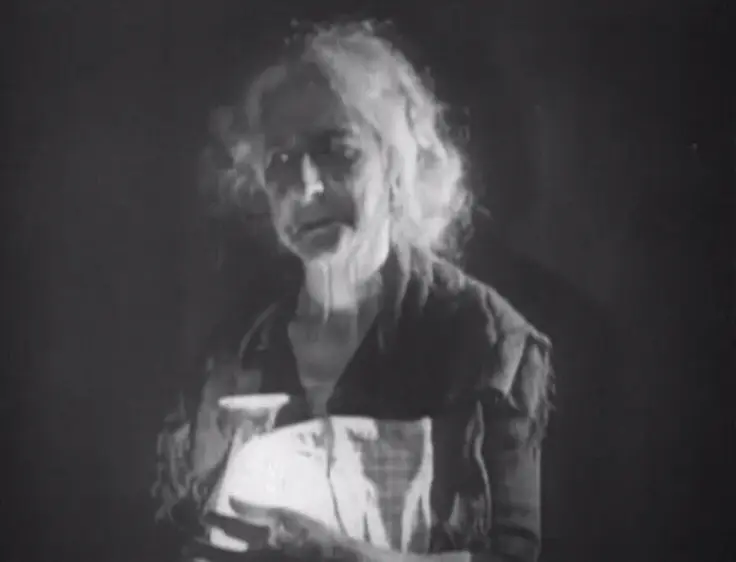
The supporting cast, though often overshadowed by Barrymore's magnetic performance, contributes significantly to the film's oppressive atmosphere. Characters like Martha Mansfield's Millicent Carew, Jekyll's fiancée, and Nita Naldi's alluring, yet ultimately tragic, cabaret dancer, Miss Gina, serve as tragic foils, their lives irrevocably altered by Hyde's escalating depravity. Their innocent joy and desperate terror underscore the profound disruption Hyde brings to the ordered Victorian society Jekyll inhabits. The screenplay, credited to Thomas Russell Sullivan, Oscar Wilde (though his direct contribution is often debated in adaptations of Stevenson's work, it points to the era's literary influences), Robert Louis Stevenson (the original source), and Clara Beranger, manages to distill the essence of the novel while adding cinematic flourishes that enhance its psychological depth.
Stylistically, the film employs stark chiaroscuro lighting, a technique that would become a hallmark of expressionist cinema, to visually articulate the film's central theme of duality. Shadows stretch long and menacing, swallowing figures whole, blurring the lines between light and dark, good and evil. The sets, though minimalist by today's standards, effectively convey the opulence of Jekyll's laboratory and the grimy underbelly of London's East End, where Hyde finds his playground. This visual language is crucial in a silent film, where every gesture, every flicker of light and shadow, must convey meaning and emotion without the aid of dialogue. The direction, though not explicitly credited in the prompt, clearly understood the power of visual storytelling in this nascent era of cinema.
The enduring legacy of "Dr. Jekyll and Mr. Hyde" lies not just in its groundbreaking special effects or Barrymore's performance, but in its exploration of themes that remain profoundly relevant. It forces us to confront the beast within, to acknowledge the capacity for evil that resides in even the most outwardly respectable individuals. This film preceded many later explorations of psychological horror, setting a high bar for thematic complexity and character depth. One might draw parallels to the existential dread explored in films like The Weakness of Man, which also grappled with moral failings, or even the more visceral terror found in something like Der Eid des Stephan Huller - II, which delves into personal torment and guilt.

The film’s influence on subsequent horror cinema is undeniable. It established tropes and archetypes that would be revisited time and again, from the mad scientist to the monstrous alter ego. While other films of the period, such as The Carter Case, offered thrilling mysteries, "Dr. Jekyll and Mr. Hyde" offered a mystery of the self, a far more unsettling proposition. It's a film that transcends its genre, becoming a profound commentary on human nature itself. The idea of a hidden, malevolent self is a concept explored in various cultural narratives, from ancient myths to modern psychological thrillers.
Consider the sheer audacity of the transformation. Without the aid of modern cinematic trickery, Barrymore relied on a combination of acting, makeup, and carefully orchestrated lighting changes. His hunched back, elongated fingers, and grotesque facial distortions are a masterclass in physical acting. This level of dedication is a stark contrast to some more lighthearted fare of the era, such as His Blooming Bloomers, highlighting the vast range of cinematic ambition present in the early 20th century. The commitment to realism, even in a fantastical premise, elevated the film beyond mere entertainment into a work of unsettling art.
The narrative progression from Jekyll's initial, almost childlike, fascination with Hyde's freedom to his ultimate, horrifying realization of Hyde's uncontrollable malevolence is expertly paced. The gradual loss of control, the increasing frequency and involuntary nature of the transformations, builds a palpable sense of dread. It's a psychological unraveling, a descent into madness that is both captivating and terrifying. This meticulous character development is something that can be appreciated even when comparing it to grand epics like War and Peace, which, despite its sprawling scope, also focuses on the internal struggles of its characters against external forces.

The film also subtly critiques Victorian societal norms, particularly the rigid expectations of decorum and the suppression of natural human impulses. Jekyll's experiment can be seen as a desperate attempt to reconcile his public persona with his private desires, a misguided quest for liberation from the constraints of his era. Hyde, in this context, becomes the embodiment of everything Jekyll and his society repress: lust, violence, hedonism. This societal critique is a recurring theme in many literary and cinematic works, from the social commentary in The Chinese Musketeer (if one considers its allegorical potential) to more direct explorations of class and morality in films like Love's Pay Day.
The final act of the film is a masterclass in tragic denouement. The desperate struggle between Jekyll and Hyde for dominance, the increasingly grotesque appearance of Hyde, and the inevitable, violent conclusion leave an indelible mark on the viewer. It's a powerful statement on the dangers of tampering with fundamental human nature and the irreversible consequences of unleashing one's darkest impulses. The film doesn't offer easy answers or moral platitudes; it simply presents the chilling reality of a man consumed by his own creation. This sense of inescapable doom is a narrative thread that connects it to other intense dramas like The Brain of Soviet Russia, where characters face overwhelming, existential threats.
Beyond Barrymore, the contributions of other cast members like Brandon Hurst, George Stevens, Louis Wolheim, Charles Lane, Georgie Drew Mendum, Blanche Ring, J. Malcolm Dunn, Cecil Clovelly, Jack McHugh, Ferdinand Gottschalk, Edgard Varèse, Julia Hurley, May Robson, and Alma Aiken, even in smaller roles, build a credible and immersive world. Each character, however brief their appearance, adds a layer to the film's rich tapestry, whether it be through conveying societal expectations or reacting to Hyde's monstrous acts. Their collective performances underscore the pervasive impact of Jekyll's experiment on the social fabric.

The film's exploration of identity is particularly poignant. Jekyll believes he can simply shed his evil, but what he discovers is that Hyde is not an external entity but an intrinsic part of him, a manifestation of his own repressed desires. The struggle is ultimately an internal one, a battle for his very soul. This internal conflict is far more compelling than any external threat, making the film a profound psychological drama. It resonates with the inner battles depicted in films such as The Eagle's Mate, which, while perhaps a different genre, also explores deep-seated personal dilemmas.
The meticulous writing, from Thomas Russell Sullivan's adaptation to the underlying influence of Robert Louis Stevenson's original vision, ensures that the film is not just a spectacle of horror but a coherent and thought-provoking narrative. The contributions of Clara Beranger and the potential echoes of Oscar Wilde's thematic concerns (especially regarding societal masks and hidden desires) further enrich the intellectual texture of the work. This strong literary foundation is what elevates the film from a mere genre piece to a timeless classic.
In an era of burgeoning cinema, "Dr. Jekyll and Mr. Hyde" stood out for its audacity and its artistic ambition. It demonstrated the power of the moving image to explore complex psychological states and ethical dilemmas. While films like The Vanderhoff Affair might have captivated audiences with intrigue, this film captivated them with introspection and terror. Its exploration of moral decay and the consequences of unchecked scientific ambition continues to resonate, making it a vital piece of cinematic history. The film’s lasting impact is a testament to its daring vision and the sheer talent involved in its creation.
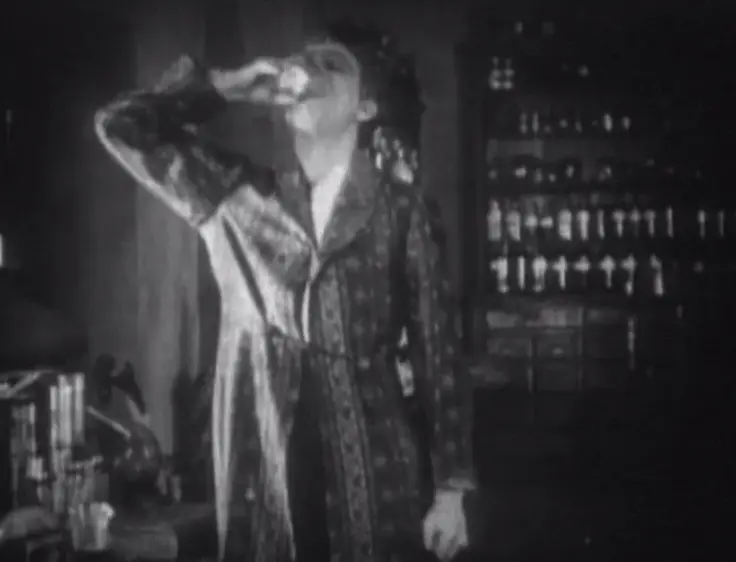
The sheer artistry involved in creating Hyde's appearance and mannerisms without the benefit of today's advanced techniques is truly remarkable. Barrymore's performance is a masterclass in physical transformation, proving that the most effective special effects often come from within the actor. This dedication to craft is reminiscent of the disciplined performances one might find in films like Three Mounted Men, where physical presence and nuanced acting were paramount.
Ultimately, "Dr. Jekyll and Mr. Hyde" is more than just a horror film; it's a profound psychological drama that probes the depths of human nature. It challenges us to look inward and confront our own potential for both good and evil. Its themes are universal and timeless, ensuring its place as a cornerstone of cinema. It reminds us that work and life, like in Work and Win 'Em, are often a balancing act, but here, the balance is catastrophically lost. The film's message about self-control and the perils of moral compromise is as relevant today as it was a century ago.
The film’s influence on the horror genre is indelible. It paved the way for countless portrayals of split personalities and the monstrous other within. Its commitment to exploring the psychological underpinnings of evil set a precedent for future filmmakers. This depth of character exploration is a far cry from the simpler narratives often found in films like The Heart of a Girl, which, while charming, didn't venture into such dark psychological territory. The film stands as a testament to the power of early cinema to tackle complex, unsettling themes with remarkable sophistication.
The moral quandary presented by Jekyll's experiment – the idea that one could simply shed one's sins and live consequence-free – is a fascinating one, and the film expertly demonstrates its catastrophic fallacy. This exploration of moral accountability and the impossibility of escaping one's true self is a powerful message. It's a stark reminder that there isn't "one law for both" the good and evil within us, as perhaps suggested by One Law for Both, but rather an intricate, inseparable tapestry of self. The tragic climax serves as a definitive statement on this inherent truth.
Ultimately, this 1920 adaptation of "Dr. Jekyll and Mr. Hyde" is a film that demands to be seen. It's a masterclass in silent cinema, a powerful psychological drama, and a timeless horror story. John Barrymore's performance alone is worth the price of admission, but the film as a whole is a testament to the enduring power of classic storytelling. It’s a profound exploration of human nature, far removed from the frivolous pursuits implied by titles like No Money, No Fun, offering instead a rich, terrifying, and deeply meaningful cinematic experience that continues to resonate with audiences today, inviting introspection into the darker recesses of our own souls.
IMDb 5.1
1935
Community
Log in to comment.