DbcultAccessing Vault...
6.9/10
Senior Film Conservator
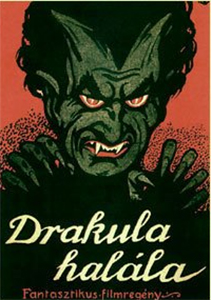
A definitive 6.9/10 rating for a film that redefined the boundaries of cult cinema. Dracula's Death remains a cornerstone of transgressive art.
A fevered phantasmagoria that predates Murnau’s Nosferatu by fourteen months, Dracula's Death is less a vampire tale than a dissolving tablet of identity slipped into the city’s water supply.
Curtiz—then thirty-four, already a firebrand of the Austro-Hungarian film industry—shoots Budapest like a patient etherised upon a table. The asylum interiors are all sickly ochre and bruised teal, corridors narrowing into coffin-vanishing points. He tilts the axis of the world: ceilings slump, doorknobs hover at shoulder height, gravity itself seems negotiable. In one vertiginous shot the camera glides above the girl’s bed as she sleeps, then corkscrews downward until we hover an inch from her throat, watching the skin quiver with each arterial pulse—an intimacy so predatory we half expect the lens to bite.
Anna Marie Hegener’s performance is a tremor rather than a scream: she lets terror seep rather than spill, her pupils dilating like inkblots we’re invited to interpret.
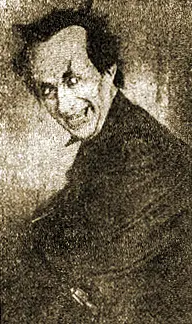
The screenplay, co-written by Curtiz and director Károly Lajthay, cannibalises Stoker but spits out the bones. There is no estate agent, no sea voyage, no garlic-crucifix folklore; instead the Count is folded into the fabric of post-war anxiety. The Treaty of Trianon looms off-screen: borders erased, citizens become refugees overnight, identity papers more fragile than parchment. Drakula, therefore, is not a foreign invader but the return of the repressed, the phantom of a nation that has tasted its own blood and found it addictive.
Carl Goetz’s asylum psychiatrist—stooped, monocled, voice like dry leaves—delivers monologues that double as political séance: "The mind is the last province we have left; when it is colonised, even the sky becomes enemy territory." His lines echo across a century and land in our age of algorithmic echo chambers, making the film feel uncannily contemporary.
Cinematographer Lajos Réthey employs a diaphanous scrim of gauze in front of the lens, turning gaslight into ectoplasm. Shadows are not black but bruise-violet, as if the celluloid itself were haemorrhaging. In the film’s most quoted tableau, the girl stands before a vaulted mirror whose silver backing has been scraped away in the shape of bat wings; her reflection appears intact, yet the wings throb with a separate heartbeat. The effect—achieved by double-exposing a strip of nitrate painted with mercury chloride—still makes restoration experts gasp.
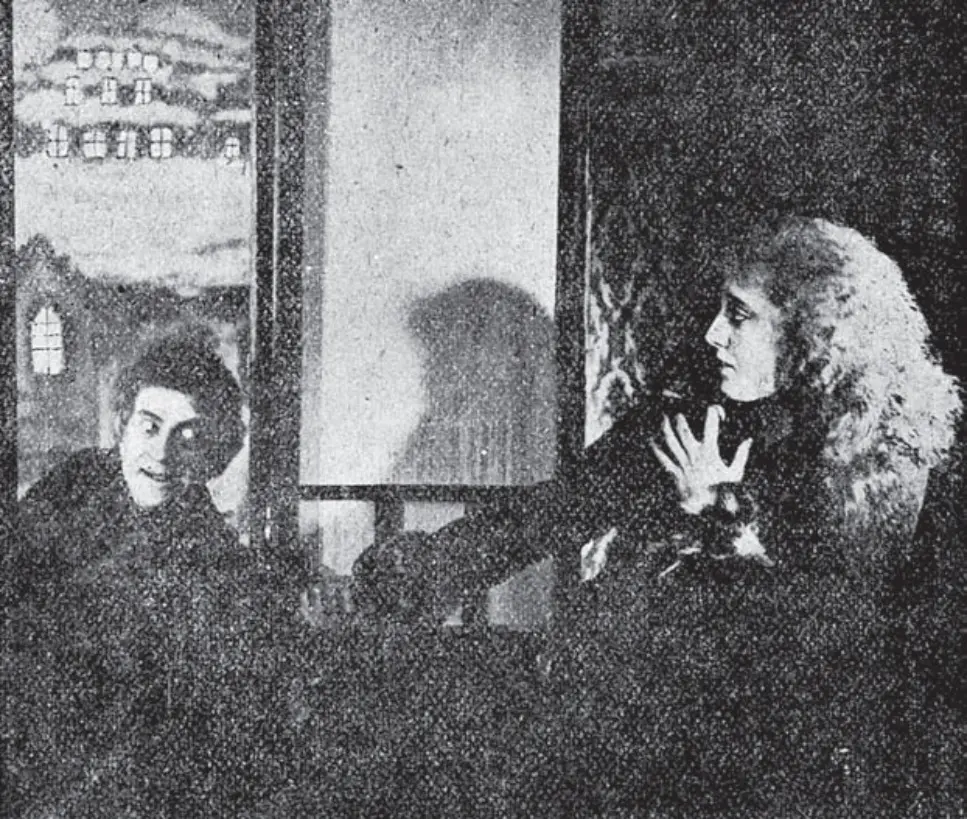
Compare this to The Mints of Hell, where mirrors merely fracture, or The Duplicity of Hargraves, whose reflective surfaces serve plot mechanics. Here the mirror is ontology: it tells the girl she exists, then whispers the price.
Being a silent film, Dracula's Death weaponises intertitles like shrapnel. Words appear onscreen torn from a diary: "I tasted iron in my dream—was it wine or was it me?" The letters jitter, as if struggling to escape the frame. Contemporary screenings in Vienna reportedly featured a live trio instructed to play sul ponticello tremolo until the bow hairs snapped, then continue with fingernails on wood. Today, even in mute digital transfer, the absence of score becomes its own orchestration; every projector click sounds like a distant cell door.
Curtiz would later confess in a 1957 Cahiers interview: "I learned horror not from monsters but from the creak of a tram seat when nobody sits there."
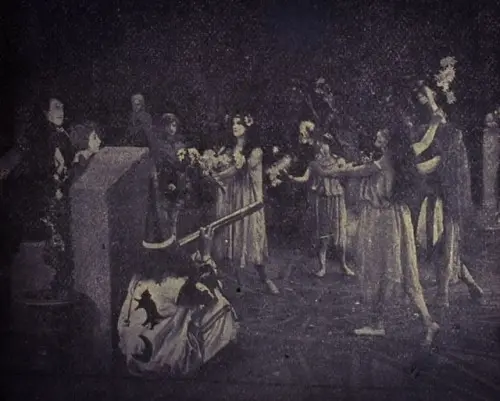
Károly Hatvani’s Drakula never bares fangs; instead he offers the girl a bouquet of white chrysanthemums whose petals blacken at his touch. His seduction is bureaucratic: he produces a parchment deed to her nightmares, already signed in what looks suspiciously like her own handwriting. Hatvani moves with the languor of a man who has read the last page of history and found his name there. Critics compare him to Schreck’s Orlok, but Hatvani’s menace is velvet-lined, the tyrant as archivist.
Margit Lux, playing the head nurse whose face is a map of trenches, delivers a single-take monologue while injecting herself with camphor. Her pupils roll upward like blinds, revealing only the whites—two tiny surrender flags. The scene lasts forty-seven seconds yet feels like surgical residency in purgatory.
Unlike Save Me, Sadie, where the heroine’s hysteria is cured by patriarchal love, or The Honeymoon, which punishes female desire, Dracula's Death refuses diagnosis. The girl’s visions may be the only reliable witness in a city that has swapped reality for cartography. When she finally confronts Drakula in the asylum’s hydrotherapy ward, the camera adopts her POV: his face dissolves into a mosaic of superimposed bureaucratic seals—marriage certificates, property deeds, military draft cards—suggesting that the true vampire is paperwork, the metastasis of state power into the bloodstream of the personal.
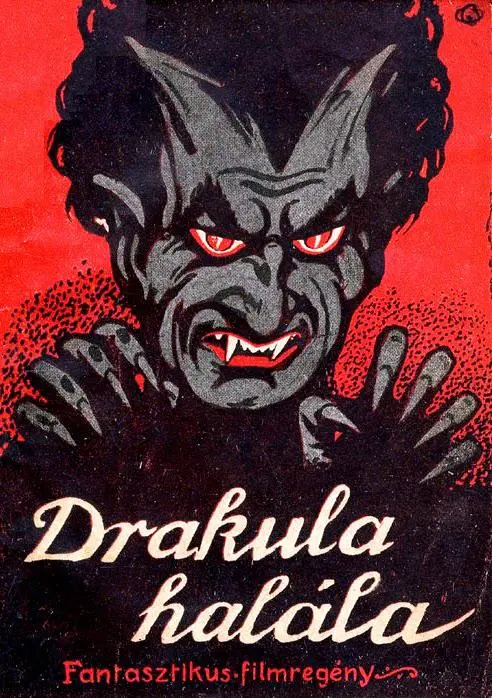
For decades the film existed only as a censored 19-minute fragment in the Hungarian National Archive, its nitrate reels rumored to have been melted for boot heels during the siege of Budapest. Then in 2018, a 4K restoration surfaced from the estate of collector Elemér Thury (grandson of the actor), hidden inside a mislabeled canister of Allies' Official War Review, No. 25. The restored 63-minute cut reveals subplots excised by the 1923 Weimar censors: a lesbian tryst between two nurses excised for “moral contagion,” a scene of Drakula dictating letters to a stenographer who types in Cyrillic despite claiming to be Viennese. The new transfer restores the cyanotype tint of the asylum scenes, turning the film into a cyanide daguerreotype.
Where The Victim externalises guilt through courtroom spectacle, Dracula's Death internalises it until the psyche becomes kangaroo court. And while June Madness uses summer light as antidote to trauma, Curtiz’s film finds no seasonal reprieve; even the dawn looks anaemic, as if the sun itself were on a hunger strike.
Traces of the film DNA ripple outward: the bureaucratic vampire reincarnates as Orson Welles’s Harry Lime, the asylum corridor prefigures the penultimate shot of The Third Man. Hitchcock screened a bootleg for the crew of Spellbound, demanding they match its dream-logic without Dalí’s crutches. More recently, Jordan Peele cited it as tonal compass for Get Out, noting: "Horror begins when the state signs your body away before you do."
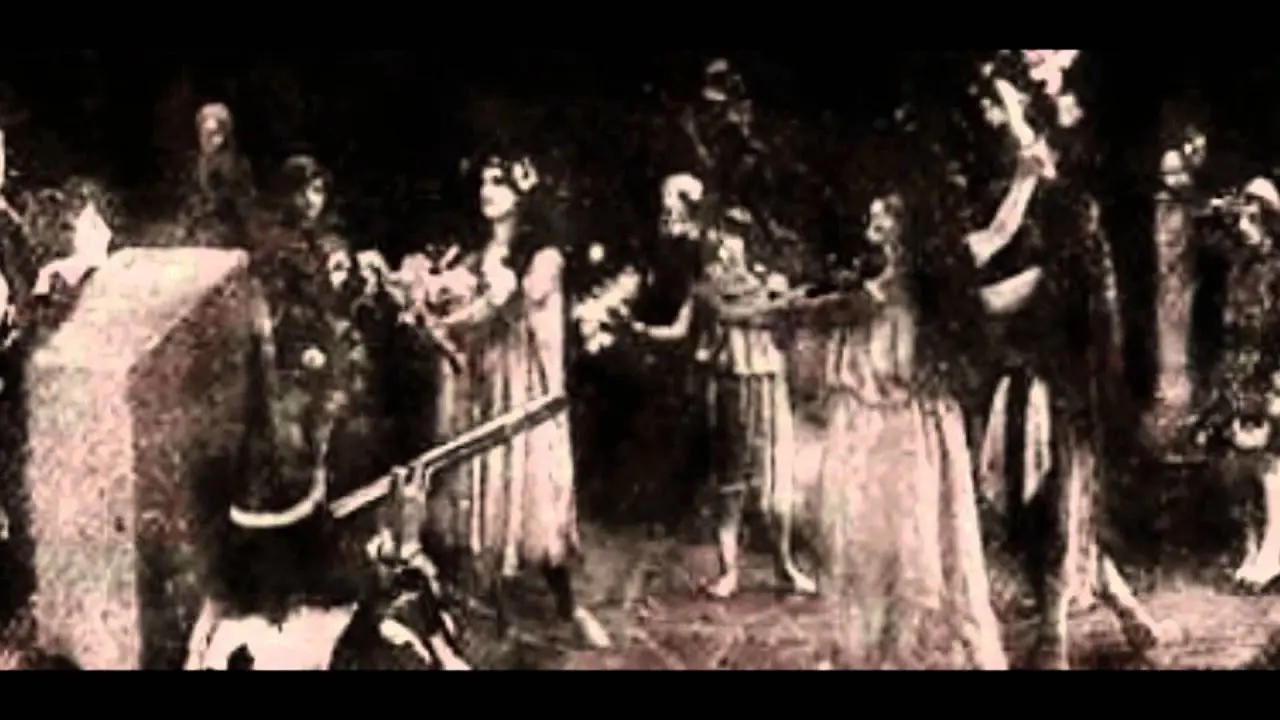
Yet perhaps the most chilling legacy is pharmaceutical: in 1933, Swiss psychiatrist Paul Askonas (whose name appears in the credits as asylum consultant) adapted the film’s intertitle flicker technique for tachistoscopic experiments on schizophrenic patients, seeding what would later become MK-Ultra’s subliminal protocols.
Watching Dracula's Death today feels like receiving a telegram from a burning continent addressed to someone you might have been. The film refuses catharsis; it ends on a freeze-frame of the girl’s eye, iris contracted to a pinhole, reflecting an inverted Budapest. No fade-out, no swell of orchestra—just the optical soundtrack of your own pulse. You leave the screening heavier than when you entered, as if the celluloid had siphoned a thimbleful of your plasma for archival purposes.
Verdict: a lattice-work of nightmare and history, Dracula's Death doesn’t merely survive restoration—it metastasizes, colonising new century, new viewers, new veins.
IMDb 6.9
1920
Community
Log in to comment.