DbcultAccessing Vault...
Cult Review
Senior Film Conservator
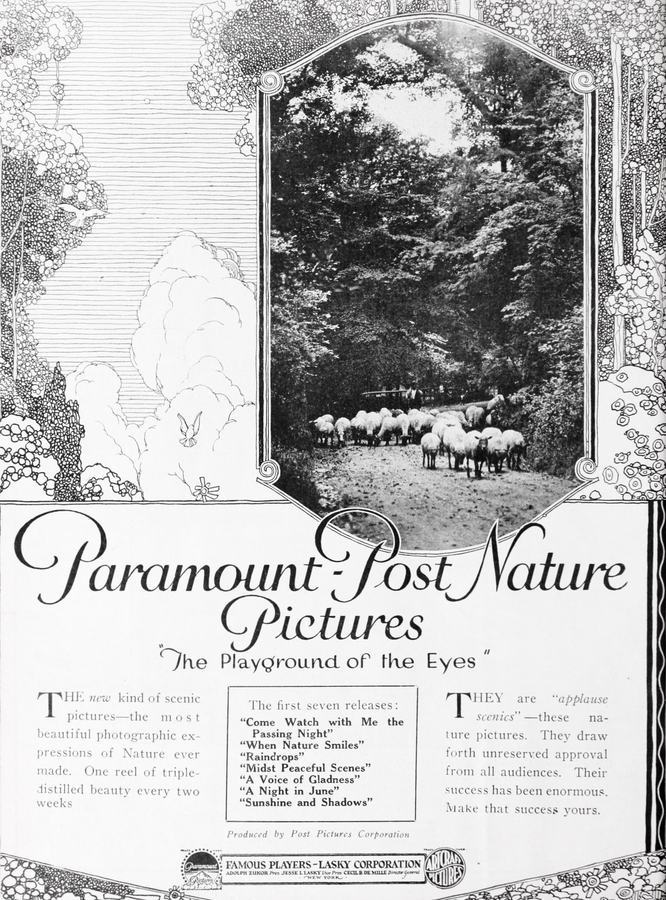
There are films that merely tell a story, and then there are those that unfurl like a delicate, living tapestry, each thread imbued with profound meaning. 'When Nature Smiles' belongs unequivocally to the latter category, a cinematic experience that transcends simple narrative to become a meditation on loss, the relentless march of time, and the enduring, almost mystical power of the natural world. From its opening frames, the film establishes a tone of somber beauty, drawing us into the desolate inner landscape of Dr. Aris Thorne, portrayed with a raw, affecting gravitas by Julian Vance. Vance embodies the very essence of a man adrift, his intellect a cage, his heart a wound that refuses to close. His daughter, Lily, a spectral presence woven throughout the narrative, is not merely a plot device but the very catalyst for Aris's descent into a singular, all-consuming obsession: the fabled Lunar Bloom.
The film’s genius lies in its refusal to simplify grief. Aris's quest is not for a magical cure or a facile closure, but for a tangible connection, a final echo of Lily's fascination with a flower that exists on the very edge of myth. This isn't the romanticized, idyllic pursuit often seen in lighter fare; it's a desperate, almost pathological drive, one that initially blinds him to the broader catastrophe unfolding around him. The Whispering Peaks, rendered with breathtaking cinematography that captures both their majestic grandeur and their vulnerable fragility, become a character in themselves, a silent witness to both human sorrow and human avarice. The visual storytelling here is nothing short of masterful, reminiscent of the evocative landscapes in films like Fires of Youth, where the environment serves as a mirror to the soul, reflecting inner turmoil and nascent hope.
Enter Elara Vance, a photojournalist whose sharp intellect and cynical realism provide a stark counterpoint to Aris’s ethereal quest. Anya Sharma delivers a performance of nuanced complexity, crafting Elara not as a mere foil, but as a fully realized individual whose own hardened exterior slowly cracks under the weight of the wilderness's plight. Her initial skepticism towards Aris is palpable, her focus squarely on the tangible destruction wrought by Silas Croft's logging conglomerate. Marcus Thorne, as Croft, is suitably menacing, portraying the industrialist not as a cartoon villain, but as a man whose vision of progress is ruthlessly devoid of empathy, making his threat feel all the more insidious and real. The narrative skillfully intertwines these disparate motivations, forcing Aris and Elara into an uneasy alliance that is both dramatically compelling and psychologically rich. Their arguments, their silences, and their gradual, reluctant respect for one another form the emotional backbone of the film, highlighting how shared purpose can bridge the widest divides.
The film's pacing, under the visionary direction, allows these character arcs to develop organically, never feeling rushed or forced. The quiet moments of contemplation are as potent as the moments of high tension. One cannot help but draw parallels to the deliberate, character-driven narratives of classics like Dombey and Son, where the internal struggles of individuals are given ample space to breathe and evolve. Elias Reed and Serena Chen's screenplay is a marvel of intricate layering, weaving together personal tragedy, scientific endeavor, and urgent environmental commentary without ever feeling didactic. The dialogue is sharp, often poetic, and always serves to deepen our understanding of the characters' inner lives. This is writing that trusts its audience to engage with complex themes, rewarding careful attention with profound insights.
The introduction of Kai, the Emberwood elder portrayed by Kaelen Blackwood, elevates 'When Nature Smiles' from a compelling drama to a truly resonant work. Blackwood's performance is a masterclass in understated power. His quiet dignity, his deep connection to the land, and his ancient wisdom provide the moral and spiritual anchor for the entire film. Kai is not merely a guide; he is the embodiment of the wilderness itself, a living repository of stories and traditions that speak to a harmonious existence long forgotten by the modern world. Through his eyes, Aris and Elara begin to see the forest not as a resource or a scientific curiosity, but as a sacred entity, a living, breathing being worthy of reverence and protection. The film beautifully articulates the clash between indigenous knowledge and colonial exploitation, a theme explored with varying degrees of success in films like The Scarlet Trail, but rarely with such heartfelt authenticity.
The cinematography, particularly in the scenes featuring Kai, is imbued with a sense of almost spiritual awe. The camera lingers on the textures of ancient trees, the flow of pristine rivers, and the intricate patterns of forest life, reminding us of the profound beauty that stands to be lost. The sound design complements this visual splendor, immersing the viewer in the symphony of the wilderness – the rustling leaves, the distant calls of birds, the subtle hum of insects. These elements are not just background noise; they are integral to the film's immersive quality, creating a sensory experience that transports the audience directly into the heart of the Whispering Peaks. The contrast between these natural sounds and the jarring, intrusive roar of Croft's logging machinery is a powerful, almost visceral commentary on humanity's destructive footprint.
The mythical Lunar Bloom itself is a narrative triumph. When it is finally revealed, it is not a spectacular CGI creation designed for shock and awe, but a fragile, ethereal presence, its luminescence rendered with a delicate, almost otherworldly glow. This understated approach makes its impact all the more profound. It becomes a powerful symbol: not just of hope and beauty, but of resilience, of life's tenacious will to persist even in the face of overwhelming odds. For Aris, it is a conduit to Lily, a final, radiant connection to her memory. For Elara, it is the ultimate photographic testament to the beauty worth fighting for. And for Kai, it is the enduring spirit of his ancestors, a sacred trust passed down through generations. The film understands that true miracles often lie in the subtle, the rare, and the deeply personal, rather than the grandiose.
The narrative builds to a thrilling, yet deeply emotional, climax as the trio and Kai's tribe confront Croft's forces. This isn't a simplistic good-versus-evil showdown; it's a desperate struggle for survival, for heritage, and for the very soul of the wilderness. The tension is expertly crafted, enhanced by a score that is both sweeping and intimate, elevating the stakes without resorting to bombast. The choices made by the characters in these moments are born from their journey, reflecting their growth and their newfound understanding of interconnectedness. It's a testament to the film's writing that even in moments of high action, the emotional core remains firmly intact. One might recall the urgent, yet deeply human stakes in films like A Scream in the Night, where personal and societal threats converge with gripping intensity.
Ultimately, 'When Nature Smiles' is a film about healing – not just the healing of a broken heart, but the healing of a fractured relationship with the planet. Aris's realization that the 'smile' of nature is not found in a single, rare bloom, but in the cyclical dance of life, death, and renewal, is the film's most profound truth. It's a powerful call to action, reminding us that reverence for the natural world is not a luxury, but a necessity for our collective well-being. The film leaves the audience with a lingering sense of both melancholy and hope, a poignant reminder of what we stand to lose, but also what we can still save.
The performances across the board are uniformly excellent, particularly Julian Vance's transformative portrayal of Aris Thorne, which anchors the entire narrative. Anya Sharma's Elara provides the necessary spark and evolution, while Kaelen Blackwood's Kai is a quiet revelation. The direction is assured, allowing the stunning visuals to speak volumes while never overshadowing the intimate human drama. The screenplay is a rich tapestry of themes, avoiding easy answers and embracing the complexities of grief, environmentalism, and cultural heritage. This film stands as a significant achievement, a work that will undoubtedly provoke thought and stir emotion long after the credits roll. It is a vital piece of cinema that speaks to the urgent issues of our time with grace, intelligence, and an undeniable artistic vision. In its quiet power, it echoes the profound impact of films like Life's Whirlpool, where the grandeur of life's struggles and triumphs are laid bare against an unforgiving, yet ultimately beautiful, backdrop.
In an era saturated with fleeting distractions, 'When Nature Smiles' offers a substantive, immersive experience. It challenges the viewer to look beyond the surface, to connect with the deeper currents of existence, and to recognize the inherent value in both personal healing and planetary stewardship. It's a film that resonates deeply, urging us to listen to the whispers of the wild and to find our own strength in the face of adversity. This is not just a movie; it is an elegy, a triumph, and a quiet revolution, all wrapped in the breathtaking beauty of a world on the brink, yet still capable of smiling.

IMDb —
1919
Community
Log in to comment.