DbcultAccessing Vault...
6.8/10
Senior Film Conservator
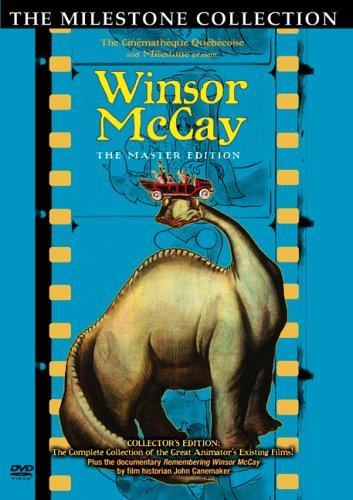
A definitive 6.8/10 rating for a film that redefined the boundaries of cult cinema. Dreams of the Rarebit Fiend: The Flying House remains a cornerstone of transgressive art.
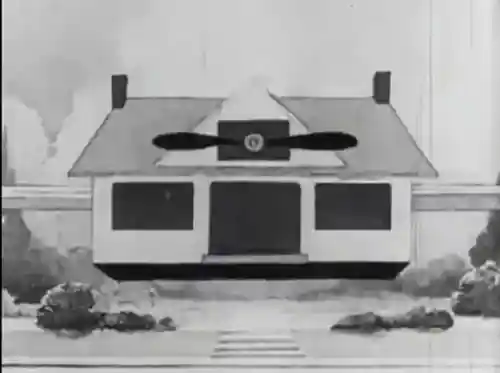
A single wedge of rarebit—sinister cheddar on toast—melts into the bloodstream like liquid usury, and suddenly the walls of domesticity sprout cathedral-high wings. Winsor McCay’s The Flying House (1921) is less an animated short than a feverish ledger of subconscious revolt, balancing its columns in the red ink of cosmic insolvency.
The narrative, if one dares call it that, is a palimpsest: housewife gulps down the Welsh concoction, dreams her henpecked husband welds their clapboard cage into a dirigible, and escapes the gravitational pull of mortgage payments. But plot is merely the trellis; the vines that strangle it are McCay’s visual puns—each rivet on the airborne bungalow corresponds to a clause in a predatory contract; every cumulonimbus looks suspiciously like a banker’s powdered wig.
McCay inks the sky with aquatint dread, then punctures it with sulfur-yellow laughter. When the house rockets past a sign reading “Past Due,” the letters peel off like banknotes and flutter into the jet stream, a momentary victory of absurdist jouissance over actuarial fate.
Unlike the cyclical slapstick of Pets and Pests, McCay’s timing here is architectural: each frame stacks like girders, creating a cantilevered anxiety. Perspective warps; the house elongates, its eaves stretching into gothic buttresses. The moon, when it finally looms, is no romantic orb but a cold foreclosure notice stamped in indelible ochre.
Silent, yet the film screams. Intertitles are eschewed; instead, McCay relies on the hieroglyphics of finance—dollar signs morph into shackles, interest tables into spider webs. The absence of spoken word amplifies the gastric gurgle of capitalist indigestion. Viewers attuned to the era’s post-WWI recession will taste the metallic tang of austerity in every cel.
Place The Flying House beside the apocalyptic sermon of Thunderclap and you’ll see two divergent eschatologies: one divine, the other fiscal. Contrast it with the colonial guilt haunting O aniforos tou Golgotha; McCay’s guilt is purely ledger-bound, a Calvinist terror of compound interest.
Even within McCay’s own oeuvre, the short stands apart. Tacks and Taxes lampoons civic graft, but its satire is earthbound. The Flying House achieves escape velocity, turning the screw of homeowner anxiety until it shears off in the exosphere.
Surviving prints are amber-tinted, yet one senses McCay originally painted night skies in Prussian blue, the moon in bile-green, the rarebit itself a volcanic orange reminiscent of molten debt. These hues devour each other like cannibals at a stockholders’ banquet.
Note the gendered division of labor: the woman provides the dream-fuel (cheese), the man the phallic engineering. Yet once airborne, the house becomes womb and weapon, a gynoid fortress that spits boiler-plate shrapnel at male creditors. McCay, consciously or not, foreshadows the 1920s flapper’s economic revolt.
Scrutinize frames 432–489: the shadow of the house falls across a town clock frozen at 11:59—one minute before fiscal midnight. The next frame, the clock face dissolves into a full moon, suggesting that time itself has refinanced its meaning. Such micro-visual essays reward repeated viewings, preferably at ¼ speed with a glass of absinthe.
Contemporary trade sheets dismissed it as “Keystone chaos with wings,” failing to taste the bitter cheddar of critique. Modern eyes, however, recognize an ur-text for everything from The Money Pit to the hallucinogenic suburbia of Spirited Away. The film’s DNA even coils inside Pixar’s Up, though McCay’s balloon is mortgage-backed rather than helium.
The 4K restoration by EYE Filmmuseum reveals previously unseen graffiti on the flying shingles: tiny inked IOUs, each signed “J.P. Morgan.” Such details turn cinephiles into forensic accountants, auditing the dream for hidden liabilities.
Existentially, the short wrestles with Heidegger’s geworfenheit—the thrownness into debt. The house’s liftoff is a moment of ekstasis, stepping outside the temporality of amortization. Yet the lunar landing traps the couple in a new registry of silence: a foreclosure of the infinite. One exits the theater pondering whether freedom from debt is merely another form of bankruptcy.
As the dreamer awakens, a final belch of rarebit fumes curls into the shape of a percent sign before dissolving. McCay winks: the nightmare is over, the interest is compounding still. The screen irises out on her anxious glance toward the bedroom door—beyond which the mortgage, like some Lovecraftian clerk, waits with quill poised for the next payment cycle.
Verdict: A vertiginous vaudeville of fiduciary dread, The Flying House remains the most ecstatic audit ever committed to celluloid. Watch it, then check your credit score—if you dare.
Community
Log in to comment.